

This article was automatically translated from the original Turkish version.
+1 More
Type of Geographical İndication | Origin Name | ||||||||
|---|---|---|---|---|---|---|---|---|---|
Application Date | 28.08.2018 | ||||||||
Registration Number | 577 | ||||||||
Registration Date | 26.10.2020 | ||||||||
Product / Product Group(s) | Processed and unprocessed fruits vegetables and mushrooms | ||||||||
Province(s) | Isparta | ||||||||
Applicant/Registrant(s) | Uluborlu Municipality | ||||||||
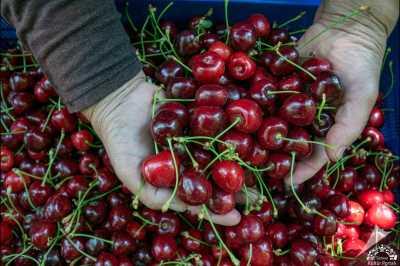
Uluborlu Cherry is a variety of cherry belonging to the species Prunus avium L., known as “0900 Ziraat,” cultivated exclusively in the Uluborlu district of Isparta Province, Türkiye. Production of this cherry began in the region in 1966. It was registered as a geographical indication on 26 October 2020, following an application submitted by the Uluborlu Municipality on 28 August 2018. This registration is protected under Law No. 6769 on Industrial Property.
The Uluborlu cherry is grown only within the boundaries of the Uluborlu district of Isparta. Uluborlu is situated in a valley surrounded by mountains, forming a transitional zone between the Mediterranean and Central Anatolia regions, and lies on a flat plain. The district has an average elevation of 1050 meters and experiences a Mediterranean climate. Summers are hot and dry, while winters are cold and rainy. The constant breeze in the region plays a crucial role in meeting the chilling requirements of cherry trees. This breeze ensures that the fruit flesh reaches the desired firmness during fruit development, a characteristic that extends the shelf life of the Uluborlu cherry and makes it suitable for transportation.
The distinctive qualities of the Uluborlu cherry stem from the region’s geographical location and cultivation methods. Attributes such as color, taste, fruit size, and flesh firmness are directly related to the degree to which chilling requirements are met. Chilling is a critical factor in the development of fruit size, flavor, and aroma. The physical and chemical properties of the Uluborlu cherry are as follows:
These characteristics are the primary factors distinguishing the Uluborlu cherry from other cherry varieties, enhancing its durability and making it suitable for long-term storage and transportation.
The cultivation of Uluborlu cherry follows specific agricultural practices adapted to the region’s geographical conditions:
Cherry orchards are established on dry, well-drained soils with high water retention capacity. Areas exposed to constant breeze are preferred, as this improves fruit quality. Planting distances are determined according to soil type: 6 meters between rows and 5 meters between plants on flat land; 3 meters between rows and 4 meters between plants on rocky land. South-facing slopes with lower elevations are prioritized due to their advantage in enabling early harvests.
Cherry trees are regularly irrigated during the active growth period, from April until harvest. An average of one hour of irrigation per day is recommended, using drip or micro-sprinkler systems.
The fertilizer needs of orchards are determined through soil and leaf analyses conducted every three years. Fertilizer is applied within the canopy projection area, ensuring no direct contact with the trunk or roots.
For the first 5–7 years, shaping pruning is carried out using close-pruning techniques. In subsequent years, yield pruning is performed to maintain the physiological balance between flower and leaf buds. Young trees receive light pruning, while older trees are pruned more severely.
The Uluborlu cherry is harvested when it reaches the desired size, color, and taste characteristics. The harvest period typically spans from 20 June to 30 July. Harvesting is done manually, ensuring no damage to branches and including the fruit stems. Containers of no more than 5 kg capacity are recommended for collection and transport.
The production and use of the geographical indication for Uluborlu cherry are monitored by a supervisory body composed of representatives from the Uluborlu Municipality, the Uluborlu District Directorate of Agriculture and Forestry, and the Uluborlu Chamber of Tradesmen, Artisans, Drivers, and Automobile Owners, under the coordination of the Uluborlu Municipality. At least one inspection is carried out annually, and compliance reports are submitted to the Turkish Patent and Trademark Office. Additional inspections may be conducted as needed. Inspections verify the correct use of the geographical indication emblem and the Uluborlu Cherry logo, as well as adherence to approved production methods. Any non-compliance identified is reported to the relevant parties, and necessary corrective measures are implemented.
The designation “Uluborlu Cherry” and the geographical indication emblem must appear on the product or its packaging. If this is not feasible, they must be displayed in a clearly visible location at the production site. This practice not only confirms the product’s registered geographical indication status but also informs consumers about its origin and quality.
Kültür Portalı. "Uluborlu Kirazı." Kültür Portalı. Accessed August 16, 2025. https://www.kulturportali.gov.tr/portal/uluborlu-kirazi.
Turkish Patent and Trademark Office. *Uluborlu Kirazı Coğrafi İşaret Tescil Belgesi*. Turkish Patent and Trademark Office. Accessed August 16, 2025. https://ci.turkpatent.gov.tr/Files/GeographicalSigns/5cf5bd41-67e5-4170-ae43-119c3e6f27fa.pdf.
Türk Patent ve Marka Kurumu. "Uluborlu Kirazı." Türk Patent ve Marka Kurumu. Accessed August 16, 2025. https://ci.turkpatent.gov.tr/cografi-isaretler/detay/38615.

Type of Geographical İndication | Origin Name | ||||||||
|---|---|---|---|---|---|---|---|---|---|
Application Date | 28.08.2018 | ||||||||
Registration Number | 577 | ||||||||
Registration Date | 26.10.2020 | ||||||||
Product / Product Group(s) | Processed and unprocessed fruits vegetables and mushrooms | ||||||||
Province(s) | Isparta | ||||||||
Applicant/Registrant(s) | Uluborlu Municipality | ||||||||
Geographical Features and Climate
Distinctive Characteristics
Cultivation Method
Orchard Establishment
Irrigation
Fertilization
Pruning
Harvesting
Monitoring and Registration
Usage