


This article was automatically translated from the original Turkish version.
+1 More
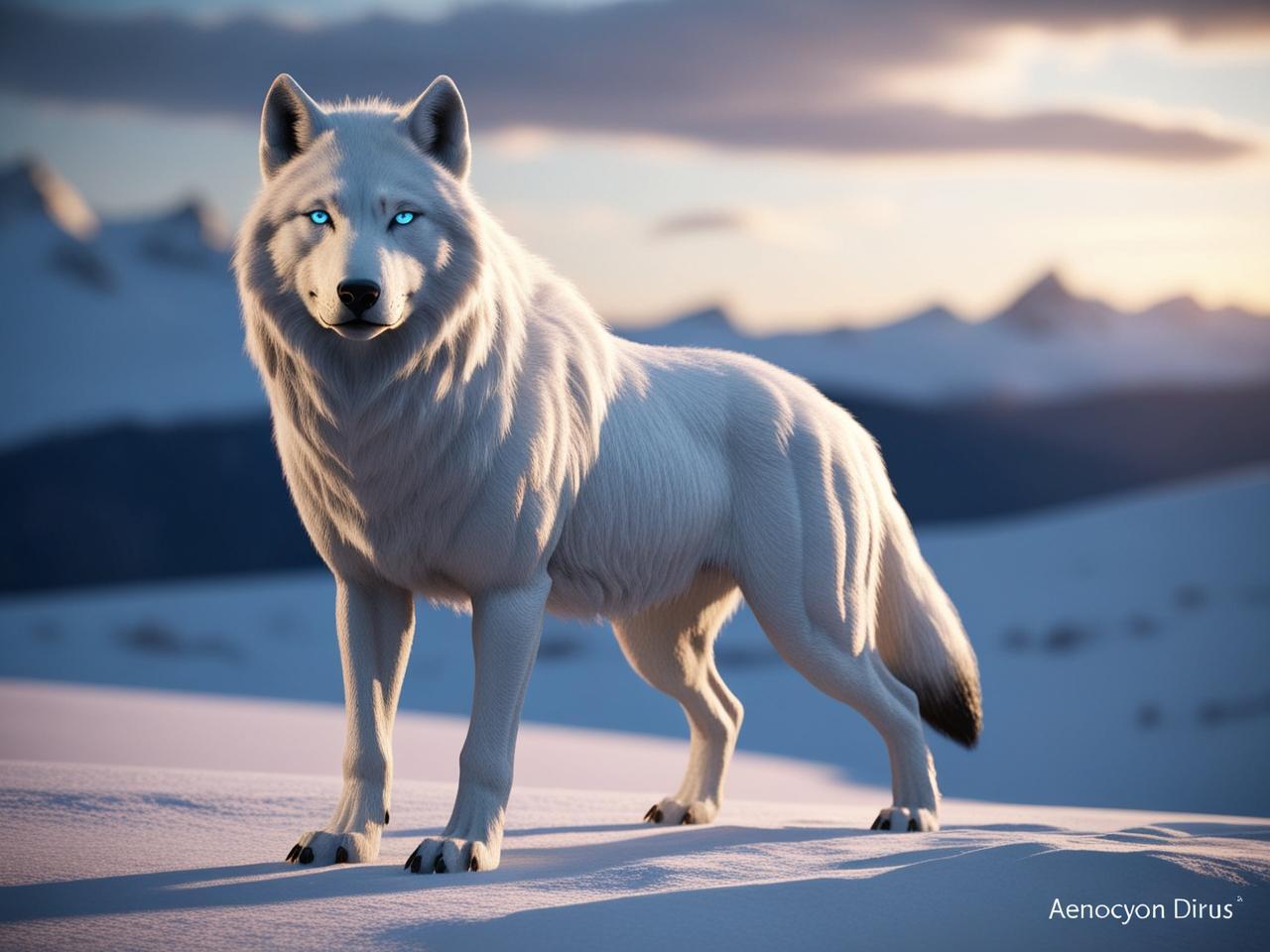
Ulukurt
Scientific Name(s) | Aenocyon dirus | ||||||||
|---|---|---|---|---|---|---|---|---|---|
Common Names | Dire Wolf | ||||||||
Status | Extinct genetic studies are ongoing. | ||||||||
Period Lived | Late Pleistocene (13,000 years ago) | ||||||||
Geographic Distribution | North and South America | ||||||||
Diet(s) | Carnivore | ||||||||
Place in Popular Culture | Its visibility has increased through appearances in fictional works such as Game of Thrones. | ||||||||
Ulukurt (Aenocyon dirus), a large extinct predator that lived in Pleistocene-era Americas. Ancient DNA analyses have demonstrated that, contrary to earlier assumptions, this animal is not closely related to wolves but instead belongs to a very ancient and distinct canid lineage (Aenocyon genus) that diverged approximately 5.7 million years ago and evolved independently in the Americas.
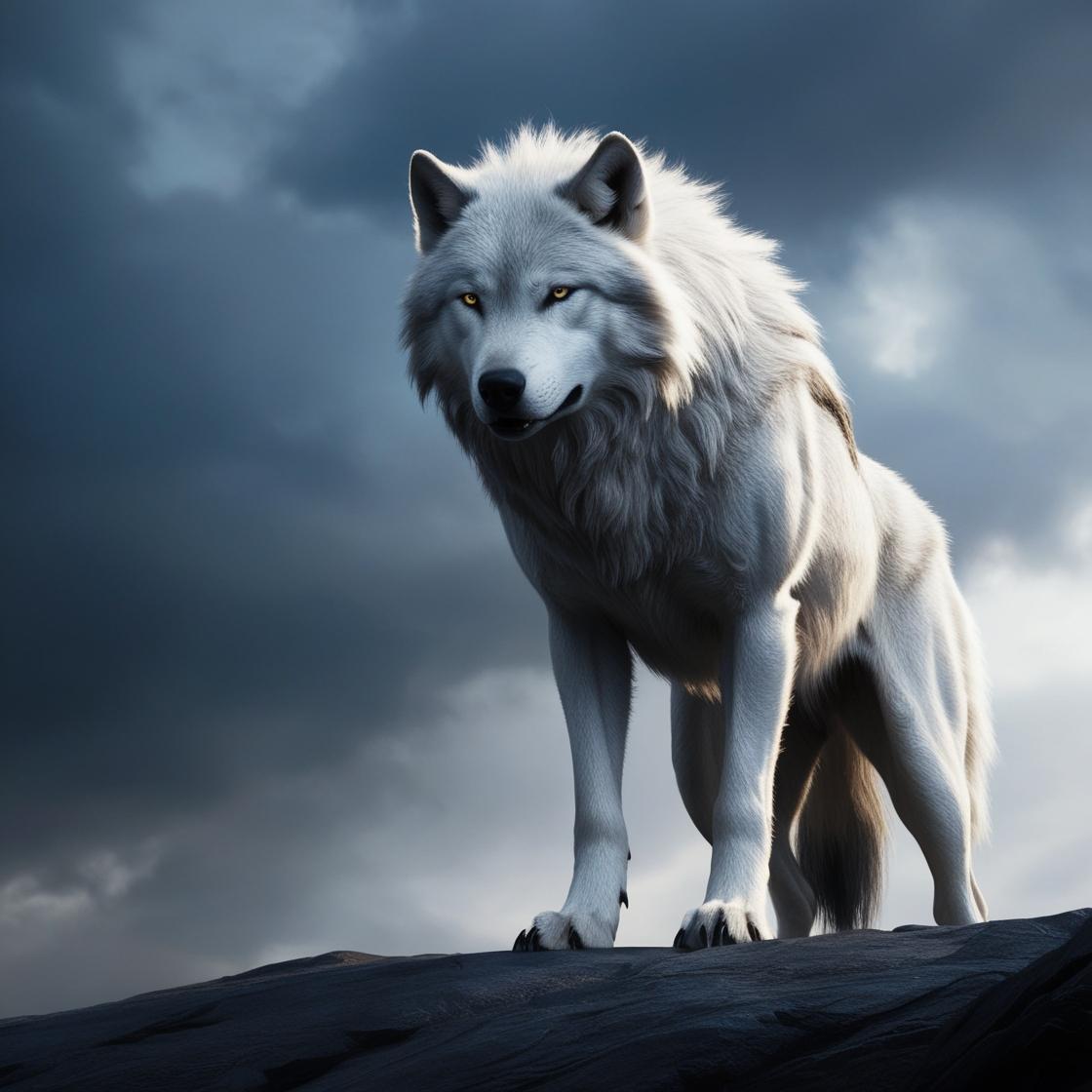
Representative Ulukurt Image (Generated by Artificial Intelligence.)
The ulukurt was a large canid that roamed a wide geographic area across North and South America during the Late Pleistocene (approximately 250,000 to 13,000 years ago). Its average weight was around 68 kg, slightly larger than modern gray wolves, though its skeletal structure overall resembles that of modern canids. 【1】 It is considered a major predator of the period’s megafauna, including mammoths, mastodons, saber-toothed cats, and giant ground sloths. Its fossils are remarkably abundant; over 4,000 individual specimens have been recovered from the Rancho La Brea tar pits in California alone, a number more than ten times greater than the number of gray wolf fossils found in the same region. 【2】 Despite this abundance, the species’ origins and precise relationships with other canids could only be interpreted until recently based on morphological data.
The pronounced skeletal similarities between the ulukurt and the gray wolf long led to the interpretation that the two species were closely related, or that the ulukurt was either a subspecies or ancestor of the gray wolf. 【3】 These interpretations resulted in both being classified under the genus Canis. However, morphological traits can be misleading due to convergent evolution, where species subjected to similar ecological pressures independently evolve similar physical features. Organisms from different evolutionary lineages may develop analogous appearances or skeletal structures as adaptations to comparable lifestyles. The ulukurt case exemplifies how morphology alone is insufficient for resolving deep evolutionary relationships.

Ulukurt and Gray Wolf (Generated by Artificial Intelligence.)
Advances in paleogenomics have played a pivotal role in unraveling the ulukurt’s evolutionary origins. Nuclear and mitochondrial DNA sequences were obtained from five ulukurt fossils recovered from various regions of the Americas (Idaho, Ohio, Tennessee, Wyoming), with ages ranging from 13,000 to 50,000 years. Analysis of these genomic data revealed the following:
Another key finding from genomic data is the complete absence of gene flow (hybridization) between ulukurts and other canids that arrived in the Americas later:
The answer to how two genetically distant lineages (Aenocyon and Canis) evolved such striking morphological similarities lies in convergent evolution. Both ulukurts and gray wolves occupied similar ecological niches as apex predators specializing in hunting large herbivores. Similar hunting strategies, locomotion patterns, and environmental pressures likely led each lineage to independently evolve analogous anatomical features—such as comparable jaw and dental structures and similar body proportions. 【7】
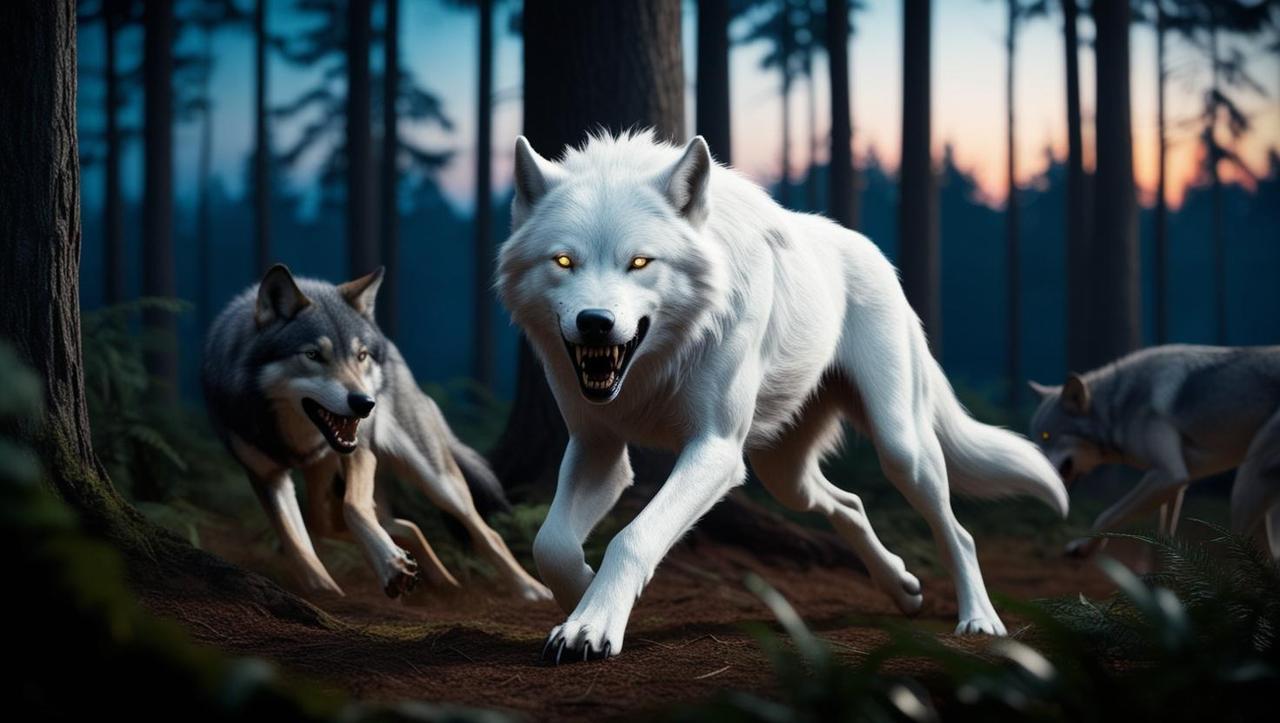
Ulukurt and Gray Wolf Hunting (Generated by Artificial Intelligence.)
Aenocyon dirus disappeared during the mass extinction event at the end of the Pleistocene, approximately 13,000 years ago, which affected numerous large mammal species. Gray wolves and jackals, however, survived. Major factors thought to have contributed to the ulukurt’s extinction include:
In recent years, advances in genetic engineering and synthetic biology have popularized the idea of de-extinction—the revival of extinct species. One of the most prominent companies in this field, Colossal Biosciences, which is pursuing ambitious projects to resurrect the woolly mammoth (Mammuthus primigenius) and the thylacine (Thylacinus cynocephalus), announced that it has added the ulukurt (Aenocyon dirus) to its de-extinction targets (Colossal Biosciences, n.d.). As stated on the company’s website, the project aims to use ancient DNA to integrate genetic information into the genomes of the ulukurt’s closest living relatives, employing advanced gene-editing technologies such as CRISPR, with the ultimate goal of reintroducing the species to the wild.
For academic accuracy and cultural sensitivity, it is essential to clearly distinguish the following:
Therefore, attributing the meanings of “bozkurt” or “ulu kurt” from Turkish culture to Aenocyon dirus, the ancient predator of the Americas, is both biologically and historically incorrect. Both wolf figures must be understood within their own distinct geographical, evolutionary, and cultural contexts.
Anderson, T. M., B. M. vonHoldt, S. I. Candille, M. Musiani, C. Greco, D. R. Stahler, D. W. Smith, B. Padhukasahasram, E. Randi, J. A. Leonard, C. D. Bustamante, E. A. Ostrander, H. Tang, R. K. Wayne, and G. S. Barsh. "Molecular and Evolutionary History of Melanism in North American Gray Wolves." *Science* 323, no. 5917 (2009): 1339–43. https://doi.org/10.1126/science.1165448.
Colossal Biosciences. "Dire Wolf." Colossal Biosciences. Accessed April 14, 2025. https://colossal.com/direwolf/.
DeSantis, Larisa R. G., Robert S. Feranec, Roxane T. G. G. Emery-Komárek, and John M. Harris. "Causes and Consequences of Pleistocene Megafaunal Extinctions as Revealed from Rancho La Brea Mammals." *Current Biology* 29, no. 15 (2019): 2488–95.e2. https://doi.org/10.1016/j.cub.2019.06.072.
Dundas, R. G. "Quaternary Records of the Dire Wolf, Canis dirus, in North and South America." *Boreas* 28, no. 3 (1999): 375–85. https://doi.org/10.1111/j.1502-3885.1999.tb00227.x.
Graham, R. W., and J. I. Mead. "Environmental Fluctuations and Evolution of Mammalian Faunas during the Last Deglaciation in North America." In *North America and Adjacent Oceans During the Last Deglaciation*, edited by W. F. Ruddiman and H. E. Wright Jr., 371–402. The Geology of North America K-3. Boulder, CO: Geological Society of America, 1987. https://doi.org/10.1130/DNAG-GNA-K3.
Leonard, Jennifer A., Carles Vilà, Kena Fox-Dobbs, Paul L. Koch, Robert K. Wayne, and Blaire Van Valkenburgh. "Megafaunal Extinctions and the Disappearance of a Specialized Wolf Ecomorph." *Current Biology* 17, no. 13 (2007): 1146–50. https://doi.org/10.1016/j.cub.2007.05.070.
Merriam, John C. "Note on the Systematic Position of the Wolves of the Canis dirus Group." *Bulletin of the Department of Geology of the University of California* 10 (1918): 531–33. https://hdl.handle.net/2027/uc1.31822009002739.
Perri, Angela R., Kieren J. Mitchell, Alice Mouton, Sandra Álvarez-Carretero, Ardern Hulme-Beaman, James Haile, Laurent A. F. Frantz, et al. "Dire Wolves Were the Last of an Ancient New World Canid Lineage." Nature 591, no. 7848 (2021): 87–91.
Zrzavý, J., P. Duda, J. Robovský, I. Okřinová, and V. Pavelková Řičánková. "Phylogeny of the Caninae (Carnivora): Combining Morphology, Behaviour, Genes and Fossils." *Zoologica Scripta* 47, no. 4 (2018): 373–89. https://doi.org/10.1111/zsc.12293.
vonHoldt, B. M., J. P. Pollinger, D. A. Earl, J. C. Knowles, A. R. Boyko, H. Parker, E. Geffen, M. Pilot, W. Jedrzejewski, B. Jedrzejewska, V. Sidorovich, C. Greco, E. Randi, M. Musiani, R. Kays, C. D. Bustamante, E. A. Ostrander, J. Novembre, and R. K. Wayne. "Whole-Genome Sequence Analysis Shows That Two Endemic Species of North American Wolf Are Admixtures of the Coyote and Gray Wolf." *Science Advances* 2, no. 7 (2016): e1501714. https://doi.org/10.1126/sciadv.1501714.
[1]
Perri vd., 2021
[2]
Leonard vd., 2007; Kurtén & Anderson, 1980
[3]
Goulet, 1993; Zrzavý vd., 2018
[4]
Merriam, 1918; Perri vd., 2021
[5]
Perri vd., 2021; Nowak, 1979
[6]
örn. vonHoldt vd., 2016; Gopalakrishnan vd., 2018
[7]
Perri vd., 2021
[8]
DeSantis vd., 2019
[9]
Graham & Mead, 1987

Ulukurt
Scientific Name(s) | Aenocyon dirus | ||||||||
|---|---|---|---|---|---|---|---|---|---|
Common Names | Dire Wolf | ||||||||
Status | Extinct genetic studies are ongoing. | ||||||||
Period Lived | Late Pleistocene (13,000 years ago) | ||||||||
Geographic Distribution | North and South America | ||||||||
Diet(s) | Carnivore | ||||||||
Place in Popular Culture | Its visibility has increased through appearances in fictional works such as Game of Thrones. | ||||||||
General Characteristics and Paleontological Records
Morphological Similarity and the Traditional Classification Misconception
True Identity
Evolutionary Isolation and Absence of Hybridization
Convergent Evolution
Extinction Hypotheses
Colossal Biosciences Project and Scientific Realities
Important Distinction: Aenocyon dirus and the Turkish Cultural Image of the Wolf (Canis lupus)