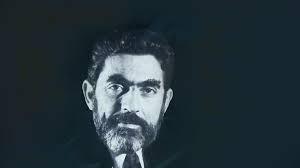



Ümit Yaşar Oğuzcan was born in the Tarsus district of Mersin. His childhood was marked by hardship, and he even described his life as “a trial.” From the age of three, he endured various accidents, illnesses, and surgeries: appendicitis at 14, kidney surgery at 19 (he had only one kidney), and tonsillectomies at 30. His early interest in poetry stemmed largely from his family’s love of poetry and his admiration for the famous poets of his time, Faruk Nafiz Çamlıbel. His earliest poetic attempts were in the style of Faruk Nafiz. He completed primary school in three different cities and attended three separate middle schools. His peers often called him “the poet.” The separation of his parents during his elementary years left deep scars on Oğuzcan, and these were the years in which he turned to poetry as an escape and sought to alleviate his sorrows through writing. During his high school years, poetry became a profound passion for him.
His poems have been translated into French, English, Russian, Bulgarian, Polish, Romanian, and Arabic, and included in various anthologies. Approximately 150 of his poems have been set to music in Turkish art music and light Western music styles by composers such as Münir Nurettin Selçuk, Rüştü Şardağ, and Avni Anıl. He was honored with two jubilees, marking the 25th and 40th years of his artistic career. He recorded five poetry albums. Ümit Yaşar Oğuzcan should not be regarded merely as a poet of love poetry; he also wrote rubai and satirical poems. He attempted suicide three times in his life.
He began his banking career in 1946 at the Ottoman Bank in Ankara and continued it after joining Türkiye İş Bankası in 1947. After working at branches in Adana, Turgutlu, Niğde, and Ankara, he settled in Istanbul in 1961. After retirement, he entered publishing and founded Ümit Yaşar Yayınevi in Istanbul to publish his own works. He later held positions at Akbank and İş Bankası Kültür Yayınları. In 1980, he established and managed an art gallery in Istanbul bearing his own name.
He began writing poetry at the age of ten, and his first poem was published in 1942 in the Eskişehir newspaper Kocatepe. His poems and writings appeared in numerous magazines and newspapers such as Varlık, Büyük Doğu, Hisar, Akbaba, and Hürriyet.
Ümit Yaşar was an original poet who never belonged to any literary movement. The most important feature of his poetry was his integration of his life story into his verses. To him, poetry was an innate divine gift requiring great effort to develop. He viewed poetry as the product of inspiration and believed it could not be forced. He used a clean, unadorned language in his poems and composed over a thousand poems with strong metrical structures. He believed in the necessity of harmony and musicality in poetry. He divided his poetic life into five periods:
1941–1954: The Awakening Period: During this period, he published the books İnsanoğlu (1947), Deniz Musikisi (1949), and Dillere Destan (1954).
1954–1960: The Search Period: In this phase, he explored individual, philosophical, and social themes, experimenting with various forms such as the rubai.
1960–1964: The Turbulence Period: He began to be known as a “poet of love.”
1964–1970: The Boiling Period: He was criticized for his intense focus on love themes and turned toward social and political satire.
1970–1982: The Stabilization Period.
The main themes in Ümit Yaşar’s poetry are romantic love, women, separation, death, helplessness, loneliness, pessimism, despair, insecurity, disappointment, and complaint. He believed in the primacy of love before poetry, and people—especially women—were his primary sources of inspiration. He identified himself as a love poet but wrote poems expressing love that gave without expecting reciprocation. Alongside human love, in poems such as “Milyon Kere Ayten,” he embodied love and the beauty of life through specific names. Sexual elements occasionally appear in his romantic love poems.
Loneliness, death, and helplessness frequently appear alongside love in his poems. The suicide of his son Vedat in 1973 intensified the presence of death in his poetry, and emotions such as separation, rebellion, helplessness, and despair became more pronounced in his works from this period.
Ümit Yaşar Oğuzcan (TRT Archive)
Oğuzcan employed Divan, Folk, and Western poetic forms in his poetry, experimenting with every meter and structure from mesnevi to sonnet, from aruz to syllabic verse, and writing metrical and rhymed poems. It is noted that the sonnet was his most favored form. He generally categorized his poems into four types: lyric poems (love and emotion), satire and invective, rubai, and prose poetry.
Rubai (Quatrains): Regarded as one of the modern masters of the rubai, Oğuzcan treated themes such as love, death, affection, and pessimism with profound and concise thought, using a clear and uncluttered language in his rubai and quatrains.
Satires (Invectives): Although he wrote relatively few satirical poems, these works brought him great fame. He collected his satires in books such as Sadrazamın Sol Kulağı, Taşlar ve Başlar, Akıllı Maymunlar, İnşallahla Maşallahla, Göbek Davası, and Dikiz Aynası. He began writing satirical poetry in 1955, aiming to reflect Turkey’s political and social conditions over three decades. Süleyman Demirel was the politician he satirized most frequently. The most significant feature of his satire was his refusal to blindly support any party or ideology.
Ümit Yaşar’s poetry attracted both attention and criticism during his time. While some critics adopted a positive stance (İlhan Geçer, Bekir Sıtkı Erdoğan, İlhami Soysal, Orhan Seyfi Orhon, Vecdi Bürün, Ulunay), others expressed negative views (Yusuf Ziya Ortaç, Nurullah Ataç, Şevket Rado, Celâleddin Çetin, M. Sunullah Arısoy). Positive critiques generally focused on his unique, personal, clean, and inaccessible poetic language. Negative critiques, by contrast, mostly criticized him for writing too many poems and following an unproductive path. The poet considered these criticisms unjust, asserting that he wrote only what he felt and that his critics were inadequate.

Professional and Artistic Life
Poetic World and Style
Themes
Poetic Forms and Structures
Critical Reception