


This article was automatically translated from the original Turkish version.
+1 More
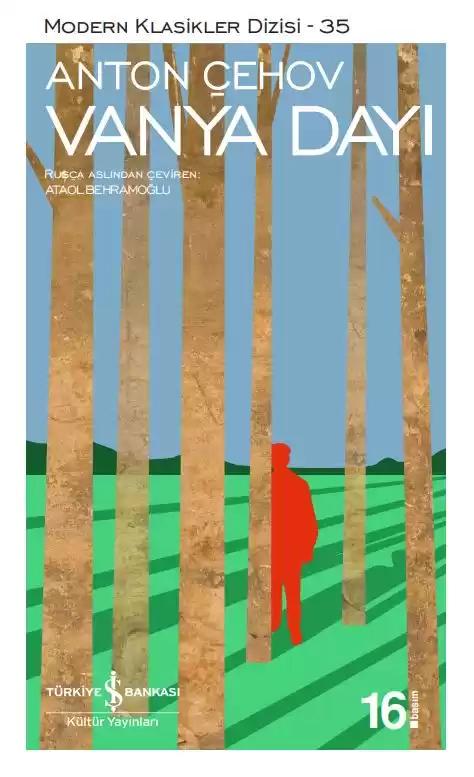
Uncle Vanya (Book)
Author(s) | Anton Pavlovich Chekhov | ||||||||
|---|---|---|---|---|---|---|---|---|---|
Type(s) | Theatre (Published as a book) | ||||||||
Original Language | Russian | ||||||||
Publisher(s) | İş Bankası Culture Publications | ||||||||
Uncle Vanya is a four-act play written by Russian author Anton Pavlovich Chekhov. It was first performed in 1899 at the Moscow Art Theatre. Written during Chekhov’s mature period, this work explores rural life in Russia, the inner conflicts of individuals, and observations on social structure. In this play, Chekhov shifts focus away from dramatic plot toward the psychological states of characters and the mundane flow of everyday life, making it influential in the development of modern theatre.
The story centers on the lives of characters residing in an estate in the Russian countryside. The estate belongs to Aleksandr Serebryakov, a retired professor who arrives with his young wife, Yelena, and reunites with other family members living there. Vanya (Ivan Voynitsky) has devoted his life to managing the professor’s property. The professor’s arrival brings to light Vanya’s disappointments, despair, and regrets regarding his past. Central conflicts in the play include Vanya’s unrequited love for Yelena, Doctor Astrov’s concerns about the environment, and the general sense of hopelessness the characters feel toward life. The narrative is built not around dramatic events but around the internal unraveling of the characters’ psyches.
Uncle Vanya addresses themes such as individual unhappiness, the search for meaning in life, unrequited love, social expectations, and environmental awareness. Chekhov uses his characters to reveal how individuals cope with disillusionment and how social structures affect them. Through the character of Astrov, the play presents a critical perspective on environmental destruction and ecological harm. In this regard, the play distinguishes itself from contemporary theatrical works of its time and presents a structure grounded primarily in psychological analysis.
The play is written in the form of a dramatic text and unfolds primarily through dialogue. Chekhov’s language is simple and natural. The characters’ emotional states and internal conflicts are conveyed through their conversations rather than through external action. Psychological states take precedence over dramatic plot development. Chekhov’s approach to theatre, which opposes classical dramatic structure, helped pioneer modern theatrical movements.
Chekhov’s character-centered approach to theatre significantly influenced the development of 20th-century modern drama. The play diverges from classical theatrical conventions by placing individual psychology at its core.
Çehov, Anton Pavloviç. Vanya Dayı. Çev. Ataol Behramoğlu. İstanbul: Türkiye İş Bankası Kültür Yayınları, 2014.

Uncle Vanya (Book)
Author(s) | Anton Pavlovich Chekhov | ||||||||
|---|---|---|---|---|---|---|---|---|---|
Type(s) | Theatre (Published as a book) | ||||||||
Original Language | Russian | ||||||||
Publisher(s) | İş Bankası Culture Publications | ||||||||
Plot
Themes
Style and Narrative Features
Significance of the Work