


This article was automatically translated from the original Turkish version.
Glass painting is a traditional folk art created by applying paint to the reverse side of glass surfaces. In this technique, the composition is applied in reverse; that is, texts, patterns, and figures are planned as mirror images so that they appear correctly when viewed through the glass. During the painting process, work begins with contour drawing and details, followed by coloring in the final stage. In addition to water-based or synthetic paints, materials such as gold leaf, fabric, collage elements, mirrors, and photographs are also used in glass paintings.
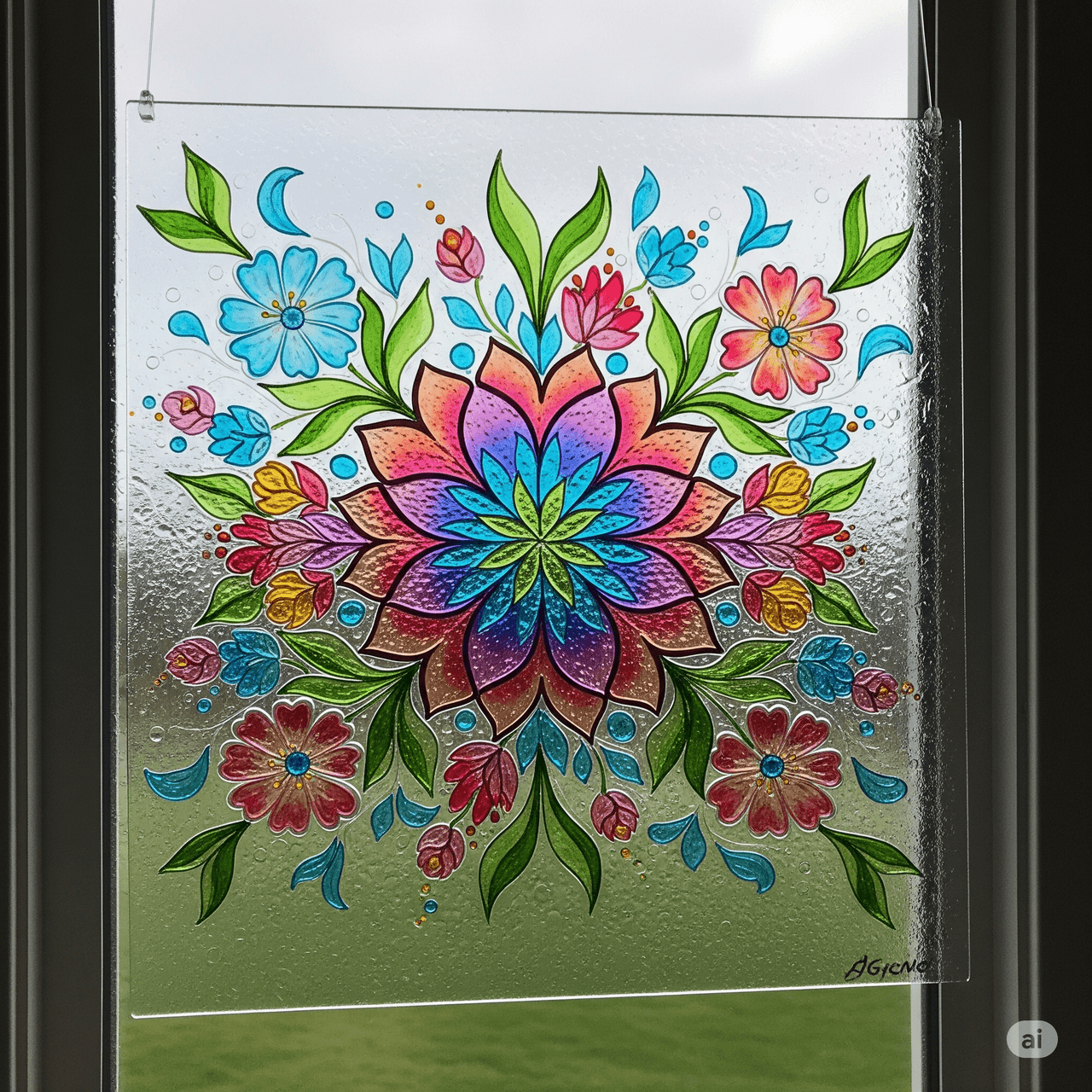
Glass Painting Art (Generated by Artificial Intelligence)
In the late 19th century, glass paintings became widespread in Anatolia due to their low cost and ease of production. These works, which carried religious, social, and literary themes, were frequently displayed in homes, coffeehouses, mosques, and tekkes. Changes in public aesthetic preferences and the fragile nature of glass led to the gradual decline and forgetting of this art form. Nevertheless, today production continues, driven by artists and collectors who seek to preserve and revive traditional examples.
Characteristic aesthetic features of glass painting include the dominant use of bright, flat colors, the near absence of light and shadow, and the superficial, simplified treatment of figures. The narrative style reflects the intellectual and belief systems of the people. In this sense, glass paintings have been regarded not merely as aesthetic objects but also as talismans, omens, and protective elements.
Glass paintings encompass a broad range of subjects. The themes depicted reflect the beliefs, emotions, and imaginations of the people and are also seen as visual expressions of cultural memory. These themes can be grouped under the following categories:
Examples include simplified renderings of sacred inscriptions such as Allah, the Prophet, and the Kalima-i Tawhid. The primary function here is spiritual protection and sacred remembrance.
Compositions that combine figurative elements with texts such as mosques, water jugs, the Amentü Ship, Sufi orders, the sword of Hz. Ali (Zulfiqar), and “Ah Minel Aşk.” In this type, the relationship between text and image becomes particularly evident.
Traditional depictions of holy cities such as Mecca and Medina. These images serve as objects symbolizing pilgrims’ devotion to sacred lands.
Figurative scenes portraying heroes from folk narratives such as Ferhat and Shirin, Köroğlu, and Şahmeran. These scenes are typically simple, comprehensible, and narrative-focused.
Compositions incorporating historical references such as the Hejaz Railway, Ottoman tughra seals, and heraldic motifs. These themes highlight visual allusions to national identity and historical memory.
Each theme demonstrates that glass painting is not only a visual medium but also a form of intellectual and cultural communication. This visual bridge between traditional folk narratives and historical identity reflects the deep connection between the art and the people.
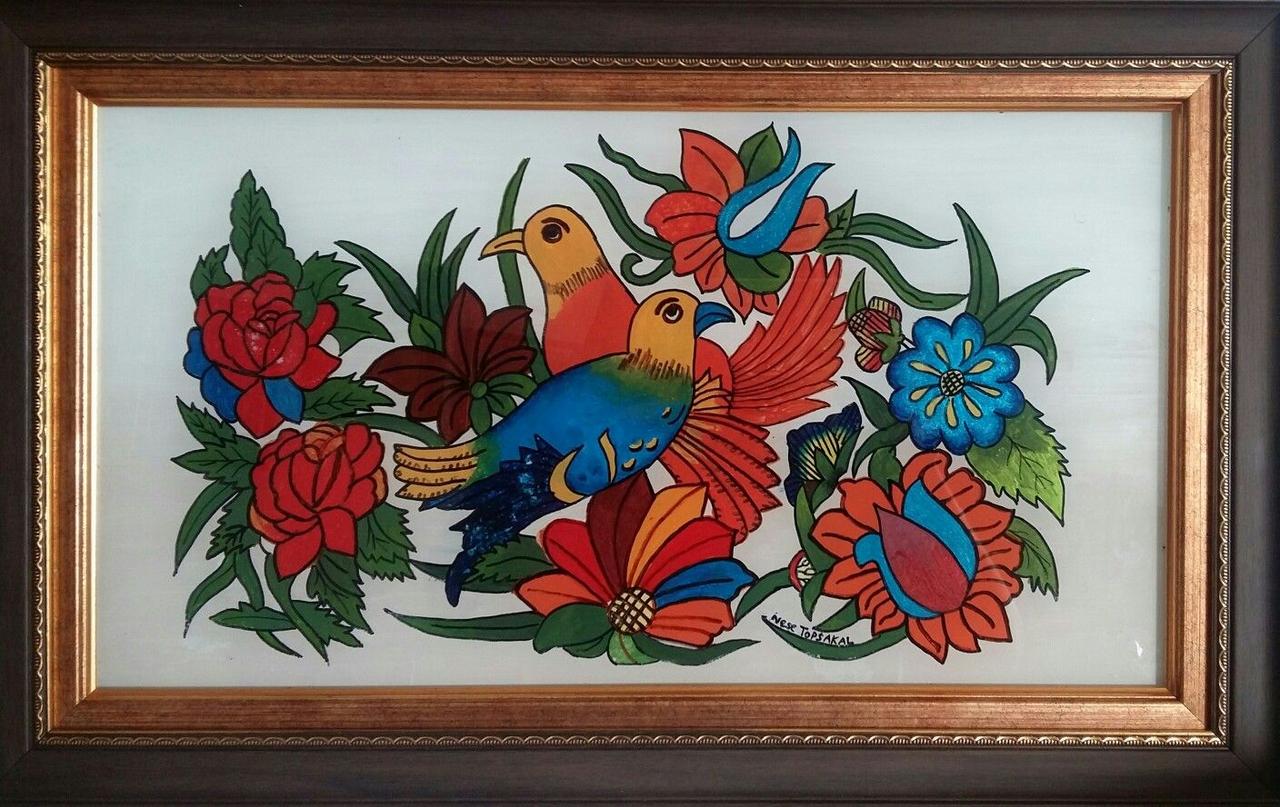
Glass Painting Art (Go Konya)
Since the early 20th century, glass painting has been associated with modern art in the West. Artists such as Wassily Kandinsky, Pablo Picasso, Marcel Duchamp, and Jackson Pollock showed interest in this technique. Today, artists like Dustin Yellin, Xia Xiaowan, and Thomas Medicus have expanded glass painting into experimental realms of contemporary art by creatively engaging with glass’s layered and translucent qualities. In Türkiye, artists such as Neveser Aksoy, Yücel Dönmez, and Mevlüt Akyıldız have produced original works by blending traditional styles with contemporary techniques.
Through the use of techniques such as layering on glass, light experimentation, collage, and assemblage, contemporary artists have transformed glass painting from a static folk art into a dynamic and evolving expressive field. Artists incorporate glass’s transparency, ephemerality, and structural properties into their artistic language, both conceptually and formally.
Glass painting is a mode of expression that retains traditional technical roots while gaining new dimensions through its relationship with contemporary art. Its ability to carry traces of the past and offer artists unlimited narrative possibilities through the physical properties of glass demonstrates its potential to carve new paths within current art practices. By preserving cultural memory while remaining open to innovative techniques and approaches, glass painting has become a visual language that speaks not only to the past but also to the future.
Documentary on Glass Painting Art (Muhammed Gece)
Gokonya. "Camaltı Resim Yapımı." *GoKonya*, Accessed July 1, 2025. https://gokonya.com/tr/camalti-resim-yapimi-1
Güray, Emel. “Camaltı Resim Sanatına Güncel Yaklaşımlar.” *Akdeniz Sanat Dergisi* 15, no. 28 (2021): 269–286. https://doi.org/10.48069/akdenizsanat.946107
YouTube. "Camaltı Resim Sanatı." YouTube video, 11:11. Published by Muhammed Gece. February 25, 2020. Accessed July 1, 2025. https://www.youtube.com/watch?v=nzJcBhQfpoA

No Discussion Added Yet
Start discussion for "Underglaze Painting Art" article
Historical Background
Aesthetic Structure and Cultural Function
Themes and Composition Types
Texts
Text-Images
Landscapes
Folk Tales
Political and Historical Elements
Modern and Contemporary Interpretations
New Forms of Expression and Interpretations