


This article was automatically translated from the original Turkish version.
+2 More
Ünye Castle is a historical structure located in the Ünye district of Ordu Province in Türkiye’s Black Sea Region. It is also known as Çaleoğlu Castle or Kaleköy Castle. The castle is situated within the boundaries of Kale Köyü, on the left side of the Ünye-Niksar highway, at the 7th kilometer mark. It lies approximately 5 to 7 kilometers from the district center. The hill on which the castle stands is about 300 meters above sea level.
The construction of Ünye Castle dates back to around 250 BCE. It was built by Mithridates II, ruler of the Pontic Kingdom, which had Iranian origins. Throughout history, the structure has been used by various peoples and underwent repairs in different periods. It served military and strategic purposes during the Roman, Pontic, Byzantine, and Ottoman eras. During the Ottoman period, the castle’s entrance gate was constructed and its walls were last reinforced.

Ünye Castle. (Ministry of Culture and Tourism of the Republic of Türkiye)
The castle is largely built upon a single massive rock formation. On this natural structure, various walls, passageways, rock-cut tombs, caves, and structural remains are found. Surrounding the castle is a four-stage wall system. Inside the castle, water cisterns, bathhouse remains, water channels, and various architectural traces have been identified.
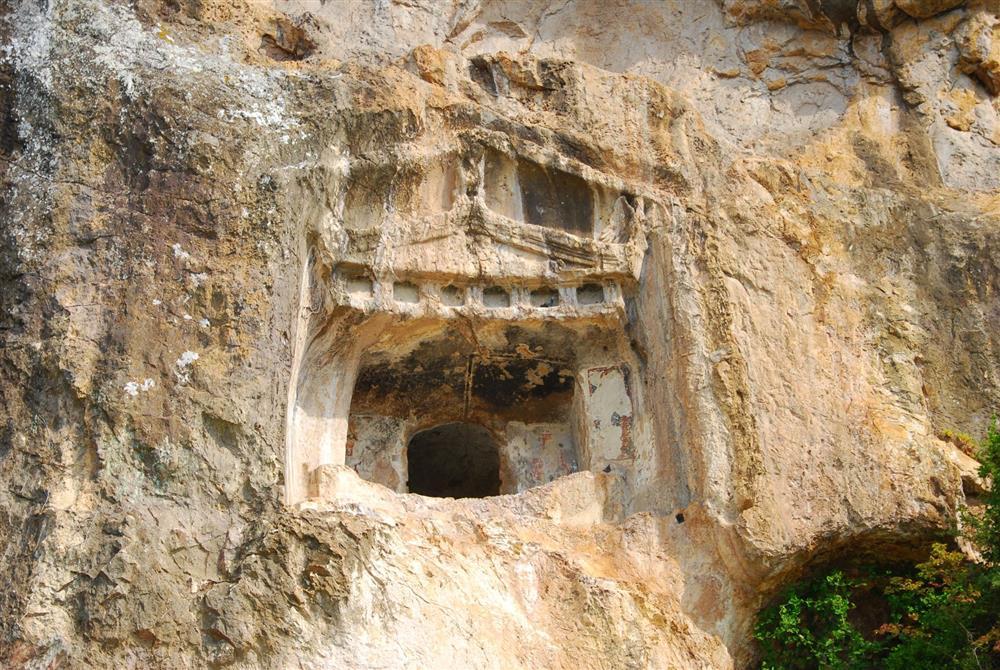
To the left of the castle’s entrance gate, at a height of approximately 8 meters above ground level, a rock-cut tomb has been carved directly into the main rock. This tomb follows the style of Paphlagonian rock-cut tombs and is generally attributed to Mithridates II of the Pontic period. Additionally, royal tombs have been carved into vertical cliffs about 10 meters above the castle’s vicinity.
On the upper sections of the castle, two passageways face the northwest. One of them was constructed with a 45-degree incline and contains approximately 420 steps. These passageways are believed to have provided access from the lower parts of the castle to the exterior. It is known that during the Roman-Pontic wars, the Roman commander Pompey destroyed these passageways by blocking them with large rock fragments, rendering them unusable.

Ünye Castle. (Ministry of Culture and Tourism of the Republic of Türkiye)
During the early Christian period, the central section of the castle was used as a sacred area, and a church is known to have existed there. The columns on either side of the rock-cut tomb at the entrance were removed during this period to make way for frescoes. The castle also contains caves, wells, and various infrastructural elements used to access water sources.
During the Republican era, the Turkish flag was erected at the castle. Today, the castle holds archaeological and touristic value. Access to the castle from Ünye town center is possible by private vehicle or taxi. An asphalt road leads to the site, but there is no regular minibus service. The castle is reached via a one-kilometer detour from the Ünye-Niksar highway.
Under a protocol signed with the Ministry of Culture and Tourism, archaeological excavations at the castle are planned to begin.
According to Professor John Frelly of Boğaziçi University, the castle referred to as “Atmaca Castle” in the 14th-century romance Mélusine, written by Jean d’Arras, is Ünye Castle. The romance tells the story of a queen held captive within the castle.
Video titled “We Visited Kurul and Ünye Castle.” (TRT Documentary YouTube Channel)
Kaleköy Kalesi Rock Tombs, Ünye/Ordu. Ministry of Culture and Tourism of the Republic of Türkiye. Accessed May 10, 2025.
TRT Belgesel. "Ordu'da Kurul ve Ünye Kalesi'ni Gezdik." YouTube video. Accessed May 10, 2025.
Ünye Kalesi Is Opened to Tourism (December 25, 2023). Ministry of Culture and Tourism of the Republic of Turkey. Accessed May 10, 2025.
Ünye Kalesi. Karadeniz Turizm Portalı. Accessed May 10, 2025.
Ünye Kalesi. Ünye Belediyesi Resmî Web Sitesi. Accessed May 10, 2025.
Ünye Kaymakamlığı. T.C. Ünye District Governorship. Accessed May 10, 2025.
Ünye. T.C. Ordu Valiliği. Accessed May 10, 2025.

History
Architectural Features
Religious and Cultural Use
Modern Era and Access
Literary Reference