 Recently Added:
This article was automatically translated from the original Turkish version.
U.S.-Saudi Arabia Joint Air Operation in Iraq (July 2026) is a joint air strike conducted on 29 July 2026 by the United States Central Command (CENTCOM) and the Saudi Arabian Armed Forces against targets affiliated with Iran-aligned armed groups in Iraq. The operation was carried out following a series of unmanned aerial vehicle (UAV) attacks on Saudi Arabia’s Eastern Region and Riyadh’s oil facilities from Iraqi territory on 27–28 July 2026. Numerous individuals affiliated with groups within Iraq’s Hashd al-Shaabi (Popular Mobilization Forces/PMF) were killed and wounded in the air strikes.
In the hours following the operation, the Islamic Revolutionary Guard Corps (IRGC) targeted U.S. military facilities in Jordan with ballistic missiles. These developments have been assessed as part of the regional military escalation that began in February 2026 within the context of the U.S.-Israel-Iran conflict.
The Saudi Ministry of Defense stated on 27 July 2026 that its air defense systems detected and destroyed numerous UAVs launched from Iraqi territory aimed at oil facilities in the Eastern Region and Riyadh. The statement alleged that these attack attempts were carried out from Iraqi territory by “terrorist militias” linked to Iran.
On the same day, the Saudi Ministry of Foreign Affairs strongly condemned the UAV attacks, which it attributed to “Iran-backed militias” in Iraq. The statement affirmed that the Riyadh government reserved its right to legitimate self-defense against the source of the attacks and called on the Iraqi government to take all necessary measures to prevent its territory from being used as a base for such assaults.
On 28 July 2026, the Saudi Ministry of Defense again reported that UAVs launched from Iraq targeting oil facilities in the eastern part of the country had been intercepted and destroyed by air defense systems.
According to Iran’s state media outlet IRIB, an unnamed Iranian military official stated that Iran had no connection to missiles allegedly launched from other countries against Saudi Arabia and asserted that attributing any action against U.S. interests to Iran constitutes a “major miscalculation stemming from a lack of awareness of the region’s situation.”
The Islamic Resistance Organization in Iraq, in a written statement on 28 July 2026, denied responsibility for UAV attacks targeting points in Riyadh and Yanbu involved in crude oil transport and supply, and instead called for the lifting of the blockade on Yemen.
On the evening of 27 July 2026, Arab countries and regional organizations issued statements condemning the attacks on Saudi Arabia’s oil facilities. The Qatari Ministry of Foreign Affairs stated that a UAV launched from Iraqi territory targeting Saudi oil facilities constituted a clear violation of Saudi sovereignty and a threat to its territorial integrity. The United Arab Emirates Ministry of Foreign Affairs reaffirmed its full solidarity with Saudi Arabia against the attacks.
Bahrain Ministry of Foreign Affairs, labeled the attack a “terrorist” act, characterizing it as a clear violation of international law and the UN Charter, as well as a threat to regional security and stability and energy supplies. Kuwait Ministry of Foreign Affairs, condemned the attacks, emphasizing they were carried out by UAVs launched from Iraqi territory by “Iran-backed militias.” Oman Ministry of Foreign Affairs, expressed support for Riyadh’s measures to safeguard its sovereignty, security and territorial integrity. Egypt Ministry of Foreign Affairs, strongly condemned the attacks and demanded their immediate cessation. Jordan Ministry of Foreign Affairs, described the attacks as a “clear violation of the sovereignty of brotherly Saudi Arabia.” Lebanese President Joseph Aoun and Libya Ministry of Foreign Affairs also issued statements condemning the attacks.
Gulf Cooperation Council (GCC) Secretary General Jasem Mohamed Albudaiwi stated that member states stand in unity with Saudi Arabia and support all measures taken to protect Riyadh’s security, sovereignty and territorial integrity. He characterized the attacks by Iran-aligned militias in Iraq as a dangerous escalation threatening regional peace and security. Bahrain commended Saudi Arabia’s air defense systems for detecting and destroying UAVs before they reached their targets.
Saudi Foreign Minister Prince Faisal bin Farhan Al Saud conducted telephone consultations on 29 July 2026 with his counterparts in Qatar, Kuwait and Bahrain. During the talks, ministers emphasized the importance of continuing efforts to de-escalate tensions and noted that guaranteeing freedom of navigation in the Strait of Hormuz and the Bab al-Mandab Strait would help mitigate the crisis’s security and economic impacts. The parties also condemned Iran’s attacks through affiliated armed groups in Iraq and Yemen and stressed the importance of maintaining coordination within the Gulf Cooperation Council (GCC).
Pakistan’s Permanent Representative to the United Nations Asim Iftikhar Ahmad, in a speech at the UN Security Council, expressed concern over rising tensions in the Middle East and called on all parties to abide by the commitments made in the ceasefire agreement signed between Iran and the United States last month. Ahmad, recalling Pakistan’s mediation role in U.S.-Iran talks, expressed deep concern over attempts to drag Saudi Arabia into conflict and affirmed support for Saudi Arabia’s security, sovereignty and territorial integrity.
On 27 July 2026, Iraqi Prime Minister Ali al-Zeydi ordered an investigation into claims that Saudi Arabia had been targeted by UAVs launched from Iraqi territory. According to a statement from the Prime Minister’s Press Office, Zeydi directed security agencies to examine the information provided by the Saudi Ministry of Defense. The statement emphasized Iraq’s commitment to good neighborly principles and affirmed that Iraqi territory would not be permitted to serve as a transit route or launch point for attacks against friendly or brotherly nations.
Prime Minister Zeydi is expected to make an official visit to Saudi Arabia on 30 July 2026 to sign memoranda of understanding in various fields and address security coordination and regional developments; however, this visit has been postponed following the U.S.-Saudi strike on 29 July.
On 28 July 2026, the U.S. military announced that it had conducted air strikes alongside the Saudi Arabian Armed Forces against targets affiliated with Iran-backed groups in Iraq.
The U.S. Central Command (CENTCOM) stated in its announcement that CENTCOM and the Saudi Arabian Armed Forces carried out precision strikes in Iraq against Iran-aligned targets that it alleged were directed by the Islamic Revolutionary Guard Corps (IRGC) to attack U.S. forces and Saudi energy infrastructure.
According to the statement, U.S. and Saudi warplanes targeted multiple logistics and weapons storage facilities in various regions of eastern Iraq in response to more than 30 UAV attacks directed by the IRGC within the previous 72 hours. The CENTCOM statement included the assertion that “unprovoked attacks against U.S. forces have failed.” It also alleged that Iran-aligned groups in Iraq had launched over 600 attack attempts against U.S. citizens and facilities between February and April 2026 and warned that further failure by the IRGC and its affiliated groups to halt such attacks could lead to renewed U.S. military intervention.
Saudi Defense Ministry Spokesperson Major General Turki al-Maliki stated that Saudi air defense systems had intercepted and destroyed numerous UAVs on 27 July and the previous day targeting oil facilities in the Eastern Region and Riyadh. Maliki claimed the attacks originated from Iraqi territory and were orchestrated by Iran-aligned militias, asserting that Saudi Arabia possessed the inherent right to defend itself and its assets and that the Riyadh government reserved the right to respond at a time and place of its choosing.
Maliki stated that under Article 51 of the UN Charter, which guarantees the right to legitimate self-defense, the Saudi Arabian Armed Forces, in coordination with CENTCOM, conducted “specific and pinpoint strikes” against Iraqi targets linked to Iran-aligned militias responsible for attacks on Saudi oil facilities. He emphasized that Saudi Arabia was not seeking escalation but would respond to any attack against its territory.
In a separate statement, the Saudi Ministry of Foreign Affairs said that during a period in which it was actively working to preserve its security and stability and end regional tensions, it had become the target of attacks by Iran-aligned militias in Iraq. The statement argued that these attacks constituted “irresponsible escalation,” violated international law, and that Iran-aligned militias had chosen a path of irresponsible tension escalation, breached international law, and disregarded Islamic brotherhood requiring adherence to good neighborly principles.
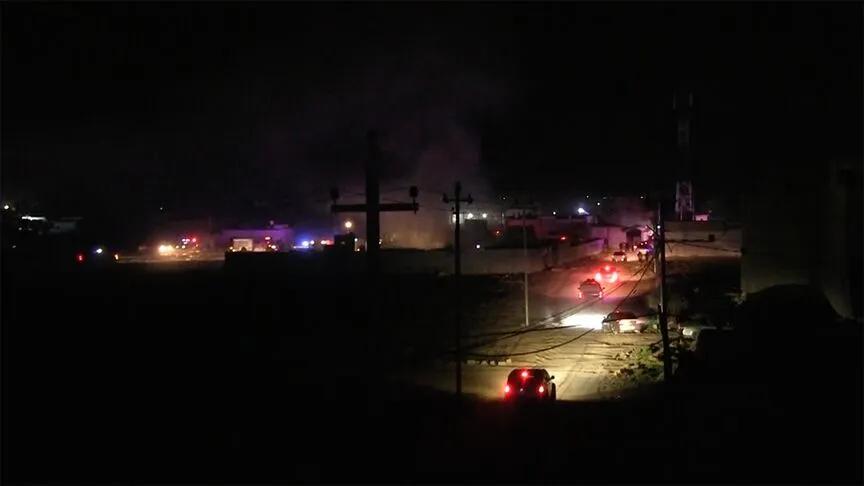
According to reports in the Iraqi press following the U.S.-Saudi joint air strikes, an explosion occurred at an operational center in the al-Deyr region of Basra Governorate housing Hashd al-Shaabi facilities including munitions depots. In Suwayra District of Wasit Governorate, the El-Feth al-Mubin Camp affiliated with the Iran-backed Nujaba Movement was targeted.
In its initial statement, the Hashd al-Shaabi Ninova Operations Command reported that eight individuals were killed and four wounded in attacks on Hashd al-Shaabi positions in northern Iraq. In a later updated and detailed statement, Hashd al-Shaabi announced that at least 20 of its members had been killed and 32 wounded in the U.S.-Saudi joint strikes. The statement indicated that the attacks targeted official Hashd al-Shaabi centers in Baghdad, Wasit, Ninewa, Basra, Kirkuk, Karbala and Diyala governorates, causing damage to buildings, vehicles and military equipment. It noted that damage assessment and fact verification processes were ongoing and that the reported figures were preliminary estimates.
In a statement by the Hashd al-Shaabi Media Directorate, the strikes were characterized as “a violation of Iraq’s sovereignty and targeting of official security institutions,” and described as a “highly dangerous escalation.” The group further labeled the attacks on Telegram as a “treacherous terrorist strike orchestrated by Saudi Arabia and the United States” and declared its units to be on full alert.
Following the nighttime air strikes by the United States and Saudi Arabia, Iraqi Prime Minister Ali al-Zeydi convened an emergency meeting of the National Security Council of Ministers. According to the official Iraqi news agency INA, a detailed statement would be issued following the meeting.
Iraqi President Nizar Amedi condemned the Saudi-American strike as “unacceptable” and “a clear violation of Iraq’s sovereignty and international law and the UN Charter,” reiterating that Iraqi territory must not be used as a base for attacks against neighboring countries or as an arena for regional and international disputes.
Former Iraqi Prime Minister Muhammad Shia al-Sudani characterized the attack as “a clear violation of Iraqi sovereignty and a breach of international law and the UN Charter.” He noted that the timing of the strike, following the Iraqi government’s establishment of committees to investigate claims that UAV attacks on Saudi oil facilities originated from Iraqi territory, raised numerous questions.
Iraqi cleric Muqtada al-Sadr called on the IRGC and its affiliated militias to avoid launching attacks from Iraqi territory and to refrain from dragging the country into another war. Al-Sadr stated, “Rebel militias must not provide a pretext for our Gulf brothers to target our sacred lands.”
The Iranian Ministry of Foreign Affairs condemned the U.S. and Saudi air strikes against targets affiliated with Tehran-backed groups in Iraq. In a written statement, the ministry asserted that the strikes violated Iraq’s sovereignty and territorial integrity and contravened the UN Charter. It emphasized Iran’s solidarity with the Iraqi government and people and held the United States and its regional allies responsible for the consequences of the attacks on Iraq.
The Iranian Ministry of Foreign Affairs further described the strikes as “an open aggression against Iraq’s national sovereignty and territorial integrity,” labeling the deadly attacks as a “serious violation of international law” and consistent with the “intentions of the United States and the Zionist regime to expand the scope of the conflict.” The ministry expressed condolences to the families of the Iraqi civilians killed in the strikes, reaffirmed Iran’s full solidarity and support for the Iraqi government and people, and held the U.S. regime and its regional accomplices accountable for the dangerous consequences of these “criminal, inhumane and provocative acts.”
In the early hours of 29 July 2026, the Islamic Revolutionary Guard Corps (IRGC) announced that it had targeted U.S. military facilities in Jordan with ballistic missiles. According to the statement carried by Iran’s state television IRIB, multiple ballistic missiles were launched at a U.S. air base in Jordan and a command center belonging to the U.S. Central Command (CENTCOM); it was stated that Iran would continue to respond as long as threats against it and the United States’ “illegal and malicious actions” persisted.
The Jordanian Armed Forces announced that its air defense systems had detected and neutralized five ballistic missiles originating from Iran. CENTCOM confirmed that all missiles targeting U.S. installations in the Middle East had been intercepted, describing the incident as a surprise attack attempt, but did not clarify whether the strike occurred before or after the U.S.-Saudi joint air operation in Iraq.
Al Jazeera. “Iran Hits US in Jordan, US-Saudi Strikes on Iraq: Is War Spreading?” Al Jazeera. Accessed July 29, 2026.https://www.aljazeera.com/news/2026/7/29/iran-hits-us-in-jordan-us-saudi-strikes-on-iraq-is-war-spreading
Al Jazeera. “Iran War Live: 20 Killed in US-Saudi Attack on Iraq; IRGC Targets Jordan.” Al Jazeera. Accessed July 29, 2026.https://www.aljazeera.com/news/liveblog/2026/7/29/iran-war-live-us-accuses-irgc-of-surprise-ballistic-missile-attacks
Al Jazeera. “Iraqi Armed Groups Condemn ‘Dangerous Escalation’ After US-Saudi Strikes.” Al Jazeera. Accessed July 29, 2026.https://www.aljazeera.com/news/2026/7/29/saudi-arabia-us-carry-out-strikes-on-iran-backed-groups-in-iraq
Al Jazeera. “ضربات أمريكية سعودية في العراق ضد مليشيات موالية لإيران.” Al Jazeera Arabic. Accessed July 29, 2026.https://www.aljazeera.net/news/2026/7/29/
Anadolu Ajansı. "Suudi Arabistan: Irak Topraklarından Doğu Bölgesindeki Petrol Tesislerini Hedef Alan İHA'lar Engellendi." Accessed July 29, 2026.https://www.aa.com.tr/tr/dunya/suudi-arabistan-irak-topraklarindan-dogu-bolgesindeki-petrol-tesislerini-hedef-alan-ihalar-engellendi/4011994
Anadolu Ajansı. "US, Saudi Forces Strike Iran-Backed Groups, Sites in Iraq: CENTCOM." Accessed July 29, 2026.https://www.aa.com.tr/en/us-israel-iran-war/us-saudi-forces-strike-iran-backed-groups-sites-in-iraq-centcom/4012040
Anadolu Ajansı. “GCC, Arab Countries Back Saudi Arabia After Drone Attacks on Oil Facilities.” Accessed July 29, 2026.https://www.aa.com.tr/en/us-israel-iran-war/gcc-arab-countries-back-saudi-arabia-after-drone-attacks-on-oil-facilities/4012474
Anadolu Ajansı. “Son Gelişmeler ➜ ABD'nin İran'a Yönelik Saldırıları ve İran’ın Misillemeleri.” *Anadolu Ajansı Live Blog*. Accessed July 29, 2026.https://www.aa.com.tr/tr/live-blog/son-gelismeler-abdnin-irana-yonelik-saldirilari-ve-iran-in-misillemeleri/6067
BBC News. “Saudi Arabia Joins US in Strikes on Iran-Backed Militias in Iraq.” Accessed July 29, 2026.https://www.bbc.com/news/articles/c70g6y24d76o
CNN Arabic. “عدد القتلى والجرحى بالضربة السعودية الأمريكية في العراق وفقا للحشد الشعبي.” Accessed July 29, 2026.https://arabic.cnn.com/middle-east/article/2026/07/29/us-saudi-strikes-in-iraq-kill-20-wound-32-iran-aligned-militia-says

Following drone attacks on oil facilities in Saudi Arabia from Iraqi territory, the United States and Saudi Arabia conducted joint air strikes against targets associated with armed groups in Iraq on 29 July 2026. The strikes resulted in numerous casualties and injuries among members of Hashd al-Shaabi. In response, Iran targeted U.S. military facilities in Jordan with ballistic missiles; Jordan and the United States announced that their air defense systems had neutralized the missiles.
No Discussion Added Yet
Start discussion for "U.S.-Saudi Arabia Joint Air Operation in Iraq (July 2026)" article
July 29, 2026
UAV Attacks from Iraqi Territory Targeting Saudi Arabia
July 29, 2026
Regional and International Reactions
July 29, 2026
Iraq’s Response and Investigation Process
July 29, 2026
U.S.-Saudi Arabia Joint Air Strikes Targeting Iraq
July 29, 2026
Casualties and Targeted Areas
July 29, 2026
Iraq’s Response to the Air Strikes
July 29, 2026
Iran’s Response
July 29, 2026
Iran’s Missile Strike on U.S. Facilities in Jordan