
This article was automatically translated from the original Turkish version.
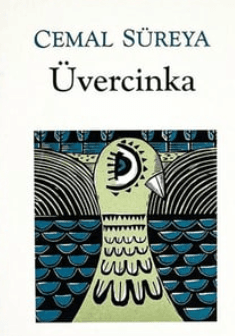
Üvercinka is Cemal Süreya’s first poetry collection, published in 1958. As one of the pioneers of the Second New movement, which transformed the course of modern poetry in Türkiye, Süreya’s book also reveals the foundational elements of his poetic vision. The collection centers on the poem titled “Üvercinka” and explores themes such as love, eroticism, individuality, freedom, and modern life. Süreya’s highly imagistic and allusive poetic language is prominently displayed in this work.
The Second New was a poetic movement that emerged in Turkish poetry during the 1950s, shifting focus from meaning to imagery, from tradition to individuality, and from simplicity to density. Cemal Süreya, one of the leading figures of this movement, entered the ranks of its most influential representatives with Üvercinka. While rejecting traditional forms and themes, Süreya developed a unique poetic sensibility that fused everyday language with aesthetic innovation. In this regard, Üvercinka transcends the status of a mere individual poet’s collection and is regarded as a concrete manifestation of the poetic inquiries of its era.
Üvercinka is a multilayered poetry collection thematically, intertwining the poet’s personal world with social observations to enable multiple levels of interpretation.
Cemal Süreya’s poems are texts that interrogate individual existence. The poet’s subjective experiences, sensitivities, and inner conflicts are intensely felt throughout his verses. Sometimes a childhood memory, sometimes a sense of loneliness, and sometimes an urban landscape serve as gateways into the depths of personal memory, evoking empathetic resonance in the reader.
In addition to individual themes, the poems also contain social observations. Concepts such as bureaucracy, urban life, and class differences are subtly suggested in the background of the poems. However, these themes are not treated through direct or didactic language but rather through imagistic and allusive expression.
The thematic structure is directly linked to the structural use of language. Cemal Süreya constructs a poetic form that leaves meaning open to the reader, distancing himself from traditional modes of expression. Unconventional chains of imagery, syntactic disruptions, and polysemy enhance the thematic depth of the poems. As a result, themes such as love, solitude, or desire are conveyed not in singular, fixed meanings but in layered, rich, and multifaceted ways.
The word “Üvercinka” is a neologism coined specifically by Cemal Süreya. This word, which has no established meaning, has become an aesthetic symbol evoking associations with womanhood, love, freedom, and poetry. It also serves as a symbolic title that encapsulates the overall atmosphere of the collection.
Süreya, Cemal. Üvercinka. Can Yayınları, Istanbul, 2020.

The Second New Movement and Cemal Süreya
Thematic Structure
Individuality and Inner Journey
Sociality and Modern Life
Language, Imagery, and the Search for Meaning
The Title of the Poem and Its Symbolic Value