


This article was automatically translated from the original Turkish version.
+2 More
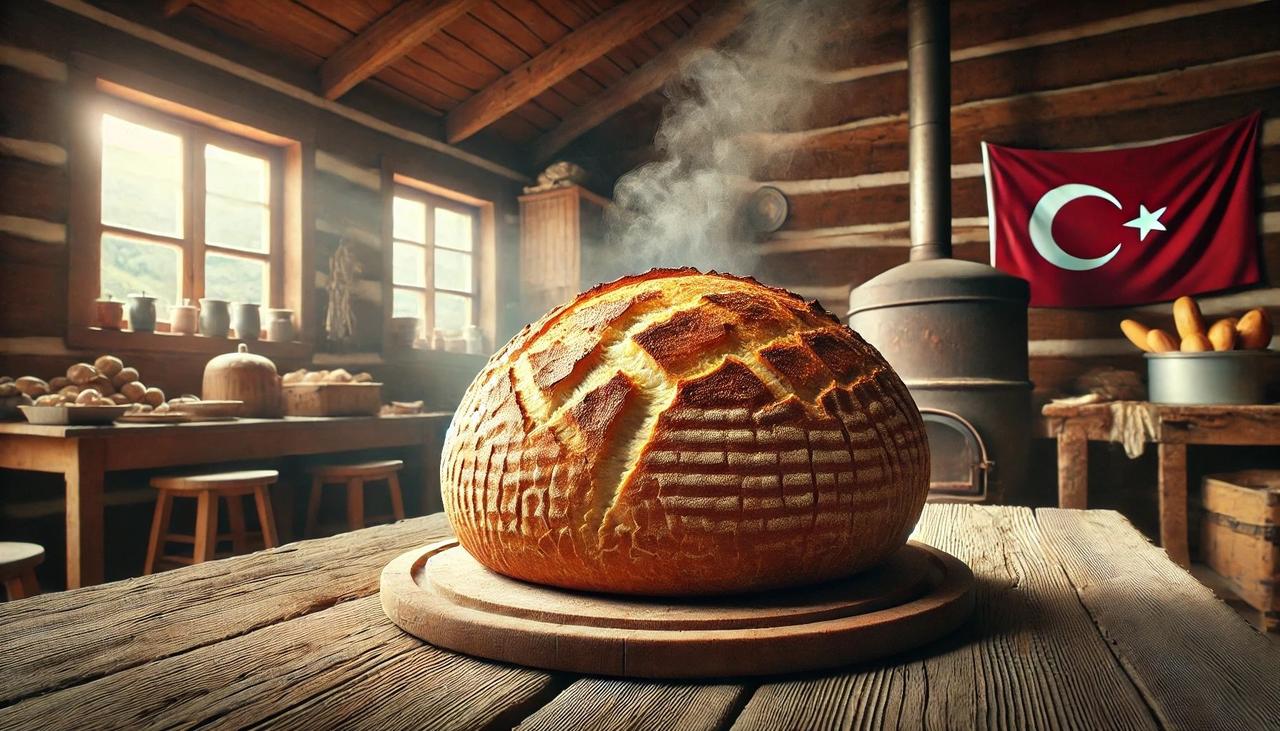
Vakfıkebir Bread
Type of Geographical Indication | Mahreç Sign | ||||||||
|---|---|---|---|---|---|---|---|---|---|
File Number | C2017/213 | ||||||||
Application Date | 30.11.2017 | ||||||||
Registration Number | 372 | ||||||||
Registration Date | 03.08.2018 | ||||||||
Product / Product Group(s) | Bakery and confectionery products sweets dough products | ||||||||
Province(s) | Trabzon | ||||||||
Applicant/Registrant(s) | Vakfıkebir Municipality | ||||||||
Status | Registered | ||||||||
Vakfıkebir Bread is a traditional type of bread unique to the Vakfıkebir district of Trabzon province in Türkiye’s Black Sea Region, baked using traditional methods in stone ovens and known for its long shelf life. Typically produced in large sizes, this bread is recognized for its crust structure and extended freshness. Locally known as “stone oven bread,” it is a geographical indication-registered local product.
The history of Vakfıkebir Bread is rooted in the region’s traditional bread-making culture. The humid climate of the Black Sea necessitated methods to preserve bread’s freshness over extended periods, leading to the development of production techniques that shaped the bread’s structure. The use of stone ovens and baking over wood fire are fundamental characteristics of this bread. Its origins date back centuries. Preferred in transhumance culture for its durability during long journeys, this bread is now produced in many parts of Türkiye, yet its traditional form is produced exclusively in Vakfıkebir. Commercial baking in Vakfıkebir began in 1897. By the mid-20th century, many families in the district continued this trade, especially as bread production outside designated ovens was restricted during wartime years.
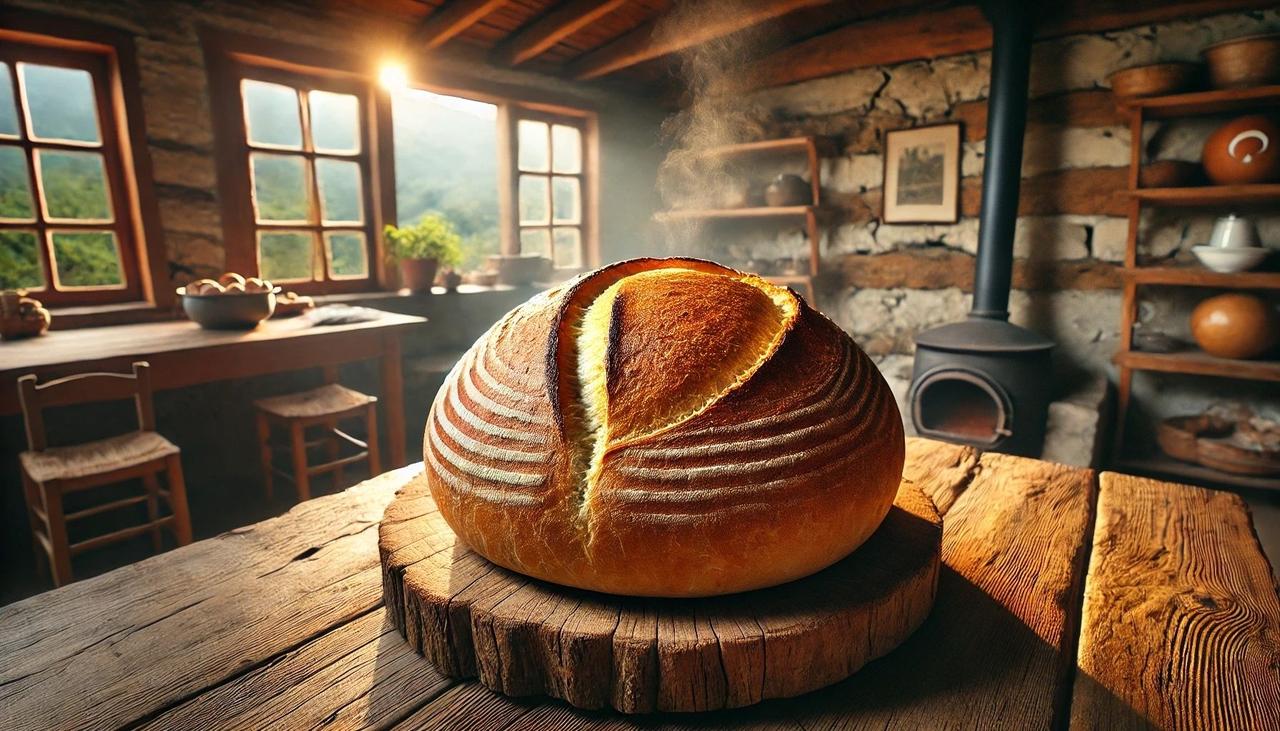
Vakfıkebir Bread (generated by artificial intelligence.)
Only four basic ingredients are used in the production of Vakfıkebir Bread: wheat flour, water, salt, and yeast. However, the long fermentation time and kneading techniques employed in dough preparation determine the texture and durability of the final product. The dough is baked at high temperatures in stone-bottomed ovens using wood fire. The baking process lasts approximately one to one and a half hours, resulting in a thick, hard crust and a dense, moist interior.
The bread is baked in specially constructed stone ovens. The oven floor is lined with heat-resistant stones, and multiple layers—gravel, sand, glass fragments, and rock salt—are used beneath to provide thermal insulation. The section known as the “cehennemlik” is where wood is burned to heat the oven. The oven is arched with dome-shaped brickwork and equipped with a chimney system to regulate smoke and temperature. The process called “tavlama” prepares the oven interior for baking by bringing it to the optimal heat level.
Wood from red pine, oak, and hornbeam is preferred as fuel. The ideal baking temperature ranges from 220 to 250°C. Masters determine whether the oven is ready for baking through visual inspection and traditional methods such as sprinkling bran inside.
Vakfıkebir Bread is made using sourdough starter. The flour used is a blend of 15- to 20-day-rested Type 1 and Type 3 wheat flours. Soft, non-calcareous water is preferred for mixing. Kneading must be performed carefully to maintain the correct dough consistency. Once fermentation is complete, the dough is shaped and topped with thin strips of firmer dough known as “fitil.”
Before placing the dough in the oven, a mixture of flour and water known as “bulamaç” is applied to the surface. This treatment is applied both before and after baking to give the bread a glossy appearance. Baking time ranges from 40 to 60 minutes depending on the size of the loaves. After cooling and resting, the bread is ready for sale.
The bread has a thick, hard crust and a soft interior with a porous structure. When stored under appropriate conditions—such as in cloth, paper, or a refrigerator—it can be preserved for 5 to 15 days. It can be sliced and sold by weight. When cut, it does not crumble. The extended baking time improves digestibility.
Vakfıkebir Bread was officially registered as a geographically indicated product by the Turkish Patent and Trademark Office on 03.08.2018. Its registration number is 372. The geographical indication certificate guarantees that the bread is produced only under specific conditions and using traditional regional methods. Production must occur within the boundaries of the Vakfıkebir district.
Every year during the first week of August, the Vakfıkebir Bread Festival is held over three days. The festival includes panels on bread production and consumption, competitions, and cultural events.
Vakfıkebir Bread is consumed by the local population from breakfast to dinner. It is also used as a side accompaniment in various dishes of Black Sea cuisine, such as mıhlama and kuymak. This bread is in demand not only in Trabzon and surrounding provinces but also in major cities outside the region. Its export provides both economic and cultural benefits.
Vakfıkebir Bread is a type of bread developed in accordance with the climatic and cultural conditions of the Black Sea Region. Its main characteristics are detailed below:
Thanks to its thick and hard crust, Vakfıkebir Bread can be stored without staling for 7 to 10 days. This feature enabled long-term consumption, particularly in periods before refrigerators were available and in rural living conditions. Its low moisture content and dense structure support this longevity.
Vakfıkebir Bread is baked exclusively in stone-bottomed ovens using wood fire. The high temperature and even heat distribution achieved in these ovens harden the crust while preserving the moist interior. Additionally, the natural aroma imparted by the wood fire gives the bread its distinctive flavor.
This bread is typically prepared in large loaves weighing 2, 4, or 7 kilograms. It is produced in sizes ranging from 2 to 7 kilograms. The thick crust combined with its large mass allows heat to remain trapped inside, ensuring even baking. These dimensions offer the advantage of prolonged consumption for families or communities. Thanks to its crust, the bread can be stored without staling for up to 10 days. This characteristic made it a preferred choice among sailors and transhumant herders undertaking long journeys.
Vakfıkebir Bread is made using only four basic ingredients: wheat flour, water, salt, and yeast. It contains no additives or preservatives. Natural fermentation is achieved through traditional methods during dough kneading and resting.
Thanks to its dense interior structure, Vakfıkebir Bread has a high satiating quality. This enhances its nutritional value and allows fullness to be achieved with small portions. It is an important source of energy for the local population engaged in transhumance and field labor in the Black Sea Region.
The production method, type of flour used, baking technique, and geographical limitations are clearly defined in the registration certificate. Accordingly, only bread produced within the boundaries of Vakfıkebir district and in compliance with the specified production conditions may be sold under the name “Vakfıkebir Bread.”
Trabzon’s 1.5-Century-Old Flavor: Vakfıkebir Bread (AA)
Anadolu Ajansı. “Trabzon'un 1.5 Asırlık Lezzeti: Vakfıkebir Ekmeği.” AA.com.tr. Accessed May 8, 2025. https://www.aa.com.tr/tr/turkiyenin-ekmek-kulturu/trabzonun-1-5-asirlik-lezzeti-vakfikebir-ekmegi/2565032
Anadolu Ajansı. “Vakfıkebir Ekmeği - 150 Yıllık Lezzet.” YouTube. Accessed May 8, 2025. https://www.youtube.com/watch?v=l3uPRCu1Iws
Turk Patent and Trademark Office. "Vakfıkebir Ekmeği – Coğrafi İşaret Detayı." Accessed May 8, 2025. https://ci.turkpatent.gov.tr/cografi-isaretler/detay/38438
Turkish Patent and Trademark Office. "Vakfıkebir Ekmeği – Tescil Belgesi (PDF)." Accessed May 8, 2025. https://ci.turkpatent.gov.tr/Files/GeographicalSigns/692d99f9-80cc-4c54-8fe7-c341bf49ea20.pdf
Vakfıkebir Belediyesi. "Vakfıkebir Ekmeği." Accessed May 8, 2025. https://www.vakfikebir.bel.tr/Vakfikebir_Vakfikebir-Ekmegi.html

Vakfıkebir Bread
Type of Geographical Indication | Mahreç Sign | ||||||||
|---|---|---|---|---|---|---|---|---|---|
File Number | C2017/213 | ||||||||
Application Date | 30.11.2017 | ||||||||
Registration Number | 372 | ||||||||
Registration Date | 03.08.2018 | ||||||||
Product / Product Group(s) | Bakery and confectionery products sweets dough products | ||||||||
Province(s) | Trabzon | ||||||||
Applicant/Registrant(s) | Vakfıkebir Municipality | ||||||||
Status | Registered | ||||||||
History
Production Characteristics
Oven Structure and Production Process
Fuel and Temperature Control
Dough and Ingredients
Baking Stage
Product Features and Storage
Registration and Geographical Indication
Festival
Consumption and Cultural Significance
Characteristics of Vakfıkebir Bread
1. Long Shelf Life
2. Traditional Baking in Stone Ovens
3. Physical Size and Heavy Structure
4. Additive-Free and Natural Composition
5. Dense and Satisfying Texture
6. Geographically Protected Production Process