


This article was automatically translated from the original Turkish version.
+2 More
“Vakt-i Seher” is a ilahi whose lyrics are attributed to the Sufi poet of the 20th century Es-Seyyid Osman Hulûsi Efendi. The poem appears in Hulûsi Efendi’s 1986 publication Divân-ı Hulûsî-i Dârendevî. The Sufi text explores the spiritual significance of the pre-dawn hours and the idea that all creation participates in divine remembrance during this sacred time.
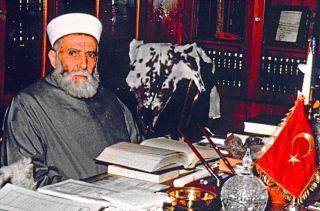
Osman Hulûsi Efendi (İslam Ansiklopedisi)
Born in 1914 in the Darende district of Malatya, Es-Seyyid Osman Hulûsi Efendi received his initial religious education from his father, Hasan Feyzi Efendi, and studied Arabic and Persian. At an early age, he became a disciple of the Nakşibendî-Hâlidî sheikh İhrâmîzâde İsmâil Hakkı Efendi and served for many years as imam and preacher at Şeyh Hamîd-i Velî Camii.
Hulûsi Efendi regarded his poetry as a means of spiritual guidance and remained faithful to the classical divan poetry tradition. In addition to gazels, he composed a large number of ilahis.【1】
In his Divân, alongside classical-style gazels, there are approximately sixty ilahis and poems written in syllabic meter.【2】
Vakt-i Seher (Mustafa Demirci)
“Vakt-i Seher” consists of eight stanzas. Each stanza ends with the refrain “feryâd eder vakt-i seher,” which reinforces the poem’s rhythmic structure and centers the pre-dawn hour as its thematic core.
The poem invokes a range of natural and cosmic entities—mountains, stones, gül, bülbül, trees, vegetation, flowing water, atoms, humans, and angels—to depict how all creation participates in a divine ecstasy and cry during the pre-dawn hours. In the final stanza, the poet uses his pen name and shifts to a direct mode of address, inviting the listener to awaken at this sacred time. In this way, the text assumes a didactic character aligned with the Sufi purpose of spiritual guidance.
Cûşa gelir dağ ile taş feryâd eder vakt-i seher
Her nesneyi kaplar telâş feryâd eder vakt-i seher
Ol demde gül handân olur bülbül görüp nâlân olur
Her ehl-i dil şâdân olur feryâd eder vakt-i seher
Ol demde diller zâr eder dil-ber arz-ı dîdâr eder
Her cân özün izhâr eder feryâd eder vakt-i seher
Ol demde eşcâr u nebât tâze bulurlar hep hayât
Ol demde cümle mümkinât feryâd eder vakt-i seher
Çağlar akar âb-ı revân yüz yere kor eyler figân
Ol demde zerrât-ı cihân feryâd eder vakt-i seher
Ol demde ins ile melek raksa gelir çarh-ı felek
Hû Hû deyü suda semek feryâd eder vakt-i seher
Ol demde Zât-ı Kibriyâ âşıklara eyler salâ
Olan bu sırra âşinâ feryâd eder vakt-i seher
Hulûsî âşıksan eğer dur yatma gel vakt-i seher
Bak gör ki âlem ser-te-ser feryâd eder vakt-i seher【3】
The poem “Vakt-i Seher” was first performed by the Sufi music artist Prof. Dr. Mehmet Emin Ay. It appears on Ay’s 2002 album Hulûs-i Kalb, which features eleven ilahis selected from Hulûsi Efendi’s Divân.
The piece has since been set to music by other artists and performed in various ilahi albums.
[1]
TDV İslâm Ansiklopedisi "Hulusi Efendi, Osman." TDV İslâm Ansiklopedisi. Erişim tarihi: 3 Mart 2026.https://islamansiklopedisi.org.tr/hulusi-efendi-osman
[2]
TDV İslâm Ansiklopedisi "Hulusi Efendi, Osman." TDV İslâm Ansiklopedisi. Erişim tarihi: 3 Mart 2026.https://islamansiklopedisi.org.tr/hulusi-efendi-osman
[3]
Osman Hulûsi, "Cûşa Gelir Dağ İle Taş," Kürdi İlâhî, güfte: M. Emin Ay, notaya alan: Halil Çay, erişim tarihi: 3 Mart 2026,https://acikders.ankara.edu.tr/pluginfile.php/48137/mod_resource/content/0/cusa_gelir_dag.pdf.

No Discussion Added Yet
Start discussion for "Vakt-i Seher (Divine)" article
Author and Literary Context
Structure and Content of the Text
Lyrics
Place in Musical Tradition