


This article was automatically translated from the original Turkish version.
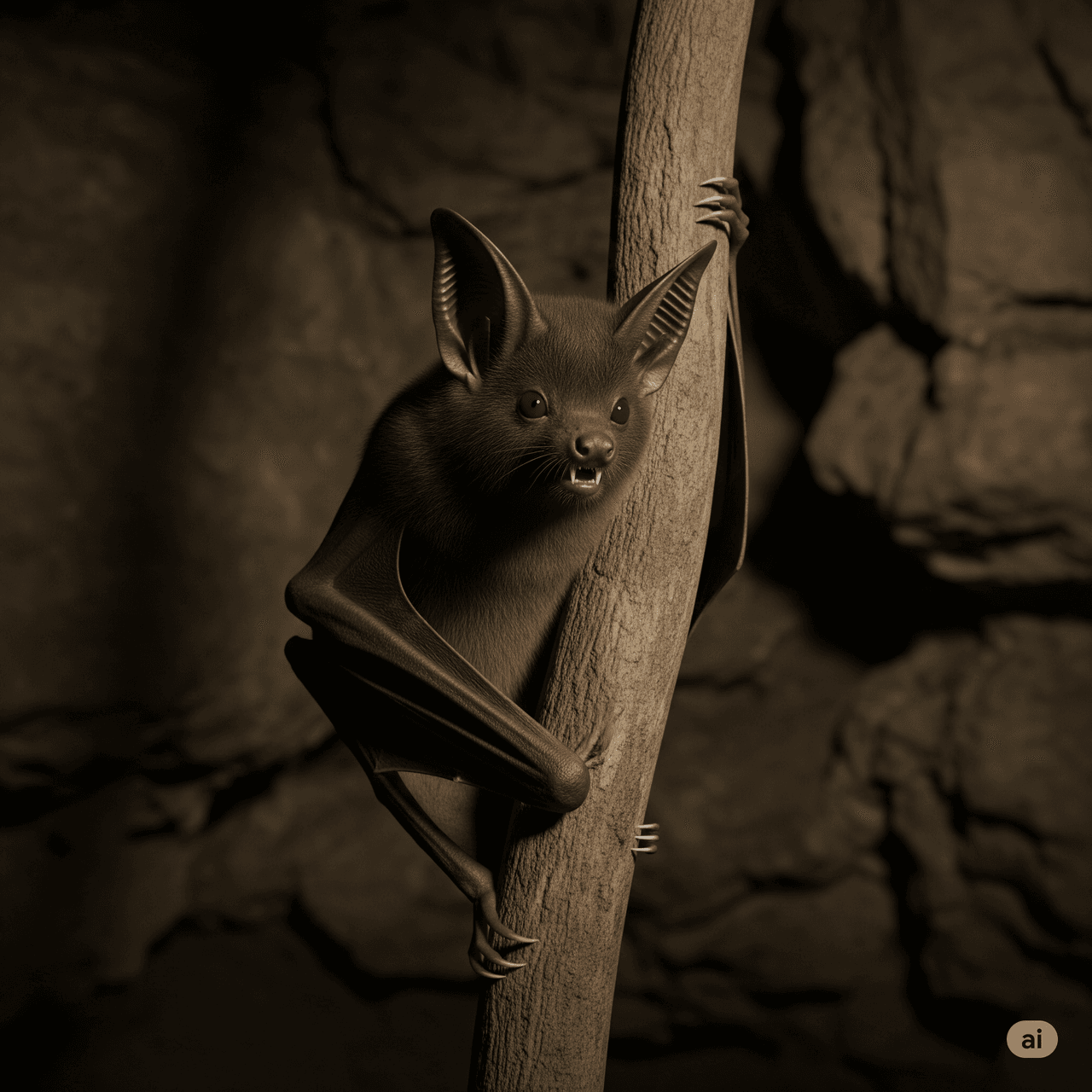
Vampire Bite
Scientific Name(s) | Desmodus Rotundus | ||||||||
|---|---|---|---|---|---|---|---|---|---|
Team(s) | Chiroptera | ||||||||
Family | Phyllostomidae | ||||||||
Subfamily | Desmodontinae | ||||||||
Genus | Desmodus | ||||||||
Average Size | Wingspan: 35 – 40 cm Head-body length: 6.5 – 9 cm | ||||||||
Activity | Nocturnal | ||||||||
Orientation | High-frequency echolocation signals and thermal perception | ||||||||
Feeding Type | Obligate hematophagy (feeds exclusively on blood) | ||||||||
Feeding Frequency | Every night | ||||||||
Reproduction Method | Polygynous system | ||||||||
Gestation Period | Approximately 7 months | ||||||||
Desmodus rotundus, commonly known as the common vampire bat, is one of only three bat species in the Neotropical biogeographic region that feed exclusively on blood and exhibits numerous evolutionary adaptations associated with its hematophagous lifestyle. Its body mass, ranging from approximately 20 to 43 grams, sharp incisors shaped like chisels, powerful olfactory senses, and infrared-sensitive upper lip receptors support the species’ unique trophic strategy. This colonial species has also been intensively studied for its rare mammalian behaviors, such as social cooperation and reciprocal food sharing.
Desmodus rotundus is the type species of the subfamily Desmodontinae within the family Phyllostomidae of the order Chiroptera. The hematophagous trait it shares with its relatives Diaemus youngi and Diphylla ecaudata emerged during the Middle Miocene, approximately 18–15 million years ago, according to molecular clock analyses. Phylogenetic modeling based on mitochondrial cytochrome b, nuclear RAG2, and ultraconserved elements indicates that positive selection pressures accelerated rapidly during the evolutionary transition from insectivorous-frugivorous feeding to blood-feeding in Neotropical ancestors of the genus Desmodus.
The upper incisors, adapted for high-penetration blood extraction, maintain their sharpness through self-sharpening, as their enamel-free anterior surfaces abrade against each other. The nasal structure contains trigeminal receptor plates sensitive to infrared radiation, enabling detection of areas with high capillary density. Uniserial papillae on the tongue facilitate laminar flow of ingested blood during suction. Salivary glands synthesize potent anticoagulants (desmoteplase, desmolaris) and inhibitors of host platelet aggregation. The skeletal system has been modified with shortened radius-ulna bones and elongated hind limbs to support body weight during blood-feeding.
The species has a broad range extending from northern Mexico to Uruguay. It is most commonly found in tropical deciduous forests, semi-open savannas, and anthropogenic shelters such as abandoned mine tunnels, bridge arches, and barns. Colony density declines markedly in regions where annual average temperatures fall below 10 °C, as prolonged cold reduces both the likelihood of locating hosts and the efficiency of digestion. Colonies typically consist of 20 to 100 individuals, with females exhibiting natal philopatry and males displaying dispersive behavior.
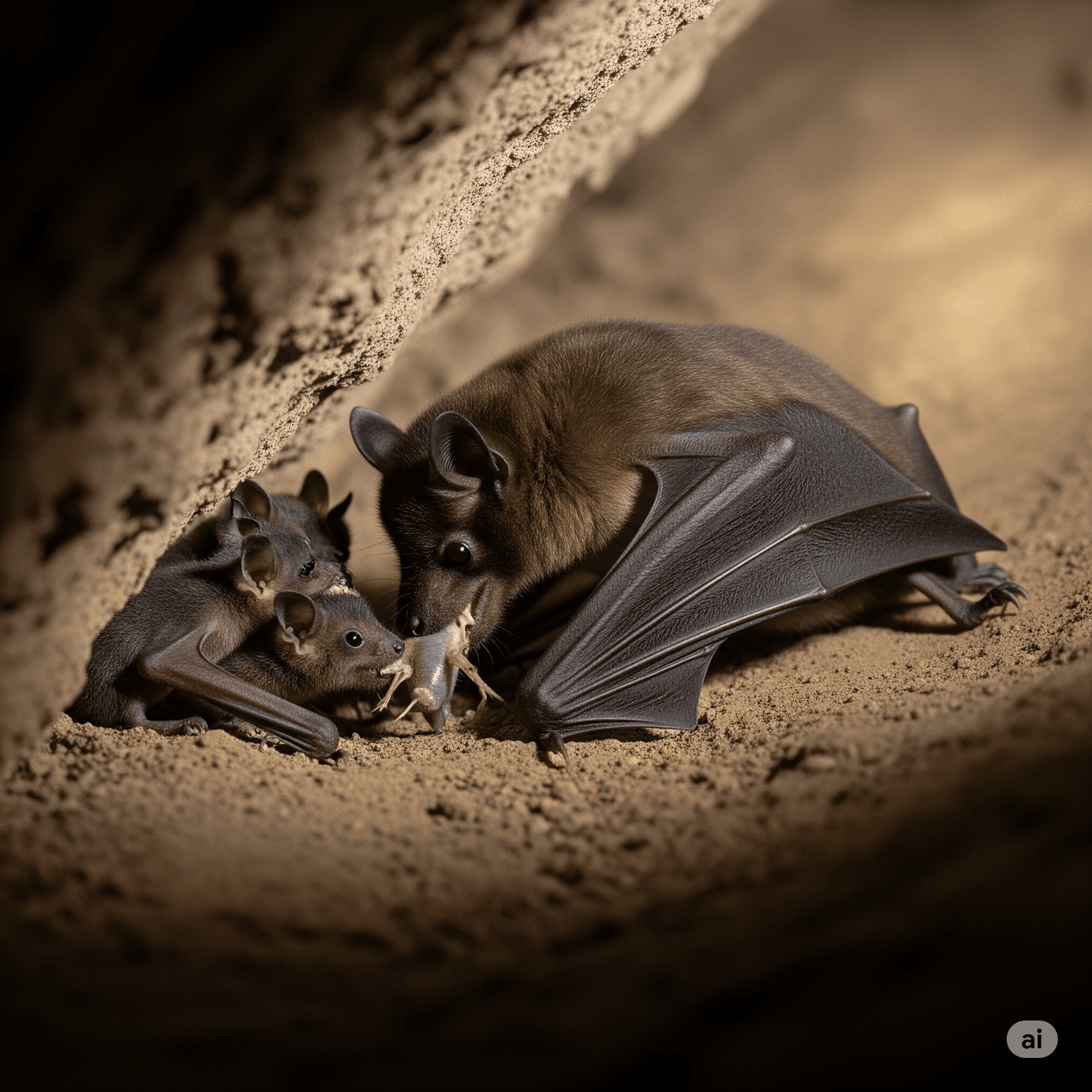
Maternal and Juvenile Feeding (Generated by Artificial Intelligence)
Desmodus rotundus typically initiates feeding activity during the first three hours of the night. It approaches its target using a holomorphological flight pattern to detect thermal gradients emitted by livestock. Using its incisors, it makes a superficial incision 3–5 mm in length on the skin, then extracts an average of 7 ml of blood per minute via negative pressure generated by its tongue and pharyngeal muscles. The salivary plasminogen activator desmoteplase rapidly dissolves fibrin clots, sustaining blood flow for up to 30 minutes. The high nitrogen load from blood digestion has led to a shift from uricotelic to ureotelic excretion, accompanied by enhanced solute reabsorption in the kidneys.
Within colonies, female-female cooperation is characterized by alloparental nursing and reciprocal food sharing. Starving individuals receive regurgitated blood from relatives or previous donors via mouth-to-mouth transfer, reinforcing interindividual social networks. Ultrasonic calls (10–40 kHz) enable recognition of familiar individuals and the detection of partner-specific vocal signatures. Social grooming reduces parasitic load while strengthening social bonds. Males periodically enter and leave the core female groups; this transient membership increases sperm competition while balancing gene flow.
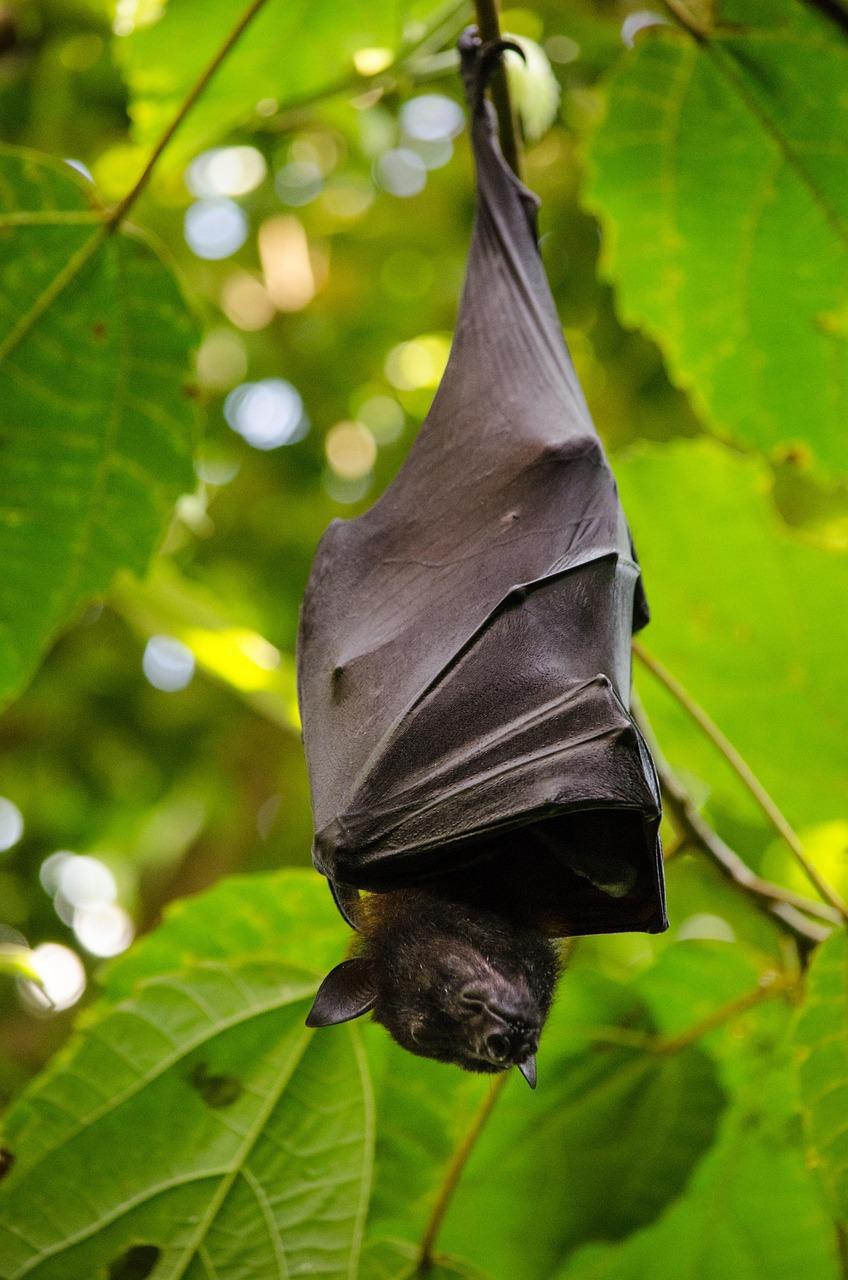
Sleeping Behavior - Pixabay
The annual reproductive cycle is continuous in populations near the equator but exhibits a single peak in lower tropical regions, synchronized with rainfall patterns. Females give birth to one offspring after a nine-month gestation, occasionally two. The neonatal mass is approximately 22% of maternal body mass, a value considered high among mammals and thought to shorten the duration of lactation. Sexual maturity is reached at nine months in females and 10–12 months in males. While average lifespan in the wild ranges from 9 to 12 years, individual tracking studies have documented lifespans exceeding 20 years.
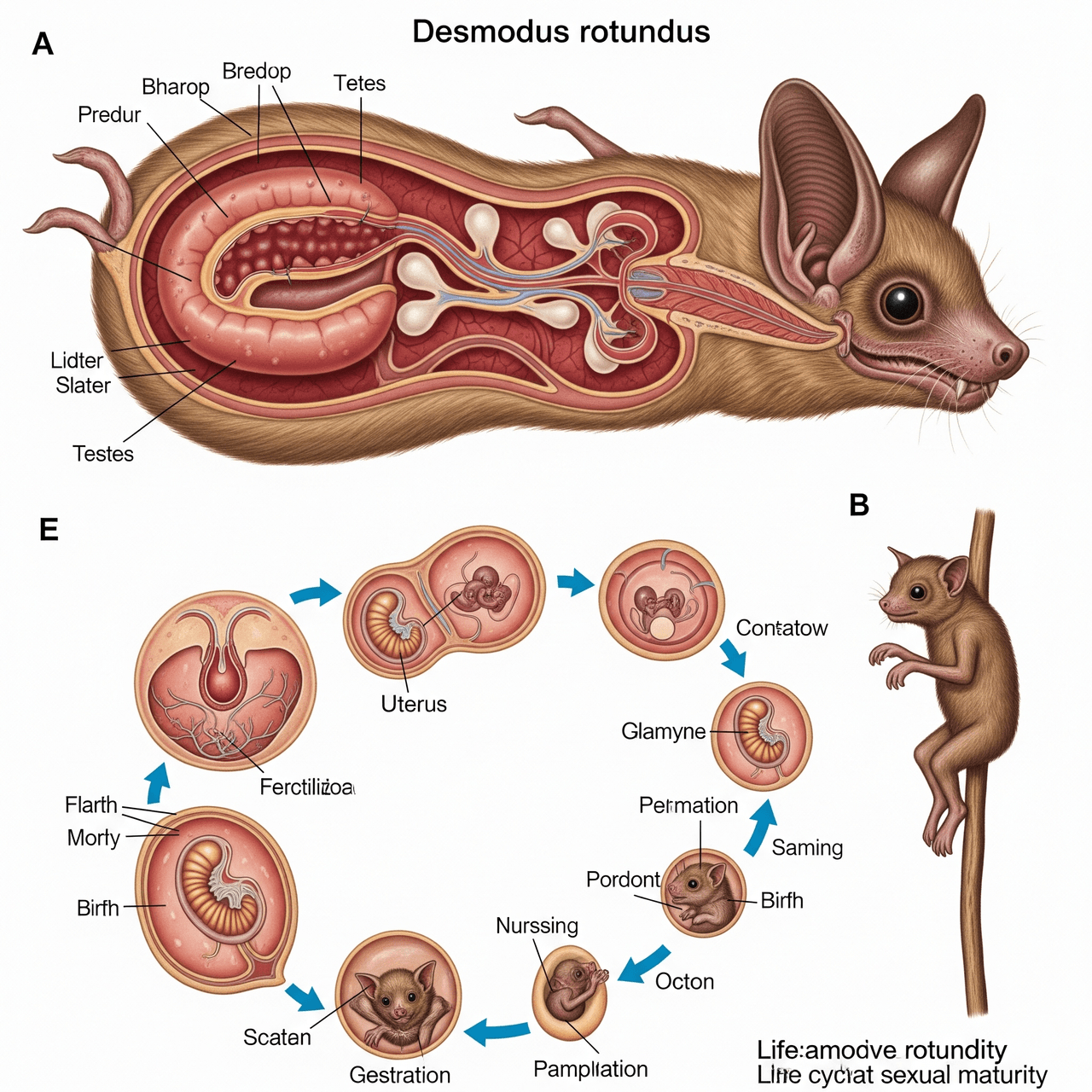
Reproductive Physiology and Life Cycle (Generated by Artificial Intelligence)
De Fraga, R., Lima, A. P., Magnusson, W. E., Ferrão, M., & Stow, A. J. (2017). Contrasting patterns of gene flow for Amazonian snakes that actively forage and those that wait in ambush. *Journal of Heredity*, *108*(5), 524–534. https://doi.org/10.1093/jhered/esx051.
Moura, Francisco P., Maria F. Teixeira, and Bruno M. Teixeira. “Rabies Virus Detection in the Common Vampire Bat Desmodus rotundus, Ceará, Brasil.” Preprints (2024): 2024121293. https://doi.org/10.20944/preprints202412.1293.v1.
Soler-Tovar, D., & Escobar, L. E. (2025). Rabies transmitted from vampires to cattle: An overview. *PLoS ONE*, *20*(1), e0317214. https://doi.org/10.1371/journal.pone.0317214.
Van De Vuurst, P., Díaz, M. M., Pedro, A. R., Allendes, J. L., Brown, N., Gutiérrez, J. D., Zarza, H., De Oliveira, S. V., Cárdenas-Canales, E., Barquez, R. M., & Escobar, L. E. (2022). A database of common vampire bat reports. *Scientific Data*, *9*(1). https://doi.org/10.1038/s41597-022-01140-9.
Wilkinson, G. S. (1984). Reciprocal food sharing in the vampire bat. *Nature*, *308*(5955), 181–184. https://doi.org/10.1038/308181a0.

Vampire Bite
Scientific Name(s) | Desmodus Rotundus | ||||||||
|---|---|---|---|---|---|---|---|---|---|
Team(s) | Chiroptera | ||||||||
Family | Phyllostomidae | ||||||||
Subfamily | Desmodontinae | ||||||||
Genus | Desmodus | ||||||||
Average Size | Wingspan: 35 – 40 cm Head-body length: 6.5 – 9 cm | ||||||||
Activity | Nocturnal | ||||||||
Orientation | High-frequency echolocation signals and thermal perception | ||||||||
Feeding Type | Obligate hematophagy (feeds exclusively on blood) | ||||||||
Feeding Frequency | Every night | ||||||||
Reproduction Method | Polygynous system | ||||||||
Gestation Period | Approximately 7 months | ||||||||
No Discussion Added Yet
Start discussion for "Vampire Bat (Desmodus rotundus)" article
Taxonomy, Morphology, and Phylogenetic Context
Taxonomic Position and Evolutionary Relationships
Morphological Features
Distribution and Habitat Preferences
Behavioral Ecology, Social Dynamics, and Feeding Strategies
Hematophagous Feeding Mechanisms
Social Organization and Behavior
Reproductive Physiology and Life Cycle