

This article was automatically translated from the original Turkish version.
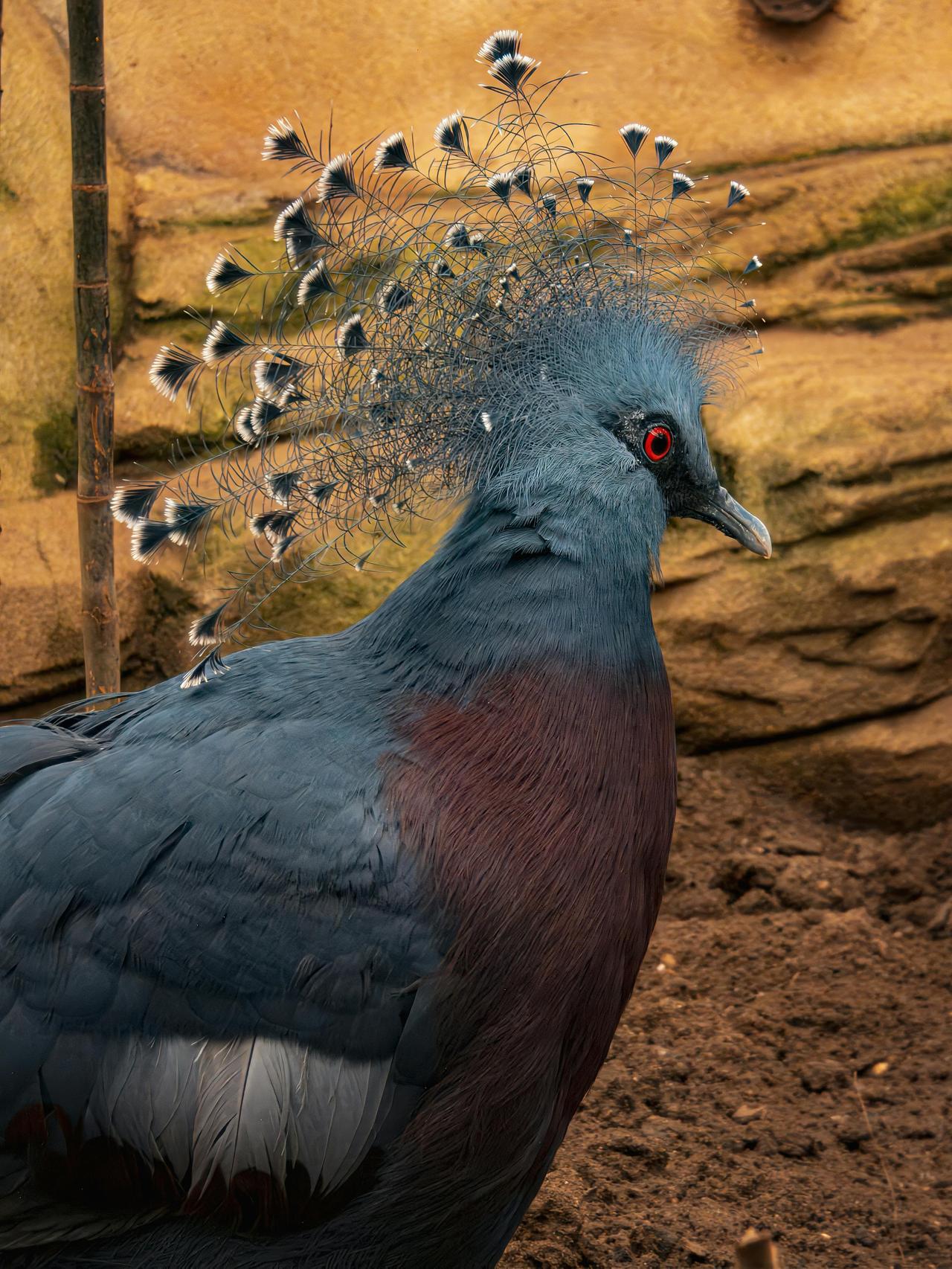
Victoria Crowned Pigeon (Goura victoria) pexels)
The Victoria Crowned Pigeon (Goura victoria) is a large-bodied bird species belonging to the family Columbidae within the order Columbiformes and the genus Goura. Endemic to the lowland swamp forests of New Guinea, this species is classified as Near Threatened (NT) on the International Union for Conservation of Nature (IUCN) Red List due to its population status.
The species was first scientifically described in 1844 by Fraser, using the protonym Lophyrus Victoria, based on specimens from the Geelvink Bay islands of New Guinea. Today, two officially recognized subspecies are accepted under the scientific name Goura victoria. The subspecies Goura victoria victoria (Fraser, 1844) is distributed across the islands of Yapen and Biak in Geelvink Bay, though the population in the Biak-Supiori region may have been introduced by human activity. The other subspecies, Goura victoria beccarii, was described in 1876 by Salvadori using the protonym Goura beccarii and the Humboldt Bay type locality. It inhabits the region from the Siriw River eastward to Astrolabe Bay and Collingwood Bay in northern New Guinea.
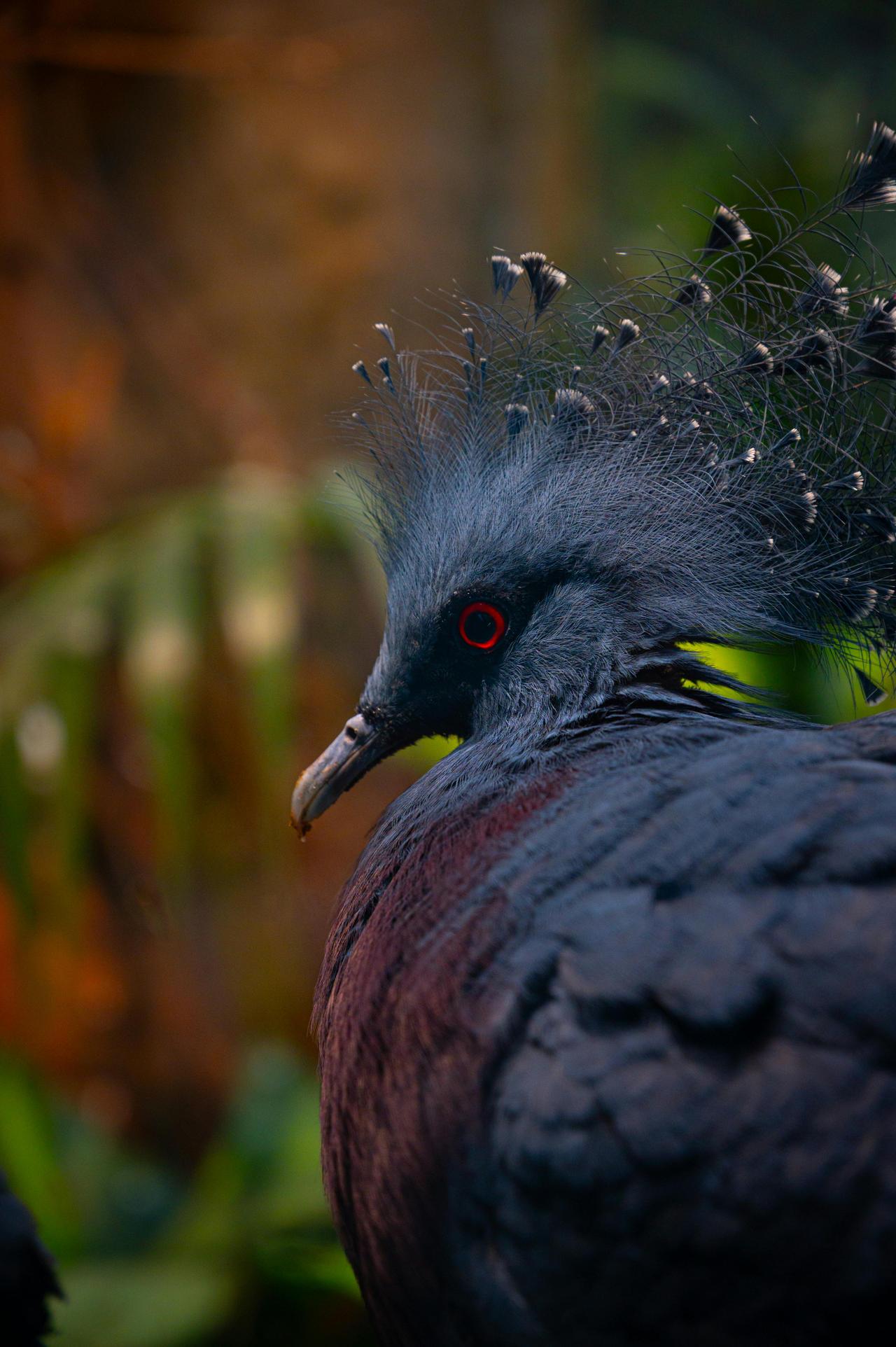
Victoria Crowned Pigeon (Goura victoria) pexels)
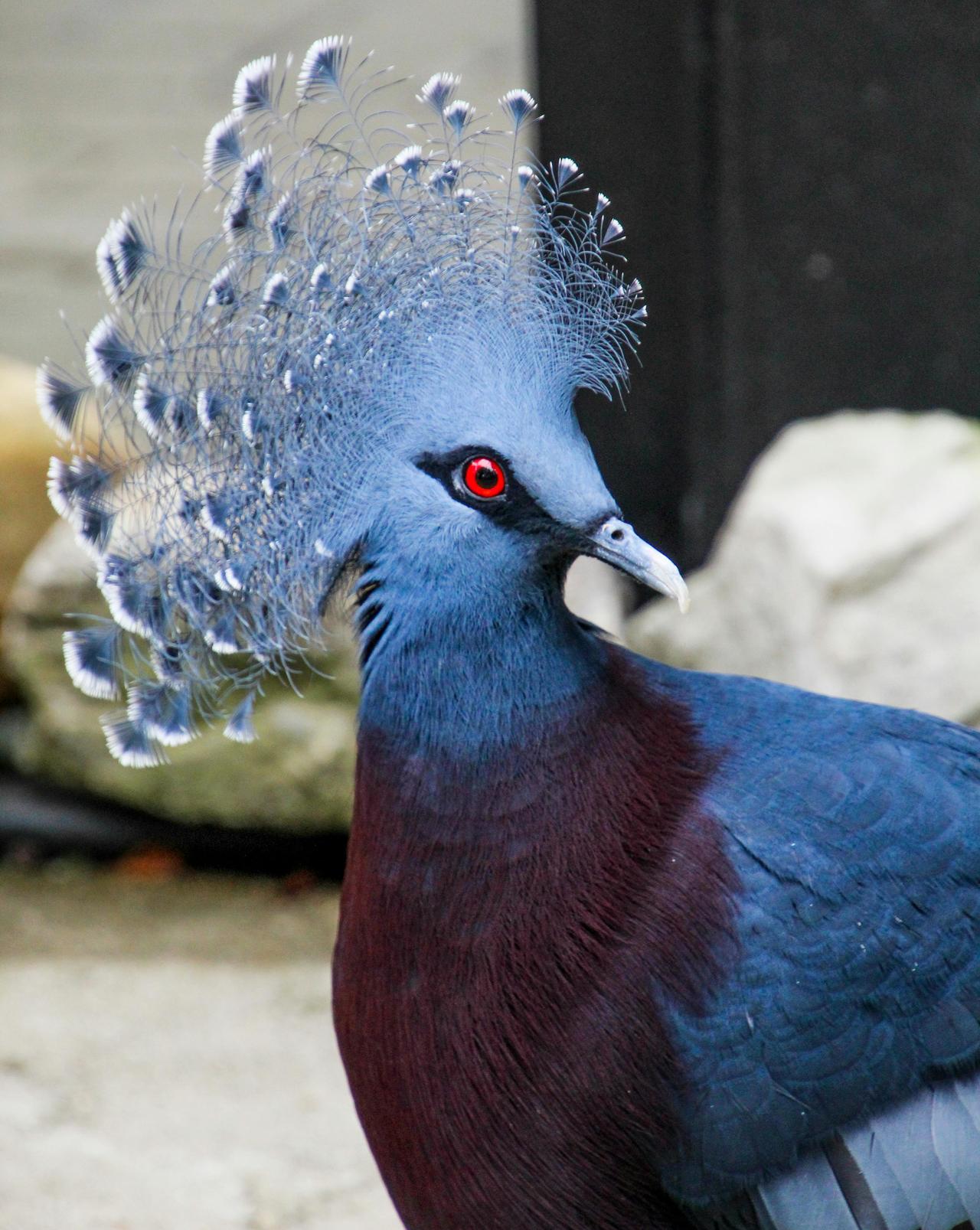
Anatomically, the Victoria Crowned Pigeon possesses a massive body structure and a distinctive phenotype that prevents confusion with other crowned pigeon species in its geographic range. Its body plumage is predominantly blue-gray, with a prominent chestnut-brown patch on the breast. The most distinguishing physical feature, setting it apart from its relatives, is its elaborate crest composed of long feathers with white tips. The wing anatomy features a pale gray wing patch ending in chestnut-colored edges. Additionally, it is noted that during takeoff, the species produces a very loud wing-clapping sound.
This species inhabits the understory of lowland swamp forests and derives its diet primarily from fallen fruits, foraging on the ground. Courtship displays involve highly conspicuous physical rituals: during these displays, the bird leans its entire body forward while fanning its tail like a peacock’s and completes the sequence by raising its wings upward. Its vocalizations consist of deep, rising, loud, explosive calls and low, rhythmic cooing notes, both originating from deep within the chest.
Baptista, Luis F., Pepper W. Trail, H. M. Horblit, and Ernest Garcia. "Victoria Crowned-Pigeon (Goura victoria)." Birds of the World. Accessed April 23, 2026. https://birdsoftheworld.org/bow/species/vicpig1/cur/introduction
BirdLife International. "Victoria Crowned-pigeon Goura victoria Species Factsheet." BirdLife DataZone. Accessed April 23, 2026. https://datazone.birdlife.org/species/factsheet/victoria-crowned-pigeon-goura-victoria
Cornell Lab of Ornithology. "Viktorya Taçlı Güvercini." eBird. Accessed April 23, 2026. https://ebird.org/species/vicpig1?siteLanguage=tr

No Discussion Added Yet
Start discussion for "Victoria Crowned Pigeon (Goura victoria)" article
Taxonomy and Classification
Physical Morphology
Ecology and Behavior