

+1 More

Virginia Woolf
Full Name | Adeline Virginia Woolf | ||||||||
|---|---|---|---|---|---|---|---|---|---|
Birth | 1882 | ||||||||
Death | 1941 | ||||||||
Nationality | English | ||||||||
Occupation(s) | Writer Critic Essayist | ||||||||
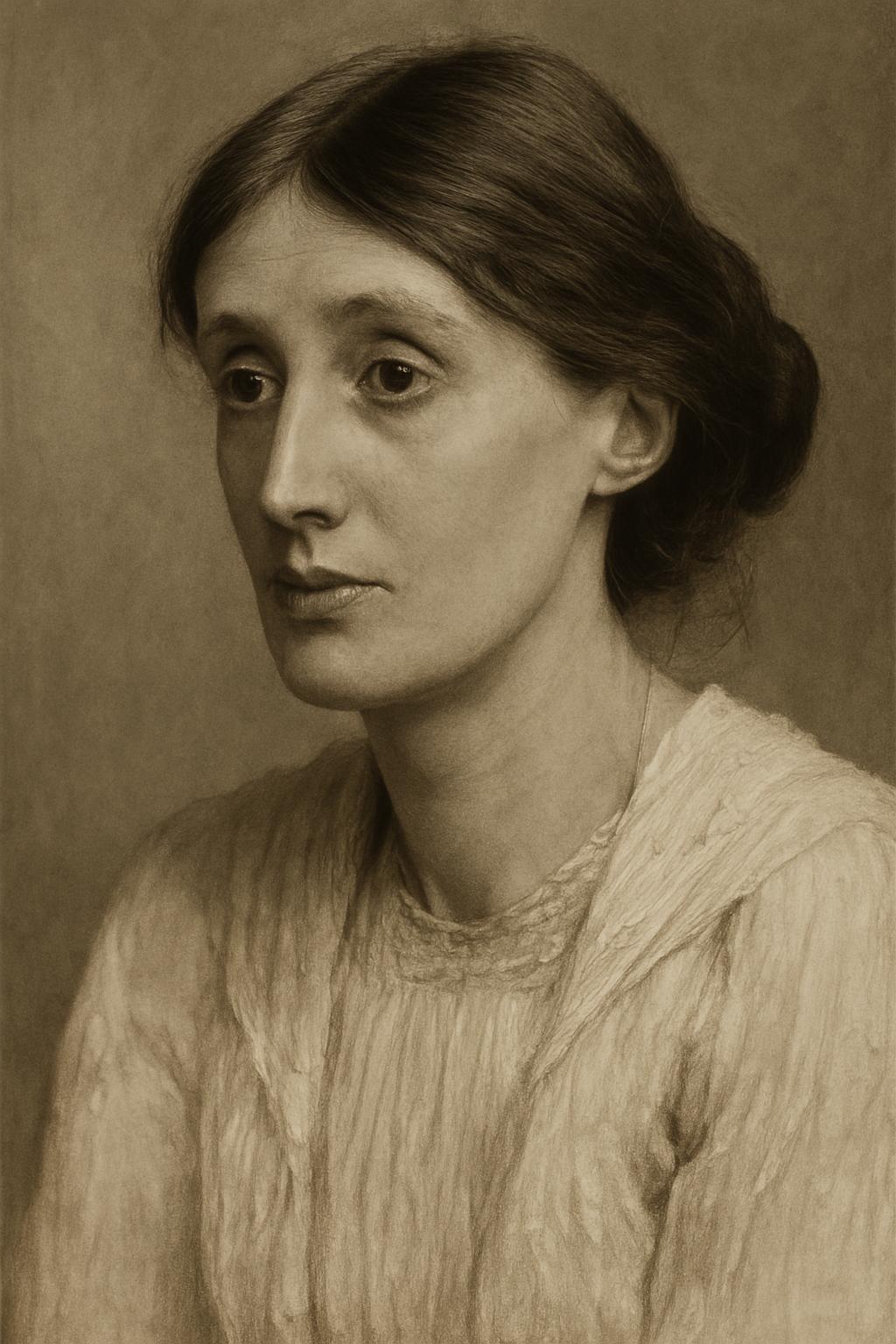
Virginia Woolf is known not only for her novels in the early 20th century but also for her intellectual critiques on women’s place in the literary world. Her feminist approach and experimental style in literary techniques have established her as a prominent figure both in literature and in intellectual circles.
Virginia Woolf’s childhood and youth unfolded within an intellectual environment. Rather than receiving a traditional school education, she developed a deep relationship with literature through her family’s extensive library and intellectual exchanges. During a time when women’s university education was severely limited, Woolf shaped her own learning through her own efforts and the support she received from her surroundings. This situation influenced the recurring theme in her works of seeking a “space of one’s own.”
Virginia Woolf’s literary career is defined by her mastery of modern narrative techniques. In her novels Mrs. Dalloway, To the Lighthouse, and Orlando such as, she conveys characters’ psychological experiences through techniques such as “stream of consciousness,” “moments of being” memorial, interior monologue, and free indirect discourse, distributing them across a fragmented time structure building.
Woolf’s narrative style possesses a sensory and cyclical structure. Alongside contemporaries such as James Joyce together, she became a representative of experimental forms in literature, particularly through texts that foreground the individual’s stream of consciousness. She also attracted attention through her theoretical writings. Her 1929 work A Room of One’s Own became one of the foundational texts in literary theory, emphasizing economic and spatial independence as essential for women’s creative freedom.
Virginia Woolf made significant contributions to feminist literary theory through her critical examination of women’s place in literary production. She argued that for women to write, they must possess “a room of their own” and economic independence. Her work A Room of One’s Own, which questions why women have historically remained in the shadows of literature, has become one of the primary sources in social gender-based analyses of literature.
Woolf also centers the role of writing in the process of comprehending individual existential reality. The experiences she terms “moments of being” form the core of her literary vision. Her novels, which focus on the transformations within characters’ inner worlds and the continuous evolution of consciousness, possess not only aesthetic but also philosophical depth.
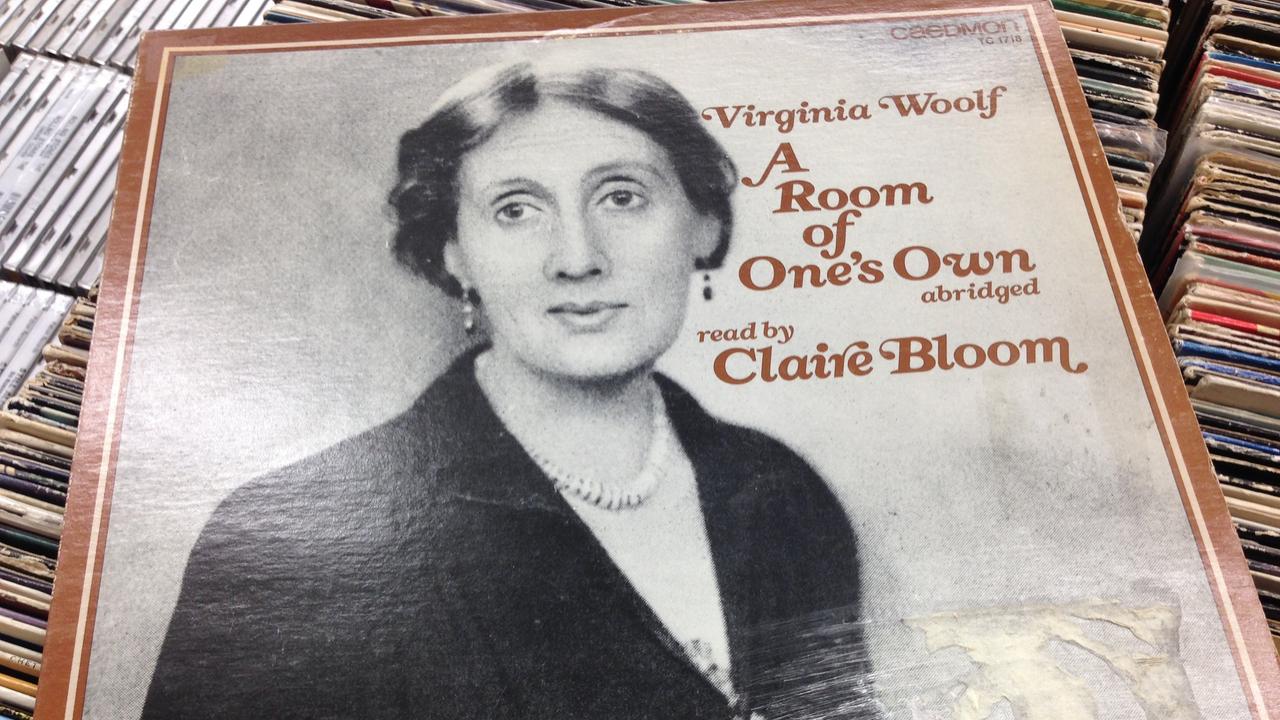
A Room of One’s Own: Her most frequently cited work, it argues that women require material independence and a physical “room” in order to write. It is recognized as one of the foundational texts of feminist theory.
To the Lighthouse: One of the strongest examples in her novels of time, stream of consciousness, and the inner world taking center stage. It has been analyzed by Erich Auerbach in his work Mimesis. The characters’ unresolved nature is presented as a sign of realism.
Mrs. Dalloway: A novel that effectively employs stream of consciousness and interior monologue techniques. It explores events and characters’ inner lives within the fluidity of time.
Orlando: An experimental novel that traverses time and bodies while examining how gender is socially constructed. It offers an allegorical narrative on gender identity and the historical position of women.
It is well known that Virginia Woolf struggled throughout her life with mental instability. Her psychological breakdowns shaped not only her biography but also her literary world. These mental states are clearly evident in her diaries and autobiographical writings. For Woolf, writing was not merely an act of expression but also a form of existential healing.
Woolf questioned traditional assumptions regarding sexuality, marriage, and female identity, becoming a figure who transformed social norms both in her personal life and in her literature. Her personal contradictions and psychological disturbances are reflected in the profound psychological analyses she infused into her characters novel.
The final years of Woolf’s life were marked by increasing mental instability. Her devotion to writing was no longer sufficient to contain these inner turmoil. In 1941, she took her own life. However, the literary legacy she left behind has made her imprint on literature indelible. Her contributions to the intellectual history of women elevate her not merely as a author but also as a thinker.
Virginia Woolf’s intellectual legacy has left a lasting impact in fields such as feminist theory, modernist novel, and literary criticism. A Room of One’s Own is regarded as a masterpiece that underscores the necessity of social and economic conditions for women to realize their creative potential.
As Mîna Urgan, who has produced the most comprehensive study of Woolf in Turkish, notes, Woolf has shown not only female writers but all readers of literature the power of individual consciousness and the liberating effect of writing. Her literary and intellectual production continues to demonstrate how writing can serve as a vehicle for the freedom of women and the individual.
Almas, Esra. "Bir Dinozorun Eleştirileri: Mîna Urgan ve Erich Auerbach ile Virginia Woolf Okumak." Nesir: Edebiyat Araştırmaları Dergisi 5 (October 2023): 89–104.
Buran, Sumeyra. “Virginia Woolf Ve James Joyce’un Modern Anlatım Teknikleri Üzerine Karşılaştırmalı Bir Çalışma”. *MANAS Sosyal Araştırmalar Dergisi* 10, no. 1 (2021): 27–43. https://doi.org/10.33206/mjss.813836.
Demirel, İdiris. "Batı Siyaset Düşüncesinde Mekân Felsefeleri ve Virginia Woolf’un ‘Kendine Ait Bir Oda’sı." Uluslararası Sosyal ve Beşeri Bilimler Araştırma Dergisi = Journal of Social and Humanities Sciences Research 6, no. 40 (2019): 2177–2183.
Durukoğlu, Salim, and İnci Hilalhan Erol. “Kadının Kurmaca Edebiyatta İkincil Statüde Kalması Üzerine Bir Deneme (Virginia Woolf – Kendine Ait Bir Oda Eseri Örneği).” AKRA Kültür Sanat ve Edebiyat Dergisi 6, no. 15 (2018): 135–144. https://doi.org/10.31126/akrajournal.412633.
Fildiş, Berna. "Virginia Woolf’ta Kadınların Kendilerini Gerçekleştirmesi Sorununa Biyografik Bir Bakış." Bartın Üniversitesi Uluslararası Edebiyat ve Toplum Sempozyumu, 28-30 Nisan 2016: Bildiriler Kitabı. Ed. Hacı İbrahim Delice. 355–365. Volume 2. Bartın: Bartın Üniversitesi Yayınları, 2016.
Uslu, Cansel, Didem Doğanyılmaz Duman, and Gökhan Duman. “Toplumsal Cinsiyet Rollerini Virginia Woolf Üzerinden Düşünmek: ‘Kendine Ait Bir Oda’.” *İzmir Demokrasi University Social Sciences Journal* 6, no. 2 (2023): 198–212. https://doi.org/10.61127/idusos.1402837.

Virginia Woolf
Full Name | Adeline Virginia Woolf | ||||||||
|---|---|---|---|---|---|---|---|---|---|
Birth | 1882 | ||||||||
Death | 1941 | ||||||||
Nationality | English | ||||||||
Occupation(s) | Writer Critic Essayist | ||||||||
Youth and Education
Career and Achievements
Contributions
Major Works
Personal Life
Final Years and Death
Legacy and Influence