


This article was automatically translated from the original Turkish version.
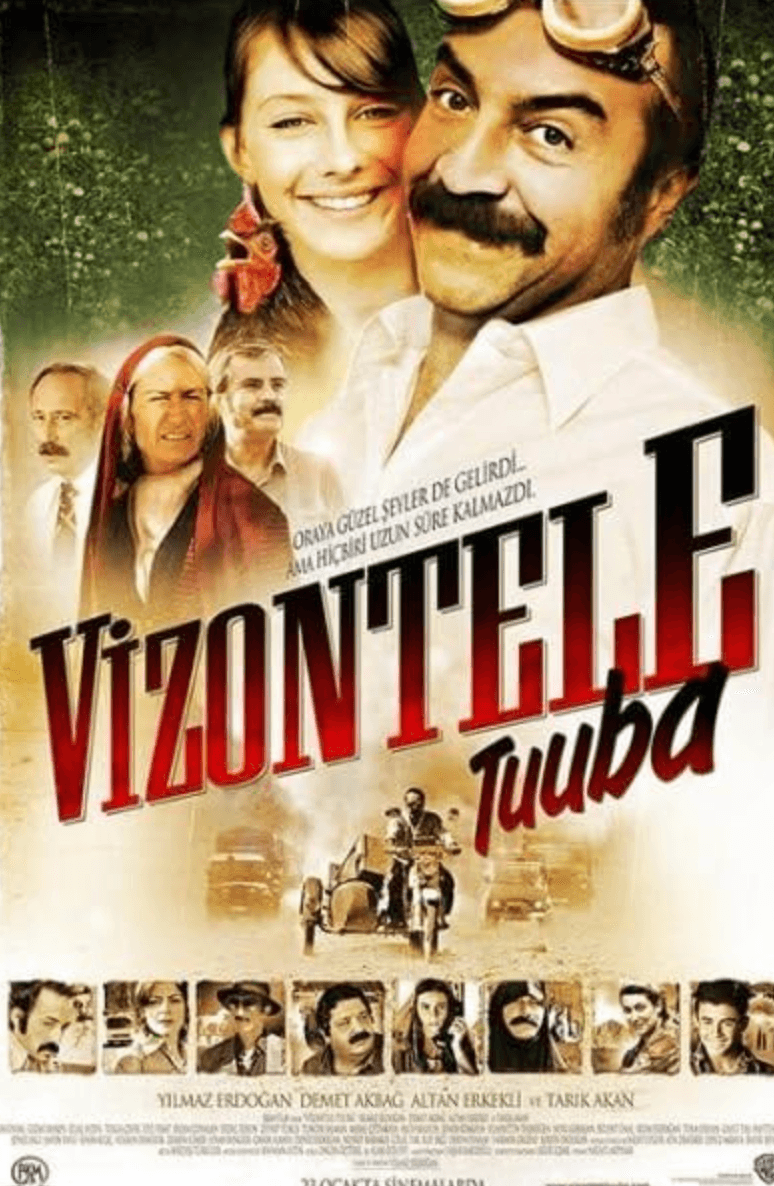
Vizontele Tuuba is a 2004 Turkish film written and directed by Yılmaz Erdoğan. It serves as a sequel to the film Vizontele (2001). The movie centers on events taking place in a small town in eastern Türkiye in 1980, focusing on the impact of the 12 September military coup, a pivotal moment in Türkiye’s political history, as experienced in a remote Anatolian village.
Six years have passed since the events of the first film. While the country grapples with the political turmoil of the 1980s, an apolitical village remains unaware of these developments. A teacher, driven from the west, arrives in the village bringing with him diverse political ideologies. Tuba, the teacher’s daughter, will profoundly affect Emin’s emotional world.

Scene from Vizontele Tuuba (IMDb)
The film explores themes such as modernization, the influence of communication media, access to education and information, social solidarity, individual resistance, and military dictatorship. Particularly through the clash between cultural instruments represented by television and books, the narrative highlights the intersection of rural life and central state policies.
The film was shot based on a screenplay drawn from Yılmaz Erdoğan’s childhood memories and social observations. Principal photography took place primarily in Gevaş district of Van and in Ağrı. Production was handled by Beşiktaş Culture Center (BKM), and distribution was managed by Warner Bros. The music is credited to Kardeş Türküler and Rahman Altın.
2004, Cinema Writers Association (SİYAD) Awards
No Discussion Added Yet
Start discussion for "Vizontele Tuuba (Film)" article
Plot
Thematic Structure
Cast
Production Process
Awards and Nominations