This article was automatically translated from the original Turkish version.
+2 More
Publication Title | The War of the Worlds | ||||||||
|---|---|---|---|---|---|---|---|---|---|
Type(s) | Radio drama | ||||||||
Program | The Mercury Theatre on the Air | ||||||||
Publisher(s) | CBS (Columbia Broadcasting System) | ||||||||
Publication Date | 30 October 1938 | ||||||||
Duration | 60 min | ||||||||
Country | USA | ||||||||
Language(s) | English | ||||||||
Commemoration | Event and commemorative materials Directional signs Area arrangements Governor's message Local committee organization 50th anniversary program in Grover's Mill (1988) | ||||||||
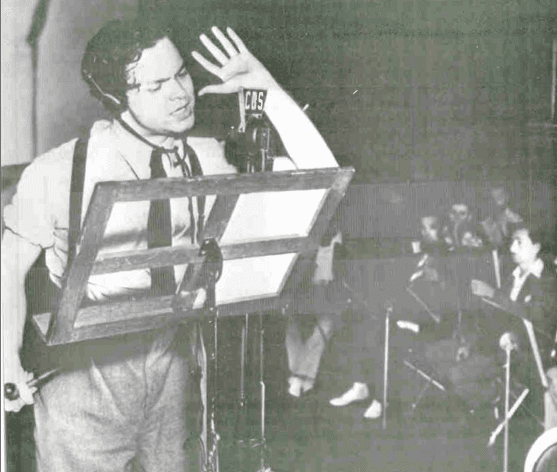
The War of the Worlds Radio Broadcast, aired on the evening of October 30, 1938, on CBS as part of the program “The Mercury Theatre on the Air,” was a radio adaptation of H. G. Wells’ novel “The War of the Worlds.”【1】 The live broadcast, presented as a series of “breaking news” bulletins interrupting a concert, with simulated live reports and the use of real place names around New Jersey, gave listeners the impression that they were witnessing an actual event rather than a fictional drama. Many listeners, tuning in after the program had begun, missed the initial disclaimers; the minute-by-minute narration of the “alien invasion” was perceived as part of the normal news flow.
Original and Complete Version of the Radio Broadcast (Orson Welles / Mercury Theatre Radio Production - Subject)
This effect triggered confusion and panic, particularly along the East Coast. Telephone exchanges were overwhelmed, police stations and newspapers received numerous calls, some people took to the roads in their cars, and others sought shelters; newspapers the next day reported the incident with front-page headlines. Although later studies showed that the panic was neither nationwide nor uniform, the bewilderment and alarm of that night became the subject of academic research. The 1938 broadcast revealed how easily the boundary between fiction and reality could blur during a time when trust in radio news was high; it marked one of the starting points for enduring debates on media responsibility, public habits of verifying information, and the effects of mass communication.
The adaptation’s central aim was to re-create H. G. Wells’ novel for American listeners with a sense of “here and now.” Howard Koch used real place names, institutional titles, and short “breaking news” bulletins in the journalistic style of the era as primary tools to ground the story in New Jersey and its surroundings. The program’s structure was designed not as a conventional play but as a music broadcast interrupted by bulletins and field reports, creating a rapid, escalating rhythm that quickly drew listeners into the logic of news reporting. This choice reflected a dramaturgical understanding that accounted for everyday radio listening habits—particularly the way audiences tuned in to music and entertainment programs in the evening—not merely to generate suspense.

Some Newspaper Reports on the Panic Caused by the Event (WorldRadioHistory)
Rehearsals and recording procedures were also organized according to this fictional framework.【2】 Sound effects, distinctions between studio and “field” audio, the tone of announcements, and the language used for expert or official commentary were unified into a single narrative thread. Opening and closing disclaimers were retained to reduce possible ambiguity; however, the dominance of news bulletin formats in the early part of the broadcast created a timing that risked pushing these warnings into the background of listeners’ memory. The resulting production did not feel like a dramatization transporting the novel’s fantasy world to the stage, but rather like a “real-time event report” that aligned seamlessly with the everyday experience of radio listening through familiar geography and institutional names. These preparatory choices played a key role in explaining the varied reception of the broadcast.
The broadcast opened with a live transmission of an “orchestra concert” from a hotel ballroom, quickly interrupted by urgent bulletin interruptions. Fake newsroom announcements progressed from tentative reports of unusual activity in the sky and a “meteor” impact to live field reports. The narrative centered on a cylindrical object that had landed in a field in rural New Jersey; eyewitness accounts from the crowd gathering at the site, statements from local officials, and a succession of “developments” were delivered in the style of live reporting. Short sentences, fluid announcer diction, measured use of technical terminology, and the familiarity of place names reinforced the listener’s sense of following a real news broadcast.

William Dock on Duty with a Fire Hose After the Broadcast (WorldRadioHistory)
The first segment was meticulously crafted to imitate established radio journalism conventions: studio-field transitions, spot announcements promising “more information soon,” consecutive reporter links from different locations, and authoritative expert voices.【3】 Sound design incorporated crowd murmurs, wind, vehicle sirens, and radio-like static to reinforce the feeling of “being there”; interruptions, crackling, and signal loss added the impression that an extraordinary event was overloading the transmission infrastructure. Meanwhile, encounters with entities emerging from the “cylinder” and the ineffectiveness of security forces were conveyed in short intervals with an escalating rhythm, allowing listeners to simultaneously experience the chaos on the ground and the irregular flow of information.
By the first half of the program, the structure had become clearly designed to be heard not as a play but as a sequence of interrupted bulletins. This choice produced two clear consequences: First, the narrative continuously pulled the audience into the “here and now” plane, maintaining a high level of attention. Second, it created a timing and intensity that risked causing the opening disclaimers to fade from listeners’ memory. As listeners encountered increasing strangeness while tuning in to what they assumed was a routine Sunday evening radio program accompanied by music, the journalistic format reinforced its own credibility. Station identifications and brief reminders during breaks were technically part of the fiction; yet within the rhythm of the bulletin chain, they receded into the background.
Enhanced Audio Quality Version of the Radio Broadcast (Orson Welles - Subject)
In the second segment, the narrative style changed markedly. The multi-voiced, reporter-studio traffic and “breaking news” chain gave way to a single narrator’s perspective observing the aftermath. This section focused on descriptions of destruction and the silence of the outside world, sustaining dramatic intensity in a different tone. The brief closing statement served a metadramatic function, reminding listeners that what they had heard was an adaptation or play. This two-part structure—the first presenting a “live event report” embedded in journalism, the second offering an observer’s account—became a defining feature of the program in both reception history and subsequent academic evaluations.
On the night of the broadcast, telephone lines were especially congested along the New York and New Jersey corridor. The New York Times carried the story on its front page the next day. Reports from the West Windsor/Grover’s Mill area in New Jersey were logged under headings such as “unusual lights in the sky,” “explosion sounds,” “smoke,” and “chemical leakage.” Local police stations and fire departments received calls asking about the possibility of the threat spreading to nearby towns and seeking confirmation of the accuracy of the radio announcements.
Telephone centers of newspapers in Trenton, Princeton, and Newark received numerous calls; some listeners attempted long-distance calls to warn relatives, while in some areas brief spikes in traffic and searches for shelters were observed. Small crowds gathered along rural roads leading to Grover’s Mill, drawn by curiosity; the flow of people wanting to see the site often intersected with those seeking to report information to authorities. Calls to CBS and affiliated stations clustered around the question “play or reality?”; some listeners were recorded moving between local radio stations, newspapers, and police to verify information.

Newspaper Reports on the Anniversary of the Event (WorldRadioHistory)
Contemporary records and later investigations made clear that this level of intensity did not spread uniformly across the country.【4】 Those who missed the beginning and tuned in later experienced greater uncertainty; in contrast, those who heard the opening or closing disclaimers, or quickly switched to other stations to verify the report, quickly allayed their fears. In short, the “panic” did not unfold as a single, continuous wave but rather concentrated in specific regions and listener groups, while fading rapidly elsewhere.
Key factors influencing this variation included late listening (missing the opening warning), the broadcast’s imitation of journalistic language, the use of familiar place names, and listeners’ habits of verifying information. Although the press the next day, especially through selected examples from the East Coast, reinforced the image of a “national panic,” archival and research findings show that fear and alarm on that night were distributed in localized clusters and largely subsided through quick verification behaviors. In this context, October 30, 1938, established a lasting framework for debate regarding media accountability and public responses to news; the reports and eyewitness accounts centered on Grover’s Mill became concrete examples within this discourse.
The 1938 broadcast made visible how permeable the boundary between “information” and “entertainment” could be when journalistic formats were employed within fiction. In the aftermath of the confusion, intense debates emerged in the press, among radio authorities, and within broadcasting circles under headings such as “avoid misleading listeners,” “ensure adequate warnings for fictional content,” and “distinguish between news tone and dramatization.” It became clear that the opening and closing disclaimers could be overshadowed by the pacing of the journalistic narrative; this became a landmark example in broadcast ethics highlighting the impact of “form” over content. These discussions led radio institutions to re-examine technical details such as script approval, tone modulation, and frequency of announcements; recommendations were made to place clearer reminders aimed at informing listeners and preventing misinformation.
Post-event institutional assessments highlighted two key points. First, formal elements imitating news reporting (“field reports,” “expert/official voices,” “breaking news” bulletins) did not in themselves cause misdirection; their impact was amplified when combined with listening habits, late entry, and local context. Second, listeners’ tendency to quickly consult other sources for verification was identified as a fundamental behavior for reducing anxiety. These two findings demonstrated that responsibility in broadcasting lay not only in the “truth” or “falsehood” of content but also in the interaction between the form used and listening practices. Thus, timing became central to media debates: not only the presence of internal warnings, but when and how they were delivered, and how often the news format reminded listeners that what they were hearing was fiction, were now critical considerations.

Program Brochure Prepared for the 50th Anniversary of the Event (WorldRadioHistory)
The broadcast’s impact left a lasting legacy in the broader history of media on two levels.【5】 First, it provided early material for social psychology and communication research, contributing to the theorization of listeners’ “critical monitoring” behaviors. Second, the sound design techniques—dramatic realism, interrupted flow, and authoritative tone—became reference points in later genres such as docudramas, “news plays,” and disaster/crisis simulations. This legacy kept alive both the risks of fiction operating on the same surface as news and the persuasive power of form.
The event strengthened broadcasters’ internal guidelines on the principle of “leaving clear signals for listeners”; critical analyses, meanwhile, warned against generalizing from a single night. From the perspective of Orson Welles and the Mercury Theatre team, the broadcast brought widespread recognition and is remembered for the creative team’s bold choices that pushed the boundaries of audio storytelling. Yet this visibility also placed them at the center of formal-ethical debates. Subsequent commemorations, interviews, and evaluative writings positioned the night of October 30, 1938, as a threshold moment in U.S. broadcasting history.
Grover’s Mill’s identification as the “landing site” of the alien spacecraft evolved into an institutionalized local commemorative practice. Fifty years later, a committee was formed to organize the anniversary program, with Douglas Forrester serving as chair. A message issued by New Jersey Governor Thomas H. Kean provided an official framework for the events. Steps were taken to acquire and preserve land around Grover’s Mill Lake, while public access was strengthened through donations and support from the Dey family. Site markers, interpretive signage, walking trails, and landscape design transformed the “event site” into a tangible landmark within everyday life; thus, the 1938 narrative gained visibility not only in written testimonies and memories but also within a concrete spatial framework.
About the Grover’s Mill Celebrations (Al Jazeera)
The anniversary program was structured as a multi-part event in the style of a festival: themed parades and processions, participatory activities such as the “Martian Panic Run,” panel discussions and talks, local exhibitions, posters, and commemorative merchandise were all integrated within the same framework. The commemorative brochure collected newspaper clippings, program schedules, and photographs from the era, re-framing the night of 1938 as a “national story that happened in New Jersey.”
The brochure also included Howard Koch’s account of why he chose Grover’s Mill for the script; this narrative concretized the adaptation’s “here and now” effect—built on familiar geography and institutional names—as a contested yet tangible achievement. Because the commemoration relied on collaboration between local government and civic initiatives, sponsorship lists, logistical arrangements, and volunteer networks were also documented as part of public memory; thus, the commemoration transcended being a single-day celebration and became a sustainable part of local collective memory.

Map of the Grover’s Mill Celebrations (WorldRadioHistory)
【6】
Among the elements that solidified spatial memory, monuments and site markers stood out. The monument by sculptor Jay Warren became one of the visual focal points of remembrance; surrounding signage and interpretive panels offered visitors a concise summary of the event’s story and the broadcast’s technical and formal characteristics. The lyrics of the song “Over the Airwaves (The Ballad of Grover’s Mill)” were included in the commemorative brochure as an example of how local community memory was carried into daily life through music and performance. Together, all these elements positioned Grover’s Mill not merely as a scene from a novel adaptation, but as a cultural heritage site where narrative, space, and participation intersect. Thus, the 1938 event transformed into a multi-layered memory map, extending beyond its impact on broadcasting history to reflect how local communities express themselves and how urban-rural landscapes are utilized.
Al Jazeera English. “Anniversary of War of the Worlds Radio Debut Celebrated.” YouTube. Accessed October 7, 2025. https://www.youtube.com/watch?v=SOA3dk9Fngw.
Allen, Erin. “Page from the Past: War of the Worlds.” Library of Congress Blog, October 31, 2016. Written by Audrey Fischer, prepared for the July/August 2016 issue of Library of Congress Magazine. Washington, D.C.: Library of Congress. Accessed October 7, 2025. https://blogs.loc.gov/loc/2016/10/lcm-page-from-the-past-war-of-the-worlds/.
Audiovisual Sources
Cantril, Hadley. *The Invasion from Mars: A Study in the Psychology of Panic*. New Brunswick, N.J.: Transaction Publishers, 2005. Accessed October 7, 2025. https://archive.org/details/invasionfrommars0000cant_g3i1.
Copeland, David A., ed. *War of the Worlds to Social Media*. Vol. 12 of *The Mediating American History* series. New York: Peter Lang, 2013. Accessed October 7, 2025. https://www.jeffpooley.com/pubs/PooleySocolowWowHayes2013.pdf.
Orson Welles / Mercury Theatre Radio Production. “The War of the Worlds: The Original October 30, 1938 Broadcast.” YouTube. Accessed October 7, 2025. https://www.youtube.com/watch?v=crPGFZiFjfs&t=1s.
Orson Welles. “War of the Worlds – Original 1938 Radio Broadcasts (2011 Remastered Version).” YouTube. Accessed October 7, 2025. https://www.youtube.com/watch?v=9q7tN7MhQ4I.
Potter, Lee Ann. “‘Jitterbugs’ and ‘Crack-pots’: Letters to the FCC about the ‘War of the Worlds’ Broadcast.” Prologue Magazine 35, no. 3 (2003). Washington, D.C.: National Archives and Records Administration. Accessed October 7, 2025. https://www.archives.gov/publications/prologue/2003/fall/war-of-worlds.html.
Research Works
Sterling, Christopher. “‘War of the Worlds’ (‘The Mercury Theatre on the Air’), October 30, 1938.” National Recording Registry Essays. Washington, D.C.: Library of Congress, 2002. Accessed October 7, 2025. https://www.loc.gov/static/programs/national-recording-preservation-board/documents/TheWaroftheWorlds.pdf.
The New York Times. “Radio Listeners in Panic, Taking War Drama as Fact: Many Flee Homes to Escape ‘Gas Raid From Mars’—Phone Calls Swamp Police at Broadcast of Wells Fantasy.” The New York Times, October 31, 1938. Accessed October 7, 2025. https://www.war-of-the-worlds.org/Radio/Newspapers/Oct31/NYT.html.
Tonguette, Peter. “The Fake News of Orson Welles: The War of the Worlds at 80.” Humanities 39, no. 4 (2018). Washington, D.C.: National Endowment for the Humanities. Accessed October 7, 2025. https://www.neh.gov/article/fake-news-orson-welles-war-worlds-80.
Wellesnet. “‘The War of the Worlds’ Radio Script from October 30, 1938.” Wellesnet, October 9, 2013. Accessed October 7, 2025. https://wellesnet.com/the-war-of-the-worlds-radio-script/.
WorldRadioHistory. *War of the Worlds: 50th Anniversary*. West Windsor, N.J.: Citizens of West Windsor, 1988. Accessed October 7, 2025. https://www.worldradiohistory.com/BOOKSHELF-ARH/Radio-Programming/War-of-The-Worlds-50th-Anniversary.pdf.
[1]
Yayın, Orson Welles’in yönetimi ve Howard Koch’un senaryosuyla hazırlanmıştır.
[2]
WorldRadioHistory. War of the Worlds: 50th Anniversary (West Windsor, N.J.: Citizens of West Windsor, 1988), s. 14.
[3]
WorldRadioHistory. (a.g.e), s. 13.
[4]
WorldRadioHistory. (a.g.e), s. 20.
[5]
WorldRadioHistory. (a.g.e), s. I.
[6]
WorldRadioHistory. (a.g.e), s. 25.

Publication Title | The War of the Worlds | ||||||||
|---|---|---|---|---|---|---|---|---|---|
Type(s) | Radio drama | ||||||||
Program | The Mercury Theatre on the Air | ||||||||
Publisher(s) | CBS (Columbia Broadcasting System) | ||||||||
Publication Date | 30 October 1938 | ||||||||
Duration | 60 min | ||||||||
Country | USA | ||||||||
Language(s) | English | ||||||||
Commemoration | Event and commemorative materials Directional signs Area arrangements Governor's message Local committee organization 50th anniversary program in Grover's Mill (1988) | ||||||||
No Discussion Added Yet
Start discussion for "War of the Worlds Radio Broadcast (1938)" article
Preparation Process and the Emergence of the Adaptation
Progression and Technical Features of the Broadcast
Public Reaction and the “Panic” Narrative
The Broadcast’s Place and Impact in Media History
Cultural Legacy and Grover’s Mill