


This article was automatically translated from the original Turkish version.
Welding operations are among industrial activities that involve multiple hazards, including high temperatures, molten metal splashes, sparks, and intense radiation (ultraviolet and infrared). During these operations, workers are at risk of serious burns, punctures, cuts, or heat-induced skin damage due to direct physical contact with welding equipment handled by hand. Therefore, gloves used by welders as part of their personal protective equipment must provide protection not only against high temperatures but also against mechanical stress and radiation.
Welding gloves are typically manufactured from heat-resistant materials such as thick leather (e.g., cowhide or goatskin), with inner linings consisting of cotton or felt layers to enhance thermal insulation. These gloves are designed with long cuffs to cover the wrist and forearm areas, and non-flammable threads are preferred for stitching. This ensures comprehensive protection against both direct heat and splashes as well as mechanical trauma during welding operations. Regular inspection of gloves and selection of models appropriate to the specific risk type are fundamental practices in ensuring occupational safety.
Protective gloves used during welding operations must be manufactured in accordance with specific international standards to ensure user safety against thermal and mechanical hazards. These standards objectively evaluate glove performance characteristics, certifying both reliability and suitability for use.
Welding gloves manufactured in compliance with these standards bear the CE mark, demonstrating conformity with European Economic Area product regulations. The CE mark informs users that the product has passed specified tests and that its protection levels have been determined according to international norms. Thus, gloves are regarded not merely as physical barriers but as certified safety equipment.
Welding gloves are not only basic protective tools for occupational safety but also technical equipment essential for the safe and efficient execution of welding operations. Therefore, these gloves must possess specific technical characteristics:
All these technical attributes play a fundamental role in providing protection levels compatible with the nature of welding operations, thereby preventing workplace accidents and reducing occupational exposures.
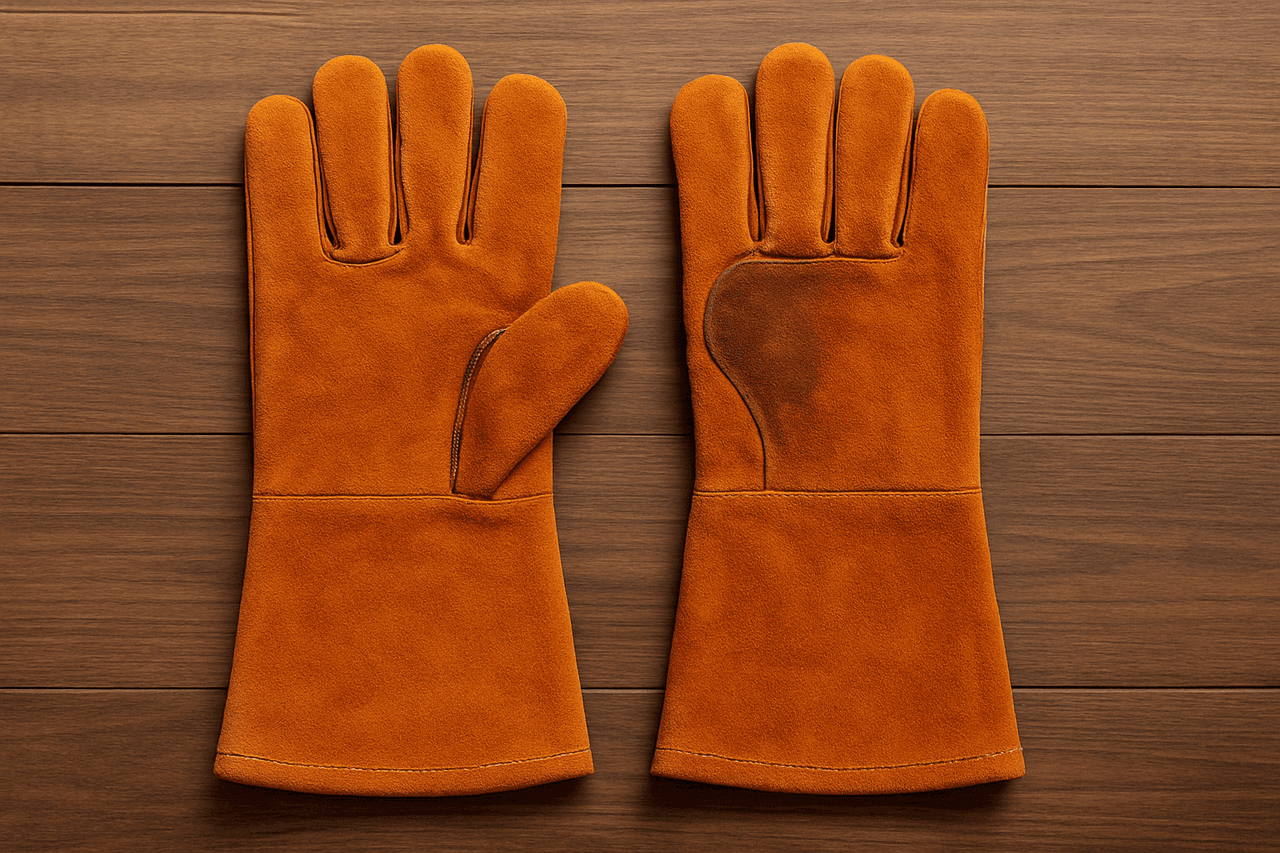
Welding Glove (Generated by Artificial Intelligence)
Welding gloves are widely used across various industries to provide hand protection against the diverse hazards encountered during welding operations. These gloves act as protective barriers against high temperatures, molten metal splashes, abrasive particles, and mechanical stresses, thereby supporting occupational safety.
It is essential that welding gloves selected for these applications are manufactured in compliance with international standards, particularly EN 12477 (performance requirements for welding gloves). Gloves selected appropriately according to the risk profile of the task not only provide physical protection but also directly contribute to preventing workplace accidents, burns, and occupational diseases.
Kaymaz, Özlem. *Kaynak İşlerinde İş Kazası ve İşe Bağlı Sağlık Problemlerine Neden Olan Faktörler ve KKD Kullanımının Bu Faktörlere Etkileri Üzerine Çevresel ve Teknik Araştırma*. Ankara: Çalışma ve Sosyal Güvenlik Bakanlığı, İş Sağlığı ve Güvenliği Genel Müdürlüğü, 2014. https://www.csgb.gov.tr/Media/5vcbx1by/ozlemkaymaz.pdf.
Ministry of Labour and Social Security. *Personal Protective Equipment Handbook*. Accessed May 24, 2025. https://kkdportal.csgb.gov.tr/media/1023/kkd_kitabi.pdf.
Ministry of Labour and Social Security. *Personal Protective Equipment Used in the Construction Sector*. Accessed May 24, 2025. https://guvenliinsaat.csgb.gov.tr/isg-konulari/kkd/.

Standards
Technical Characteristics
Applications