


This article was automatically translated from the original Turkish version.

The impact of technology on art has been at the center of cultural debates since the 20th century. One of the most striking and pioneering texts in these debates is undoubtedly Walter Benjamin’s 1935 work titled “The Work of Art in the Age of Its Technical Reproducibility.” In this essay, Benjamin questions the technical processes of reproduction that fundamentally alter art’s uniqueness its social function and its relationship with the viewer. This theory remains vibrant today and continues to guide our understanding of how art is produced and consumed in the digital age.

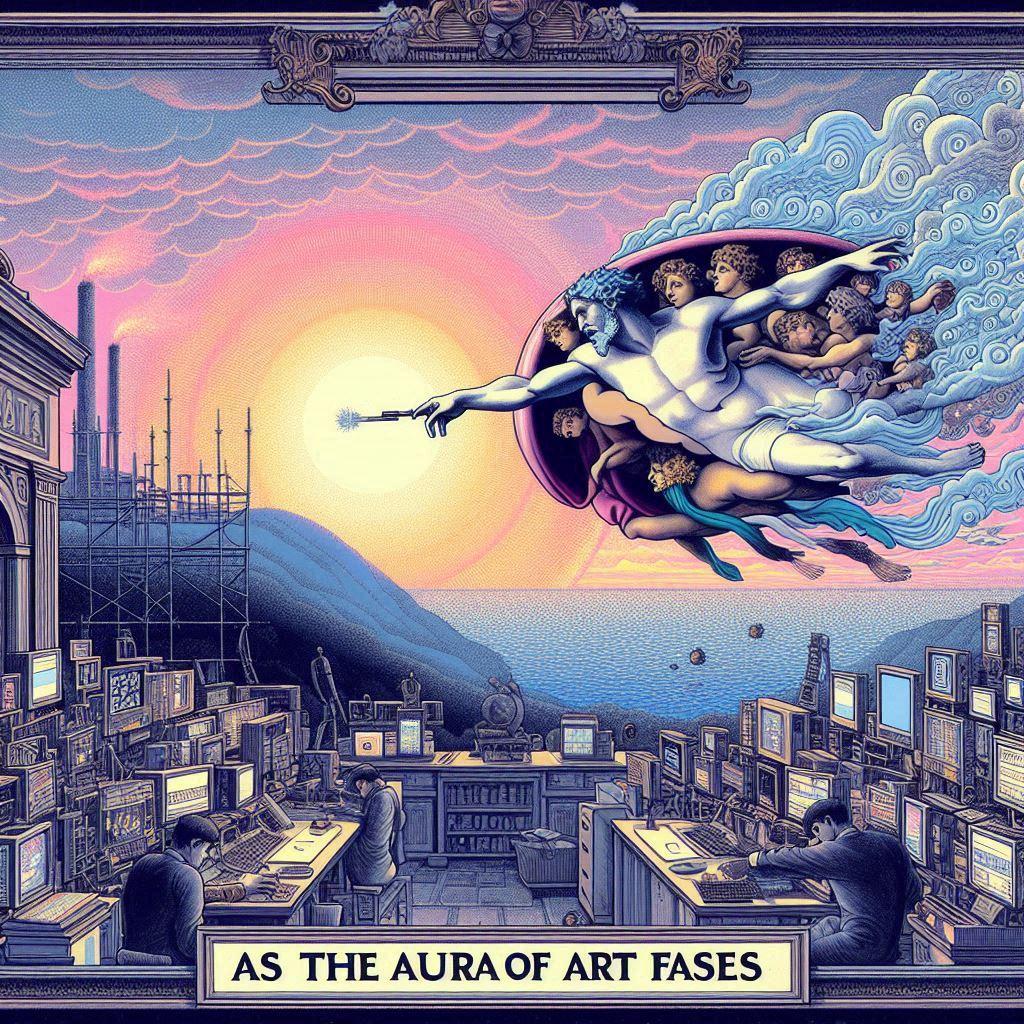
Now and Here (Generated with the aid of artificial intelligence.)
The concept of “aura” at the heart of Benjamin’s thought refers to the unique presence of an artwork in its historical and physical context. For instance there is a significant difference between viewing the original of a painting in a museum and viewing its reproduction on a page in a book or on a screen. The original artwork generates a kind of profound effect in the viewer — an aura — precisely because it is “here and now.”
However technical reproduction — such as a photograph of a painting a replica of a sculpture or thousands of copies of a film — destroys this aura. The artwork becomes reproducible portable and accessible everywhere. According to Benjamin this transformation means the loss of art’s “authenticity” and “authority.”
Art from Past to Present (Generated by Artificial Intelligence.)
When we examine the history of art we find that most artworks were originally produced for ritual purposes within religious or cultic contexts. The value of such works was determined by their “cult value.” However technical reproduction processes have pushed this cult value into the background and brought forward “exhibition value.”
Especially in art forms such as photography and cinema the works are created specifically for public display. These reproducible and widely accessible artworks eliminate the traditional sanctity of art and create a more democratic mode of reception. Art is no longer the exclusive domain of a particular elite — it is now for everyone.
Technically reproducible artworks transform not only the mode of production but also the relationship between the artwork and the viewer. One of the key points Benjamin draws attention to is precisely this. Cinema especially confronts the viewer with a constant stream of changing images creating a perception process that is fragmented yet multi-layered rather than the traditional “contemplative” aesthetic experience.
Benjamin does not view this distracted attention as a weakness but as a new form of awareness. The viewer no longer engages with art merely to derive aesthetic pleasure but also to understand question and transform the world through art.
Today thanks to digital technologies we can access artworks within seconds. Online museums AI-generated images and digital assets such as NFTs are fundamentally changing how art is produced and circulated. This new digital reality aligns closely with the dynamics Benjamin foresaw nearly a century ago.
Digital artworks can be technically reproduced infinitely. This nearly erases the aura entirely. Yet this transformation also enables art to become more democratic more accessible to broader audiences and more open to critical engagement.
The visual content we encounter today through TikTok videos Instagram posts or NFT collections compels us to reconsider Benjamin’s concept of “exhibition value.” Art is no longer merely an aesthetic experience — it has also become a field of cultural political and economic action.
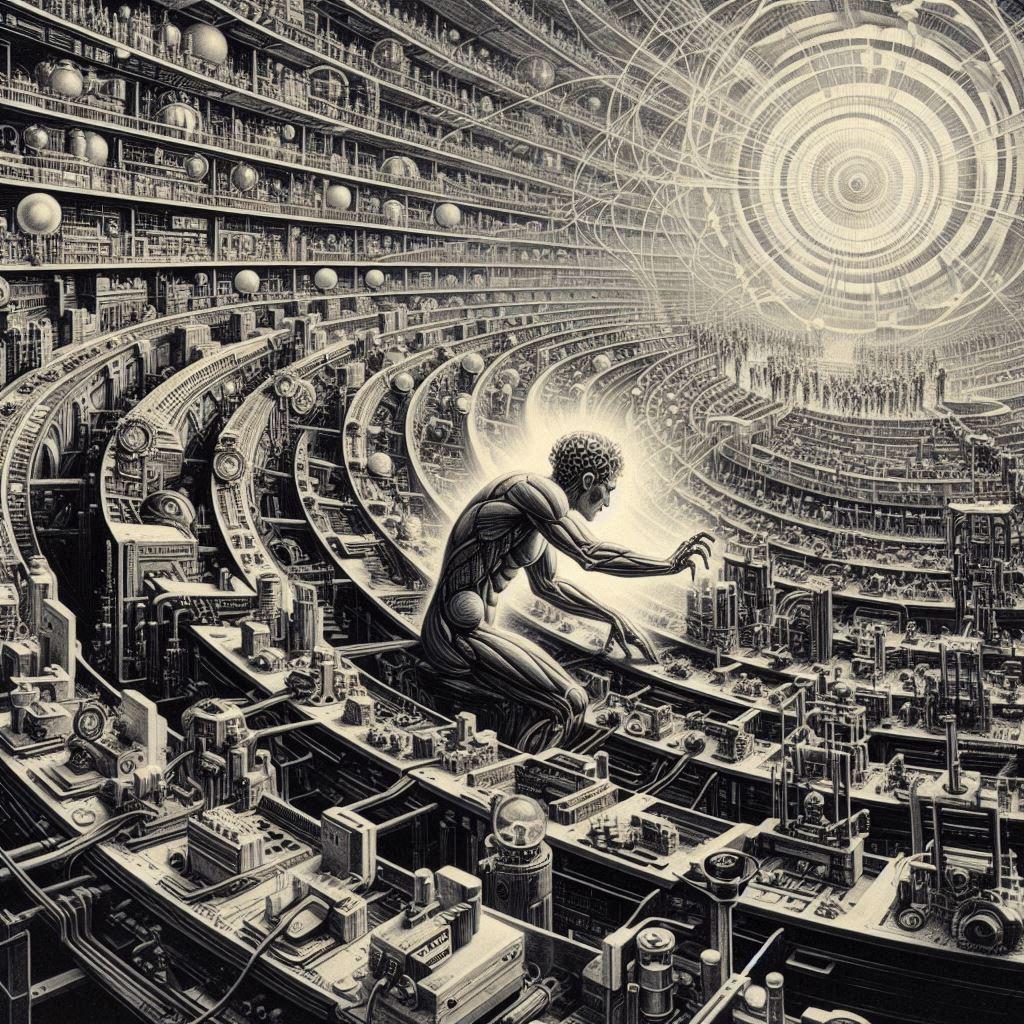
Art in the Shadow of Reproduction (Generated with the aid of artificial intelligence.)
Walter Benjamin’s concepts of technical reproduction and aura enable us to rethink the social function and aesthetic experience of art. Today the new challenges and opportunities facing art in the digital age lend fresh perspective to Benjamin’s analyses. Perhaps his most compelling observation remains:
“The human drive to transcend itself is most visibly manifested through art.”
The transition of art from “uniqueness to multiplicity” and from “cult object to exhibition object” continues to transform both the viewer and the producer. Benjamin’s thought continues to help us map this transformation.
Daldeniz, Elif. Walter Benjamin ve yeniden üretilebilir sanat yapıtı. Master's thesis, İstanbul Üniversitesi, 2000. Accessed May 3, 2025. https://acikbilim.yok.gov.tr/handle/20.500.12812/191027.
Karadaş, M. Ertan. “Walter Benjamin Düşüncesinde Teknik: İmkanlar, Eleştiri ve Politik Eylem.” *Felsefe Arkivi*, no. 52 (July 2020): 1–18. Accessed May 4, 2025. https://dergipark.org.tr/tr/pub/iufad/issue/56083/737845.
Ulusoy, Şebnem Gürsoy. “Yapay Zekayla Sanatın Yeniden Üretimi Çağında Dijital Dizi Kültürü.” *Uluslararası Sanat ve Estetik Dergisi*, Yıl 7, Sayı 13 (Haziran 2024): 118–128. Accessed May 4, 2025. https://acikerisimarsivi.gelisim.edu.tr/server/api/core/bitstreams/176da8bc-716d-4aff-ae96-0babb8e09820/content.
What Is the “Aura” of Art?
From Cult Value to Exhibition Value
New Modes of Perception: Distraction or Critical Engagement?
Why Is Benjamin’s Theory Still Relevant in the Digital Age?
Thinking Alongside Benjamin