

This article was automatically translated from the original Turkish version.
+1 More
Söğüt (Salix L.), a genus of deciduous trees and shrubs belonging to the Salicaceae family, typically growing along water edges and in moist areas. trees and Türkiye commonly feature willows, which are fast-growing species that readily adapt to areas near water. This genus is taxonomically complex and notable for frequent natural hybridization between species. Willows are generally dioecious, with male and female individuals separate, and can be pollinated by both insects and wind.

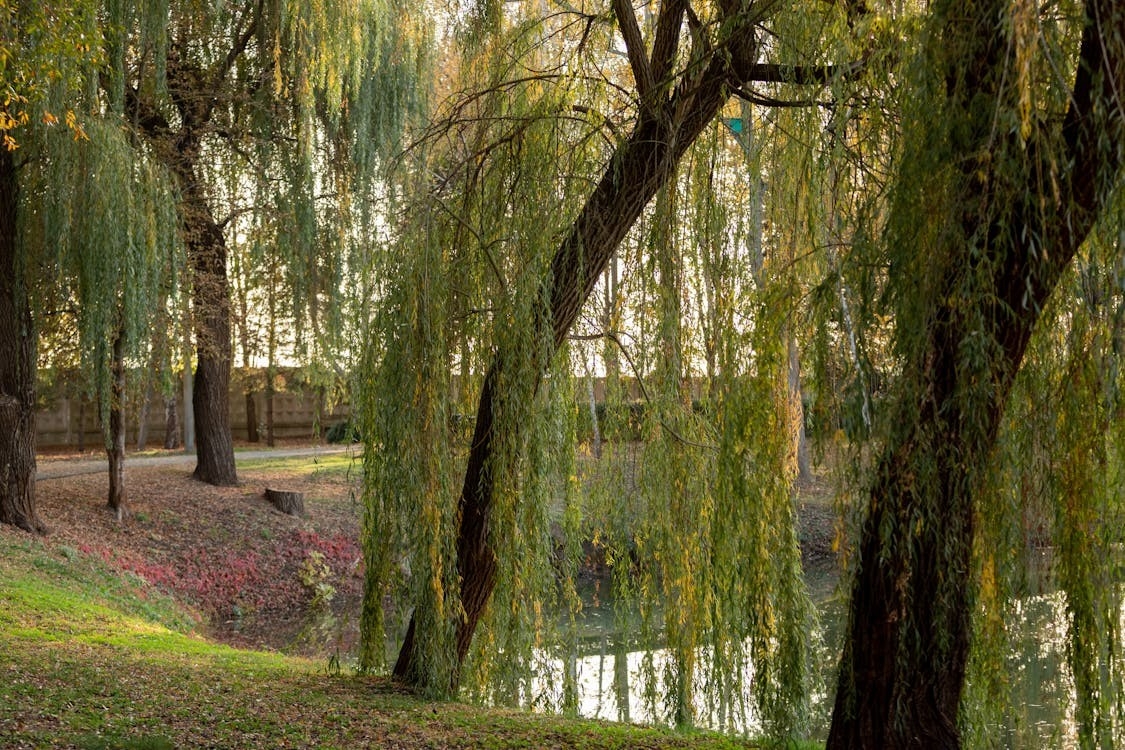
Willow Tree (Pexels)
Willow species exhibit considerable variation in appearance. They can grow as trees or shrubs and typically have slender, flexible branches. Stem bark varies by species, ranging from smooth to fissured; young shoots may appear green, yellow, or reddish. Leaves are usually narrow and elongated, with finely toothed or entire margins. Flowers occur in catkin-like structures called aments; male and female flowers develop on separate individuals. Fruits are small capsules containing numerous fine, hairy seeds.
Willows naturally thrive especially along riverbanks, lake shores, and areas with high groundwater levels. These plants prefer moist, alluvial soils and are distributed across nearly all regions of Türkiye. Highly light-demanding, willows grow rapidly and adapt quickly to their environment. Their tolerance to flooding makes them a vital component of riparian and wetland ecosystems. The root systems of willows play a critical role in preventing soil erosion and, through rapid root development, help stabilize soils in areas prone to landslides.
Willows flower early in spring and begin producing pollen. In Türkiye, pollen dispersal typically starts in late February or March and continues until May. Pollen is transported by both wind and insects. Environmental factors such as temperature, humidity, and wind directly influence pollen dispersal. Aerobiological studies have shown that willow pollen in Türkiye follows distinct seasonal patterns across different regions. Pollen release increases with rising temperature and humidity, while weather events such as rainfall can cause sudden drops in concentration.
Willows are ecologically and economically valuable plants. Their strong and extensive root systems make them ideal for stabilizing riverbanks, preventing soil erosion, and reinforcing areas at risk of landslides. In landscape design, particularly pendulous species such as Salix babylonica, are favored for their aesthetic appeal and commonly used as shade trees in parks. Additionally, their flexible shoots are utilized in traditional basket weaving and the production of decorative items. Some species are also employed in phytoremediation projects aimed at reducing environmental pollution; these species can absorb and sequester contaminants such as heavy metals from polluted soils and water sources, contributing to pollution reduction through rapid biomass production.

No Discussion Added Yet
Start discussion for "White Willow Tree (Salix Alba)" article
Morphological Characteristics
Ecological Distribution and Habitat
Pollen and Pollination Characteristics
Uses and Importance