


This article was automatically translated from the original Turkish version.
+2 More
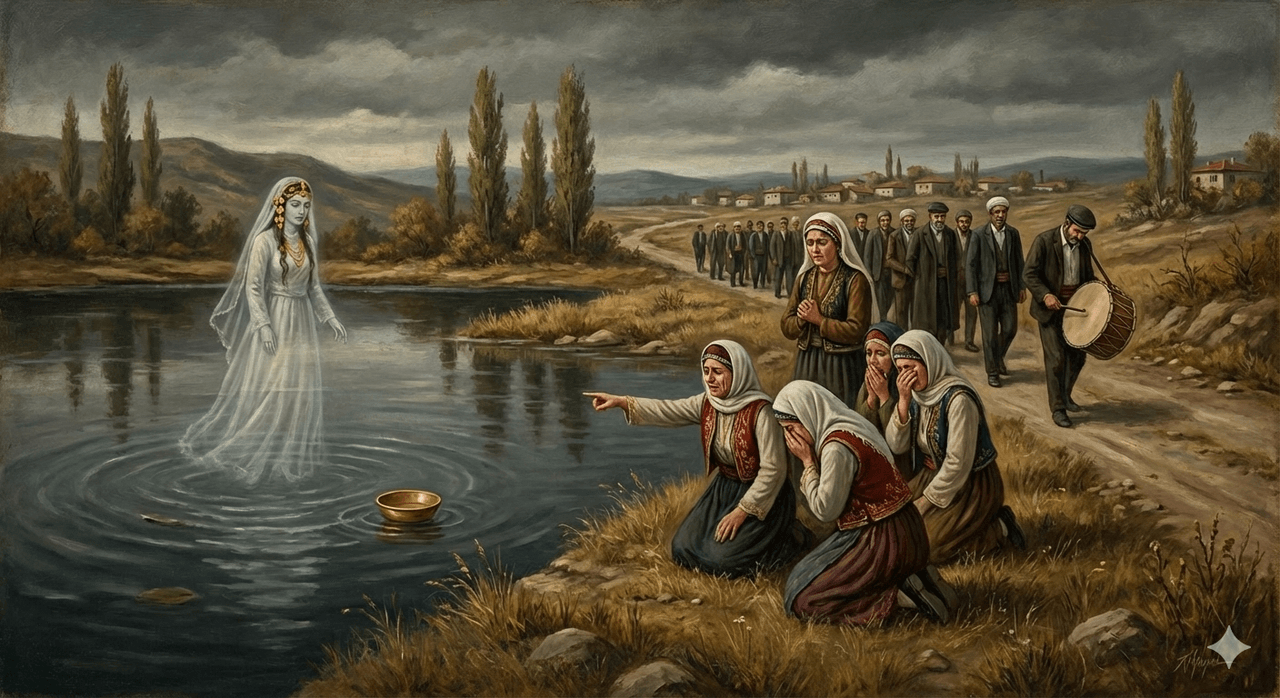
(Yapay Zeka ile Oluşturulmuştur)
“Kaçındasın Gelin Ümmü Kaçında” türkü, an anonymous narrative structure and ağıt character that distinguishes it within the Ankara regional folk music repertoire.【1】 The song, centered on the death of a young woman, represents one of the examples through which regional notions of female identity, perceptions of fate, and social memory are reflected in folk music.【2】 The narrative reflects the transformation of an individual tragedy into collective memory through oral culture.
The “Ümmü Kız” türkü emerged within the oral cultural tradition of the Ankara region and has been transmitted across generations to the present day.【3】 Considered within the tradition of narrative folk songs, the piece is built upon the recounting of an event that either occurred or was accepted as having occurred. The türkü occupies a place among narrative-based compositions performed in the region during weddings, mourning rituals, and social memory practices.【4】

Notation of the “Kaçındasın Gelin Kaçında” Türkü (Repertükül)
The song “Kaçındasın Gelin Ümmü Kaçında” is an ağıt originating from the Afyon region.【5】 According to the song’s narrative, the event takes place around Emre Lake, between the villages of Döğer and Ligen in northern Afyonkarahisar.【6】
According to tradition, as the wedding procession advances accompanied by drums and zurnas, the bride Ümmü rides her horse along the shore of the lake. When they reach a dark stretch, the sudden flight of large birds startles the horse, causing it to bolt uncontrollably. Despite efforts by the procession to stop the horse, they fail. Soon after, only Ümmü’s headscarf (yazma) remains, and it becomes clear that the bride has disappeared. Following this event, it is believed that Ümmü drowned in the lake, and the ağıt was composed in response to this tragedy.
Another version of the narrative exists. In this account, Ümmü is forced into marriage with a man she does not love and flees with her beloved young man. As they reach the bank of a river, the young man crosses safely; however, as Ümmü attempts to leap across a narrow point, her veil catches on her foot and she falls into the water and drowns. After the incident, her lover is blamed, brought to trial, and sentenced to death. Before his execution, he sings a heart-wrenching türkü, heard by Ümmü’s husband and others present. As a result of this testimony, the young man is released; Ümmü’s father and the false witnesses are arrested.
In light of these narratives, “Kaçındasın Gelin Ümmü Kaçında” is transmitted as a Turkish folk türkü in the form of an ağıt, addressing themes of tragic death and romantic longing.【7】
The “Ümmü Kız” türkü is regarded among examples in folk music that address representations of women. In the song, the female figure is presented with elements of youth, beauty, and innocence, while her fatal destiny is conveyed through the motif of fate.【8】 In this regard, the piece serves as a regional example of the women-centered ağıt tradition.
The “Ümmü Kız” türkü belongs to the tradition of narrative folk songs through its integration of events, characters, and locations.【9】 The song functions not merely as a musical composition but also as an oral narrative carrying social memory.【10】 Its form as an ağıt indicates that the composition is structured around themes of mourning and loss.
The song is part of the Ankara regional repertoire and is performed in a style dominated by its ağıt character.【11】 The narrative aspect of the lyrics is emphasized in performance; the story of the türkü serves as a vital element in completing its meaning. In this regard, the “Ümmü Kız” türkü is regarded among narrative-based compositions within the regional musical tradition.【12】
Kaçındasın Gelin Ümmü kaçında
Sar'altınlar delebiyor saçında
Gelin Ümmü kaldı göller içinde
Katil Göller nere koydun Ümmü'mü
Ümmü'mü Ümmü'mü Gelin Ümmü'mü
On sekizdir siyah saçın örgüsü
Bu güzellik sana Hakkın vergisi
Suya düştü Ümmü kızın kendisi
Katil Göller nere koydun Ümmü'mü
Ümmü'mü Ümmü'mü Gelin Ümmü'mü
Davulcusu kaya dibi dolaşır
Seymenleri kuzu gibi meleşir
Evlerine kara haber ulaşır
Katil Göller nere koydun Ümmü'mü
Ümmü'mü Ümmü'mü Gelin Ümmü'mü
Altın tası suya düşmüş dalabır
Sırma saçlar su üstünde yalabır
Şu gelinsiz gelen kirvan banadır
Katil Göller nere koydun Ümmü'mü
Ümmü'mü Ümmü'mü Gelin Ümmü'mü
Akmaz iken kanlı sular harladı
Gelin Ümmü başın kimler bağladı
Gökte melek, yerde insan ağladı
Katil Göller nere koydun Ümmü'mü
Ümmü'mü Ümmü'mü Gelin Ümmü'mü【13】
[1]
Nesrin Feyzioğlu. “Gelin Ağıtları Üzerine Bir Değerlendirme.” Atatürk Üniversitesi Türkiyat Araştırmaları Enstitüsü Dergisi 43 (2010): s. 84. Erişim tarihi: 22 Şubat 2026. https://dergipark.org.tr/en/download/article-file/33516.
[2]
Nesrin Feyzioğlu. “Gelin Ağıtları Üzerine Bir Değerlendirme.” Atatürk Üniversitesi Türkiyat Araştırmaları Enstitüsü Dergisi 43 (2010): s. 84. Erişim tarihi: 22 Şubat 2026. https://dergipark.org.tr/en/download/article-file/33516.
[3]
Nesrin Feyzioğlu. “Gelin Ağıtları Üzerine Bir Değerlendirme.” Atatürk Üniversitesi Türkiyat Araştırmaları Enstitüsü Dergisi 43 (2010): s. 88. Erişim tarihi: 22 Şubat 2026. https://dergipark.org.tr/en/download/article-file/33516.
[4]
Nesrin Feyzioğlu. “Gelin Ağıtları Üzerine Bir Değerlendirme.” Atatürk Üniversitesi Türkiyat Araştırmaları Enstitüsü Dergisi 43 (2010): s. 85. Erişim tarihi: 22 Şubat 2026. https://dergipark.org.tr/en/download/article-file/33516.
[5]
Repertükül, “Kaçındasın Gelin Ümmü Kaçında.” Erişim tarihi: 22 Şubat 2026. https://www.repertukul.com/KACINDASIN-GELIN-UMMU-KACINDA-1488.
[6]
Repertükül, “Kaçındasın Gelin Ümmü Kaçında.” Erişim tarihi: 22 Şubat 2026.https://www.repertukul.com/KACINDASIN-GELIN-UMMU-KACINDA-1488.
[7]
Repertükül, “Kaçındasın Gelin Ümmü Kaçında.” Erişim tarihi: 22 Şubat 2026.https://www.repertukul.com/KACINDASIN-GELIN-UMMU-KACINDA-1488.
[8]
Çağhan Adar ve Beyza Yetim. “Sanatta Kadın Algısı: Afyonkarahisar Türküleri Örneklemi.” Iğdır Üniversitesi Sosyal Bilimler Dergisi 24 (Ekim 2020): s. 168. Erişim tarihi: 22 Şubat 2026. https://dergipark.org.tr/tr/download/article-file/2154399.
[9]
Çağhan Adar ve Beyza Yetim. “Sanatta Kadın Algısı: Afyonkarahisar Türküleri Örneklemi.” Iğdır Üniversitesi Sosyal Bilimler Dergisi 24 (Ekim 2020): s. 168. Erişim tarihi: 22 Şubat 2026. https://dergipark.org.tr/tr/download/article-file/2154399.
[10]
Çağhan Adar ve Beyza Yetim. “Sanatta Kadın Algısı: Afyonkarahisar Türküleri Örneklemi.” Iğdır Üniversitesi Sosyal Bilimler Dergisi 24 (Ekim 2020): s. 168. Erişim tarihi: 22 Şubat 2026. https://dergipark.org.tr/tr/download/article-file/2154399.
[11]
Nesrin Feyzioğlu. “Gelin Ağıtları Üzerine Bir Değerlendirme.” Atatürk Üniversitesi Türkiyat Araştırmaları Enstitüsü Dergisi 43 (2010): s. 84. Erişim tarihi: 22 Şubat 2026. https://dergipark.org.tr/en/download/article-file/33516.
[12]
Nesrin Feyzioğlu. “Gelin Ağıtları Üzerine Bir Değerlendirme.” Atatürk Üniversitesi Türkiyat Araştırmaları Enstitüsü Dergisi 43 (2010): s. 85. Erişim tarihi: 22 Şubat 2026. https://dergipark.org.tr/en/download/article-file/33516.
[13]
Repertükül, “Kaçındasın Gelin Ümmü Kaçında.” Erişim tarihi: 22 Şubat 2026. https://www.repertukul.com/KACINDASIN-GELIN-UMMU-KACINDA-1488.

(Yapay Zeka ile Oluşturulmuştur)
No Discussion Added Yet
Start discussion for "Who are you avoiding, bride? Ode to Ümmü Kaçında" article
Regional and Cultural Context of the Song
The Story of the Song
Perceptions of Womanhood and Social Representations
Its Place Within the Narrative Folk Song Tradition
Repertoire and Performance Characteristics
Lyrics of the Song