This article was automatically translated from the original Turkish version.
Winter Sleep (Film)
Director(s) | Nuri Bilge Ceylan | ||||||||
|---|---|---|---|---|---|---|---|---|---|
Screenplay(s) | Ebru Ceylan Nuri Bilge Ceylan | ||||||||
Producer(s) | Nuri Bilge Ceylan Zeynep Özbatur Atakan | ||||||||
Cinematographer(s) | Gökhan Tiryaki | ||||||||
Editing | Nuri Bilge Ceylan | ||||||||
Music(s) | Gökhan Tiryaki | ||||||||
Country | Germany France Türkiye | ||||||||
Language(s) | Turkish | ||||||||
Duration | 196 minutes | ||||||||
Release Date(s) | 13 June 2014 | ||||||||
Box Office Revenue | Approximately 2.5 million ₺ | ||||||||
Awards Received | Best Film – 47th SİYAD Awards Best Director – 47th SİYAD Awards FIPRESCI Prize – Cannes Film Festival Golden Palm – 67th Cannes Film Festival Sadri Alışık Theatre and Cinema Actor Awards – Special Jury Award Best Cinematography – Gökhan Tiryaki Best Supporting Actor – Ayberk Pekcan Best Actor – Haluk Bilginer Best Actress – Melisa Sözen | ||||||||
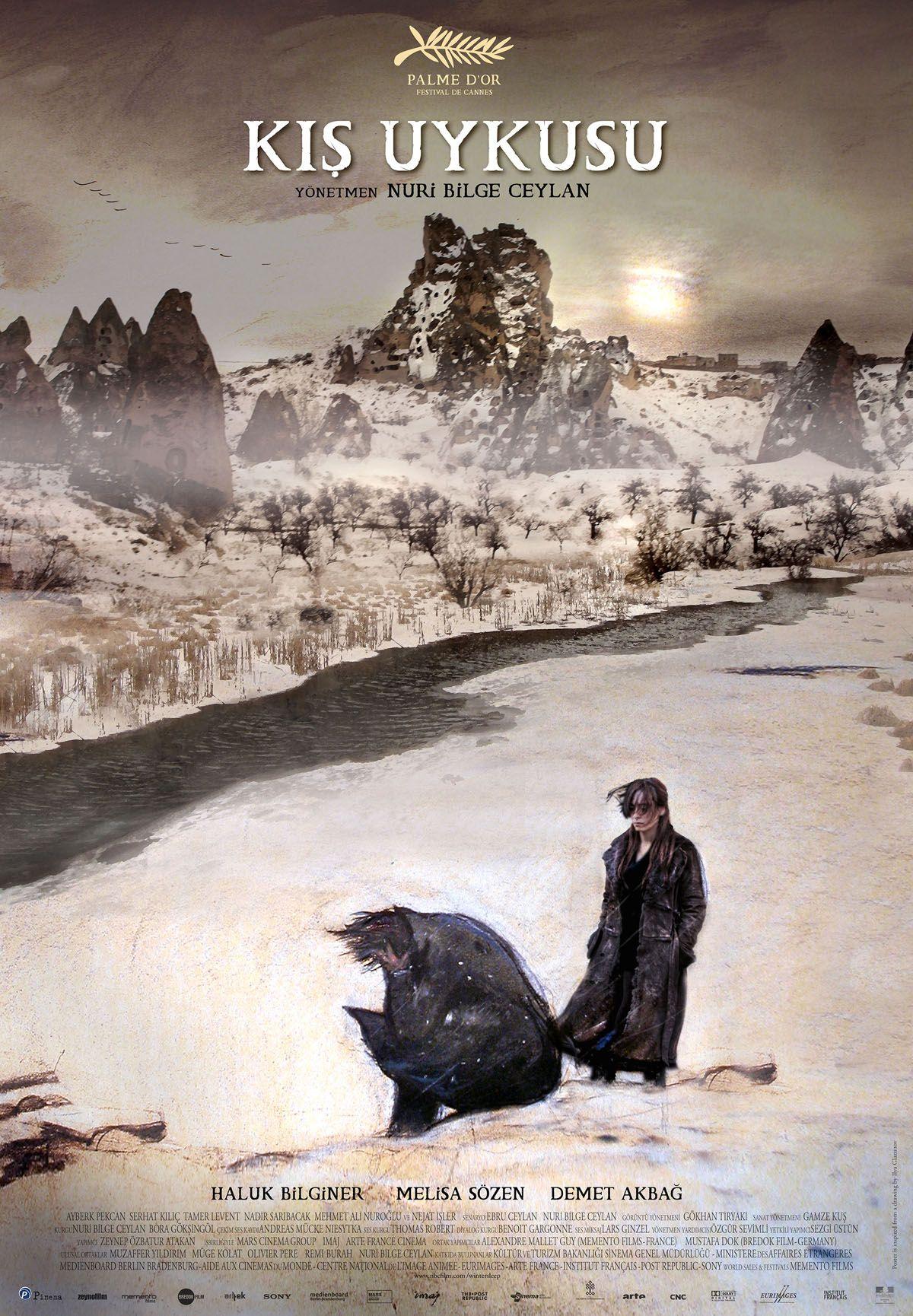
Winter Sleep is a 2014 dramatic film by Nuri Bilge Ceylan, one of Türkiye’s most important directors. The film won the Golden Palm at the 67th Cannes Film Festival, achieving major international acclaim. While posing universal questions about human nature and interpersonal relationships, it also successfully captures the social and cultural fabric of rural life in Türkiye. Although its slow pace and profound narrative demand patience, Winter Sleep leaves a lasting impression on viewers through its significant contribution to the art of cinema.
The film centers on Aydın, a retired theater actor who runs a boutique hotel inherited from his father, located in the snow-covered steppes of Cappadocia. Aydın lives with his wife Nihal and his divorced sister Necla at the hotel. The harsh winter conditions trigger an inner crisis in Aydın. The film delves deeply into his relationships with those around him, class differences, and personal reckonings. Aydın’s conversations with the people around him reveal his intellectual arrogance and his avoidance of social responsibility. The film emphasizes human inner loneliness and the conflict between the individual and society.
Winter Sleep Trailer (YouTube)
Winter Sleep draws inspiration from Chekhov’s short stories in its screenplay. The film explores the complexity of human relationships and individual conflicts with great depth. Aydın’s intellectual arrogance and sense of superiority over those around him are among the film’s central themes. Through long dialogues and static shots, the film reflects the inner worlds of its characters. Cinematographically, Gökhan Tiryaki’s visual direction successfully captures the cold and isolated atmosphere of Cappadocia, reinforcing the film’s overall tone.
Haluk Bilginer – Aydın
Aydın, the hotel owner and retired actor, is a character caught between intellectual pride and social responsibility, engaged in a deep internal reckoning; he represents the clash between Western intellectual idealism and rural reality in Türkiye.
Melisa Sözen – Nihal
Aydın’s wife Nihal, through her innocence and emotional fragility, attempts to soften family tensions and offers a quiet interrogation of female identity and social status.
Demet Akbağ – Necla
Divorced and energetic Necla embodies the modern woman’s search for freedom and the contradictions of rural life; she is the catalyst for tensions within the family.
Ayberk Pekcan – Hamdi
Hamdi, the hotel employee, serves as a symbol of class hierarchy and the constrained existence of rural laborers, offering a silent critique of power dynamics and social injustice.
Nejat İşler – İsmail
İsmail, with a limited role, enriches the film’s character dynamics by reflecting the complexity of social interactions and the human landscape of rural society.
Tamer Levent – Suavi
Suavi, Aydın’s friend and an intellectual figure, voices the film’s philosophical debates and moral inquiries.
Serhat Kılıç – Servet
Servet, as one of the ordinary yet impactful members of rural society, represents the dynamics and varied faces of power within the social environment.
Nadir Sarıbacak – Sadık
Sadık is an ordinary character immersed in the daily life of the hotel and its surroundings, enhancing the film’s sense of realism.
Mehmet Ali Nuroğlu – Yusuf
Yusuf, a young and idealistic character, reflects the hopes and disappointments of the new generation.
Ekrem İlhan – Şevket
Şevket represents a simpler, more concrete face of village and rural life in the film.
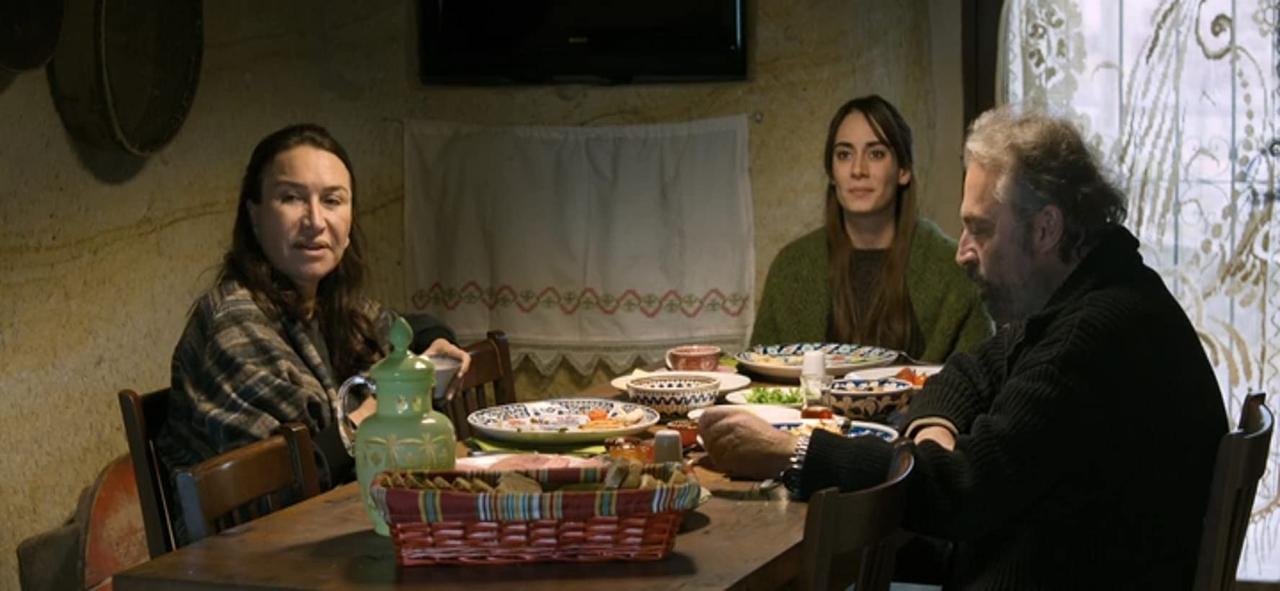
Necla - Nihal - Aydın (Left to right)
Winter Sleep offers a profound examination of Türkiye’s social, economic, and cultural structures, particularly in rural regions. Set in Cappadocia—a geographically and culturally rich yet isolated area—the film’s location choice symbolizes the solitude of rural life and the distance between the individual and society.
Through the character of Aydın, the film illuminates the gap between urban intellectuals and rural existence, reflecting broader class divisions in Türkiye. Aydın’s status as a hotel owner and an educated man places him apart from those around him, marking a clear indicator of social hierarchy and class conflict.
The film also questions the position of women in Turkish society and family dynamics. Through the characters of Nihal and Necla, subtle allusions are made to women’s repression, their pursuit of freedom, and their roles within the family.
The dialogues and behaviors in the film point beyond individual introspection to social injustice, economic inequality, and cultural disconnection. Aydın’s sense of superiority and his inability to empathize with others, along with his evasion of social responsibility, symbolize the relationship between certain segments of Türkiye’s intellectual class and rural or lower-class communities.
Winter Sleep has been criticized by some viewers and critics as “excessively static” and “overly dialogue-driven,” primarily due to its long duration and slow pace. Its extended scenes and in-depth character analysis do not offer an easily accessible viewing experience; at times, this intensity tests the audience’s patience. However, this intense narrative style is also regarded as a crucial element that enhances the film’s artistic depth and philosophical inquiry. Some critics argue that the film reflects an intellectual elitism and that Aydın’s perspective fails to address social issues from a sufficiently broad viewpoint. On the other hand, the film has received widespread international acclaim for its visual aesthetics, performances, and psychological depth, winning numerous awards and securing its place as a landmark of Türkiye’s cinema.
Winter Sleep made history in Türkiye’s cinema by winning the Golden Palm at the 2014 Cannes Film Festival. In addition to this prestigious award, the film received numerous nominations and accolades at international festivals. It has been widely praised by critics in Türkiye and around the world, earning recognition in categories such as acting, directing, screenplay, and cinematography. These achievements highlight the film’s artistic quality and the power of its universal themes.
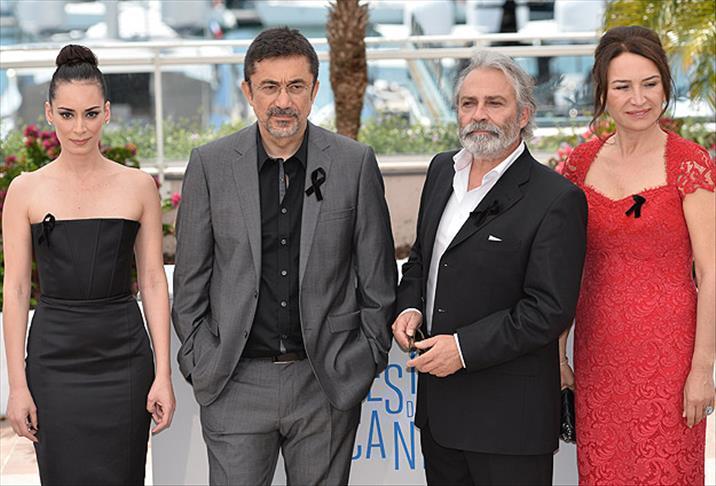
87th Academy Awards (AA)
Winter Sleep is a masterpiece that, through its simple yet profound narrative, examines not only individual psychology but also the social and cultural structure of Turkish society. Nuri Bilge Ceylan’s masterful direction, powerful performances, and detailed character analysis have elevated the film to one of the most important examples in the art of cinema. Though its length and deliberate pace demand patience from viewers, its intellectual and philosophical depth offers a thought-provoking and unforgettable experience. With its skillful handling of both local and universal themes, the film holds a permanent place as a significant work that has enhanced Türkiye’s prestige on the international cinematic stage.
Anadolu Ajansı (AA). “Kış Uykusu Ödülleri Topladı.” Accessed September 1, 2025. https://www.aa.com.tr/tr/kultur-sanat/kis-uykusu-odulleri-topladi/67728
Beyazperde. "Kış Uykusu." Accessed September 1, 2025. https://www.beyazperde.com/filmler/film-220032/
Cinemas. "Kış Uykusu." Accessed September 1, 2025. https://www.sinemalar.com/film/219447/kis-uykusu
Film Criticism. "Kış Uykusu." Accessed September 1, 2025. http://www.filmelestirisi.com/elestiri/kis-uykusu
IMDb. “Kış Uykusu.” Accessed September 1, 2025. https://www.imdb.com/title/tt2758880/
Oggito. “Kış Uykusu Filminden 10 Alıntı.” Accessed September 1, 2025. https://oggito.com/icerikler/kis-uykusu-filminden-10-alinti/27046
Science and Art Foundation (BİSAV). "Kış Uykusu’na Yatan Karakterler: Kış Uykusu Filminin Karakter Analizi." Accessed September 1, 2025. https://www.bisav.org.tr/Bulten/258/1568/kis_uykusu_na_yatan_karakterler_kis_uykusu_filminin_karakter_analizi

Winter Sleep (Film)
Director(s) | Nuri Bilge Ceylan | ||||||||
|---|---|---|---|---|---|---|---|---|---|
Screenplay(s) | Ebru Ceylan Nuri Bilge Ceylan | ||||||||
Producer(s) | Nuri Bilge Ceylan Zeynep Özbatur Atakan | ||||||||
Cinematographer(s) | Gökhan Tiryaki | ||||||||
Editing | Nuri Bilge Ceylan | ||||||||
Music(s) | Gökhan Tiryaki | ||||||||
Country | Germany France Türkiye | ||||||||
Language(s) | Turkish | ||||||||
Duration | 196 minutes | ||||||||
Release Date(s) | 13 June 2014 | ||||||||
Box Office Revenue | Approximately 2.5 million ₺ | ||||||||
Awards Received | Best Film – 47th SİYAD Awards Best Director – 47th SİYAD Awards FIPRESCI Prize – Cannes Film Festival Golden Palm – 67th Cannes Film Festival Sadri Alışık Theatre and Cinema Actor Awards – Special Jury Award Best Cinematography – Gökhan Tiryaki Best Supporting Actor – Ayberk Pekcan Best Actor – Haluk Bilginer Best Actress – Melisa Sözen | ||||||||
No Discussion Added Yet
Start discussion for "Winter Sleep (Film)" article
Plot
Cinematic and Thematic Features
Cast
Cultural and Social Reflections
Criticism
Awards and Nominations