This article was automatically translated from the original Turkish version.
+2 More
World Arabic Language Day
History | 18 December | ||||||||
|---|---|---|---|---|---|---|---|---|---|
Year Declared | 2012 | ||||||||
Declaring Institution | UNESCO | ||||||||
World Arabic Language Day is an international observance celebrated annually on 18 December to highlight the cultural, historical and social significance of the Arabic language. It was officially proclaimed by UNESCO in 2012, in recognition of the United Nations (UN) General Assembly’s decision on 18 December 1973 to adopt Arabic as the sixth official and working language of the UN.
This day aims to underscore Arabic’s contribution to world culture and its historical role. Through celebrations, UNESCO emphasizes not only the language itself but also the cultural diversity and multilingualism it enriches. Arabic plays a central role in fostering social cohesion, generating knowledge, and promoting peace and mutual understanding.
On 18 December 1973, the UN General Assembly adopted Arabic as its sixth official language. In 2012, UNESCO officially announced World Arabic Language Day to commemorate this milestone. In 2021, the art of Arabic calligraphy was inscribed on UNESCO’s Representative List of the Intangible Cultural Heritage, an initiative designed to promote the aesthetic and artistic dimensions of Arabic on the international stage. The theme for 2023 was “Arabic – The Language of Poetry and Art,” highlighting the poetic and artistic facets of the language. The theme for 2024 was declared as “Arabic and Artificial Intelligence: Preserving Cultural Heritage While Enhancing Innovation,” aiming to increase the representation of Arabic in digital content and safeguard its cultural heritage.
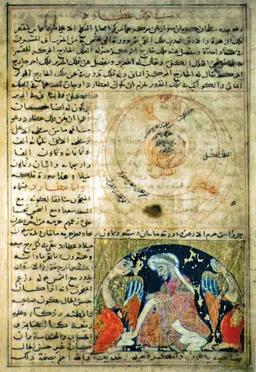
Arabic served as a catalyst in transmitting ancient Greek and Roman science and philosophy to the European Renaissance and facilitated intercultural dialogue along the Silk Road, from the coasts of India to the Horn of Africa. Throughout history, prominent figures and works have shaped Arabic’s intellectual and artistic legacy. These include poets Abū Nuwās and Omar Khayyam, the poet Al-Hansā’, the philosopher and physician Ibn Sīnā (Avicenna), and the philosopher Ibn Rushd (Averroes).
UNESCO undertakes various initiatives to preserve and promote Arabic. Through the Prince Sultan bin Abdulaziz Al Saud Program, it encourages the use of Arabic within the organization. It enhances the language’s visibility by supporting cultural change and events, and by increasing translations of UNESCO publications into Arabic.
UNESCO emphasizes Arabic’s contribution to cultural diversity and multilingualism. Linguistic diversity and differing perspectives are regarded as fundamental elements of sustainable peace and cultural richness. World Arabic Language Day is observed with this awareness, bringing to the fore the value of both the language and the cultures it carries.
UNESCO. "Message from Ms Audrey Azoulay, Director-General of UNESCO, on the Occasion of World Arabic Language Day 18 December 2023." UNESCO Digital Library. Accessed October 23, 2025. https://unesdoc.unesco.org/ark:/48223/pf0000388057_eng?posInSet=1&queryId=N-6f629a33-8b90-40cf-8345-a6799e2cb264
UNESCO. "World Arabic Language Day." UNESCO. Accessed October 23, 2025. https://www.unesco.org/en/world-arabic-language-day
United Nations. “World Arabic Language Day.” United Nations. Accessed October 23, 2025. https://www.un.org/en/observances/arabiclanguageday
Yıldız, Hakkı Dursun. "Arap." İslam Ansiklopedisi-Küre Ansiklopedi. Accessed October 23, 2025. https://kureansiklopedi.com/tr/detay/arap

World Arabic Language Day
History | 18 December | ||||||||
|---|---|---|---|---|---|---|---|---|---|
Year Declared | 2012 | ||||||||
Declaring Institution | UNESCO | ||||||||
No Discussion Added Yet
Start discussion for "World Arabic Language Day" article
Purpose and Significance
History
Cultural and Historical Contributions
UNESCO’s Role
Cultural Diversity and Peace