This article was automatically translated from the original Turkish version.
Registration Number | 851 | ||||||||
|---|---|---|---|---|---|---|---|---|---|
Registration Date | 17.08.2021 | ||||||||
Application Number | C2020/216 | ||||||||
Application Date | 17.08.2020 | ||||||||
Name of the Geographical Indication | Yalova Kivisi | ||||||||
Product / Product Group(s) | Processed and Unprocessed Fruits Vegetables and Mushrooms | ||||||||
Type of Geographical Indication | Place of Origin | ||||||||
Applicant/Registrant(s) | Yalova Provincial Directorate of Agriculture and Forestry | ||||||||
Geographical Boundary | Yalova Province | ||||||||
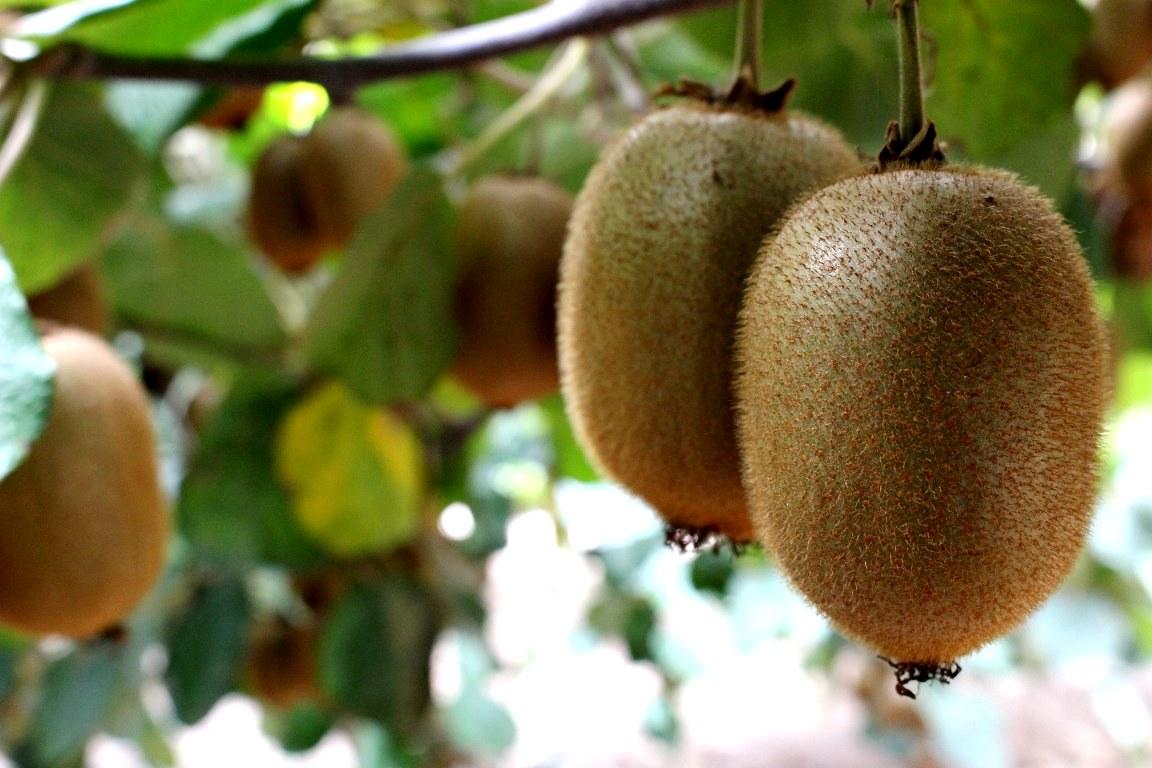
Yalova Kiwi is produced from Tomuri or Matua kiwi plants used as pollinators alongside the Hayward variety. The skin is brownish-green and covered with short, soft hairs. The flesh is bright green, slightly tart, and moderately sweet. The fruit measures 4–6 cm in width, 6–9 cm in length, and weighs 80–150 g. Harvesting takes place at the end of October and beginning of November; the fruit can be stored in cold storage for up to nine months.
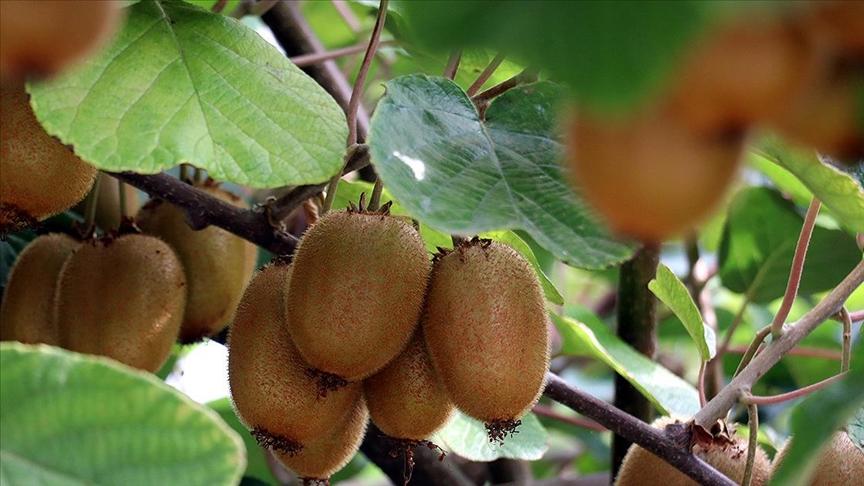
Yalova Kiwi (AA)
The Yalova Kiwi is distinguished by its fruit weight and shape. The fruit weighs between 80 and 150 g, with a width of 4–6 cm and a length of 6–9 cm; its shape varies from cylindrical-oval to egg-shaped. The skin is brownish-green with short, soft hairs. The flesh is bright green, slightly tart, and moderately sweet. The soluble solids content ranges from 14–17%, while vitamin C content is 60–65 mg/100 g at harvest and increases to 90–100 mg/100 g during storage. It can be preserved in cold storage for up to nine months. Harvesting occurs from late October to early November. The fruit retains its chemical, physical and textural properties throughout cold storage.
Yalova Kiwi vines grow in areas with sufficient light and heat accumulation. Due to their vigorous growth, they require a support system; shoots can reach 5–7 m in length. Posts are 2.5–3 m tall and buried 50–60 cm deep into the soil. Row spacing is set at 5 m and intra-row spacing at 4–5 m. Between 50 and 90 seedlings are planted per hectare; the male to female ratio must be 1:6 to 1:10.
Yalova Kiwi begins fruiting after 2–3 years and reaches full production at 4–5 years of age. Pruning includes shaping pruning, winter pruning and summer pruning, as well as bud and fruit thinning. Shaping pruning establishes the main arms and scaffold branches during the first 2–3 years. Winter pruning is carried out between December and February, while summer pruning occurs between June and July.
Bud and fruit thinning are performed to balance yield and quality; malformed buds and lateral buds in triple-cluster structures are removed. Irrigation is preferably done using mini-sprinkler or drip systems. Harvesting takes place at the end of October or beginning of November, based on soluble solids content and fruit firmness.
Fruits are sorted by size and stored in plastic crates, viyol containers or cardboard packaging. Inspections are conducted at least once annually under the coordination of the Yalova Provincial Directorate of Agriculture and Forestry, verifying compliance with production methods and the use of the logo and origin name.
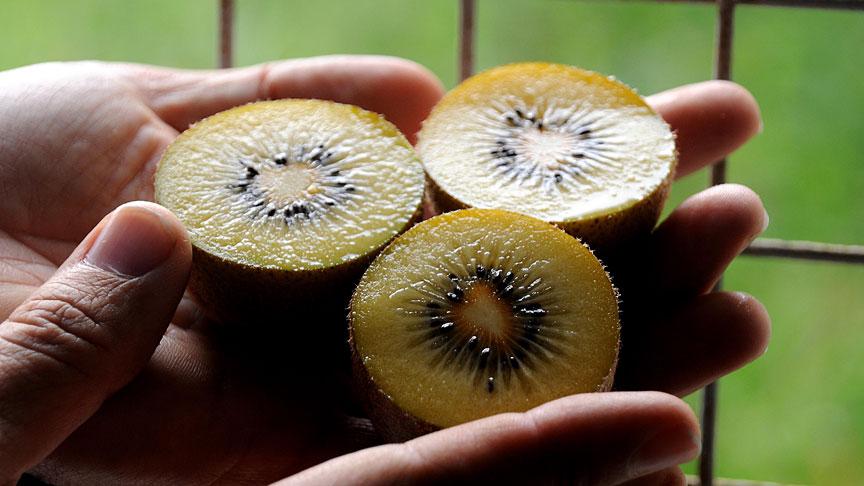
Yalova Kiwi (AA)
The Yalova Kiwi was developed under the coordination of the Yalova Provincial Directorate of Agriculture and Forestry and the Atatürk Center for Fruit and Vegetable Research. It was officially registered as a geographical indication by the Turkish Patent and Trademark Office on 17.08.2021 (Registration No: 851, Application No: C2020/216).
The Atatürk Center for Fruit and Vegetable Research developed Türkiye’s first native kiwi variety, “İlkaltın.” “İlkaltın” is sweeter than green kiwi and can be harvested approximately three weeks earlier than the Hayward variety. Following this work, the Center focused on developing its second native variety, “Yalova Altını,” which features a deep yellow color, high sweetness and a long shelf life.
Yalova holds a leading position in kiwi production in Türkiye. The kiwi varieties grown in the region are used both in domestic markets and for export, and production expertise is shared with other countries. Thanks to its geographical indication registration, Yalova Kiwi producers are able to present their products with official documentation and maintain quality standards.
The Yalova Kiwi is harvested at the end of October and beginning of November. Harvest timing is determined by measuring the dry matter content (soluble solids) and fruit firmness. Fruits are sorted by size, and damaged, misshapen or defective ones are removed. Harvested kiwis are stored in bulk in cold storage facilities.
The Yalova Kiwi Harvest Festival, held annually in Yalova, brings producers together during the harvest season. The festival fosters a spirit of production enthusiasm, with participation from local authorities, growers and protocol members. It serves as an important event for promoting the Yalova Kiwi and motivating producers.
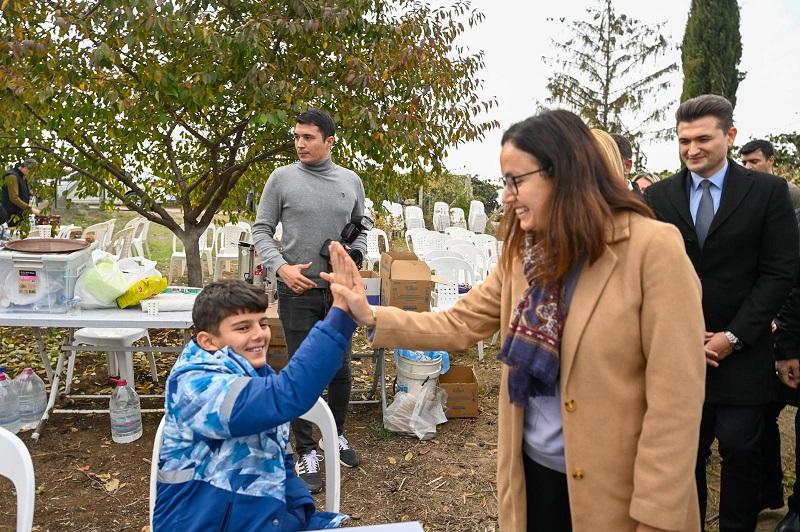
Image from the Harvest Festival (Yalova Governorship)
The production of Yalova Kiwi is supervised by a three-member inspection body composed of experts from the Yalova Provincial Directorate of Agriculture and Forestry, the Atatürk Center for Fruit and Vegetable Research and the Yalova Kiwi Producers Association. Inspections are conducted annually and may be carried out at any time if needed or in response to complaints.
Inspections focus on kiwi varieties, male to female plant ratios, pruning and harvesting times, packaging, storage and the proper use of the name “Yalova Kiwi” and its logo. The inspection body may seek expert assistance and initiate legal procedures to protect registered rights and ensure compliance.
Anadolu Ajansı. “Kivide ikinci 'altın' geliyor.” Accessed August 18, 2025. https://www.aa.com.tr/tr/turkiye/kivide-ikinci-altin-geliyor/1315167.
Anadolu Ajansı. “Tescillenen Yalova kivisi üreticisine kazandıracak.” Accessed August 18, 2025. https://www.aa.com.tr/tr/ekonomi/tescillenen-yalova-kivisi-ureticisine-kazandiracak/2366434.
Turkish Patent and Trademark Office. "No: 851 – Menşe Adı YALOVA KİVİSİ [PDF]." Accessed August 18, 2025. https://ci.turkpatent.gov.tr/Files/GeographicalSigns/d8b0e6ed-ca52-4240-ac96-fee11315ee13.pdf.
Türk Patent ve Marka Kurumu. "No: 851 – Menşe Adı YALOVA KİVİSİ." Accessed August 18, 2025. https://ci.turkpatent.gov.tr/cografi-isaretler/detay/2445.
Türkiye Cumhuriyeti Yalova Valiliği. "Yalova’da kivi hasadı başladı." November 12, 2024. Accessed August 18, 2025. http://www.yalova.gov.tr/yalovada-kivi-hasadi-basladi.

Registration Number | 851 | ||||||||
|---|---|---|---|---|---|---|---|---|---|
Registration Date | 17.08.2021 | ||||||||
Application Number | C2020/216 | ||||||||
Application Date | 17.08.2020 | ||||||||
Name of the Geographical Indication | Yalova Kivisi | ||||||||
Product / Product Group(s) | Processed and Unprocessed Fruits Vegetables and Mushrooms | ||||||||
Type of Geographical Indication | Place of Origin | ||||||||
Applicant/Registrant(s) | Yalova Provincial Directorate of Agriculture and Forestry | ||||||||
Geographical Boundary | Yalova Province | ||||||||
Distinctive Characteristics
Cultivation and Production Method
History and Variety Development
Harvest and Festivals
Inspection and Control