


This article was automatically translated from the original Turkish version.
+2 More
Location | Thermal Türkiye Yalova | ||||||||
|---|---|---|---|---|---|---|---|---|---|
Period(s) | Byzantine (Justinian) – Ottoman (Abdulhamid II) | ||||||||
Construction | 6th century; restoration: 1900 | ||||||||
Material(s) | Masonry construction lead roof | ||||||||
Plan | Transverse rectangle Original plan schematic | ||||||||
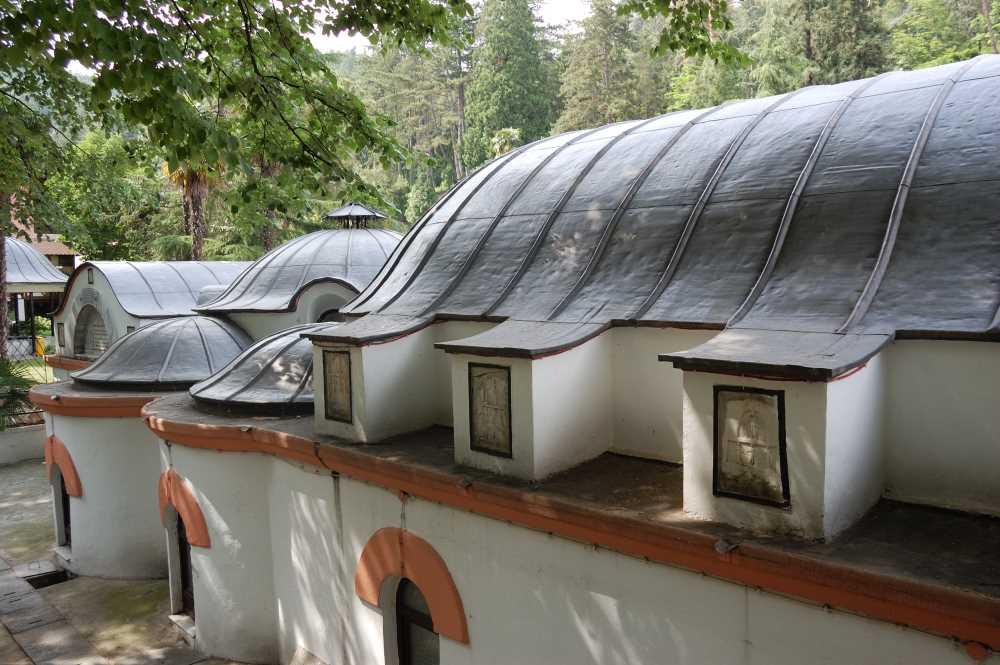
Kurşunlu Hamamı is a historical bath structure located in Yalova province of Türkiye, dating back to the Byzantine and Ottoman periods. Originally constructed during the reign of Byzantine Emperor Justinian I, the building gradually fell into ruin due to natural disasters and wars; it was restored in 1900 under the order of Ottoman Sultan Abdulhamid II. It is known today as Kurşunlu Hamamı because its roof was covered with lead.

Yalova Kurşunlu Hamamı (Culture Portal)
The construction of Kurşunlu Hamamı dates back to the Byzantine period, specifically to the 6th century during the rule of Emperor Justinian I. Over time, the structure was buried due to various natural disasters and conflicts. In 1900, coinciding with the 25th anniversary of Sultan Abdulhamid II’s accession to the throne, it was restored over a three-year period and regained its functionality. An Ottoman inscription was placed on the exterior facade in commemoration of this restoration.
The bath was built on an east-west oriented rectangular plan. The exterior walls are entirely constructed of rubble stone and painted white. Unlike traditional Turkish bath layouts, it follows an independent plan.
A rectangular open pool is located on the eastern facade, surrounded by changing rooms on three sides. The entrance is on the southern facade, while the eastern facade was specially designed. The changing room is L-shaped and contains a fountain-fed marble pool.
From the changing room one enters the cold room, whose walls are clad in marble up to window level. A large pool occupies the center of the cold room. Access to the warm room is through a round-arched doorway, where a circular small pool is located in the center, with washing areas to the north and south. The warm room opens into a square-shaped steam room. The ceiling of the steam room is vaulted and covered with lead.
The exterior decorations of the bath are concentrated particularly on the eastern and southern facades. Among the reliefs on the dome drum, within a frame, is a depiction of Hercules, shown bearded and naked, beneath whom three female saints—dressed in long robes and holding each other’s hands—are portrayed. A marble inscription is placed on the southern wall of the steam room.
Kurşunlu Hamamı was constructed in integration with the natural hot springs of the Thermal area and forms a cultural unity with other historical structures and legends of the region. Surrounding the bath is an area known as the Three Sisters, believed to be where the Christian saints Menodora, Metrodora, and Nymphodora lived. This site is regarded as sacred and is associated with the Thermal Baths.
Kurşunlu Hamamı was restored over a three-year period in 1900 under the order of Sultan Abdulhamid II and reopened for public use. The restoration preserved the original Byzantine features while incorporating Ottoman restoration elements. After restoration, the bath was converted back into a public bathhouse, featuring enclosed pools, saunas, showers and bathing rooms within its interior spaces.
Ministry of Culture and Tourism of the Republic of Türkiye. "Kurşunlu Hamam." Kültür Portalı. Accessed August 16, 2025. https://www.kulturportali.gov.tr/turkiye/yalova/kulturenvanteri/kursunlu-hamam.
T.C. Termal Subdistrict Municipality. “Kurşunlu Hamamı.” Termal Subdistrict Municipality Official Website. Accessed August 16, 2025. http://www.termal.gov.tr/kursunlu-hamami.
Yalova Belediyesi. "Kurşunlu Hamamı." Accessed August 16, 2025.

Location | Thermal Türkiye Yalova | ||||||||
|---|---|---|---|---|---|---|---|---|---|
Period(s) | Byzantine (Justinian) – Ottoman (Abdulhamid II) | ||||||||
Construction | 6th century; restoration: 1900 | ||||||||
Material(s) | Masonry construction lead roof | ||||||||
Plan | Transverse rectangle Original plan schematic | ||||||||
No Discussion Added Yet
Start discussion for "Yalova Kurşunlu Hamamı" article
History
Architectural Features
Decorations and Inscriptions
Cultural Context and Environmental Relationship
Restoration