

This article was automatically translated from the original Turkish version.
+2 More
Yamula Eggplant is a unique variety of eggplant cultivated in the village of Yemliha and its surrounding areas, located in the Kocasinan district of Kayseri. It has developed distinctive taste and aroma characteristics through adaptation to the region’s climatic and soil conditions. On 27 November 2007, it was officially registered with a geographical indication and placed under protected status.
The area around Yemliha village and Yamula Dam stands out as the sole region where this eggplant is grown, thanks to its unique microclimate, fertile soil structure, and long-standing agricultural traditions. The production and promotion of Yamula eggplant have become an integral part of the region’s cultural life since festivals began to be held annually starting in 1997.

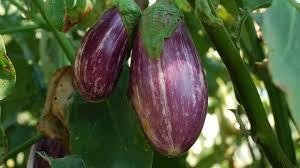
Yamula Eggplant (Anadolu Agency)
The Yamula eggplant plant reaches an average height of 70–80 cm. The stems and branches are slightly hairy, and the leaf margins are either straight or slightly wavy. Anthocyanin pigmentation is visible on the stems and young leaves. The flowers are purple.
The key features distinguishing Yamula eggplant from other eggplant varieties are:
The land where it is grown differs in agricultural quality due to the mineral richness provided by the Kızılırmak River valley.
Yamula eggplant thrives due to the unique composition of the soils in Yemliha village. Analyses have shown:
These characteristics are key factors contributing to the unique peel color and fruit structure of the product.
Yemliha village lies at an elevation of 1,093 meters and is distinguished by its microclimatic features. Based on 33 years of climate data from Kayseri:
The production period spans from April to September.
Eggplant cultivation begins in April with transplanting seedlings. The soil is prepared to a depth of 25–30 cm and enriched with farmyard manure. In spring, a base fertilizer (DAP) is applied, followed by nitrogen-based fertilizers throughout the summer. Irrigation intensifies at the beginning of July, with row spacing maintained at 60 cm.
Harvesting begins in the last week of July and continues until the first week of October. One hectare can yield 4–6 tons per season.

Yamula Eggplant Harvesting Stage (Anadolu Agency)
The production and marketing of Yamula eggplant are monitored by the Kayseri Directorate of Agriculture and Forestry, the Faculty of Agriculture at Erciyes University, the Yemliha Municipality, and the Kayseri Kocasinan Chamber of Agriculture. Monitoring covers all stages including planting, fertilization, irrigation, pesticide application, harvesting, and marketing. Inspections are intensified during the peak harvest period in August.
Anadolu Ajansı. “Pijamalı Patlıcanın Üretimi Yaygınlaşıyor.” AA. Accessed September 14, 2025. https://www.aa.com.tr/tr/ekonomi/pijamali-patlicanin-uretimi-yayginlasiyor/2977522
Turkish Patent and Trademark Office. "Yamula Patlıcanı Coğrafi İşaret Belgesi (PDF)." Accessed September 14, 2025. https://ci.turkpatent.gov.tr/Files/GeographicalSigns/e6a06908-d8a1-42cd-8cef-dd3ec3a4019f.pdf
Turkish Patent and Trademark Office. "Yamula Patlıcanı." Türk Patent ve Marka Kurumu Coğrafi İşaretler Portalı. Accessed September 14, 2025. https://ci.turkpatent.gov.tr/cografi-isaretler/detay/37985

Botanical Characteristics
Fruit Characteristics
Distinctive Features of the Product
Soil Characteristics
Climatic Characteristics
Cultivation Method
Monitoring Mechanism