

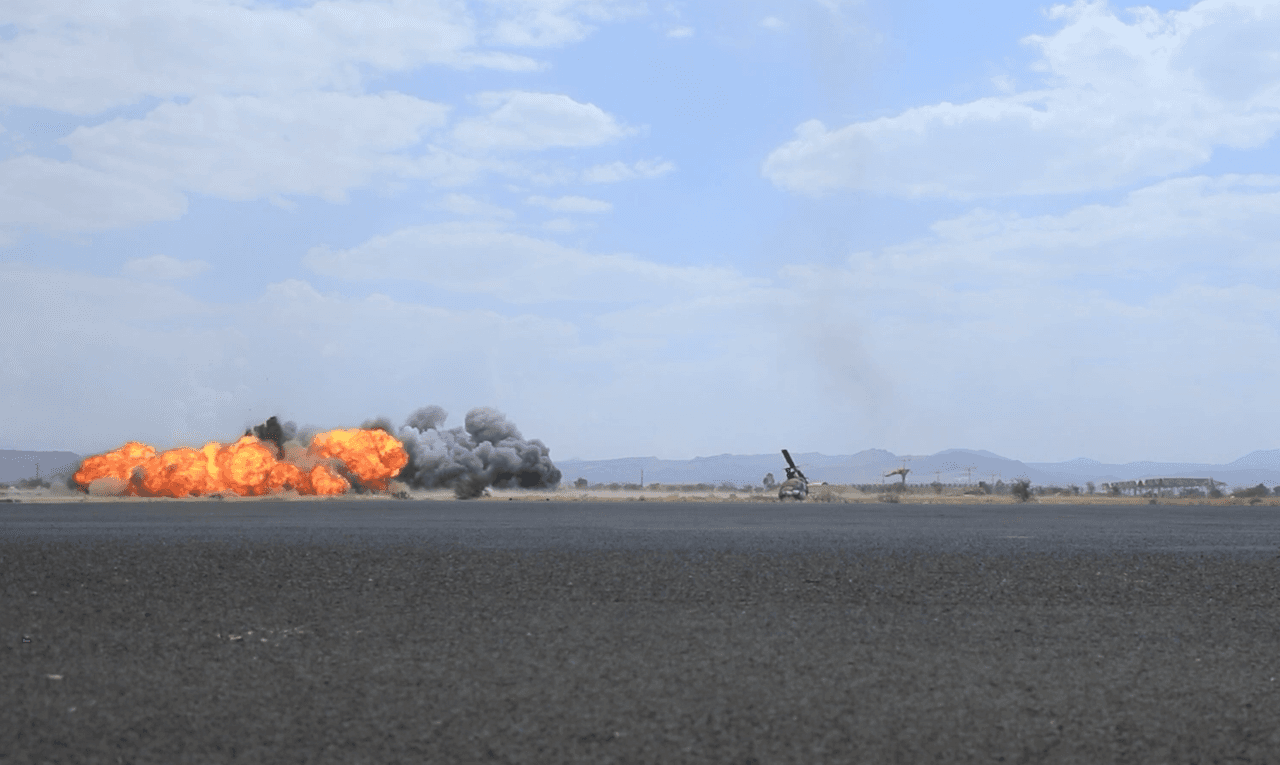
 Recently Added:
This article was automatically translated from the original Turkish version.
The Yemen-Saudi Arabia Tension and Iran Aircraft Crisis refers to the political and military crisis in July 2026 between the internationally recognized government of Yemen and the Iran-backed Houthis (Ansarullah Movement), led by Saudi Arabia. The crisis began when civilian aircraft belonging to Iran flew to Sanaa International Airport, which is under Houthi control. The situation escalated with military strikes on the airport, reciprocal missile and unmanned aerial vehicle (UAV) attacks, declarations of maritime blockades, and general mobilization calls.
Since September 2014, Iran-backed Houthis have maintained control over the capital Sanaa and large areas of northern and western Yemen. Since March 2015, the Saudi-led Coalition Forces have provided military support to the internationally recognized Yemeni government based in the temporary capital Aden. As of 2026, the ongoing civil war has claimed over 150,000 lives.
Following the ceasefire that came into effect in April 2022, the intensity of fighting decreased significantly and relative calm was achieved on many fronts. However, no comprehensive political agreement has been reached between the parties toward a lasting resolution.
The crisis began on 3 July 2026 when a plane operated by the Iranian airline Mahan Air landed at Sanaa International Airport, which is under Houthi control. The aircraft transported a Houthi delegation to Tehran to attend the funeral of Iran’s Supreme Leader Ali Khamenei, who died in February 2026 during US and Israeli attackson Iran.
Houthi Military Spokesperson Yahya Saree claimed that Saudi Arabian warplanes attempted to prevent the Iranian civilian aircraft from landing at Sanaa Airport, and that his forces responded accordingly. Saree stated that over 200 stranded, injured, and sick passengers were aboard the aircraft.
Yemeni media reported that this flight was the first direct Iranian flight to Sanaa International Airport in approximately ten years.
Turki al-Maliki, spokesperson for the Saudi-led Coalition, rejected the Houthi claims. He argued that the group’s statements about threats against Saudi Arabia were intended to divert attention from internal issues and allegations of violations against the Yemeni people.
On 4 July 2026, the Coalition issued a statement declaring that it would respond with unprecedented determination and force to any attempts targeting Saudi Arabia, its citizens, foreign residents in the country, or national assets, or violating Yemen’s sovereignty.
On 5 July, Houthis in the Hays area of Hodeidah Governorate launched attacks using artillery, unmanned aerial vehicles (UAVs), and sniper fire against government positions. According to medical and military sources, 16 government soldiers were killed and 22 others wounded.
During the same period, the British Armed Forces announced that a cargo ship off the coast of Hodeidah had been attacked, with no injuries reported. No group claimed responsibility for the attack.
On 8 July, President of the Presidential Leadership Council Rashad al-Alimi met in Riyadh with the Council’s Consultation and Reconciliation Committee to discuss national unity and security. On the same day, Council member and Commander of the Elite Brigades Abdulrahman al-Muhrimi ordered military and security units to raise their readiness levels to maximum. The official media outlet of the Houthi Ministry of Defense announced that general mobilization, war preparations, and armed tribal meetings were taking place across multiple governorates to support frontline forces.
On 9 July, tribal members in Jawf Governorate shot down a Houthi UAV reportedly conducting reconnaissance flights. On the same day, large-scale demonstrations were held in Saada, Hajjah, Jawf, Dhamar, Marib, and Hodeidah governorates under the call for “general mobilization.”
On 10 July, the planned prisoner exchange involving approximately 1,600 to 1,728 individuals scheduled for 11 July was postponed. The Yemeni government stated that the Houthis had refused to implement the agreement, while Abdulkader al-Murtada, Chairman of the Houthi Prisoners Affairs Committee, blamed the government for the delay.
On 12 July, Presidential Leadership Council member Abdullah al-Alimi argued that Mahan Air’s flight to Sanaa on 3 July violated Yemen’s sovereignty and called for an emergency meeting of the United Nations Security Council (UNSC) to address the matter.
Al-Alimi further alleged that the flight was used to secretly transport Iranian military experts and officials from Sanaa to Tehran. Iranian authorities have not issued an official statement regarding these claims.
On 13 July 2026, it was reported that a second Iranian aircraft attempted to land again at Sanaa International Airport. Yemen’s Minister of Defense Tahir al-Uqayli stated that Iranian aircraft had violated Yemen’s airspace and that military retaliation would follow.
The Yemeni military announced that it targeted the airport runway to prevent the Iranian aircraft from landing. The Houthis claimed the attack was carried out by Saudi Arabia.
Following the attack, the Iranian aircraft changed course and landed at Hodeidah Airport. Iranian authorities have not issued an official statement on the incident. Yemen’s Minister of Information Muammer al-Iryani accused the Houthis of detaining an aircraft belonging to the International Committee of the Red Cross (ICRC) at Sanaa Airport, refusing to allow it to take off, and detaining its pilot and co-pilot.
Houthi Military Spokesperson Yahya Saree declared that the attack would not go unanswered and shortly afterward announced that Abha Airport in southern Saudi Arabia had been targeted by ballistic missiles and UAVs.
Turki al-Maliki, spokesperson for the Saudi-led Coalition, stated that air defense systems had been activated against the ballistic missiles launched by the Houthis and that the threat had been neutralized. No casualties were reported in the incident.
The Houthis also warned international airlines not to use Saudi airspace until restrictions on Sanaa Airport were lifted, stating that attacks would continue until then.
President of the Presidential Leadership Council Rashad al-Alimi ordered the government, military, and security forces to raise their readiness to the highest level. Al-Alimi stated that the attempt to land the Iranian aircraft at Sanaa Airport constituted a violation of Yemen’s sovereignty and that the country would not tolerate any infringement of its airspace.
Yemen’s Civil Aviation and Meteorology Authority announced that all airports in the country were closed until a further notice following the strike on Sanaa Airport. However, shortly afterward, the Ministry of Transport declared that operations at airports were continuing normally.
In response to these developments, the United Nations Security Council (UNSC) held an emergency meeting the same day. UN Assistant Secretary-General for Political Affairs Khalid Khiari stated that Yemen and the region could not withstand another wave of tension and called on all parties to participate in negotiations under UN auspices.
UN Special Envoy for Yemen Hans Grundberg confirmed that the UN was closely monitoring developments in Yemen’s airspace and warned of the risk of broader escalation, urging all parties to engage in dialogue.
Yemen’s Permanent Representative to the UN Abdullah al-Saadi claimed that the aircraft attempting to land in Sanaa was linked to the Iranian Revolutionary Guard Corps (IRGC) and was carrying military personnel and equipment. Al-Saadi also stated that the Yemeni government had offered to provide a Yemen Airways aircraft to repatriate the Houthi delegation from Tehran.
The British Embassy in Yemen condemned the hardening rhetoric from the Houthis and called on all parties to reduce tensions. Russia’s Ambassador to Yemen Yevgeny Kudrov stated that the Tehran-Sanaa flight had been discussed during his meeting with President Rashad al-Alimi.
On 14 July, the American news platform Axios, citing two unnamed US officials, reported that US President Donald Trump had spoken by phone with Saudi Crown Prince Mohammed bin Salman and approved requested support for a potential military operation against the Houthis.
The report also stated that a US official claimed the Iranian aircraft was transporting weapons, missile components, and military experts to the Houthis. The White House responded to requests for comment by referencing a previous interview Trump gave to Fox News, while the Saudi Embassy in Washington declined to issue a statement.
On 14 July, Houthi Political Bureau member Muhammad al-Buhayti told Al Jazeera that if Saudi Arabia’s responsibility for the attack on Sanaa Airport were accepted, Yemen would have the right to target Saudi airports and impose a similar blockade. On the same day, Houthi Military Spokesperson Yahya Saree claimed that the 13 July attack had ended the “de-escalation” period that had lasted since 2014.
On 16 July, Houthi leader Abdulmalik al-Houthi stated in a televised address that the response to Sanaa Airport had been “modest,” and declared that the Houthis would apply a policy of “airports for airports, ports for ports, blockade for blockade.” He also indicated that Saudi Arabia’s oil facilities could be targeted. In the same speech, al-Houthi stated that if attacks on Yemen continued, Saudi oil infrastructure and critical facilities would become targets of missile and UAV strikes.
On 17 July, mass demonstrations under the slogan “mobilization” were held in numerous cities, beginning with Sanaa, following a call by Abdulmalik al-Houthi. After the demonstrations, the Houthis declared that the continuation of the blockade against Yemen would be regarded as a “total war.”
Houthi Minister of Defense Muhammad al-Atifi affirmed that all military units were ready to implement orders from leadership and stated that readiness levels were at their highest.
On 18 July, Presidential Leadership Council member Osman Majali told the official news agency SABA that the military option must be activated and that state institutions under Houthi control must be reclaimed.
On the same day, Council member and Commander of the Amalika Brigades Abdulrahman al-Muhrimi issued a message to civilians in Houthi-controlled areas, stating that their priority was a fair and lasting peace, but that they were prepared to resort to military action if peace proved unattainable.
On 19 July, Yemen’s Minister of Transport Muhsin al-Omari announced that a planned flight by the Iranian airline Mahan Air to Sanaa had been halted due to lack of required official permissions. Omari stated that the aircraft was denied permission to proceed to Sanaa while over Omani airspace and was forced to return. Iranian authorities and the Houthis have not issued official statements on the matter.
On 20 July 2026, Houthi Military Spokesperson Yahya Saree announced in a statement broadcast on the Al-Masirah television channel that a ban on maritime transport linked to Saudi Arabia had come into effect. Saree described the decision as part of a “blockade for blockade” response to the approximately 12-year-long blockade imposed on Yemen.
Saree stated that the Yemeni Armed Forces were prepared for all options but did not provide details on the scope or geographic areas covered by the maritime blockade.
Saudi Arabia initially did not issue an official assessment of the announcement. The development occurred as Saudi Arabia was attempting to increase oil shipments to Yanbu Port via the East-West Pipeline (Petroline).
Al Jazeera Arabic. “الحوثيون يعلنون فرض حظر على السفن الإسرائيلية في البحر الأحمر.” *الجزيرة*. Accessed July 20, 2026.https://www.aljazeera.net/news/
Al Jazeera. "What Is Going on in Yemen?" Al Jazeera. Accessed July 20, 2026.https://www.aljazeera.com/features/2026/7/11/what-is-going-on-in-yemen
Al Jazeera. “Leading Houthi Threatens ‘Siege’ on Saudi Arabia after Yemen Airport Attack.” Al Jazeera. Accessed July 20, 2026.https://www.aljazeera.com/news/2026/7/14/leading-houthi-threatens-siege-on-saudi-arabia-after-yemen-airport-attack
Al Jazeera. “Yemen’s Houthis Threaten Saudi Arabia after Alleged Airspace Intrusion.” Al Jazeera. Accessed July 20, 2026.https://www.aljazeera.com/news/2026/7/3/yemens-houthis-threaten-saudi-arabia-after-alleged-airspace-intrusion
Anadolu Ajansı. "Saudi Air Defenses Intercept Houthi Ballistic Missiles amid Yemen Tensions." Accessed July 20, 2026.https://www.aa.com.tr/en/middle-east/saudi-air-defenses-intercept-houthi-ballistic-missiles-amid-yemen-tensions/3996904
Anadolu Ajansı. "Saudi-Led Coalition Vows ‘Unprecedented’ Force against Houthi Threats." Accessed July 20, 2026.https://www.aa.com.tr/en/middle-east/saudi-led-coalition-vows-unprecedented-force-against-houthi-threats/3985817
Anadolu Ajansı. "Trump'ın Suudi Arabistan'ın Husilere Yönelik Saldırısına Destek Verdiği İddiası." Anadolu Ajansı. Accessed July 20, 2026.https://www.aa.com.tr/tr/dunya/trumpin-suudi-arabistanin-husilere-yonelik-saldirisina-destek-verdigi-iddiasi/3997165
Anadolu Ajansı. "Yemen Hükümeti, İran'a Ait Bir Uçağın Sana Havalimanı'na İnişini Engellediğini Duyurdu." Accessed July 20, 2026.https://www.aa.com.tr/tr/dunya/yemen-hukumeti-irana-ait-bir-ucagin-sana-havalimanina-inisini-engelledigini-duyurdu/4002763
Anadolu Ajansı. "Yemen'de Hükümet ile Husiler Karşılıklı Askeri Hazırlıklarını Artırıyor." Accessed July 20, 2026.https://www.aa.com.tr/tr/dunya/yemende-hukumet-ile-husiler-karsilikli-askeri-hazirliklarini-artiriyor/3990369
Anadolu Ajansı. "Yemen'deki Husiler: Suudi Arabistan'ın Abha Havalimanı'nı Balistik Füze ve İHA'larla Hedef Aldık." Accessed July 20, 2026.https://www.aa.com.tr/tr/dunya/yemendeki-husiler-suudi-arabistanin-abha-havalimanini-balistik-fuze-ve-ihalarla-hedef-aldik/3996967
Anadolu Ajansı. "Yemen’s Houthis Declare ‘Maritime Blockade’ on Saudi Arabia." Accessed July 20, 2026.https://www.aa.com.tr/en/middle-east/yemen-s-houthis-declare-maritime-blockade-on-saudi-arabia/4003795
Anadolu Ajansı. “Houthis Threaten to Attack Oil Facilities in Saudi Arabia amid Yemen Tensions.” Accessed July 20, 2026.https://www.aa.com.tr/en/middle-east/houthis-threaten-to-attack-oil-facilities-in-saudi-arabia-amid-yemen-tensions/4000598
Anadolu Ajansı. “Yemen'deki Husiler: Suudi Arabistan, Uluslararası Sana Havalimanı'nı Hedef Aldı.” Accessed July 20, 2026.https://www.aa.com.tr/tr/dunya/yemendeki-husiler-suudi-arabistan-uluslararasi-sana-havalimanini-hedef-aldi/3996488
Anadolu Ajansı. “İran Uçağı Krizi, Yemen'de Dört Yıldır Süren Ateşkesi Sarsarken Askeri Gerilimi Yeniden Tırmandırdı.” Accessed July 20, 2026.https://www.aa.com.tr/tr/dunya/iran-ucagi-krizi-yemende-dort-yildir-suren-ateskesi-sarsarken-askeri-gerilimi-yeniden-tirmandirdi/3997442
Arab News. “Saudi Arabia Says It Intercepted Houthi Missiles Fired at South.” Accessed July 20, 2026.https://www.arabnews.com/node/2650763/sa%EE%80%80udi-arabia
Associated Press. “Iran-Backed Houthi Leader in Yemen Threatens Escalation with Saudi Arabia.” Accessed July 20, 2026.https://apnews.com/article/yemen-saudi-arabia-war-houthi-iran-70a8626c44a50a4f489a0b193788fd43
Associated Press. “Yemen’s Houthis Announce a Maritime Embargo against Saudi Arabia.” Accessed July 20, 2026.https://apnews.com/article/yemen-saudi-arabia-maritime-embargo-fd7c4a3911f7eee18251483fc8af768c
Associated Press. “Yemen’s Houthis Strike Saudi Arabia’s Abha Airport with Missiles and Drones in a Sharp Escalation.” Accessed July 20, 2026.https://apnews.com/article/yemen-houthis-airport-saudi-strikes-7bddae3006304df8bf7f89e980006b33
BBC News. “Yemen's Houthis Launch Missiles at Saudi Arabia after Strikes on Sanaa Airport.” BBC News. Accessed July 20, 2026.https://www.bbc.com/news/articles/cp9ldle3d3xo
CNN Arabic. “فيديو لـ«لحظة سقوط صاروخ حوثي على مطار أبها في السعودية».. ما قصته؟” CNN Arabic. Accessed July 20, 2026.https://arabic.cnn.com/middle-east/article/2026/07/14/old-video-moment-a-houthi-missile-fell-on-abha-airport-in-saudi-arabia
Haberler.com. "Yemen'de İran Uçağı Krizi: Gerilim Yeniden Tırmanıyor." Accessed July 20, 2026.https://www.haberler.com/guncel/yemen-de-iran-ucagi-krizi-gerilim-yeniden-tirmaniyor-20033059-haberi/
Reuters. “Houthis Fire Missiles at Saudi Arabia, Breaking Years of Calm.” Reuters. Accessed July 20, 2026.https://www.reuters.com/world/middle-east/yemeni-military-targets-sanaa-airport-runway-stop-iranian-plane-landing-defence-2026-07-13/
TRT Haber. "Yemen Başkanlık Konseyi: Hava Sahamızın İhlal Edilmesine İzin Vermeyeceğiz." Accessed July 20, 2026.https://www.trthaber.com/haber/dunya/yemen-baskanlik-konseyi-hava-sahamizin-ihlal-edilmesine-izin-vermeyecegiz-951107.html
The National. "Houthis Announce ‘Maritime Ban’ on Saudi Arabia in Retaliation for Yemen Blockade." Accessed July 20, 2026.https://www.thenationalnews.com/news/2026/07/20/houthis-announce-maritime-ban-on-saudi-arabia-citing-blockade-of-yemen/
Arab Coalition spokesperson Brigadier General Turki al-Maliki stated that coalition forces have taken necessary operational measures to ensure the safety of commercial vessels navigating the Bab al-Mandab Strait within the framework of international law and the 1982 United Nations Convention on the Law of the Sea. The statement asserted that claims regarding the closure of ports and airports in Yemen constitute a “disinformation campaign” conducted by the Houthis.
According to the coalition’s statement, more than 300 commercial vessels entered the ports of Hodeidah, Al-Salif, and Ras Isa during the first half of 2026 carrying food, fuel and construction materials. It was alleged that the Houthis have halted operations at Sanaa International Airport, destroyed aircraft belonging to Yemenia Airlines, and rejected all efforts to reopen the airport.
The Saudi Ministry of Foreign Affairs condemned statements made by Seri, whom it labeled as the “military spokesperson of terrorist Houthi militias.” It recalled that the Houthis have targeted Yemen’s infrastructure through attacks on Aden International Airport in 2020 and southern Yemen’s oil export ports in 2022. The ministry also accused the Houthis of seizing four Yemenia Airlines aircraft at Sanaa International Airport.
On 21 July, Saudi Arabia issued a statement following a meeting of the Council of Ministers chaired by King Salman bin Abdulaziz, condemning the Houthis’ “false claims,” reaffirming its support for the internationally recognized government of Yemen, and declaring that it would take “decisive measures” to safeguard its vessels and ensure security in accordance with international law and the 1982 United Nations Convention on the Law of the Sea.
United Nations spokesperson Stephane Dujarric expressed concern at a press briefing on 20 July regarding the renewed fighting in the region and the Houthis’ threats against Saudi Arabia and freedom of navigation, stating that “an urgent de-escalation step is required.” Dujarric also highlighted the potential global economic impact of the near-closure of the Hormuz Strait.
US President Donald Trump, in a statement on 21 July, said the United States has “no issues” with the Houthis since its military operations against them. In response to concerns that a Houthi blockade could open a new front in the region, Trump stated that “the necessary steps will be taken if needed,” and recalled the “very strong operation” conducted against the Houthis lasting approximately 45 days.
The Sudanese Ministry of Foreign Affairs, in a statement issued on 22 July, expressed “deep concern” over the Houthi blockade decision, noting that it endangers maritime navigation in the Red Sea and the security and economic interests of coastal states. It affirmed full support for Saudi Arabia’s right to take all necessary measures to protect its ports and national security.
The Pakistani Ministry of Foreign Affairs, in a statement issued the same day, affirmed its right to take all necessary measures, including the legitimate use of force within the framework of self-defense under the United Nations Charter and international law, to protect its maritime assets and national interests in the Red Sea. The ministry condemned the Houthis’ “ongoing” threats against Saudi Arabia and commercial vessels “unconditionally.”
A Houthi military source speaking to the Houthi-affiliated Saba News Agency reported that within 24 hours of the blockade announcement on 21 July, six vessels received warnings, altered course, and returned. The source did not identify the vessels or the regions to which they returned.
Rashad al-Alimi, Chairman of the Yemen Presidential Council, during a meeting with India’s Ambassador to Yemen, Suhel Ajaz Khan, urged the international community to view the Houthis as part of an interconnected regional threat network. Alimi stated that the Houthis are attempting to drag Yemen into a broader regional conflict serving the agenda of the Iranian regime.
Alimi emphasized that the consequences of these developments extend beyond Yemen’s borders, threatening the security of the Red Sea and Asian countries dependent on this strategic sea lane. He also accused the Houthis of collaborating with terrorist groups and armed factions in the Horn of Africa, facilitating arms and military technology smuggling, and supporting piracy and transnational crime.
Following the near-halt of commercial vessel transit through the Hormuz Strait due to US-Iran tensions, the Houthi blockade decision has shifted the tension to the Bab al-Mandab Strait. Brent crude oil prices hovered near the $90 per barrel level.
After the blockade announcement, the number of crude oil tankers passing through the Bab al-Mandab Strait decreased by 69 percent. On 20 July, 16 vessels transited the strait; this number dropped to five on 21 July and rose slightly to nine on 22 July. During the same period, no vessels transited the Hormuz Strait over the previous five days.
ING Group Senior Economist for Transport and Logistics Rico Luman noted that even though no new attacks had yet occurred, the Houthi announcement immediately increased risks for Bab al-Mandab transit, causing freight and insurance premiums to surge. He recorded that the increased utilization of Yanbu Port as an alternative export hub for Saudi Arabia has added pressure to oil markets.
According to vessel tracking data, at least seven to eight oil tankers changed course sharply near Yemen following the Houthi blockade announcement on 20 July. The tankers Rodos and Mica, along with the vehicle carrier Liu Jiang Kou, altered their routes as they approached the Bab al-Mandab Strait from the south. The European Union’s naval force Aspides advised vessels belonging to Israel, the United States or Saudi Arabia to avoid transit through the Red Sea and the Gulf of Aden until the threat level subsides.
In an email sent to shipowners, the Houthis stated that “vessels are prohibited from loading or unloading cargo at any Saudi port” and that “anywhere within the operational area may be targeted.”
Under normal conditions, approximately 7.8 to 8.8 million barrels of crude oil and refined petroleum products transit daily through the 32-kilometer-wide Bab al-Mandab Strait. Analysts describe a simultaneous closure of the Hormuz and Bab al-Mandab straits as a “double chokepoint,” forecasting that such a scenario could reduce global oil supply by 7 percent and push crude oil prices above $120 per barrel.
Yemeni authorities reported that in “intense fighting” between government forces and Houthis in the Dhalea governorate in southwestern Yemen, four government soldiers and 23 Houthi fighters—including two commanders—were killed, and seven were captured. Ten government personnel were wounded. These clashes are described as the most intense in the region since the 2022 ceasefire.
Reports indicate that recent fighting between government forces and Houthis has resumed in various governorates including Juff, Dhalea and Taiz. According to a Reuters report citing sources from last week, Iran has instructed the Houthis to prepare to close the Bab al-Mandab Strait in the event of a US strike on Iran’s power infrastructure.
Houthi military spokesperson Yahya Seri announced on 23 July 2026 that, citing violations of the transit ban, the Houthis launched ballistic missiles, cruise missiles and drones against two Saudi oil tankers, Encelia and Layla. Seri stated that the attacks achieved direct hits and forced approximately 10 other vessels to turn back.
In a warning to Saudi Arabia, Seri stated that any attack targeting the kingdom would be met with large-scale operations deep within Saudi territory.
The United Kingdom Maritime Trade Operations (UKMTO) center reported that an oil tanker approximately 70 nautical miles off the coast of Shaqiq in Saudi Arabia was struck by an unknown projectile, resulting in a fire on board.
The Saudi General Authority for Transport, in a statement issued through the official news agency SPA, confirmed that the tanker Encelia was attacked while sailing in the Red Sea, with a fire breaking out in its bow section. However, all crew members were confirmed safe. The authority stated that the attack constitutes a violation of international law that guarantees the safety of commercial vessels and their crews. The alleged attack on the Layla tanker has not been independently verified.
According to vessel tracking data, the tankers Xin Long Yang and Rodos turned back before reaching the southern entrance of the Bab al-Mandab Strait, while the vessels New Champion, Xin Tong Yang, New Prime and Desh Viraat also altered their routes. At the same time, the Xin Long Yang and Cosnew Lake vessels were observed heading back toward the Bab al-Mandab Strait, possibly testing whether the Houthis are actively enforcing their blockade.
Sanaa-based journalist Hussein al-Buhayti, in an assessment for Al Jazeera, stated that the ultimate objective of the Houthi maritime blockade is to force Riyadh to lift its own blockade on ports and airports under its control.
Al Jazeera. “Iran, Houthis Strike Tankers as US Bombing Continues: What’s the Latest?” Al Jazeera. Accessed July 23, 2026.https://www.aljazeera.com/news/2026/7/23/iran-houthis-strike-tankers-as-us-bombing-continues-whats-the-latest
Al Jazeera. “Yemen’s Houthis Claim Attack on Two Saudi Oil Tankers.” Al Jazeera. Accessed July 23, 2026.https://www.aljazeera.com/news/2026/7/22/yemens-houthis-claim-attack-on-two-saudi-oil-tankers
Anadolu Ajansı. "Mounting Tensions in Bab el-Mandeb Strait Threaten Maritime Trade." Accessed July 23, 2026.https://www.aa.com.tr/en/middle-east/mounting-tensions-in-bab-el-mandeb-strait-threaten-maritime-trade/4005589
Anadolu Ajansı. "Pakistan Warns Against Any Hostile Act on Its Vessels in Red Sea." Accessed July 23, 2026.https://www.aa.com.tr/en/asia-pacific/pakistan-warns-against-any-hostile-act-on-its-vessels-in-red-sea/4005703
Anadolu Ajansı. "Several Oil Tankers Alter Course in Red Sea Following Houthi Threats." Accessed July 23, 2026.https://www.aa.com.tr/en/us-israel-iran-war/several-oil-tankers-alter-course-in-red-sea-following-houthi-threats/4006572
Anadolu Ajansı. "Trump Says US Has No Problem with Houthis Since US Military Action." Accessed July 23, 2026.https://www.aa.com.tr/en/americas/trump-says-us-has-no-problem-with-houthis-since-us-military-action/4005010
Anadolu Ajansı. "Yemen'deki Husilerden Kızıldeniz'de Suudi Arabistan Tankerlerine Saldırı." Accessed July 23, 2026.https://www.aa.com.tr/tr/dunya/yemendeki-husilerden-kizildenizde-suudi-arabistan-tankerlerine-saldiri/4006354
Anadolu Ajansı. "Yemen'deki İran Destekli Husiler, Suudi Arabistan'a Karşı ‘Deniz Ablukası Başlattıklarını’ Açıkladı." Accessed July 23, 2026.https://www.aa.com.tr/tr/dunya/yemendeki-iran-destekli-husiler-suudi-arabistana-karsi-deniz-ablukasi-baslattiklarini-acikladi/4003708
Anadolu Ajansı. "Yemen's Houthis Say They Targeted 2 Saudi Oil Tankers with Missiles, Drones." Accessed July 23, 2026.https://www.aa.com.tr/en/middle-east/yemen-s-houthis-say-they-targeted-2-saudi-oil-tankers-with-missiles-drones/4006371
Anadolu Ajansı. “Houthis Say 6 Ships Turned Back After Navigation Ban on Saudi Arabia as Yemen's Government Seeks Global Action.” Accessed July 23, 2026.https://www.aa.com.tr/en/middle-east/houthis-say-6-ships-turned-back-after-navigation-ban-on-saudi-arabia-as-yemen-s-government-seeks-global-action/4005233
Anadolu Ajansı. “Husilerin, Suudi Arabistan'a ‘Deniz Ablukası’ Kararı, Hürmüz'den Sonra Babülmendep'te de Tansiyonu Artırdı.” Accessed July 23, 2026.https://www.aa.com.tr/tr/ekonomi/husilerin-suudi-arabistana-deniz-ablukasi-karari-hurmuz-den-sonra-babulmendepte-de-tansiyonu-artirdi/4004620
Anadolu Ajansı. “Hürmüz'ün Ardından Babülmendep'te Yükselen Tansiyon Deniz Taşımacılığını Tehdit Ediyor.” Accessed July 23, 2026.https://www.aa.com.tr/tr/ekonomi/hurmuzun-ardindan-babulmendepte-yukselen-tansiyon-deniz-tasimaciligini-tehdit-ediyor/4005489
Anadolu Ajansı. “Sudan Backs Saudi Arabia After Houthi Announcement of Maritime Blockade.” Accessed July 23, 2026.https://www.aa.com.tr/en/middle-east/sudan-backs-saudi-arabia-after-houthi-announcement-of-maritime-blockade/4005695
Anadolu Ajansı. “UN Voices Concern Over Houthi Threats as Mideast Tensions Risk Choking Red Sea Trade.” Accessed July 23, 2026.https://www.aa.com.tr/en/world/un-voices-concern-over-houthi-threats-as-mideast-tensions-risk-choking-red-sea-trade/4004012
BBC News. "Yemen's Houthis Announce ‘Maritime Embargo’ on Saudi Arabia." BBC News. Accessed July 23, 2026.https://www.bbc.com/news/articles/cm2gmddx1ldo
BBC News. “Tankers Make Sharp U-Turns After Houthi Shipping Threat.” BBC News. Accessed July 23, 2026.https://www.bbc.com/news/articles/cn0n127lpzgo
TRT World. “More Than Two Dozen Killed in Yemen Clashes as Houthis Widen Attacks in Support of Iran.” TRT World. Accessed July 23, 2026.https://www.trtworld.com/article/d4f60145b077
AEuropean Union High Representative for Foreign Affairs and Security Policy Kaja Kallas condemned the tanker attack in the Red Sea as “unacceptable and unlawful” and called on the Houthis to cease actions that endanger international maritime traffic, emphasizing the need for unhindered freedom of navigation in both the Strait of Hormuz and the Red Sea. Kallas underscored the EU’s continued commitment to safeguarding freedom of navigation through its naval operation ASPIDES.
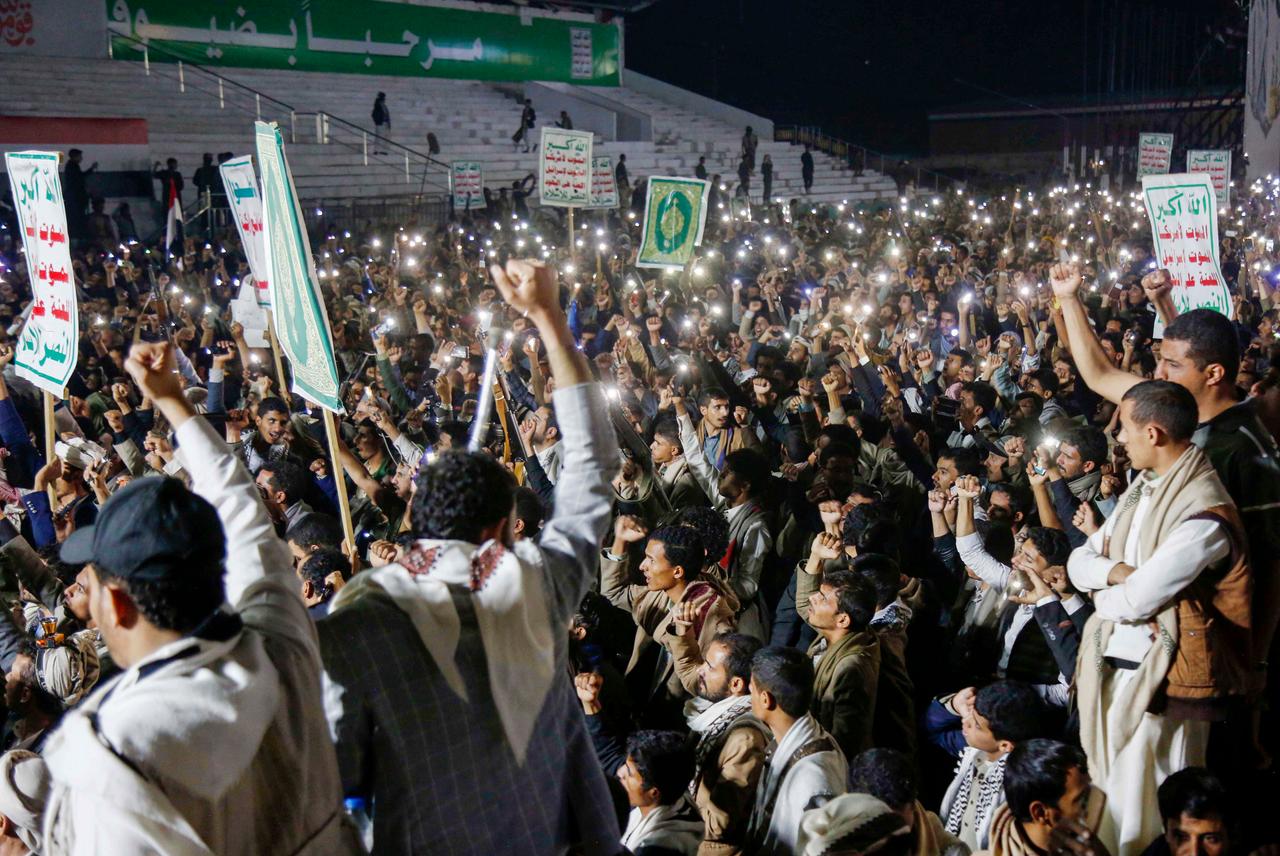
Thousands of people gathered in Sanaa in support of the decision to impose a naval blockade on Saudi Arabia, July 21, 2026 – (Anadolu Agency)
Canadian Foreign Minister Anita Anand also condemned the attack and urged the Houthis to immediately halt their strikes against commercial vessels. German Chancellor Friedrich Merz stated that the attacks jeopardized freedom of navigation and undermined regional stability, offering a message of support to Saudi Arabia.
The United Kingdom’s Foreign, Commonwealth and Development Office expressed solidarity with Saudi Arabia and called on the Houthis to stop their attacks. Chinese Ministry of Foreign Affairs Spokesperson Lin Jian called on all parties to exercise restraint and resolve disputes through dialogue. Indonesia’s Ministry of Foreign Affairs characterized the attacks as violations of international law and reiterated its call for a political solution to the Yemen issue under UN auspices and led by Yemen.
African Union (AU) Commission Chairperson Mahmud Ali Yusuf condemned the attacks, warning that they constituted a dangerous escalation for regional peace and security, and emphasized the AU’s full solidarity with Saudi Arabia.
Pakistan Prime Minister Shehbaz Sharif, during a phone call with Saudi Crown Prince Mohammed bin Salman, condemned the attacks “in the strongest terms” and affirmed Pakistan’s full solidarity with Saudi Arabia. Oman’s Ministry of Foreign Affairs announced it was coordinating with Saudi Arabia and the UN Special Envoy for Yemen to relaunch the political process and roadmap.
US President Donald Trump, in a statement following the attacks, declared that if the Houthis launch further attacks, the United States will regard them as “agents or representatives” of Iran and hold Iran accountable, imposing “severe military penalties” on Iran and the Houthis. US Secretary of State Marco Rubio also claimed the Houthis were “manipulated” by Iran into the conflict and urged the group to distance itself from the fighting.
UN Secretary-General Antonio Guterres, in a statement on 24 July, expressed “deep concern” over the Houthis’ renewed attacks on commercial vessels in the Red Sea. Through UN Spokesperson Stéphane Dujarric, it was emphasized that these attacks risked heightening regional tensions and drawing Yemen deeper into regional conflict, undermining peace prospects in Yemen and causing serious economic humanitarian and environmental consequences. Guterres called for an immediate de-escalation in line with UN Security Council Resolution 2722 (2024) and subsequent resolutions.
The Arab Coalition led by Saudi Arabia announced that on the evening of 24 July, in response to Houthi attacks on commercial vessels in the Red Sea, it had carried out a proportional military strike against “legitimate Houthi military targets” in Yemen’s Hodeidah governorate.
Coalition Spokesperson Turki al-Maliki stated that the operation was launched “in response to the cowardly and reckless attacks” by the Houthis against commercial vessels, and clarified that the strikes targeted legitimate military objectives linked to threats against maritime traffic, in accordance with international humanitarian law. Maliki emphasized that Hodeidah Port was not a target, and that all Yemeni ports including Hodeidah, Ras Isa and As-Salif remained open for maritime traffic, while the Houthis continued to block flights at Sanaa International Airport.
Houthi-affiliated Al-Masira television channel claimed the strikes targeted Kamaran Island and facilities belonging to the Communications Authority, reporting that one woman was injured in the attack on Kamaran Island. Witnesses speaking to Reuters reported explosions in Hodeidah Port, but the Coalition denied targeting the port.
The Houthi-controlled Ministry of Foreign Affairs described the attack on Hodeidah as “costly for Riyadh,” stating that “through this attack, the Saudi regime has made escalation the defining feature of the coming period.”
Houthi spokesperson Mohammed Abdul-Salam stated on social media that the group had not closed the Bab al-Mandab Strait, that the announced location was limited to a naval blockade targeting Saudi Arabia, and that this was a response to the blockade imposed on Yemen.
Saudi Arabia’s official SPA agency reported that shortly before the attack, the vessel “NCC MASA,” owned by a Saudi company, was struck while sailing in the Red Sea, sustaining minor damage to its hull, and resumed its voyage after security checks.
The Houthi Political Bureau characterized the attack on Hodeidah as a “dangerous escalation” and declared that such attacks “will not go unanswered.” The statement declared: “Blockade will be met with blockade, port with port, escalation with escalation.” It warned that continued Saudi aggression would bring “nothing but loss” to the aggressors.
Houthi Military Spokesperson Yahya Saree announced in a televised statement on 25 July that the group had conducted two separate military operations against Aramco facilities in the regions of Jizan and Yanbu using dozens of ballistic missiles, cruise missiles and drones, stating these were carried out in response to Saudi air strikes on Hodeidah. Saree affirmed that the naval blockade would continue and that attacks would intensify in the coming days.
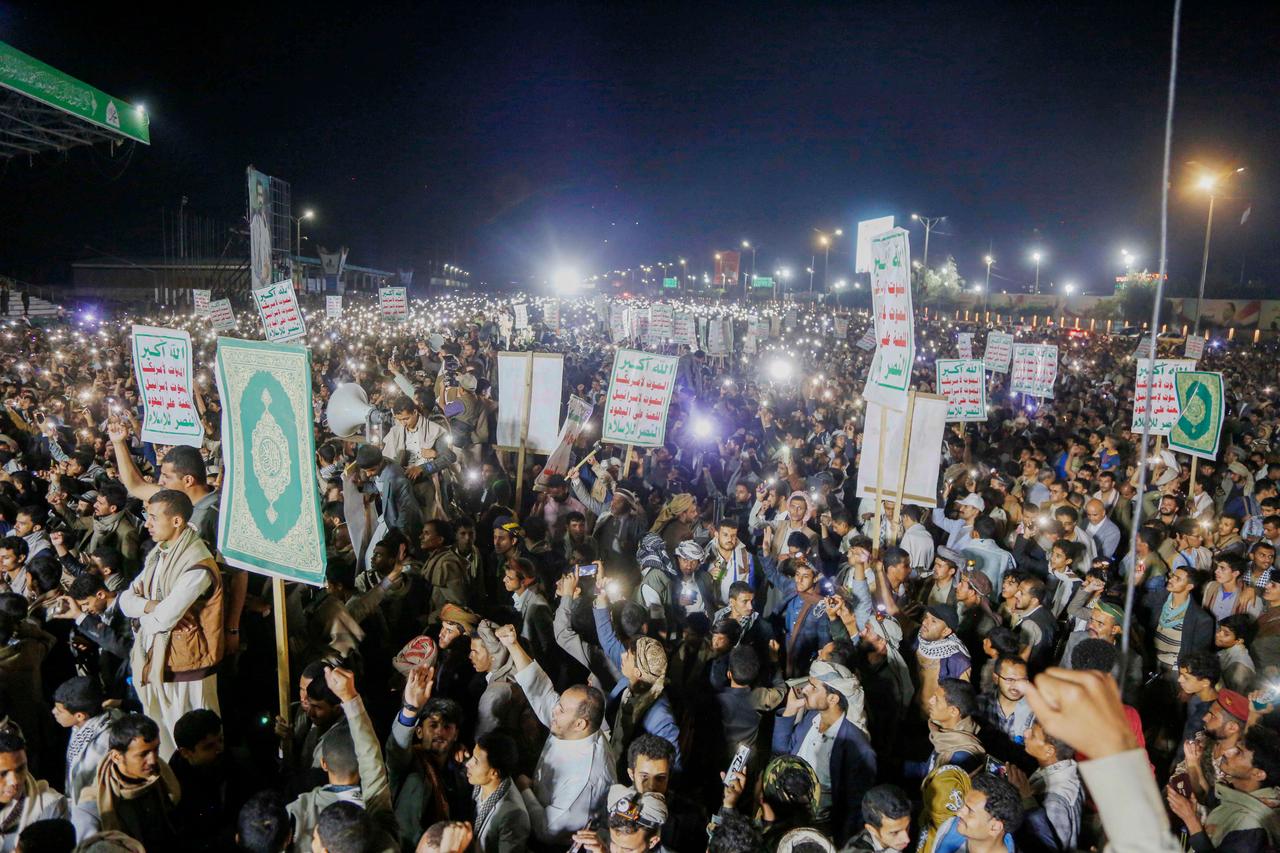
Thousands of people gathered in Sanaa in support of the decision to impose a naval blockade on Saudi Arabia, July 21, 2026 – (Anadolu Agency)
Saudi Civil Defense issued separate warnings early on 25 July for the Jizan and Yanbu regions, alerting residents to a “potential threat”; shortly thereafter, it announced the threat had passed. No casualties or damage were reported. No official statement was issued by Saudi Arabia regarding the attacks.
Yemen state television reported that on 25 July, Houthi reinforcement forces, missile launchers, a Katyusha rocket launcher base and weapons depots in Marib and Jawf governorates were targeted in air strikes, without specifying who carried out the attacks. Numerous Houthi personnel, including missile specialists, were reported killed; no statement was issued by the Houthis regarding the incident.
Yemen Presidential Council Member Sultan al-Aradah said at an expanded military meeting in Marib governorate attended by Defense Minister Tahir al-Uqayli, Chief of Staff and Joint Operations Commander Saqr bin Aziz, and Arab Coalition commander Brigadier General Fares al-Shamari that the Houthis “believe only in the option of war” and that the struggle against them amounted to a “definite confrontation.” The meeting addressed raising the level of military preparedness and implementing operational plans.
On the same day, in the city of Taiz in southwestern Yemen, the Houthis launched a shelling attack from positions in the north against a judicial complex in the Jebel Jerra neighborhood. According to the official SABA agency, no casualties occurred in the attack.
Yemen’s internationally recognized government declared it would not allow its territory to be turned into a platform threatening neighboring countries and international maritime security, labeling the Houthi tanker attack in the Red Sea as “a new terrorist act undermining regional and international de-escalation efforts.” The government affirmed that the Arab Coalition’s military response was conducted in accordance with the principles of necessity and proportionality under international law and called on the international community to cut off funding and arms supplies to the Houthis.
Yemen Presidential Council Chairman Rashad al-Alimi, in a social media statement, emphasized the government’s resolve to protect sea lanes and combat terrorism, accusing the Houthis of serving Iran’s agenda at the expense of the Yemeni people’s interests. Alimi stated that the escalatory stance would yield no result other than depleting the country’s resources and could not alter the Yemeni people’s determination to rebuild state institutions.
Saudi Arabia’s Ambassador to Yemen Muhammad al-Jabir affirmed that Saudi Arabia continued to pursue de-escalation and support the UN Special Envoy’s peace efforts, criticizing the Houthis for turning Yemen into “a pawn in the hands of foreign powers” and choosing escalation over peace.
Iran Ministry of Foreign Affairs Spokesperson Ismail Bekayi expressed concern over tensions between the Houthis and Saudi Arabia and stated that Iran would support constructive initiatives based on the agreed roadmap. Bekayi emphasized that the crisis could not be resolved through military means and must return to dialogue, arguing that Saudi Arabia’s blockade deepened the humanitarian crisis and calling for its immediate lifting.
The United Kingdom Maritime Trade Operations (UKMTO) center reported on 26 July that an unidentified projectile had fallen near a tanker in the southern Red Sea. The vessel reported seeing a splash from an unknown projectile nearby; the ship and crew were confirmed safe, with no reports of injuries or damage, and the environmental impact had not yet been verified. UKMTO urged vessels transiting the region to remain vigilant and report suspicious activity.
Al Jazeera. “Houthis Claim Saudi Drone Downed Over Northwestern Yemen.” Al Jazeera Video. Accessed July 27, 2026.https://www.aljazeera.com/video/newsfeed/2026/7/26/houthis-claim-saudi-drone-downed-over-northwestern-yemen
Al Jazeera. “New Front in US-Iran War Escalates as Houthis Fire at Saudi Oil Facilities.” Al Jazeera. Accessed July 27, 2026.https://www.aljazeera.com/news/2026/7/26/new-front-in-us-iran-war-escalates-as-houthis-fire-at-saudi-oil-facilities
Al Jazeera. “Saudi Arabia Strikes Houthi-Held Hodeidah, Yemeni Group Says.” Al Jazeera. Accessed July 27, 2026.https://www.aljazeera.com/news/2026/7/24/saudis-strike-yemens-houthi-held-hodeida-rebel-media
Al Jazeera. “Yemen’s Houthis Target Saudi Oil Facilities Along the Red Sea.” Al Jazeera Video. Accessed July 27, 2026.https://www.aljazeera.com/video/newsfeed/2026/7/26/yemens-houthis-target-saudi-oil-facilities-along-the-red-sea
Anadolu Ajansı. "Airstrikes Target Houthi Reinforcements, Missile Launchers in Yemen." Accessed July 27, 2026.https://www.aa.com.tr/en/middle-east/airstrikes-target-houthi-reinforcements-missile-launchers-in-yemen/4009157
Anadolu Ajansı. "Germany Condemns Houthi Attacks on Saudi Ships in Red Sea." Accessed July 27, 2026.https://www.aa.com.tr/en/europe/germany-condemns-houthi-attacks-on-saudi-ships-in-red-sea/4007603
Anadolu Ajansı. "London Condemns Houthi Strikes on Saudi Oil Tankers, Urges Group to Halt Hostilities." Accessed July 27, 2026.https://www.aa.com.tr/en/europe/london-condemns-houthi-strikes-on-saudi-oil-tankers-urges-group-to-halt-hostilities/4007399
Anadolu Ajansı. "Oman Says Working with Saudi Arabia, UN Envoy to Resume Yemen Road Map Amid Red Sea Tensions." Accessed July 27, 2026.https://www.aa.com.tr/en/middle-east/oman-says-working-with-saudi-arabia-un-envoy-to-resume-yemen-road-map-amid-red-sea-tensions/4006778
Anadolu Ajansı. "Saudi-Led Coalition Confirms Strikes on Houthi Military Sites in Yemen’s Hodeidah." Accessed July 27, 2026.https://www.aa.com.tr/en/middle-east/saudi-led-coalition-confirms-strikes-on-houthi-military-sites-in-yemen-s-hodeidah/4008702
Anadolu Ajansı. "US Will Hold Iran Accountable If Houthis Attack Ships: Trump." Accessed July 27, 2026.https://www.aa.com.tr/en/us-israel-iran-war/us-will-hold-iran-accountable-if-houthis-attack-ships-trump/4007032
Anadolu Ajansı. "Yemeni Government Vows Not to Let Territory Threaten Neighbors, Maritime Security." Accessed July 27, 2026.https://www.aa.com.tr/en/middle-east/yemeni-government-vows-not-to-let-territory-threaten-neighbors-maritime-security/4008792
Anadolu Ajansı. "Yemeni Presidential Council Member Says Houthis Believe Only in War." Accessed July 27, 2026.https://www.aa.com.tr/en/middle-east/yemeni-presidential-council-member-says-houthis-believe-only-in-war-/4009321
Anadolu Ajansı. "Yemen’deki İran Destekli Husiler ile Artan Gerilimin Ardından Suudi Arabistan’da Üçüncü Kez Saldırı Uyarısı Yapıldı." Accessed July 27, 2026.https://www.aa.com.tr/tr/dunya/yemen-deki-iran-destekli-husiler-ile-artan-gerilimin-ardindan-suudi-arabistan-da-ucuncu-kez-saldiri-uyarisi-yapildi/4008690
Anadolu Ajansı. "Yemen’s Houthis Call Strikes on Hodeidah Dangerous Escalation, Vow Retaliation." Accessed July 27, 2026.https://www.aa.com.tr/en/middle-east/yemen-s-houthis-call-strikes-on-hodeidah-dangerous-escalation-vow-retaliation/4008774
Anadolu Ajansı. “BM, Husilerin Kızıldeniz'de Saldırılara Yeniden Başlamasından ‘Derin Endişe’ Duyduğunu Açıkladı.” Accessed July 27, 2026.https://www.aa.com.tr/tr/dunya/bm-husilerin-kizildenizde-saldirilara-yeniden-baslamasindan-derin-endise-duydugunu-acikladi/4008457
Anadolu Ajansı. “China Urges Restraint in Red Sea Amid Houthi Embargo Attacks.” Accessed July 27, 2026.https://www.aa.com.tr/en/asia-pacific/china-urges-restraint-in-red-sea-amid-houthi-embargo-attacks/4007853
Anadolu Ajansı. “EU, Canada Calls Houthi Attack on Red Sea Oil Tanker Unacceptable, Warns Against Further Escalation.” Accessed July 27, 2026.https://www.aa.com.tr/en/europe/eu-canada-calls-houthi-attack-on-red-sea-oil-tanker-unacceptable-warns-against-further-escalation/4006958
Anadolu Ajansı. “Houthis Shell Judicial Complex in Yemen’s Taiz City, No Casualties Reported.” Accessed July 27, 2026.https://www.aa.com.tr/en/middle-east/houthis-shell-judicial-complex-in-yemen-s-taiz-city-no-casualties-reported/4009366
Anadolu Ajansı. “Indonesia Condemns Red Sea Attacks, Urges Political Process to Resolve Yemen Conflict.” Accessed July 27, 2026.https://www.aa.com.tr/en/asia-pacific/indonesia-condemns-red-sea-attacks-urges-political-process-to-resolve-yemen-conflict/4008113
Anadolu Ajansı. “Pakistani Premier Backs Saudi Arabia in Call with Crown Prince Amid Houthi Attacks.” Accessed July 27, 2026.https://www.aa.com.tr/en/asia-pacific/pakistani-premier-backs-saudi-arabia-in-call-with-crown-prince-amid-houthi-attacks/4006672
Anadolu Ajansı. “Saudi Arabia Issues Fresh Warnings in Western Regions of Yanbu, Jazan About Potential Danger.” Accessed July 27, 2026.https://www.aa.com.tr/en/world/saudi-arabia-issues-fresh-warnings-in-western-regions-of-yanbu-jazan-about-potential-danger/4008791
Anadolu Ajansı. “Several Oil Tankers Alter Course in Red Sea Following Houthi Threats.” Accessed July 27, 2026.https://www.aa.com.tr/en/us-israel-iran-war/several-oil-tankers-alter-course-in-red-sea-following-houthi-threats/4006572
Anadolu Ajansı. “UN Chief Alarmed by Renewed Houthi Attacks on Red Sea Shipping, Urges De-Escalation.” Accessed July 27, 2026.https://www.aa.com.tr/en/americas/un-chief-alarmed-by-renewed-houthi-attacks-on-red-sea-shipping-urges-de-escalation/4008384
Anadolu Ajansı. “Unidentified Projectile Lands Near Tanker in Southern Red Sea: UKMTO.” Accessed July 27, 2026.https://www.aa.com.tr/en/middle-east/unidentified-projectile-lands-near-tanker-in-southern-red-sea-ukmto/4009756
Anadolu Ajansı. “Yemen Gov’t Vows Cooperation with Saudi-Led Coalition to Protect Waterways, Deter Threats Amid Houthi Tension.” Accessed July 27, 2026.https://www.aa.com.tr/en/middle-east/yemen-gov-t-vows-cooperation-with-saudi-led-coalition-to-protect-waterways-deter-threats-amid-houthi-tension/4008886
Anadolu Ajansı. “Yemen'de Husiler: Suudi Arabistan'da Aramco Tesislerini Füze ve İHA'larla Vurduk.” Accessed July 27, 2026.https://www.aa.com.tr/tr/dunya/yemende-husiler-suudi-arabistanda-aramco-tesislerini-fuze-ve-ihalarla-vurduk/4009136
Anadolu Ajansı. “Yemen'deki Husilerden Kızıldeniz'de Suudi Arabistan Tankerlerine Saldırı.” Accessed July 27, 2026.https://www.aa.com.tr/tr/dunya/yemendeki-husilerden-kizildenizde-suudi-arabistan-tankerlerine-saldiri/4006354
Associated Press. “Iran-Backed Houthis Fire Missiles at Saudi Arabia in Response to Airstrikes in Yemen.” Associated Press. Accessed July 27, 2026.https://apnews.com/article/iran-us-hormuz-strait-war-25-july-2026-df3790320c595f3e599fb1dd69423e77
Associated Press. “Iran-Backed Houthis Fire Missiles at Saudi Arabia in Response to Airstrikes in Yemen.” Associated Press. Accessed July 27, 2026.https://apnews.com/article/iran-us-hormuz-strait-war-25-july-2026-df3790320c595f3e599fb1dd69423e77
BBC News. “Iran-Backed Houthis Claim Missile Attack on Saudi Arabia.” BBC News. Accessed July 27, 2026.https://www.bbc.com/news/articles/cj9d27v70j1o
Houthi spokesperson Yahya Sarea announced that in retaliation for Saudi Arabian drones violating Yemeni airspace, they targeted multiple points in Yanbu, Saudi Arabia, that handle crude oil transportation and supply, using drones.
A report aired on El-Mesira television, affiliated with the Houthis, stated that during recent escalating military clashes with government forces, nine Houthi members were killed. Funeral ceremonies were held in different cities: three in Saada, two in Taiz, and four in Ibb, Amran, and Sanaa provinces. No information was provided regarding where or when the individuals died, only that they were killed in the “war with Saudi Arabia”.
Houthi spokesperson Yahya Sarea announced that they targeted the Saudi Arabian oil tanker “NCC GHAZAL” with ballistic missiles, forcing it to retreat on the grounds that it violated maritime navigation bans and ignored warnings.
The internationally recognized government of Yemen, in response to military activity along the frontlines, elevated its security measures and state of emergency level in the temporary capital Aden. At a security meeting chaired by Aden Security Director Mutahhar ash-Shuaybi, it was decided to tighten controls at the city’s entry and exit points, collect unlicensed weapons, and prevent unregistered vehicles from operating on the roads.
Yemen Presidential Council member Sultan al-Arabi held a virtual meeting with China’s Yemen mediator Zhao Cheng and called on the international community to demonstrate firm resolve in halting the Houthis’ military escalation and attacks in the Red Sea, and to pressure Iran. Chinese diplomat Zhao Cheng reiterated Beijing’s support for Yemen’s unity, sovereignty, and territorial integrity.
Abdullah bin Amir, Deputy Director of the Spiritual Guidance Directorate of the so-called Houthi Ministry of Defense, claimed the maritime blockade was the result of long-term planning and asserted that military operations would continue despite all consequences, alleging that in response to any potential Saudi military offensive, the Kingdom’s economy would be targeted.
Houthi spokesperson Yahya Sarea announced that they had shot down a Saudi Arabian reconnaissance drone in Saada province in northwestern Yemen.
Yemen’s internationally recognized government’s candidate for Minister of Foreign Affairs, Efra al-Zube, stated in an announcement at the Yemeni embassy in Riyadh that the Houthis aim to replicate Iran’s strategy in the Strait of Hormuz by controlling shipping traffic through the Red Sea’s Bab al-Mandab Strait. He noted that the international community’s inadequate response had emboldened the Houthis. It was reported that the number of commercial vessels passing through the Red Sea had dropped to just 11 the previous day.
Yemeni Army Emergency Forces announced that they successfully intercepted a Houthi drone equipped with explosives in the Safra locality of Saada province before it reached its target.
Houthi Political Bureau member Hizam al-Asad denied a Reuters report citing regional sources that the Houthis were considering collecting transit fees from commercial vessels passing through the southern Red Sea and Bab al-Mandab Strait. He affirmed that the strait remained open and safe for international navigation and that restrictions applied only to Saudi vessels. Asad noted these restrictions would continue only upon the lifting of the blockade against Yemen and respect for its sovereignty.
According to sources speaking to Reuters, Saudi Arabia has initiated efforts to establish an international coalition to protect maritime traffic in the Red Sea from Houthi attacks. Although the coalition’s composition remains unclear, consultations have been held with dozens of countries. Saudi Foreign Minister Faisal bin Farhan emphasized in phone calls with counterparts in Qatar, Kuwait, and Bahrain the importance of continuing de-escalation efforts; all parties condemned attacks by Iran and its allied militias in Iraq and Yemen.
Yemen Information Minister Muammer al-Iryani accused the Houthis of establishing a system to collect fees from vessels passing through the Red Sea and Bab al-Mandab Strait on Iran’s instructions, describing this as a dangerous escalation aimed at turning one of the world’s most strategic maritime corridors into a permanent funding source for the militia’s military and terrorist activities.
Kuwait, Bahrain, Qatar, Yemen, Egypt, Morocco, and Mauritania declared full support for the Riyadh administration, condemning Houthi drone attacks targeting Saudi Arabia’s eastern region and Riyadh’s oil facilities. The countries emphasized that the attacks constituted a clear violation of Saudi sovereignty and regional security. Bahrain and Yemen called on the Iraqi government to prevent armed groups from using Iraqi territory to launch attacks against neighboring countries. Saudi Arabia had previously announced that the attacks were carried out by “Iran-aligned militias” stationed on Iraqi territory, after which U.S. Central Command (CENTCOM) and Saudi Armed Forces conducted air strikes against targets linked to these groups in eastern Iraq.
Saudi Arabia hosted a meeting attended by the chiefs of staff of countries joining the “Naval Defense Coalition to Protect Transit through Bab al-Mandab Strait”. Attendees included Bahraini Chief of Staff Major General Diyab bin Sakr al-Naimi and Kuwaiti Chief of Staff Lieutenant General Khalid Derec ash-Shari’an, as well as military officials from the United States, Oman, Jordan, Morocco, Yemen, Sudan, Maldives, Bangladesh, and New Zealand.
The Saudi Ministry of Defense announced on the same day that it hosted a meeting with chiefs of staff and military representatives from 43 countries to discuss the establishment of the “Multinational Naval Defense Coalition”. Fourteen participating countries issued a joint statement confirming their support for the coalition project and agreed to sign the foundational arrangements.
Houthi spokesperson Yahya Sarea claimed that under their implemented “maritime blockade,” they forced eight Saudi oil tankers to reroute around the Cape of Good Hope. He threatened to continue the blockade and persist in targeting Saudi vessels.
It was reported that a Houthi infiltration attempt targeting military positions east of the city of Taiz in southwestern Yemen was thwarted by the Yemeni army. According to Yemeni state television, numerous Houthi fighters were killed and wounded in clashes involving medium and heavy weapons. No statement was issued by the Houthis regarding the incident.
Brigadier General Usama al-Radfani, commander of the 4th Brigade of the “National Shield” forces loyal to the Yemeni government, was killed in an assassination attack alongside his security detail in the Al-Abir region of Hadramawt governorate. No details were shared regarding the attack’s specifics or the number of security personnel killed, and no group has claimed responsibility.
Yemen Information Minister Muammer al-Iryani blamed “Iran-backed terrorist Houthi militias” for the assassination, stating that the attack was a continuation of a systematic approach targeting national leaders, armed forces, and security personnel aiming to reestablish the state. The Houthis did not comment on the incident.
Following reports of Houthi plans to impose fees on vessels transiting Bab al-Mandab, the Humanitarian Operations Coordination Center (HOCC), which monitors passage through the strait, denied the claims, stating that the “safe passage service” is voluntary and free of charge. It was clarified that individuals demanding payment do not represent Yemen or HOCC. According to a Reuters report citing regional sources, the idea of charging fees was reportedly conveyed by a Houthi delegation during a visit to Tehran in early July, with Iranian advisors assisting in establishing an authority to manage such payments.
Saudi Arabia announced the establishment of a 14-nation naval defense coalition aimed at preserving freedom of navigation in the Bab al-Mandab Strait, the Red Sea, and the Gulf of Aden.
It was reported that a Houthi infiltration attempt targeting military positions in the Jebel Han region west of Taiz was thwarted by the Yemeni army. Five Houthi fighters were killed and one of their drones was shot down during the clashes. Intense fighting also occurred along the Barh front west of Taiz between units of the 43rd Brigade and Houthi forces, and another Houthi drone targeting a training camp south of Taiz was also shot down.
Yemen’s Minister of Foreign Affairs Efra Abdulaziz al-Zube and Gulf Cooperation Council (GCC) Secretary General Qasim Muhammad al-Budeyvi met in Riyadh to discuss forming a united front against the “threats” posed by the Houthis. Zube stated that his country rejects allowing its territory and territorial waters to be used to threaten neighboring countries or serve Iran’s expansionist agenda. Budeyvi affirmed the GCC’s unwavering support for the Yemeni Presidential Council and government.
Houthi-affiliated SABA news agency reported that three Houthi members, two of them officers, were killed in clashes with government forces, and funeral ceremonies were held in Sanaa, Dali, and Hajjah. No information was provided regarding where, when, or under what conditions the individuals died.
Houthi spokesperson Yahya Sarea announced that they struck a “sensitive target” at Najran Airport in southern Saudi Arabia with a kamikaze drone, claiming the attack successfully reached its target.
Houthi spokesperson Yahya Sarea defended the attack on Najran Airport as retaliation for Saudi Arabian drones violating airspace over Saada and Hajjah. Sarea emphasized: “We stress that any violation of our airspace by the Saudi enemy will not go unanswered or unpunished.” No statement was issued by Saudi Arabia regarding the attack.
Pro-government “National Resistance Forces” reported that a vessel loaded with explosives targeted and sank the Indian-flagged cargo ship “MSV Faize Noore Oliya”, located 13 nautical miles off the Hodeidah coast in the Red Sea. The 14-member crew consisted of 13 Indians and one Yemeni, all of whom were rescued. No information was provided on who carried out the attack. The Indian Ministry of External Affairs condemned the attack and called for unimpeded navigation and trade on international sea routes.
Houthi spokesperson Yahya Sarea announced that they targeted the Saudi Arabian oil tanker “Vefa” in the waters off Yanbu in northern Red Sea with multiple ballistic missiles. Sarea stated the attack was carried out under the principle of “blockade in response to blockade”.
Houthi spokesperson Yahya Sarea claimed they targeted the Saudi Arabian oil tanker “Daisy” in the Gulf of Aden with a ballistic missile, asserting that the vessel was hit and forced to retreat. Sarea stated that until the blockade against Yemen is lifted, Saudi oil tankers will not be permitted to pass through the northern or southern Red Sea.
Pro-government “Yemen Emergency Forces” reported that they targeted numerous military camps and units affiliated with armed forces, including their own, and stated that the attacks resulted in casualties and material damage. No figures were provided for the number of dead or wounded. Some media outlets reported that at least 30 people were killed in attacks on military camps in Marib and Hadramawt provinces, although no official confirmation was provided.
Houthi military spokesperson Yahya Sarea announced that, citing claims that government forces supported by Saudi Arabia were preparing attacks on areas under Houthi control, they targeted military depots in the al-Ruwayq and as-Sinyah areas of Marib province and the al-Abir area of Hadramawt province with numerous ballistic missiles and drones. Sarea claimed that as a result of the attacks, “hundreds of soldiers lost their lives”.
He also claimed that Saudi military depots and weapon storage facilities in the al-Vedia area of Hadramawt were destroyed, rendering most military vehicles in the region inoperable.
Yemen government sources reported that an attack using eight missiles launched from the al-Jawf province in northern Marib targeted the al-Tunayya and al-Abir areas in Hadramawt and al-Ruwayq in Marib, killing at least 30 soldiers and injuring 15. The attack was said to target camps affiliated with the National Shield Forces established in 2022 with Saudi support, the Emergency Forces established at the end of 2025, and the 1st Military Region. The high casualties were attributed to soldiers gathering for morning training exercises.
Arab Coalition spokesperson Brigadier General Turki al-Maliki reported that in Houthi attacks on civilian settlements in Najran on 6 August, 11 civilians were injured, seven of whom were Saudi nationals. Among the injured were a four-year-old child and a woman with second-degree burns. Maliki characterized the attack as a clear violation of international humanitarian law.
The U.S. Embassy in Yemen labeled the attacks as “cowardly” and extended condolences to the families of Yemeni soldiers killed in the attacks via its social media account.
The Yemeni Ministry of Defense officially announced that in a ballistic missile and drone attack on army units stationed in Marib and Hadramawt provinces the previous day, 17 soldiers and officers were killed and many others were injured. The ministry stated that the attack would not affect the armed forces’ determination to carry out their duties and that they would respond “at the appropriate time and place”.
GCC Secretary General Qasim Muhammad al-Budeyvi strongly condemned the Houthi attack on Najran, stating that targeting civilians and civilian infrastructure constituted a clear violation of international law and a crime requiring accountability. Budeyvi emphasized the GCC’s full solidarity with Saudi Arabia.
According to Al Jazeera correspondent Yousef Mawry’s report from Sanaa, the Houthis launched at least 12 new missile attacks on Marib and Hadramawt provinces since morning. Yemeni state television reported that government air defense systems shot down several Houthi drones over Marib.
Yemen’s Minister of Health, Qasim Buhaybih, announced that the Houthis had bombed civilian settlements and displacement camps in Marib city, including the Al-Mil camp, using missiles and drones. Initial assessments indicated that two people from the same family were killed and 14 injured; all health facilities were placed on alert.
In a Houthi attack in the Shebwa province in southern Yemen, Brigadier General Bashir Muhsin Salih al-Bureyki, commander of the 9th Brigade of the Shebwa Defense Forces, and Deputy Head of the Brigade’s Finance Department, Abdullah Nasir Abdullah al-Awlaki, were killed. Local sources stated the soldiers were killed in a Houthi armed drone attack.
Houthi spokesperson Yahya Sarea, in his statement regarding an attack on a major military base in the Sahn al-Jin area of Marib, stated that rocket and drone strikes against Saudi forces, ammunition depots, vehicles, and military equipment were “precise and effective”. Sarea noted they would continue to respond to escalation “with escalation”. No statement was issued by Saudi Arabia regarding the claims.
The European External Action Service (EEAS) strongly condemned Houthi attacks on Saudi Arabia and government-controlled areas of Yemen, stating that targeting civilians and civilian infrastructure is unacceptable. The EEAS noted that the attacks have weakened regional stability and jeopardized peaceful resolution efforts.
UN Special Envoy for Yemen Hans Grundberg announced that Yemen is facing the risk of large-scale fighting for the first time since the ceasefire established in April 2022. Grundberg noted that recent attacks in Marib and Hadramawt have caused civilian casualties and that attacks on commercial vessels in the Red Sea and Gulf of Aden have resumed. While emphasizing that the diplomatic solution remains open, Grundberg called on all parties to exercise maximum restraint and participate in good-faith negotiations under UN auspices.
Saudi Arabia, Turkey, and Pakistan signed a trilateral defense agreement in Mecca, agreeing that an armed attack against any one of the three countries would be considered an attack against all three. Turkish Foreign Minister Hakan Fidan, in a statement the following day, clarified that the agreement was not directed against Iran, that no written common threat had been identified, and that the arrangement was “technically” similar to NATO’s Article 5.
Yemeni Army spokesperson Colonel Majid al-Nuzayli announced that in response to Houthi attacks on military camps in Marib and Hadramawt, a military operation was launched targeting Houthi elements and military equipment along multiple fronts and axes. Nuzayli stated that if Houthi attacks continue, the Yemeni army will respond “without hesitation”.
Under the leadership of Presidential Council member Tarik Salih, pro-government National Resistance Forces reported targeting Houthi command and control centers, fortifications, and gathering areas in Hodeidah province. The operation was said to be a response to increased Houthi attacks and violations in the regional waters of Marib, Hadramawt, and al-Muha.
It was announced that a drone identified as belonging to the Houthis was detected in the western skies of the temporary capital Aden and intercepted by air defense systems. The statement was issued by the Southern Armed Forces under the leadership of Presidential Council member Abdurrahman al-Muharrami.
The Taiz Military Axis under the Yemeni Ministry of Defense reported detecting Houthi missile launches toward the Red Sea from the Uman Mountain in the al-Huban region east of Taiz but did not provide details on the number or type of missiles.
The Yemeni army targeted Houthi positions in the Dabab, Garab, Salu, and Makbine fronts in Taiz province with artillery fire and thwarted a Houthi drone attack attempt in Makbine. Houthi command centers, fortifications, and gathering points in southern Hodeidah province were also targeted. The attacks were said to be in response to Houthi escalation along the Marib and Hadramawt fronts and their targeting of maritime access in the waters off al-Muha district.
Yemeni air defense units intercepted and neutralized two bomb-laden drones directed at civilian areas and displacement camps in Marib. No damage or injuries were reported. It was noted that over two million of Yemen’s approximately five million displaced persons are located in Marib province.
Government-aligned forces announced they targeted Houthi gathering points, military barracks, and military vehicles in northern Dali province in southern Yemen but provided no information on casualties or damage caused.
According to Al Jazeera, following renewed Houthi bombardment of Marib city, government forces launched attacks against Houthi positions along the frontlines. Yemen Deputy Minister of Information Muhammad Gezan stated that the Houthis had again bombed civilian neighborhoods in Marib with missiles and drones. The UN called for de-escalation, condemning Houthi missile attacks and tanker strikes in the Red Sea.
Houthi military spokesperson Yahya Sarea announced that they targeted the refinery of Saudi Aramco, Saudi Arabia’s national oil company, in the Jizan region with a drone and claimed the attack was successful. Sarea stated the attack was carried out in retaliation for Saudi Arabian drones violating Yemeni airspace. The Saudi Ministry of Energy previously reported that a fire at the Aramco facility in Jizan early in the day had been extinguished with no injuries, but did not disclose the cause of the fire.
Houthi military spokesperson Yahya Sarea announced that in response to Saudi military activities along Yemen’s western coast and in Taiz province, they targeted what they claimed were Saudi military depots and weapon storage facilities in the al-Muha region of Taiz with numerous ballistic missiles and drones. Sarea claimed the attacks caused extensive damage to military equipment and weapons and resulted in dozens of deaths and injuries, including Saudi nationals. Yemeni state television SABA reported that the Houthis also targeted al-Muha Port with missiles and drones, noting explosions and dense smoke following the attacks.
According to Yemeni media reports, at least seven people were killed and 35 injured in Houthi attacks on al-Muha Port and surrounding settlements, according to initial assessments. Hodeidah Governor Hasan Ali Tahir survived a ballistic missile attack on his residence in al-Huha; it was not disclosed whether he was present at the time of the attack.
According to an AFP report citing a medical source in al-Muha, at least 11 people were killed in the attacks, including three civilians and eight soldiers, and 32 people were injured, six of them civilians. All civilian casualties were attributed to attacks on the port.
The Nigerian Ministry of Foreign Affairs condemned the Houthi attack on civilians in Saudi Arabia’s Najran region, stating that the injury of civilians, including women and children, constitutes a clear violation of international humanitarian law and called on all parties to exercise maximum restraint.
Yemen Presidential Council member and National Resistance Forces commander Tarik Salih stated that the attack on al-Muha city would not go unanswered. Government forces announced that 11 Houthi drones used in the attack were shot down and a boat attempting to strike the port was destroyed.
Yemen Presidential Council Chairman Rashad al-Alimi met with U.S. Yemen mediator Neil Hop and briefed him on the al-Muha attack. Alimi stated that the Houthis are waging a “systematic war” against Yemen’s vital economic facilities and continue targeting ports, airports, and economic infrastructure while tightening the blockade. Alimi called on the United States and the international community to move beyond merely containing the Houthi threat and instead target the sources supporting the Houthis.
Yemeni Army spokesperson Colonel Majid al-Nuzayli reported that in the Houthi attack on al-Muha city and port on 9 August, four soldiers and three civilians were killed and 30 others, mostly civilians, were injured. Nuzayli characterized the attack as “a clear violation of international humanitarian law”, noting that civilian settlements, infrastructure, power generation facilities, and military positions were targeted. It was recorded that air defense units in al-Muha shot down 11 Houthi drones involved in the attack.
The Houthi attack on al-Muha resumed with a new wave on Sunday evening. The Yemeni Armed Forces reported that in the follow-up attack, which came after the initial attack that killed at least 11 people, at least seven more people were killed, including four military personnel and three civilians, and 30 others, mostly civilians, were injured. Air defense systems reportedly shot down 11 drones involved in the attack, while two ballistic missiles fell into the sea before reaching their targets.
Houthi-affiliated El-Mesira television broadcast footage showing numerous ballistic missiles and drones used in the attack. Houthi military spokesperson Yahya Sarea stated that the operation targeted Saudi military concentrations and weapon depots in the al-Muha region. Houthi Political Council member Hizam al-Asad claimed that the explosions, fires, and smoke columns rising from the port were caused by large quantities of weapons and military equipment stored there.
The attacks were not limited to al-Muha; the southern district of al-Hoha in Hodeidah city was also targeted. El-Cumhuriyya television, affiliated with the National Resistance Forces under Presidential Council member Tarik Salih, reported that Hodeidah Governor al-Hasan Tahir survived a Houthi ballistic missile strike on his residence in al-Hoha.
Al Jazeera. "Two Civilians Killed in Houthi Strike on Marib, Says Yemen’s Government." Al Jazeera. Accessed August 10, 2026.https://www.aljazeera.com/news/2026/8/7/two-civilians-killed-in-houthi-strike-on-marib-says-yemens-government
Al Jazeera. "Yemen’s Government Forces Attack Houthis Amid Renewed Shelling of Marib." Al Jazeera. Accessed August 10, 2026.https://www.aljazeera.com/news/2026/8/8/yemens-government-forces-attack-houthis-amid-renewed-shelling-of-marib
Al Jazeera. “Houthi Attacks Kill Seven in Yemen, Refinery Targeted in Saudi Arabia.” Al Jazeera. Accessed August 10, 2026.https://www.aljazeera.com/news/2026/8/9/saudi-arabia-says-fire-extinguished-at-aramco-facility-in-jizan
Al Jazeera. “Houthi Attacks on Gov’t Forces Hint That a Major Battle in Yemen Is Brewing.” Al Jazeera. Accessed August 10, 2026.https://www.aljazeera.com/news/2026/8/7/houthi-attacks-on-govt-forces-hint-that-a-major-battle-in-yemen-is-brewing
Al Jazeera. “Houthi Attacks on Yemeni Government Forces Kill at Least 30.” Al Jazeera. Accessed August 10, 2026.https://www.aljazeera.com/news/2026/8/6/houthis-claim-to-have-killed-45-in-attacks-on-yemeni-government-forces
Al Jazeera. “Houthi Strikes in Yemen as Saudi Arabia Braces for Attacks: What We Know.” Al Jazeera. Accessed August 10, 2026.https://www.aljazeera.com/news/2026/8/7/houthi-strikes-hit-yemen-as-saudi-arabia-braces-for-attacks-what-we-know
Al Jazeera. “Houthis Want to Copy Iran’s Hormuz Control in the Red Sea: Yemeni FM.” Al Jazeera. Accessed August 10, 2026.https://www.aljazeera.com/news/2026/7/28/houthis-want-to-copy-irans-hormuz-control-in-the-red-sea-yemeni-fm
Al Jazeera. “New Houthi Missile and Drone Attacks Kill Seven in Yemen’s al-Makha.” Al Jazeera. Accessed August 10, 2026.https://www.aljazeera.com/news/2026/8/10/houthis-renew-missile-and-drone-attacks-on-yemens-port-of-al-makha
Al Jazeera. “Saudi Arabia Seeks International Coalition Against Houthis in Red Sea.” Al Jazeera. Accessed August 10, 2026.https://www.aljazeera.com/news/2026/7/29/saudi-arabia-seeks-international-coalition-against-houthis-in-red-sea
Al Jazeera. “Yemen’s Houthis Deny Plan to Charge Ships Transiting Red Sea.” Al Jazeera. Accessed August 10, 2026.https://www.aljazeera.com/news/2026/8/1/yemens-houthis-deny-plan-to-charge-ships-transiting-red-sea
Asharq Al-Awsat. “Houthis Widen Their Escalation to Yemen’s West Coast.” Accessed August 10, 2026.https://english.aawsat.com/arab-world/5305179-houthis-widen-their-escalation-yemen%E2%80%99s-west-coast
CNN Arabic. "Saudi Official to CNN: The Kingdom Is Preparing for an Attack Planned by Iraqi Militias in Cooperation with the Houthis." Accessed August 10, 2026.https://arabic.cnn.com/middle-east/article/2026/08/07/saudi-arabia-bracing-for-attack-from-iraqi-militias-working-with-iran-backed-houthis-official-says
CNN. “August 5, 2026 — Houthis Claim to Attack Saudi Oil Tanker, Trump Says Hormuz Reopening ‘Soon’.” CNN. Accessed August 10, 2026.https://edition.cnn.com/2026/08/05/world/live-news/iran-war-trump
Critical Threats Project. “Iran Update Special Report, August 4, 2026.” Critical Threats Project. Accessed August 10, 2026.https://www.criticalthreats.org/analysis/iran-update-special-report-august-4-2026
Long War Journal. “Houthis Escalate Attacks in Red Sea and on Saudi Arabia, Riyadh Evaluates Options.” Accessed August 10, 2026.https://www.longwarjournal.org/archives/2026/08/houthis-escalate-attacks-in-red-sea-and-on-saudi-arabia-riyadh-evaluates-options.php
Middle East Eye. "Saudi Aramco Refinery Erupts in Flames in Jizan as Houthis Claim Drone Attack." Accessed August 10, 2026.https://www.middleeasteye.net/news/saudi-aramco-refinery-erupts-flames-jizan-houthis-claim-drone-attack
Middle East Eye. “Houthi Attack on Mocha Kills Seven, Yemeni Military Says.” Accessed August 10, 2026.https://www.middleeasteye.net/live-blog/live-blog-update/houthi-attack-mocha-kills-seven-yemeni-military-says
Middle East Eye. “Houthi Attacks Kill 11 in Yemen and Target Saudi Refinery.” Accessed August 10, 2026.https://www.middleeasteye.net/live-blog/live-blog-update/houthi-attacks-kill-11-yemen-and-target-saudi-refinery
Reuters. “Yemeni Military Says Houthi Attack on Mocha Kills 7, Wounds 30.” Reuters. Accessed August 10, 2026.https://www.reuters.com/world/middle-east/yemens-houthis-resume-attacks-mocha-port-city-yemeni-military-spokesperson-says-2026-08-09/
On 11 August the armed forces of Yemen’s internationally recognized government reported that the Houthis launched another wave of ballistic missile attacks in El-Muha and the central city of Marib, without specifying whether the attacks resulted in casualties. On the same day, in the Shibwah governorate, a Houthi drone attack killed two government soldiers and injured seven others.
On the same day it was reported that the Houthis targeted the commercial vessel “Tihame,” flying the Yemeni flag, in the Bab al-Mandab Strait, resulting in loss of life. Initial reports indicated that three people (two Pakistanis and one Indonesian) had died. In subsequent hours, Yemen’s Ministry of Transport announced that the ship had been struck by three consecutive ballistic missiles, causing a fire on board the vessel which was carrying food supplies. The ministry stated that the death toll had risen to four — three Pakistanis and one Indonesian — and the number of injured had increased to four. The ministry also noted that as rescue teams were evacuating the wounded, the Houthis fired another missile at the ship, labeling the attack a “terrorist act committed by Houthi militia forces.”
The Yemen Coast Guard later announced that the death toll had risen to six — three Pakistani and one Indonesian crew members from the ship, plus two soldiers from the 2nd Naval Brigade under the Yemeni Armed Forces — and the number of injured had increased to ten. It was confirmed that all eleven Pakistani and Indonesian crew members aboard the vessel had been rescued.
Mohammed Abdulsalam, Chairman and Spokesperson of the Houthi Negotiation Delegation, stated that the Houthis continue to engage in talks and consultations with regional and international parties regarding de-escalation, insisting on resolving humanitarian issues such as the reopening of airports and ports and the payment of salaries. Abdulsalam defended the Houthis’ attacks on Saudi vessels and military camps in Yemen as a “legitimate response” to attacks against Yemen, accusing Saudi Arabia of tightening the blockade by extending inspection procedures for ships heading to Hodeidah Port and targeting banks, currency exchange offices, and merchants.
The National Resistance Forces under the leadership of Tarik Saleh, a member of the Yemen Presidential Council, stated that the Houthis targeted various locations along Yemen’s western coast with ten missiles and four drones since the morning, and that Yemen’s air defense systems had responded, shooting down one of the explosive-laden drones.
On 12 August, the National Resistance Forces loyal to the Yemeni government announced that naval and coast guard units involved in rescuing the crew of the Tihame and towing the vessel had been targeted by a drone, resulting in the deaths of two naval personnel and injuries to four others. This brought the total death toll from the Bab al-Mandab attacks to seven and the number of injured to eleven. No official statement has been issued by the Houthis regarding the attack on the Tihame.
Pakistan’s Minister of Foreign Affairs, Muhammad Ishaq Dar, strongly condemned the attack on the Tihame, noting that three Pakistani citizens had been killed and one injured, and stating that authorities in Saudi Arabia were being contacted to repatriate the bodies.
SABA TV, affiliated with the Yemeni government, reported that the Houthis had repeatedly struck the port in El-Muha district of Taiz governorate with several ballistic missiles over the course of several days, causing serious damage to the facility. Colonel Yahya al-Qadi, who was killed during clashes with the Houthis in El-Muha, was buried on 12 August, Tuesday, at the Republican Guards Cemetery following a funeral ceremony held in El-Muha.
Yemen state television reported that the Yemeni Armed Forces targeted Houthi assembly points and reinforcement units around the El-Fahir Market in the northern part of Dali city with artillery strikes, resulting in casualties among the Houthis.
Yemen Presidential Council Chairman Rashad al-Alimi, during a wide-ranging meeting with representatives of media organizations in Aden, called on the Houthis to lay down their arms and join the political process. Alimi stated, “We have one army under a single command center, subordinate to the Commander-in-Chief of the Armed Forces and the Supreme Military Committee. Our strategic goal is to reestablish state institutions and end the coup.” He characterized the United States’ designation of the Houthis as a terrorist organization and its sanctions as a significant turning point, recalling that the Houthis’ attacks on oil facilities in October 2022 caused a 70 percent loss in public revenues and direct damages exceeding 40 million dollars. He emphasized that if oil exports resume, salaries will be paid to all public employees, including those in Houthi-controlled areas. Alimi thanked countries, led by Türkiye, that have supported the Yemeni people.
On 12 August, the social media platform “X” suspended the account of Houthi Military Spokesperson Yahya Saree, which had 121,500 followers and was the primary channel used by the Houthis to announce attacks on the Red Sea, Bab al-Mandab, and Saudi Arabia.
On 13 August, the Houthi-affiliated Al-Mesire television reported that seven Houthi fighters were killed in clashes with army forces, with six buried in Amran governorate and one in Hajjah. The Southern Armed Forces under the leadership of Abdulrahman al-Muharrami, a member of the Yemen Presidential Council, stated that they had resisted Houthi attacks in Taiz and Lahij governorates, forcing the Houthis to retreat toward the Hayfan and Tur al-Bahah fronts with heavy losses.
The Egyptian Ministry of Foreign Affairs denied claims that an Egyptian vessel had been targeted in the Red Sea and condemned attacks on commercial ships in the Red Sea and Bab al-Mandab Strait. The ministry recalled that a Yemeni ship had been targeted on 11 August and a Saudi oil tanker on 25 July, stating that these attacks threaten navigation security in the Red Sea.
A military source speaking to the Houthi-affiliated SABA news agency stated that they had targeted the Aramco refinery in Saudi Arabia’s Jizan region with two drones, describing the attack as a response to Saudi Arabia’s violations of Yemeni airspace over the cities of Saada and Hajjah. No official statement has been issued by Saudi Arabia regarding the attack.
Yemen state television Saba TV reported that the Houthis targeted the Bab al-Mandab district of Taiz city with two ballistic missiles, but provided no information on casualties or damage.
On 13 August, a government official from the Tor al-Bahah Military Axis stated that a Houthi attack in the El-Mefalis front, south of Hayfan in southeastern Taiz governorate, had been repelled by the 4th Hashid Infantry Brigade, which inflicted “heavy losses on Houthi militia forces.” Government spokesperson Veddah al-Dubeysh also reported that air defense systems had intercepted Houthi reconnaissance drones over El-Muha.
Deputy Minister of Information Fayyad al-Numan stated that government forces had heavily bombed Houthi positions on various fronts on Wednesday, 13 August, using intensive artillery and drone strikes. Yemen state television reported that government forces had targeted Houthi assembly points and reinforcement units around the El-Fahir Market in northern Dali governorate with artillery strikes, resulting in numerous Houthi casualties.
Yemen Presidential Council Chairman Rashad al-Alimi stated, “From now on, no action by Houthi militia forces will go unanswered or unchallenged.” He emphasized that the government does not favor a return to the previous cycle of ceasefires, but instead supports a lasting and sustainable peace based on state sovereignty and disarmament, adding, “The opportunity still exists for them to lay down their arms, join the political process, and compete on equal terms with all other Yemenis at the ballot box.”
State-backed Saba TV reported that the Houthis had buried 57 fighters killed in fighting on various fronts over the past ten days, including 31 officers and three brigadier generals. The outlet did not specify where or under what conditions the fighters died. On the same day, the Houthi-affiliated Al-Mesira television reported that funeral ceremonies were held in Amran governorate for six fighters and in Hajjah governorate for one fighter.
UN Special Envoy for Yemen Hans Grundberg, in a video briefing to the UN Security Council, reiterated that Yemen faces a greater risk than ever of a full-scale resumption of conflict since the 2022 ceasefire. UN Humanitarian Chief Tom Fletcher stated that Yemen is facing a “catastrophe” due to rising hunger and collapsing health services, with six million people experiencing acute food insecurity approaching famine levels — the highest such figure globally.
Yemeni Nobel Peace Prize laureate Tawakkul Karman, speaking to journalists outside the UN Security Council chamber, blamed the Houthis for the “collapse of the state” in Yemen but also accused Iran of supporting the Houthis, Saudi Arabia of intervening on behalf of the government, the United Arab Emirates of drawing itself into the conflict, and the international community of failing to make sufficient efforts to protect civilians.
Al Jazeera. “Six Killed in Houthi Attack on Bab al-Mandeb Ship, Yemen’s Government Says.” Al Jazeera. Accessed August 14, 2026.https://www.aljazeera.com/news/2026/8/12/six-killed-in-houthi-attack-on-bab-al-mandeb-ship-yemens-government-says
Al Jazeera. “Will All-Out War in Yemen Reignite as the Houthis Escalate Attacks?” Al Jazeera. Accessed August 14, 2026.https://www.aljazeera.com/news/2026/8/13/will-all-out-war-in-yemen-reignite-as-houthis-escalate-attacks
Al Jazeera. “Yemeni Forces Say Houthi Attack Repelled in Taiz Amid Escalation.” Al Jazeera. Accessed August 14, 2026.https://www.aljazeera.com/news/2026/8/13/yemeni-forces-say-houthi-attack-repelled-in-taiz-amid-escalation
Al Jazeera. “Yemen’s Houthis Launch Ballistic Missile Attacks on al-Makha and Marib.” Al Jazeera. Accessed August 14, 2026.https://www.aljazeera.com/news/2026/8/11/yemens-houthis-launch-ballistic-missile-attacks-on-al-makha-and-marib
Anadolu Ajansı. "Yemen'deki Husiler, Suudi Arabistan'a Yönelik Tehditlerinin Ardından Ülkede Çatışma Çemberini Genişletiyor." Accessed August 14, 2026.https://www.aa.com.tr/tr/dunya/yemendeki-husiler-suudi-arabistana-yonelik-tehditlerinin-ardindan-ulkede-catisma-cemberini-genisletiyor/4026248
Anadolu Ajansı. "Yemen'deki Husilerin Babu'l Mendeb Boğazı'nda Hedef Aldığı Ticari Gemide Ölenlerin Sayısı 6'ya Yükseldi." Accessed August 14, 2026.https://www.aa.com.tr/tr/dunya/yemendeki-husilerin-babul-mendeb-bogazinda-hedef-aldigi-ticari-gemide-olenlerin-sayisi-6ya-yukseldi/4023922
Anadolu Ajansı. "Yemen’s Houthis Bury 57 Fighters, Including 31 Officers, in 10 Days: State Media." Accessed August 14, 2026.https://www.aa.com.tr/en/middle-east/yemen-s-houthis-bury-57-fighters-including-31-officers-in-10-days-state-media/4026564
Anadolu Ajansı. “Yemen Hükümetine Bağlı Güçler, Marib'de Husilere Ait Askeri Noktaları Hedef Aldı.” Accessed August 14, 2026.https://www.aa.com.tr/tr/dunya/yemen-hukumetine-bagli-gucler-maribde-husilere-ait-askeri-noktalari-hedef-aldi/4022887
Anadolu Ajansı. “Yemen'deki Husiler, Marib ve Muha Kentlerindeki Askeri Noktaları Vurduğunu İddia Etti.” Accessed August 14, 2026.https://www.aa.com.tr/tr/dunya/yemendeki-husiler-suudi-arabistana-yonelik-tehditlerinin-ardindan-ulkede-catisma-cemberini-genisletiyor/4026248
Associated Press. “Iran-Backed Houthis Clash with Yemeni Forces and Other Mideast Developments.” Accessed August 14, 2026.https://apnews.com/article/iran-us-strait-hormuz-yemen-houthi-august-13-2026-42eb6af678a8f16d3a2cb14bd7918a12
BBC. “Houthis Reportedly Kill Six in First Deadly Attack Since Start of Iran War.” BBC. Accessed August 14, 2026.https://www.bbc.com/news/articles/ckg9wpmzmlno
Reuters. “Four Killed in the Red Sea as Yemen's Houthis Claim Tuesday Ship Attack.” Reuters. Accessed August 14, 2026.https://www.reuters.com/world/middle-east/yemens-houthis-attacked-saudi-ship-bab-el-mandeb-houthi-run-news-agency-says-2026-08-11/
On 14 August, the National Resistance Forces loyal to the Yemeni government announced that the Houthis launched 78 attacks on regions along the country’s western coast, including 36 ballistic missiles and 42 drones. Of these, 11 failed to reach their targets. The statement specified that the attacks targeted El-Muha Port and civilian service facilities, with no military objectives hit.
The Houthis again targeted El-Muha Port, which opens onto the Red Sea in southwestern Yemen, resulting in casualties. The official Yemeni news agency SABA reported that a total of 10 missiles struck El-Muha Port and the district center; four missiles hit the port causing damage, while six missiles that struck the district center killed at least four civilians.
Houthi Military Spokesperson Yahya Saree claimed that several military boats and weapons were destroyed in the attack, and dozens of government forces personnel were killed or wounded.
During the 14 August attacks on El-Muha district and port, 1 port security officer was killed, 8 civilians were injured, and 2 sailors were reported missing. National Resistance Forces Spokesperson Sadik Duweid stated that the Houthis had launched a total of 86 munitions—40 ballistic missiles and 46 drones—at El-Muha within a few days, targeting the port and facilities providing essential services to civilians.
Abdulmalik ash-Sharabi, Director of Yemen’s El-Muha Port, stated at a press conference that port operations and commercial activities had halted due to Houthi attacks, with direct damage reaching approximately $16 million. Sharabi reported that more than 25 missiles struck the port, killing seven people including four security officers and three port workers. He added that six wooden vessels and one excavator used in the port’s expansion project were damaged. Sharabi noted that the suspension of operations had deprived approximately 1,300 workers of their income and coincided with a rehabilitation effort costing over $130 million.
On 15 August, in Sada province in northwestern Yemen, an attack by the Houthis killed Lieutenant Hişam Mucahid as-Subeyhi, an officer serving with the government’s Emergency Intervention Forces. Yemen’s Assistant Minister of Information Faiyaz an-Numan provided no details on how the attack was carried out.
On the same day, the Yemeni army reported that the Houthis targeted densely populated civilian neighborhoods in Marib city with three ballistic missiles, resulting in casualties and injuries, though no specific numbers were released.
On 16 August, the Houthis launched rocket and drone attacks on Marib and Muha cities. In Muha, a missile struck Kehreba Street causing damage; in Marib, six ballistic missiles and four drones targeted civilian neighborhoods, injuring people and damaging homes and a bakery.
According to Al Jazeera, four people were killed and eight injured in Muha during overnight attacks. Abdulkmalik ash-Sharabi, General Director of El-Muha Airport, stated that port operations had already been suspended due to days of ongoing attacks.
On 16 August, Yemeni Armed Forces Spokesperson Colonel Majid Abdullah an-Nezili announced that the military had conducted 181 military operations in the past 24 hours against Houthi positions and threat sources, using drones, artillery, and rocket launchers. He reported dozens of Houthi fighters killed or wounded in Taiz, Marib, Abyan, Dali, and Hodeidah provinces, along with the destruction of military vehicles, equipment, and arms and ammunition depots.
On the same day, the Saudi Civil Defense General Directorate issued an alert via the National Early Warning Platform for potential threats in the Jazan region of southern Saudi Arabia, later announcing that the threat had passed without disclosing its nature.
The Houthi-affiliated SABA news agency reported that military zones in Muha and Marib—allegedly belonging to Saudi Arabia—were targeted by numerous ballistic missiles and drones, resulting in casualties and the destruction of several arms depots following direct hits. The Taiz Military Brigade loyal to the Yemeni army stated it had subjected Houthi gathering areas and military bunkers north of Taiz city to artillery fire, reporting casualties among Houthi ranks without providing exact figures.
On 17 August, the Yemeni Armed Forces Media Center reported that units under the 6th Military Region Command had struck Houthi assembly points and positions in Jafah province using rocket launchers, while an armed drone of the Yemeni army hit a Houthi military vehicle at the Ayrif Front in southern Marib.
The National Resistance Forces loyal to the Yemeni government stated that the Houthis targeted the Bab al-Mandab region in southwestern Yemen with five ballistic missiles, without providing details on whether the missiles hit their targets or caused damage.
On the same day, the Taiz Military Brigade loyal to the Yemeni army announced that reconnaissance units had detected two hypersonic ballistic missiles launched from the former 170th Air Defense Brigade headquarters on Mount Uman, east of Taiz, toward Muha city and Bab al-Mandab.
Houthi Military Spokesperson Yahya Saree claimed that a series of ballistic missiles targeted a Saudi military landing vessel and four accompanying military boats in the Red Sea off the coast of Hodeidah. He asserted the attack was “direct and accurate,” resulting in the complete burning of the landing vessel, the sinking of some boats, and the burning of others. No statement was issued by Saudi Arabia regarding the claim.
Yemeni media also reported that the Houthis targeted the civilian vessel “Emir Han,” owned by a Yemeni contractor, in the Bab al-Mandab Strait with four consecutive missiles, causing heavy damage at the El-Ardi Pier where the vessel was moored. It was stated that the vessel had been abandoned by its entire crew approximately one week before the attack, resulting in no casualties.
On 17 August, the Houthis also claimed to have targeted Aramco’s refinery in Saudi Arabia’s Jizan region with drones again, stating the attack was in response to violations of the airspace of Saada and Hajjah governorates by Saudi drones.
On 18 August, Yemeni Armed Forces Spokesperson Colonel Majid Abdullah an-Nezili announced that the military had conducted 133 operations in the past 24 hours against Houthi positions and threat sources. A meeting chaired by Yemen Presidential Council President Rashad al-Alimi in Riyadh, attended by Prime Minister Shaie Muhsin az-Zindani, decided to maintain military preparedness against the Houthis and increase air strikes and missile operations.
On the same day, the Houthis announced they had launched two drones and two ballistic missiles at Marib city, causing injuries but providing no casualty figures. The Yemeni Emergency Forces 1st Division reported that a Houthi “suicide-type” SİHA targeting the Es-Seniyye Camp in Marib had been shot down by air defense systems.
In a two-missile attack on Huha district in southern Hodeidah province, three farmers, including a 13-year-old child, were killed. On the same day, the United Kingdom Maritime Trade Operations (UKMTO) reported that a cargo ship in the waters off Yemen’s Muha city had been struck by unknown objects and rendered completely unusable, with no personnel aboard at the time of the attack.
Houthi Military Spokesperson Yahya Saree claimed that since declaring a maritime navigation ban on 20 July, the Houthis had targeted eight Saudi oil tankers in the Red Sea, the Gulf of Aden, and the Sea of Oman—five in the Red Sea and three in the Gulf of Aden and Sea of Oman—and had forced 48 oil tankers—34 in the Sea of Oman and Indian Ocean and 14 in the Red Sea—to turn back. Saree further claimed that during the same period, the Houthis conducted nine military attacks on the Saudi cities of Yanbu, Najran, Jizan, and Abha and on oil supply points in eastern Yemen, and 14 attacks on Houthi gathering points of Saudi-linked forces in Ruwayq, El-Aber, El-Vedia, Marib, and Muha, resulting in hundreds of deaths and injuries including Saudi commanders and officers, and the sinking or burning of two military landing vessels. No statement was issued by Saudi Arabia or the Yemeni government regarding these claims.
On 20 August, Houthi Military Spokesperson Yahya Saree announced that two drones targeted the airport in Najran, Saudi Arabia, and an Aramco facility, stating the attacks were carried out in response to violations of Saada governorate airspace by Saudi drones.
On the same day, Yemen government spokesperson Majid Abdullah an-Nezili reported that 81 attacks had been carried out against Houthi positions in the past 24 hours, rendering a number of Houthi fighters and field commanders “ineffective.” The Iranian-backed Islamic Revolutionary Guard Corps (IRGC) warned that while the Houthis intensified attacks against the Kingdom, Saudi Arabia would be unable to bring them under control.
On 20 August, the United Kingdom Maritime Trade Operations (UKMTO) center reported that the tanker “Seamull” (also known as SIBU 1), sailing 136 nautical miles (252 km) east of Yemen’s Al-Mukalla city, had been seized by six armed individuals and redirected toward Somalia. On the same day, the Yemeni army reported that two soldiers, including the son of a commander, were killed in clashes with the Houthis, and a funeral ceremony for the deceased was held in Marib city.
On 21 August, Yemen’s Minister of Transport Muhsin al-Omari stated that infrastructure at El-Muha Port had been destroyed by Houthi attacks the previous week, rendering anchored ships and vessels unusable. Omari reported that hangars, administrative buildings, and housing at the port had been burned, and that the attacks had resulted in the deaths of port workers and some ship crews.
The Houthi-affiliated Al-Masirah television channel reported that 12 Houthi fighters, including four officers, were killed in clashes with government forces, and funeral ceremonies were held in Sanaa, Saada, Hajjah, Mahwit, Zamar, and Amran cities. No information was provided on when or where the deaths occurred.
On 22 August, the National Resistance Forces close to the Yemeni government announced that a Houthi vessel loaded with explosives had been destroyed in the Bab al-Mandab Strait. The Yemeni army reported that Lieutenant Colonel Yahya Qasim al-Veraki was killed in clashes with the Houthis, and a funeral attended by military officials, leaders of popular resistance forces, and numerous citizens was held in Marib city, with the body buried at the Martyrs’ Cemetery.
On 23 August, the Houthis targeted two vehicles on the Meris-Demt road between the capital Sanaa and Dali, injuring at least three civilians. The Yemeni army reported that it had struck Houthi positions and targets across various fronts using drones.
Yemeni commander Tarik Salih, appearing publicly after reports of deaths, declared he was ready to launch a “decisive battle” to retake Sanaa and Hodeidah from the Houthis, stating his forces had acquired new military capabilities. Sadik Duweid, spokesperson for the National Resistance Forces stationed near Muha and western Taiz, said the latest Houthi offensive demonstrated their departure from the path of peace, and that the Presidential Council and Yemeni government were prepared for all options.
Yemeni state minister Walid al-Kudumi stated that Houthi attacks aimed to wear down Salih’s forces, disrupt ports and logistical infrastructure, and prevent the National Resistance Forces from preparing a counteroffensive. He added that the attacks could also be an attempt to test battlefield conditions ahead of a potential ground advance toward Muha and Bab al-Mandab.
On 24 August, the United Kingdom Maritime Trade Operations (UKMTO) reported that an unknown munition struck a tanker approximately 117 kilometers west of Saudi Arabia’s Yanbu city, causing a fire on the main deck. All crew members were reported safe, and no environmental pollution was reported.
Houthi Military Spokesperson Yahya Saree claimed that a ballistic missile targeted the Saudi oil tanker “Amzan” in the northern Red Sea off Yanbu, stating the missile struck directly and caused a fire. Saree also claimed attacks on a military convoy allegedly transporting weapons to Yemen in the El-Abr and El-Vedia areas, destroying more than ten trucks, and targeting Saudi military bunkers and arms depots in El-Kenayis, describing these as part of a “blockade against blockade” and “comprehensive escalation against comprehensive escalation” strategy.
Saudi Arabia’s National Maritime Transport Company Bahri confirmed that the tanker “Amzan” (IMO: 9693745) was involved in a security incident in the Red Sea on 24 August, stating all crew members were safe, no injuries occurred, and continuous communication with the vessel was maintained.
Yemen Presidential Council President Rashad al-Alimi, meeting in Riyadh with Germany’s State Secretary of Defense Nils Bolter, stated that Houthi terrorist attacks on cities, ports, and civilian facilities—including Muha and Marib—had escalated tensions, and that armed forces would continue delivering “painful blows” to Houthi command centers and gathering areas. Alimi called on the international community to strengthen cooperation to monitor arms and technology smuggling networks and prevent the Houthis from accessing resources.
On 25 August, the official Yemeni news agency SABA reported that the Houthis had attempted infiltrations on multiple fronts in Taiz province, with intense clashes occurring at the Kilabe front in northeastern Taiz and at El-Krifat and other fronts, resulting in heavy Houthi casualties and rendering numerous military vehicles unusable.
On the same day, the Yemeni Presidential Council, chaired by President Rashad al-Alimi in Riyadh with full membership attendance, decided to implement broader deterrence measures aimed at restoring state institutions and ending Houthi control. The meeting affirmed that armed forces were ready to fulfill their constitutional duties and seize the initiative, targeting the Houthi leadership, military capacity, and funding sources to make their operations more costly.
The National Resistance Forces loyal to the Yemeni government announced that the Houthis targeted a village north of Huha district in Hodeidah province with a ballistic missile. The forces also reported that naval units had detected five Houthi boats attempting to approach international maritime routes in the Red Sea the previous evening, engaged them in combat, and forced them to retreat toward the Hodeidah coast; a Houthi reconnaissance drone deployed during the operation was also shot down.
The official Yemeni agency SABA reported that navy units had seized a small vessel the previous night in the Red Sea carrying equipment used for drone manufacturing, allegedly destined for the Houthis by the Iranian Revolutionary Guard Corps. That same night, the Houthis targeted El-Muha Port west of Taiz province with three ballistic missiles, and a fourth missile struck El-Huha city. No statement was issued by the Houthis or Iran regarding these claims.
The Yemeni Presidential Council, in a meeting chaired by President Rashad al-Alimi and attended by Prime Minister Shaia Zindani in Riyadh, emphasized that government forces were now ready to seize the initiative, warning that any new Houthi escalation would carry direct costs in leadership, capacity, and funding. The Council affirmed its continued efforts to restore state institutions and end the Houthi coup, noting that the performance of armed and security forces in repelling Houthi attacks and reaching military targets over recent weeks had been commendable. It stressed that the era of treating cities, civilians, and national facilities as “cost-free” targets was over.
On 27 August, the National Resistance Forces loyal to the Yemeni government reported that Houthi ballistic missiles struck fishing vessels anchored near Hanish Island in the Red Sea, rendering three vessels unusable, injuring three fishermen, and causing some fishermen to go missing. Search and damage assessment operations were ongoing, with no statement issued by the Houthis.
According to Yemeni naval sources, hours after detecting a smuggling attempt to deliver materials for drone manufacturing from Iran to the Houthis, the Yemeni navy repelled a Houthi attack in the southern Red Sea. Patrol vessels identified five Houthi boats attempting to approach international shipping lanes; after a confrontation, the boats were forced to retreat northward toward Hodeidah, and a Houthi reconnaissance drone on surveillance duty was also shot down.
Al Jazeera. "Yemeni Government Escalates Attacks against Houthis: What’s Next?" August 28, 2026.https://www.aljazeera.com/news/2026/8/18/yemeni-government-escalates-attacks-against-houthis-whats-next
Al Jazeera. "Yemen’s Houthis Report Attack on Saudi Oil Tanker in Red Sea." August 28, 2026.https://www.aljazeera.com/news/2026/8/24/yemens-houthis-report-attack-on-saudi-ship
Al Jazeera. “Gunmen Seize Tanker off Yemen amid Resurgence of Somali Piracy.” August 28, 2026.https://www.aljazeera.com/news/2026/8/20/gunmen-seize-tanker-off-yemen-amid-resurgence-of-somali-piracy
Al Jazeera. “Houthis Launch New Attacks on al-Makha and Marib as Yemen Conflict Escalates.” August 28, 2026.https://www.aljazeera.com/news/2026/8/16/houthis-launch-new-attacks-on-al-makha-and-marib-as-yemen-conflict-escalates
Al Jazeera. “Houthis and Government Trade Attacks as Yemen Slides Back to Full-Scale War.” August 28, 2026.https://www.aljazeera.com/news/2026/8/20/houthis-and-government-trade-attacks-as-yemen-slides-back-to-full-scale-war
Alhurra. “Yemeni Commander Vows ‘Decisive Battle’ against the Houthis.” August 28, 2026.https://alhurra.com/en/36327
Asharq Al-Awsat. “Yemen Navy Thwarts Houthi Attack in Red Sea.” August 28, 2026.https://english.aawsat.com/arab-world/5311954-yemen-navy-thwarts-houthi-attack-red-sea
Asharq Al-Awsat. “Yemen’s PLC Urges Deterrent Measures against the Houthis.” August 28, 2026.https://english.aawsat.com/arab-world/5311469-yemen%E2%80%99s-plc-urges-deterrent-measures-against-houthis
Middle East Eye. “Yemeni Forces Say Fighter Killed on Taiz Front Lines against Houthis.” August 28, 2026.https://www.middleeasteye.net/live-blog/live-blog-update/yemeni-forces-say-fighter-killed-taiz-front-lines-against-houthis
Reuters. "Yemen’s Houthis Say They Attacked Ship off Saudi Arabia’s Yanbu." August 28, 2026.https://www.reuters.com/world/middle-east/yemens-houthis-say-they-attacked-ship-off-saudi-arabias-yanbu-no-saudi-2026-08-24/
On 30 August, Yemeni government forces announced the destruction of a remotely controlled, unmanned, explosive-laden vessel belonging to the Houthis in the Red Sea.
According to information released on 1 September, four personnel from the National Resistance Forces Navy, loyal to the Yemeni government, were killed in clashes with the Houthis. Mutual accusations have continued over the failure to reach a peace formula, as the conflict entered its third month; fighting has intensified in the governorates of Marib, Jawf, Dali and Taiz.
On 3 September, Yemeni state television reported that the Houthis targeted areas along the western coasts of Taiz and Hodeidah with 14 ballistic missiles guided by drones, and that air defense systems downed some of the drones. The Yemeni army continued mutual clashes with the Houthis in the Al-Kadha region of Taiz, while the National Shield Forces announced that airstrikes were conducted against their units in Dali city.
On the same day, intense fighting erupted across various fronts in Taiz; the Yemeni army reported targeting the areas around Jabal Jarrah and Wadi al-Qadi in northern Taiz with aerial and heavy artillery fire, and downing a kamikaze drone at the Makbene front. The army stated that at least 18 Houthi fighters were neutralized, many civilians were wounded, and several militiamen were captured.
Between 3 and 4 September, due to intense Houthi artillery shelling, numerous civilians fled from villages and camps near the Mekbene district and Al-Kadha region; a missile strike on Kerim School during class damaged the school building in the Al-Waziiyya district, with no casualties reported.
The National Resistance Forces announced that they killed Kamel Khalil Nasir al-Vazir, known by the codename “Abu Ali al-Madani,” a senior Houthi official, along with his bodyguards, in the Kadha region west of Taiz, and downed two attack drones resembling those used by Hezbollah.
On 4 September, it was reported that a ballistic missile attack by the Houthis on a restaurant at the Al-Muha Junction in Taiz injured several people. The Yemeni army announced it had regained control of the strategic Tebbe al-Hazzan position from the Houthis in the Jabal Habshi district west of Taiz, and that a Houthi drone had been shot down over the Al-Berah region.
Also on 4 September, the Ministry of Planning and International Cooperation office in Taiz announced that 917 families had been displaced due to fighting in the Mekbene and Jabal Habeshi areas, issuing an urgent appeal for humanitarian aid. Warplanes under the Yemeni Ministry of Defense launched air strikes against Houthi positions in the Hays front west of Taiz for the first time since July 2026.
On 4–5 September, President of the Presidential Council of Yemen Rashad al-Alimi warned that any Houthi attempt to challenge Bab al-Mandab would lead to their “severe degradation.” He held the Houthis responsible for escalating tensions, resulting in humanitarian consequences and the displacement of hundreds of families.
On 5 September, the United Nations Office for the Coordination of Humanitarian Affairs (OCHA) reported that 1,790 families had been displaced in Taiz over the previous two days. The Yemeni army conducted more than 15 airstrikes along the western coastal fronts of Taiz and Hodeidah; the army also announced advances on the Hayfan front between Taiz and Lahij governorates.
On the same day, a Houthi ballistic missile attack targeting passenger buses on the Heyce al-Abd road in Taiz killed four civilians and injured nine. According to a comprehensive compilation by Agence France-Presse, fighting has expanded from the Kedha, Mekbene and Jabal Habeshi fronts west of Taiz to the Muha-Bab al-Mandab line, to the mountainous Dabas region south of Hodeidah, to the oil-rich Marib, Shabwa, Hadramaut, Jawf and Bayda regions. Material damage at Muha Port is estimated at approximately $79 million.
On 6 September, a spokesperson for UN Secretary-General Antonio Guterres expressed “deep concern” over the fighting, warning it could lead to “devastating political, economic and security consequences” for Yemen and its people. An AFP assessment based on military and medical sources reported that between noon on Saturday 5 September and morning on Sunday 6 September, 84 government forces personnel and 57 Houthis were killed.
Also on 6 September, President Alimi stated that after government forces liberated the strategic Hays district in southern Hodeidah from Houthi control, the Houthis’ miscalculations had “opened the door to their comprehensive collapse.”
On 6 September, the Houthis launched three additional ballistic missiles near civilian settlements west of Taiz, causing no casualties. Yemeni Armed Forces Spokesperson Majid al-Nuzayli announced that government forces conducted an operation targeting the Lebenat Camp in Jawf governorate; the Houthis claimed they launched a ballistic missile attack on a meeting of pro-government forces.
On 7 September, the Yemeni army announced it launched a large-scale offensive on the El-Bire front west of Taiz, reclaimed several positions in the Al-Kedha region, killed or wounded more than 20 Houthis, and secured control of the strategic Lebenat Camp in Jawf.
Brigadier General Abdullah Daris stated that the Lebenat Camp was one of the Houthis’ largest camps in Jawf and provided control over routes leading to Hazm, the governorate capital, as well as to Sanaa and Saada.
On the same day, the World Health Organization (WHO) reported in a statement that between 23 August and 6 September, the death toll from fighting in Yemen had risen to 194, with 884 injured, representing a 208 percent increase in casualties over the 13-day period. Since 3 September, approximately 21,036 people from 3,506 households in Taiz have been displaced; 74 percent of casualties occurred in Taiz and Hodeidah, and 20 percent in Marib. UN Special Envoy for Yemen Hans Grundberg warned that escalating fighting risked turning into a full-scale, uncontrollable war.
On 8 September, President Alimi of the Presidential Council of Yemen stated that government forces had gained battlefield superiority over the Houthis in Jawf, Bayda, Taiz and Hodeidah, accused the Houthis of choosing to escalate tensions and rejecting all peace initiatives, and affirmed that armed forces would continue their campaign until all Yemeni territory was reclaimed.
On 8 September, Arab Coalition Spokesperson Brigadier General Turki al-Maliki reported that a Houthi attack on civilian and commercial facilities in Abha, Hamis Mushayt, Jazan and Najran injured 73 people, including women and children. The Saudi Ministry of Energy confirmed that some energy facilities in the south were targeted and fires broke out in certain areas; the Ministry of Foreign Affairs strongly condemned the attacks and called for implementation of UN Security Council resolutions.
On the same day, Houthi Military Spokesperson Yahya Saree claimed that in response to the coalition’s increasing airstrikes on Yemen, they targeted Aramco facilities in Abha, Najran and Jazan, and King Khalid Air Base in Hamis Mushayt with dozens of ballistic missiles and drones; he alleged that Saudi Arabia conducted 121 airstrikes on Yemen in the last three days and that civilians, including women and children, were killed in an attack on the Central Prison in Jawf.
On the evening of 8 September, the Marib Governorate reported that a Houthi attack on an area housing displaced persons in the Ragvan region north of the city killed two children and injured 15 people, eight of whom were children; 23 families lost their shelter.
Following the 8 September attacks, condemnations of the attacks on Saudi Arabia came from Sudan, Pakistan, Egypt, Jordan, Qatar, Kuwait, Lebanon, Yemen, Palestine, Bangladesh, India, Türkiye, the EU and the Gulf Cooperation Council, all labeling them as a “dangerous escalation” and a violation of international law. UN Spokesperson Stephane Dujarric expressed deep concern over reports of civilian casualties, while the U.S. Embassy in Yemen stated that the Houthis had initiated the conflict and must bear responsibility for its consequences.
On the same day, the Egyptian Ministry of Foreign Affairs condemned the attacks “in the strongest terms,” asserting that “Saudi Arabia’s security is an inseparable part of Egypt’s and Arab countries’ security”; Jordan stated the attacks violated international law and the UN Charter; Qatar called it an “outrageous act of aggression”; Kuwait described it as a “dangerous and unjustified escalation.” Lebanese President Joseph Aoun and Prime Minister Nawaf Salam, Palestinian President Mahmoud Abbas and the Yemeni Ministry of Foreign Affairs also condemned the attacks; GCC Secretary-General Qasim Muhammad al-Budeywi called on the Houthis and their backers to account for their actions.
On 9 September, Bangladesh and India separately condemned the attacks and reaffirmed their support for Saudi Arabia’s sovereignty and territorial integrity. The Turkish Ministry of Foreign Affairs condemned the attacks for disregarding civilian safety and escalating regional tensions, calling on the Houthis to end their aggressive actions.
According to a 10–11 September report citing unnamed sources from CNN, over 100 U.S. military advisors in Saudi Arabia are providing intelligence and target identification support to a newly established joint command targeting the Houthis. The total number of U.S. military personnel is estimated at approximately 200.
On 8 September, the Yemeni army announced it had recaptured the Yeteme region in Jawf governorate from the Houthis. On the same day, the International Organization for Migration (IOM) reported that since 3 September, approximately 18,500 people had been displaced in Taiz and Hodeidah. According to Şafak News, a Yemeni government airstrike hit a Houthi commander meeting in El-Berah west of Taiz; it was alleged that Houthi Defense Minister Muhammad Nasir al-Atifi was present at the meeting; this information has not been independently verified and the Houthis have not yet commented.
On 9 September, Yemeni Armed Forces Spokesperson Majid al-Nuzayli announced that government forces conducted 133 operations against the Houthis in the past 24 hours; Houthi Military Spokesperson Yahya Saree claimed they attacked an Arab Coalition landing ship and four warships near El-Muha (Mocha) in Taiz governorate.
Fighting continued in the governorates of Taiz, Bayda, Dali and Hodeidah; the pro-government Amalika Brigades destroyed a Houthi vehicle in Bayda, and National Shield Forces Commander Lieutenant General Abdurrahman al-Lahici arrived in Muha with reinforcements.
According to an AFP report based on military and medical sources published on 9 September, between the night of 6 September and the morning of 7 September, 84 government forces personnel and 57 Houthis were killed, bringing the total death toll above 300.
On 10 September, according to Reuters, Iran-aligned Houthis seized the Yemeni port city of Muha on the Red Sea hours after U.S. President Donald Trump stated the previous day that the war with Iran would end after the U.S. midterm elections, and reached the Hanish Islands. UN Special Envoy for Yemen Hans Grundberg told the UN Security Council that the Yemen war had entered a “new and more dangerous phase”; U.S. representative to the UN Jennifer Neidhart Ortiz labeled the Houthis as “Iran’s agents and instruments.” Brent crude prices rose 4 percent above $105, and the U.S. average diesel price exceeded $6 per gallon for the first time.
Also on 10 September, it was reported that Pakistan conveyed Saudi Arabia’s warning to Iran, and an Iranian official responded that “Iran does not control the Houthis.” The U.S. Department of the Treasury announced new sanctions under “Operation Economic Outcast” targeting companies and individuals aiding Hezbollah and other Iranian proxies.
On 10 September, Saudi Arabia’s Permanent Representative to the UN, Abdulaziz al-Wasil, condemned Houthi attacks on civilian settlements at the UN Security Council, emphasizing that the group threatens navigation and security in the Red Sea and Bab al-Mandab. According to Axios, Crown Prince Mohammed bin Salman called Trump and requested he launch attacks against the Houthis, but Trump rejected the request, stating that the U.S. currently has no plans for direct military intervention but would provide intelligence support.
On 11 September, the Houthis seized full control of Yemen’s entire Red Sea coast, rapidly captured the last coastal towns, and reached islands in Bab al-Mandab. The Houthis reached the town of Zubab and, following the withdrawal of government forces, conducted a naval landing on Mayyun (Perim) Island. Houthi Military Spokesperson Yahya Saree claimed that as a result of the operation, Saudi-backed forces were expelled from six districts covering 5,400 square kilometers, seven military units comprising 38 brigades were struck, hundreds were killed, captured or wounded.
On the same day, Saudi Arabia’s vital East-West oil pipeline in the Riyadh and Medina regions was temporarily shut down after an IED attack from Iraq. Saudi Arabia decided not to retaliate at Iraq’s Prime Minister’s request but reserved the right to take “all necessary measures” to protect its interests. The International Energy Agency (IEA) announced that Saudi crude oil production had fallen to its lowest level in 30 years.
On 11 September, it was reported that the Houthis’ advance along the coast was directly guided by Iran’s Revolutionary Guards; according to Iranian sources, Tehran had instructed the Houthis the previous week to escalate attacks against Saudi Arabia and promised additional funding, weapons and senior officers.
It was reported that Crown Prince Mohammed bin Salman called Trump at least twice on Thursday, requesting U.S. military assistance, and that Washington informed Riyadh it was not currently willing to engage in direct military intervention but would offer intelligence sharing and targeting support.
On 11 September, Ibrahim Azizi, Chairman of the Iranian Parliament’s National Security Commission, praised the Houthis as “the only force independently resisting imperial hegemony in the region,” warning that Hezbollah, Hamas and Iraqi resistance groups would announce their “definite responses” at the appropriate time. Iran’s Religious Leader Advisor Muhammad Muhbir congratulated the Houthis for their “brilliant victories”; the Iranian Ministry of Foreign Affairs called for an end to Saudi Arabia’s blockade of Yemen and a return to negotiations. This was Iran’s first statement on Yemen since the Houthis seized Muha.
Also on 11 September, Houthi Political Bureau member Hazim al-Asad defended the group’s position, asserting that international maritime traffic faced “no threat” from them and that navigation and international trade in the Red Sea and Bab al-Mandab were “safe and orderly.” Andreas Krieg from King’s College London assessed that over the past 48 hours, the Houthis had acted with clear unified objectives, while the anti-Houthi front exhibited extreme fragmentation due to divided loyalties among UAE and Saudi-backed groups.
On 11 September, U.S. President Donald Trump, in a speech marking the 25th anniversary of the 9/11 attacks, labeled Iran as “the world’s number one state sponsor of terrorism.” Iranian President Masoud Pezeshkian responded that this accusation came from the “same devils” responsible for a U.S. airstrike in February that, according to Iran, killed over 175 children and teachers at a school.
On 11 September, President Alimi of the Presidential Council of Yemen received Egypt’s Ambassador to Yemen, Ihab Abu Seri, in Riyadh, stating that the threat to Bab al-Mandab directly endangered the Red Sea, the Suez Canal and global trade, and that “Bab al-Mandab must not be allowed to become a second Hormuz.” Yemeni sources reported that the Houthis had also seized the Zubab district along the Red Sea coast.
On the same date, the number of commercial vessels passing through Bab al-Mandab had fallen to an average of 26–28 per day (79 total) over the past three days, far below the pre-crisis average of 70–75. UN Deputy Spokesperson Farhan Haq expressed “great concern” over the Houthis’ seizure of a joint UN humanitarian facility in Muha, confirming that all UN personnel had safely evacuated the facility before the seizure. UN High Commissioner for Refugees Filippo Grandi reported that approximately 46,000 people had been displaced in recent days.
On 12 September, the Yemeni army announced it had launched airstrikes on the Muha area seized by the Houthis and called on civilians not to use the Taiz-Muha and Muha-Zubab roads. The army also reported neutralizing numerous Houthi elements west of Muha and striking a command center near the Water Project Directorate in the city; the Amalika Brigades repelled a Houthi attack in the El-Mudarebe and Ras al-Ara regions of Lahij governorate.
On the same day, Houthi Military Spokesperson Yahya Saree claimed that in the six districts of 5,400 square kilometers seized in Taiz and Hodeidah, maritime traffic was safe except for Saudi vessels; he alleged that the Houthis targeted 38 brigades and 32 Saudi warplanes, shooting down nine. The Houthis’ lack of direct statements regarding Bab al-Mandab drew attention.
On 12 September, Houthi fire targeting a family fleeing from Hodeidah to Aden killed three people, two of whom were children, and injured three others. The Yemeni army reported that two officers (Major Fawaz Sabit Ismail al-Asveri and Lieutenant Ferid Yasin Hamid al-Marbadi) were killed in clashes with Houthis on southern fronts of Taiz, and that dozens of trucks carrying weapons and missiles were targeted by airstrikes on 60th Street in northern Taiz.
On the same date, Arab countries (UAE, Kuwait, Lebanon, Bahrain, Egypt, Oman, Palestine, Libya, Sudan, Yemen, Mauritania, Qatar, Jordan) condemned the attack on Saudi Arabia’s East-West oil pipeline in Riyadh and Medina by drones launched from Iraq. The Houthis claimed that 73 vessels passed through Bab al-Mandab in two days and that Saudi Arabia conducted 129 airstrikes on Yemen in the past 48 hours. Yemeni Prime Minister Shay Muhsin al-Zindani stated that the Houthi escalation was a “comprehensive and dangerous escalation linked to Iran’s agenda.”
On 13 September, Presidential Council member and Marib Governor Sultan al-Arada stated that the government’s ultimate objective was to regain control of the capital Sanaa and that units withdrawn from the western coast had been reorganized. The National Resistance Forces claimed that over 500 of their members were killed and approximately 1,500 wounded in fighting along the western coast between 9 August and 10 September, and that over 1,000 Houthis were killed.
On the same day, UN High Commissioner for Refugees Filippo Grandi estimated that approximately 50,000 people had been displaced in Yemen in recent days; the International Organization for Migration reported that the number of displaced exceeded 85,000, with 2,000 fleeing to Djibouti. Houthi attacks in Taiz temporarily disrupted traffic at a key transit point in the east, and some schools suspended classes.
On 13 September, it was reported that the Houthis arrested Sadik Shelli, Director of the National Resistance Forces Press Center, at his home in Muha. The Yemeni Journalists Syndicate immediately called for his release. Saudi Foreign Minister Faisal bin Farhan stated at the BRICS Summit in New Delhi that his country would not allow its security to be threatened and noted that Saudi Arabia had reported two injuries in an attack on the Et-Tival neighborhood of Jazan the previous day.
On 13–14 September, President Alimi of the Presidential Council of Yemen stated that the government’s core policy was to reclaim state institutions from the Houthis and restore sovereignty over all national territory; he announced that government forces had made progress in Jawf governorate and were approaching the governorate capital Hazm. Deputy President of the Presidential Council Tarik Salih decided to establish a new military force named “Tihama Resistance,” named after the Tihama region, with financial and administrative independence. Houthi Military Spokesperson Yahya Saree claimed that Saudi aircraft conducted 58 airstrikes on Yemen in the past 24 hours.
On 13 September, the Saudi Civil Defense reported that a shell fired by the Houthis landed in the Et-Tuval district of Jazan, injuring two people and damaging a mosque and several vehicles. Houthi Military Spokesperson Yahya Saree claimed they targeted a Saudi military base in the Sharura region of Najran with ballistic missiles and drones, striking its weapons depots and command center, and threatened further deep strikes.
On 14 September, it was reported that Saudi-backed Yemeni government forces advanced in western Taiz after successfully repelling a Houthi attack; air forces continued bombing Houthi gathering points in Muha, Zubab and surrounding areas. The Houthis announced that in response to over 300 airstrikes by Saudi Arabia in the past five days, they targeted aircraft hangars, radars, runways and ammunition depots at King Khalid Air Base in Hamis Mushayt with dozens of ballistic missiles and drones.
On the same day, according to The Associated Press, Houthi fighters had deployed on the Greater and Lesser Hanish Islands, approximately 160 km north of Bab al-Mandab. The International Organization for Migration reported that recent fighting in Yemen had displaced approximately 86,000 people, with some leaving the country entirely and over 2,000 reaching neighboring Djibouti.
On 12 September, in a statement from Geneva, the International Organization for Migration (IOM) reported that the number of displaced persons in Yemen had risen from 46,000 a week earlier to 76,000, quadruple the previous week’s figure. Taiz was the most affected governorate, with approximately 50,000 people (8,300 households) displaced from the Jabal Habeshi, El-Meafir, Mekbene, Mevza and El-Vaziiyya regions. In Lahij, 2,819 households (approximately 17,000 people) were displaced; in Hodeidah, 1,374 households (over 8,100 people) were displaced from Hays and El-Huha. IOM Director-General Amy Pope noted that most families had been displaced for the second or third time due to this conflict.
On 14 September, South Korea, Japan, China and the EU condemned the Houthis’ attacks on Saudi Arabia. EU Commission President Ursula von der Leyen stated, “We stand in solidarity with our Gulf partners against the relentless attacks by Iran’s proxy forces”; Japanese Foreign Minister Motegi Toshimitsu delivered a message of “full support” to the Yemeni government. Saudi Arabia issued an emergency alert for the cities of Hamis Mushayt, Abha, Jazan and Najran.
Also on 14 September, IOM Yemen Mission Chief Abdussettar Esoev reported that since early September 2026, over 82,000 civilians had been displaced from Taiz, Hodeidah and Lahij; Yemeni Minister of Health Qasim Buhaibih called for blood donations to increase emergency medical capacity in Aden’s health centers. Yemeni Foreign Minister Efra al-Zube discussed with his Somali counterpart the threats posed by developments in Bab al-Mandab and the Red Sea to international navigation security.
Al Jazeera. "How Significant Are the Yemeni Government’s Military Gains Against Houthis?" Accessed September 15, 2026.https://www.aljazeera.com/news/2026/9/6/how-significant-are-the-yemeni-governments-military-gains-against-the-houthis
Al Jazeera. “Houthi Fighters Clash with Yemeni Government Forces in Country’s Southwest.” Accessed September 15, 2026.https://www.aljazeera.com/news/2026/9/3/houthi-fighters-clash-with-yemeni-government-forces-in-countrys-southwest
Al Jazeera. “Houthi Projectile Wounds Two, Damages Mosque in Jazan Region, Saudi Says.” Accessed September 15, 2026.https://www.aljazeera.com/news/2026/9/13/houthi-projectile-wounds-two-damages-mosque-in-jazan-region-saudi-says
Al Jazeera. “Houthis Control Key Shipping Route After Gains Along Yemen’s Red Sea Coast.” Accessed September 15, 2026.https://www.aljazeera.com/news/2026/9/11/houthis-take-control-of-yemens-red-sea-coast-key-shipping-route
Al Jazeera. “Saudi Arabia Says 73 Wounded as Houthis Attack Civilian and Energy Sites.” Al Jazeera. Accessed September 15, 2026.https://www.aljazeera.com/news/2026/9/8/houthi-attacks-on-saudi-arabia-have-wounded-73-civilians-official-says
Al Jazeera. “Yemen Gov’t Forces Advance in Taiz as Houthis Claim Attack on Saudi Arabia.” Accessed September 15, 2026.https://www.aljazeera.com/news/2026/9/14/yemen-govt-forces-advance-in-taiz-as-houthis-claim-attack-on-saudi-arabia
Al Jazeera. “Yemen’s Army Says Recaptured Key Territory as Clashes with Houthis Continue.” Accessed September 15, 2026.https://www.aljazeera.com/news/2026/9/4/yemens-army-says-recaptured-key-territory-as-clashes-with-houthis-continue
Al Jazeera. “Yemen’s Houthis Report Attack on Saudi Oil Tanker in Red Sea.” Accessed September 15, 2026.https://www.aljazeera.com/news/2026/8/24/yemens-houthis-report-attack-on-saudi-ship
Al Jazeera. “Yemen’s Houthis Seize Strategic Red Sea City of Mocha.” Accessed September 15, 2026.https://www.aljazeera.com/news/2026/9/10/yemens-houthis-seize-strategic-red-sea-city-of-mocha
Al-Monitor. "More Than 120 Killed in Yemen's Worst Clashes in Years: Sources." Al-Monitor. Accessed September 15, 2026.https://www.al-monitor.com/originals/2026/09/more-120-killed-yemens-worst-clashes-years-sources
Anadolu Ajansı. “Yemeni Government Forces, Houthis Clash Across 4 Provinces Amid Sharp Escalation.” Accessed September 15, 2026.https://www.aa.com.tr/en/middle-east/yemeni-government-forces-houthis-clash-across-4-provinces-amid-sharp-escalation/4051881
Arab News. “Toll from Yemen Clashes Passes 300 as Civilians Flee Homes.” Accessed September 15, 2026.https://www.arabnews.com/middle-east/toll-from-yemen-clashes-passes-300-as-civilians-flee-homes-3000718
Axios. “Scoop: MBS Urged Trump to Strike Houthis Amid Red Sea Threat.” Accessed September 15, 2026.https://www.axios.com/2026/09/11/houthis-yemen-saudi-trump-mbs-strikes
International Organization for Migration. “IOM: Yemen Displacement Tops 76,000 as Fighting Intensifies.” International Organization for Migration. Accessed September 15, 2026.https://www.iom.int/news/iom-yemen-displacement-tops-76000-fighting-intensifies
NPR. “Houthi Attacks on Saudi Arabia Ignite Fires at Oil Facilities and Wound 73 People.” Accessed September 15, 2026.https://www.npr.org/2026/09/08/g-s1-142296/houthi-attacks-saudi-arabia
Reuters. “Gulf Oil Threatened Anew as Houthis Reach Key Island and Pipeline Is Shut Down.” Accessed September 15, 2026.https://www.reuters.com/world/middle-east/yemens-houthis-reach-strategic-island-mouth-vital-shipping-lane-2026-09-11/
Reuters. “Houthi Advance Along Yemeni Coast Threatens Saudi Oil Exports.” Accessed September 15, 2026.https://www.reuters.com/world/middle-east/trump-says-iran-war-end-after-us-midterm-elections-threatens-attack-pickaxe-2026-09-10/
Shafaq News. “Houthi Defense Minister Targeted in Taiz.” Accessed September 15, 2026.https://shafaq.com/en/Middle-East/Houthi-defense-minister-targeted-in-Taiz

Tensions arose between the parties after an Iranian aircraft landed at Sanaa International Airport on July 3. On July 13, the Yemeni army targeted the airport runway, and in response, the Houthis struck Abha International Airport in Saudi Arabia with missiles and drones; the Saudi air defense announced it had intercepted the attack. During this period, the prisoner exchange was postponed, the parties issued mutual declarations of military preparedness and mobilization, and the UN Security Council convened an emergency meeting to address the issue. On July 20, the Houthis declared a naval blockade against Saudi Arabia.
No Discussion Added Yet
Start discussion for "Yemen-Saudi Arabia Tension and Iran Airplane Crisis (July 2026)" article
July 20, 2026
Background of the Crisis
July 20, 2026
Beginning of the Crisis: Iran Aircraft Landing in Sanaa
July 20, 2026
Military Activity and Escalation of Tensions
July 20, 2026
Attack on Sanaa Airport and Reciprocal Clashes (13 July 2026)
July 20, 2026
Allegation that US President Donald Trump Supported Saudi Arabia
July 20, 2026
Mutual Statements and Escalation of Military Tensions (14–18 July 2026)
July 20, 2026
Second Aircraft Blocked and Maritime Blockade Declared (19–20 July 2026)
July 23, 2026
Saudi Arabia and the Arab Coalition’s Response to the Blockade
July 23, 2026
International Reactions
July 23, 2026
Yemen Government’s Call for International Action
July 23, 2026
Impact on Maritime Traffic in the Red Sea and Bab al-Mandab Strait
July 23, 2026
Resumption of Fighting on the Ground
July 23, 2026
Attack on Saudi Oil Tankers (22–23 July)
July 27, 2026
International Reactions to Tanker Attacks (23–24 July)
July 27, 2026
Arab Coalition’s Counterattack Against Hodeidah (24 July)
July 27, 2026
Houthi Attack and Threats Against Aramco Facilities (25 July)
July 27, 2026
Fighting in Marib, Jawf and Taiz
July 27, 2026
Yemen Government’s Position on Saudi Arabia and Iran
August 10, 2026
Houthi Drone Attack on Saudi Arabian Oil Facilities (27 July 2026)
August 10, 2026
Houthi Targeting of Oil Tanker and Security Measures in Aden (28 July 2026)
August 10, 2026
Yemeni Army Shoots Down Houthi Drone and Seeks Naval Coalition (29 July 2026)
August 10, 2026
Support for Saudi Arabia and Naval Defense Coalition Initiative (30 July 2026)
August 10, 2026
Yemeni Army Thwarts Houthi Infiltration Attempt (31 July 2026)
August 10, 2026
Houthi Assassination in Yemen and Establishment of Naval Coalition (1 August 2026)
August 10, 2026
Yemeni Army Thwarts Houthi Infiltration Attempts (2 August 2026)
August 10, 2026
Houthi Drone Attack on Najran Airport (3 August 2026)
August 10, 2026
Houthi Attacks in the Red Sea and Sinking of MSV Faize Noore Oliya (4 August 2026)
August 10, 2026
Houthi Attack on Saudi Oil Tanker and Targeting of Military Camps (5 August 2026)
August 10, 2026
Houthi Missile and Drone Attacks on Yemeni Military Depots (6 August 2026)
August 10, 2026
Military and Civilian Casualties from Houthi Attacks in Yemen (7 August 2026)
August 10, 2026
Yemeni Army Retaliatory Operations Against Houthis (8 August 2026)
August 10, 2026
Houthi Attacks on Aramco Facility in Jizan and al-Muha (9 August 2026)
August 10, 2026
Casualties from al-Muha Attacks and Continuation of Houthi Attacks (10 August 2026)
August 14, 2026
Escalation of Houthi Attacks and Targeting of the Tihame Ship (11 August 2026)
August 14, 2026
Developments on 12 August 2026
August 14, 2026
Expansion of Conflict and Mutual Attacks in Yemen (13 August 2026)
August 28, 2026
Attack on El-Muha Port (14 August 2026)
August 28, 2026
$16 Million in Damage at El-Muha Port
August 28, 2026
Developments on 16 August 2026
August 28, 2026
Alleged Attack on Saudi Military Landing Vessel (17 August 2026)
August 28, 2026
Developments on 18 August 2026
August 28, 2026
One-Month Blockade Toll by the Houthis (19 August 2026)
August 28, 2026
Seizure of the Seamull Tanker by Somalia (20 August 2026)
August 28, 2026
Destruction of El-Muha Port Infrastructure
August 28, 2026
Destruction of Vessel in Bab al-Mandab (22 August 2026)
August 28, 2026
Developments on 23 August 2026
August 28, 2026
Attack on the Amzan Tanker (24 August 2026)
August 28, 2026
Presidential Council Deterrence Decision (25 August 2026)
August 28, 2026
Naval Clash in the Red Sea and New Attack on El-Muha (26–28 August 2026)
September 15, 2026
Houthis Seize the Red Sea Coast and Bab al-Mandab (30 August – 14 September 2026)
September 15, 2026
30 August – 1 September 2026 – Naval Engagements and the Conflict Enters Its Third Month
September 15, 2026
3 September 2026 – Large-Scale Attack in Taiz
September 15, 2026
4 September 2026 – Yemeni Army’s First Air Strike Since July
September 15, 2026
5–6 September 2026 – Government Forces Take Control of Hays District
September 15, 2026
7 September 2026 – WHO Reports Death Toll in Yemen Conflict Rises to 194
September 15, 2026
8 September 2026 – Houthis Launch Attacks on Cities in Southern Saudi Arabia
September 15, 2026
9 September 2026 – Multi-Front Fighting Continues Between Government Forces and Houthis in Yemen
September 15, 2026
10 September 2026 – Houthis Seize Muha
September 15, 2026
11 September 2026 – Houthis Seize the Entire Red Sea Coast and Mayyun Island
September 15, 2026
12 September 2026 – Yemeni Army Launches Airstrikes on Muha Area
September 15, 2026
13 September 2026 – National Resistance Forces Suffer Over 500 Casualties
September 15, 2026
14 September 2026 – Government Forces Continue Advance in Taiz