This article was automatically translated from the original Turkish version.
Yerköprü Waterfall
Location | Türkiye Mersin Mut | ||||||||
|---|---|---|---|---|---|---|---|---|---|
River Where Located | Ermenek Çayı | ||||||||
Status | Natural Monument and Natural Park | ||||||||
Registration Date | 03 May 2011 | ||||||||
Geological Formation Period | Cretaceous (Chalk) Period Approximately 110 million years ago | ||||||||
Waterfall Height | Approximately 30 m | ||||||||
Water Tunnel Characteristics | 10-15 m bottom depth (lake) 10 m width 200 m length | ||||||||
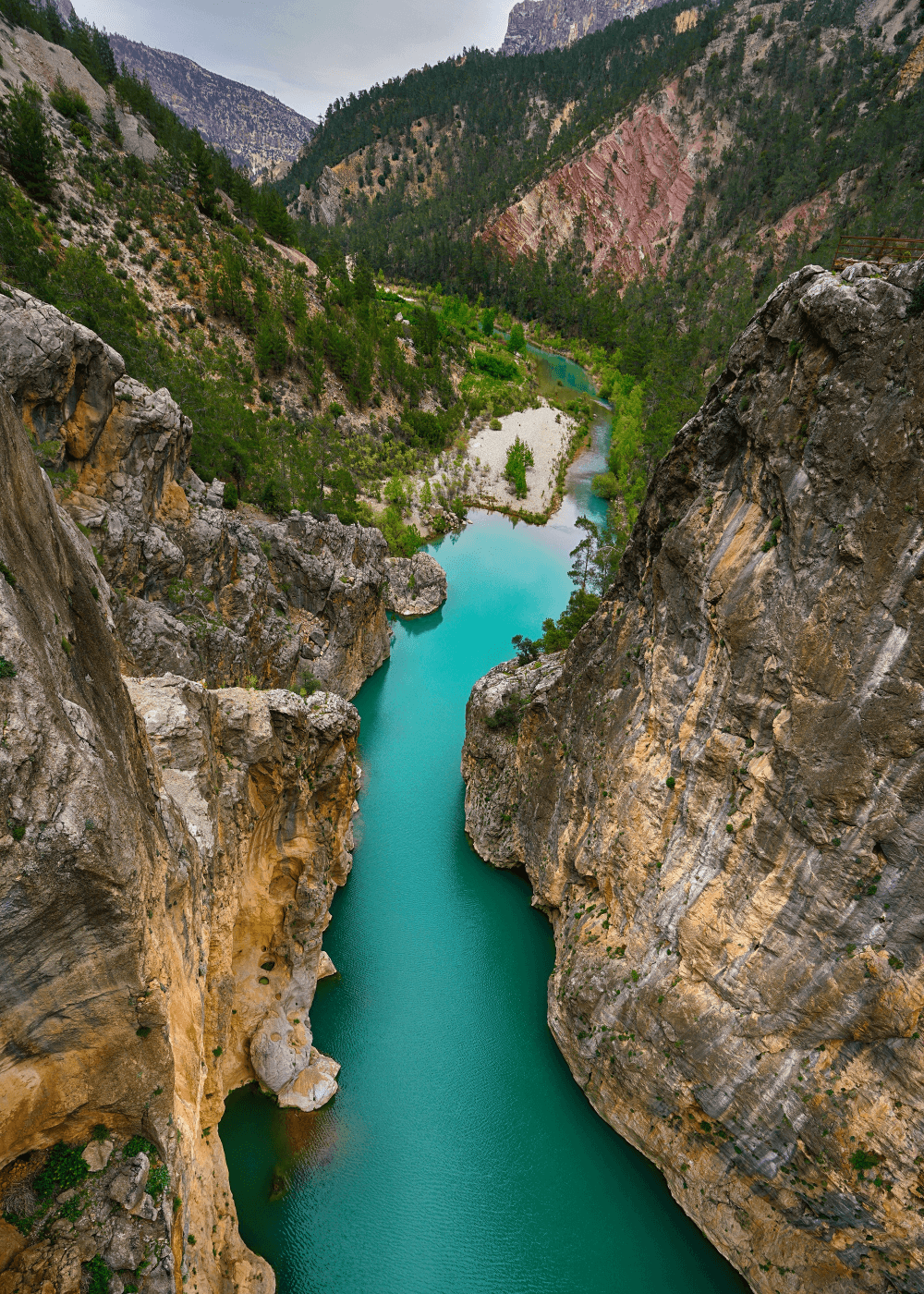
Yerköprü Waterfall is a natural monument located within the boundaries of the Mut district of Mersin Province in Türkiye. Situated on the Ermenek Creek, the waterfall has been placed under protection by the General Directorate of Nature Conservation and National Parks as one of Türkiye’s registered natural monuments. The area was officially designated as a Natural Monument on 3 May 2011 and also holds the status of a natural park.
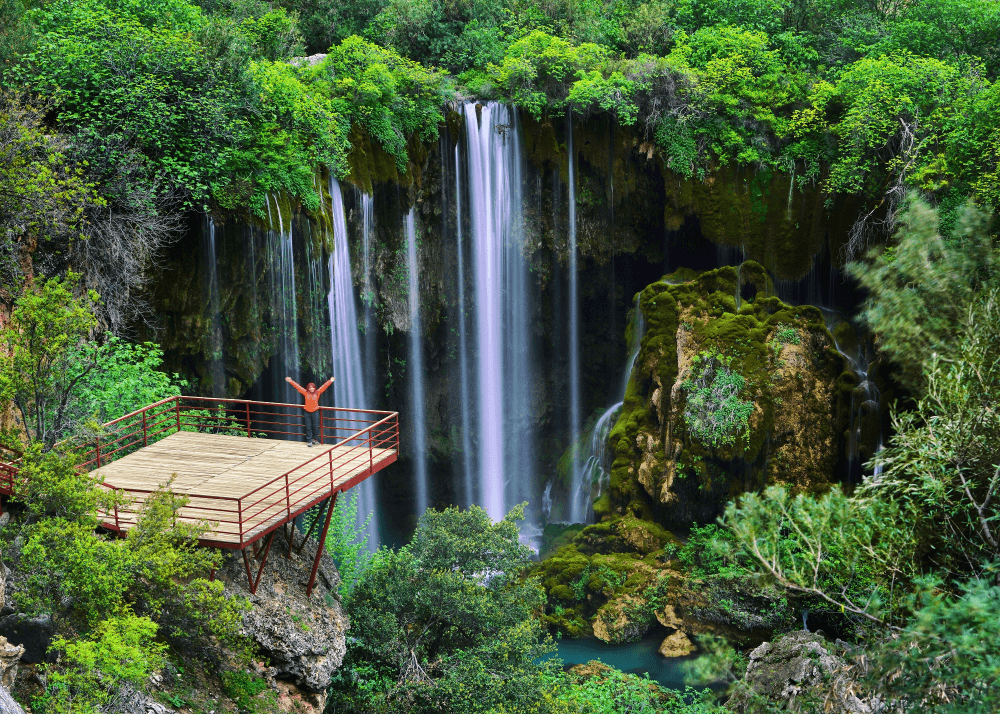
Yerköprü Waterfall (Mut District Governorship)
The formation of the waterfall is attributed to a narrow spring that emerged as a result of faulting of limestone deposits from the Cretaceous Period, approximately 110 million years ago.
The waterfall flows from a height of approximately 30 metres. At the point where the water descends, there is a water tunnel 200 metres long, 10 metres wide, and with a depth of 10 to 15 metres at its base. Within this tunnel, stalactites preserved in their natural state and a rich vegetation cover are found.
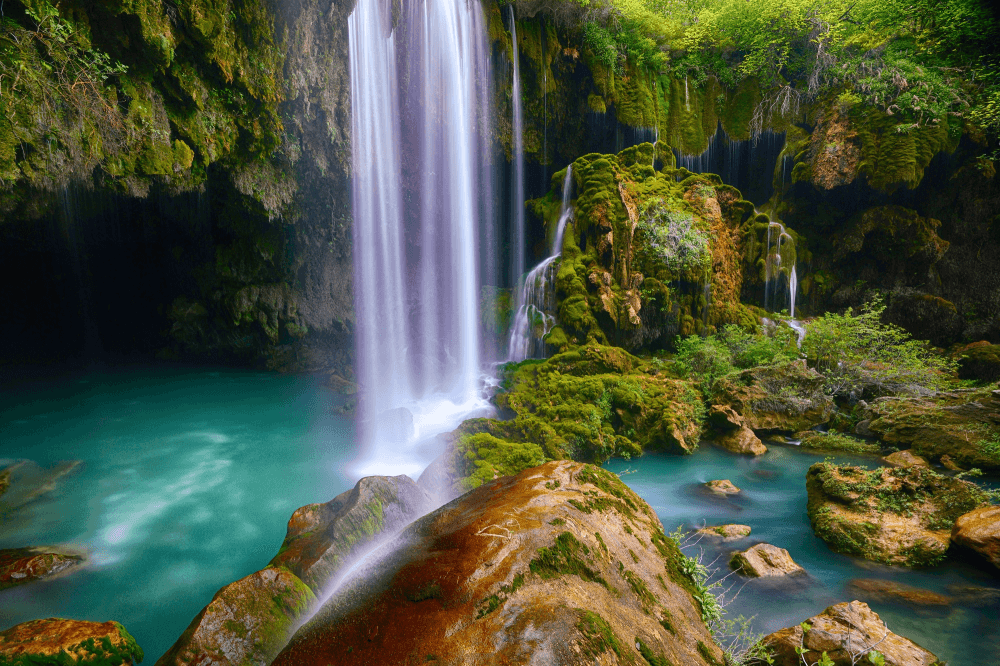
Yerköprü Waterfall (Mut District Governorship)
The waterfall, fed by the Ermenek Creek from the Gezende Canyon and surrounding valleys, possesses a unique ecosystem and a natural formation within a deep valley.
The walking trail within the park, along with bridges, staircases, resting areas and viewing terraces, offers visitors a distinctive exploration experience. Particularly during hot weather, Yerköprü Waterfall attracts both local and international tourists due to its natural coolness.
The caves in the region and the formations carved by the water eroding the rocks bear traces of natural processes. The movement of water from the Gezende Dam feeding the waterfall and the convergence of water emerging from a spring at the base of the rocks create the source of the area’s cool climate.
Anadolu Ajansı. “Mersin’s Hidden Paradise:Yerköprü Şelalesi.” Anadolu Ajansı, August 11, 2023. Accessed June 21, 2025. https://www.aa.com.tr/tr/yasam/mersin-in-sakli-cenneti-yerkopru-selalesi/2965658.
T.C. Mersin Valiliği. “Mut Yerköprü Şelalesi.” Mersin Valiliği Resmî Web Sitesi. Accessed June 21, 2025. http://www.mersin.gov.tr/mut-yerkopru-selalesi.
T.C.Mut Kaymakamlığı Governorship. "Yerköprü Şelalesi." T.C. Mut District Governorship Official Website. Accessed June 21, 2025. http://www.mut.gov.tr/yer-kopru-selalesi.

Yerköprü Waterfall
Location | Türkiye Mersin Mut | ||||||||
|---|---|---|---|---|---|---|---|---|---|
River Where Located | Ermenek Çayı | ||||||||
Status | Natural Monument and Natural Park | ||||||||
Registration Date | 03 May 2011 | ||||||||
Geological Formation Period | Cretaceous (Chalk) Period Approximately 110 million years ago | ||||||||
Waterfall Height | Approximately 30 m | ||||||||
Water Tunnel Characteristics | 10-15 m bottom depth (lake) 10 m width 200 m length | ||||||||
Formation and Structure
Features