


This article was automatically translated from the original Turkish version.
+2 More
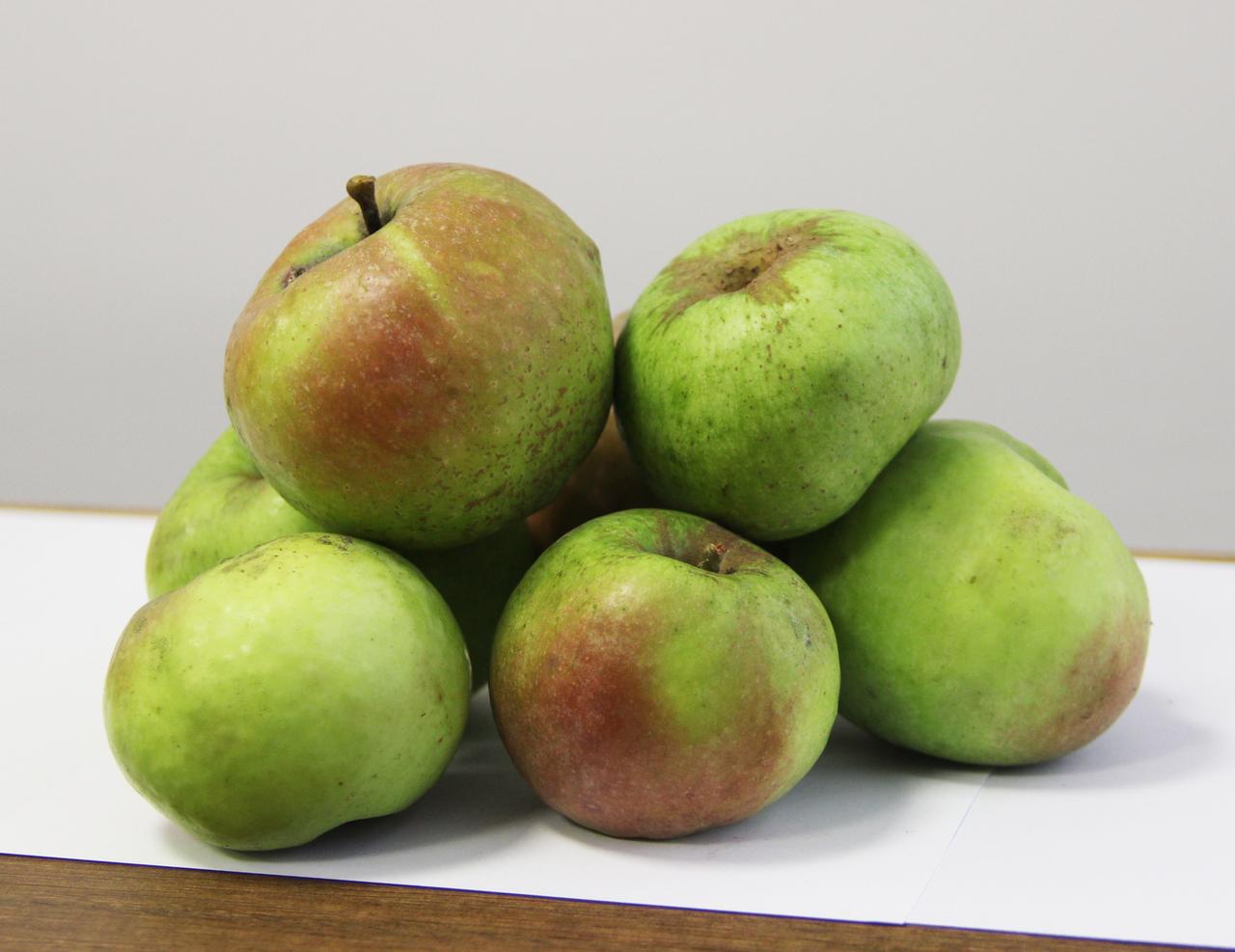
Yomra Apple is a local apple variety cultivated within the boundaries of Yomra district in Trabzon province, located in Türkiye’s Black Sea Region. It was officially registered as a geographical indication on 15 December 2020, with the registering authority being the Yomra Municipality. The registration application was submitted on 17 February 2020. The Yomra Apple falls under the category of processed and unprocessed fruit and is confined to the geographical boundaries of Yomra district, Trabzon province.
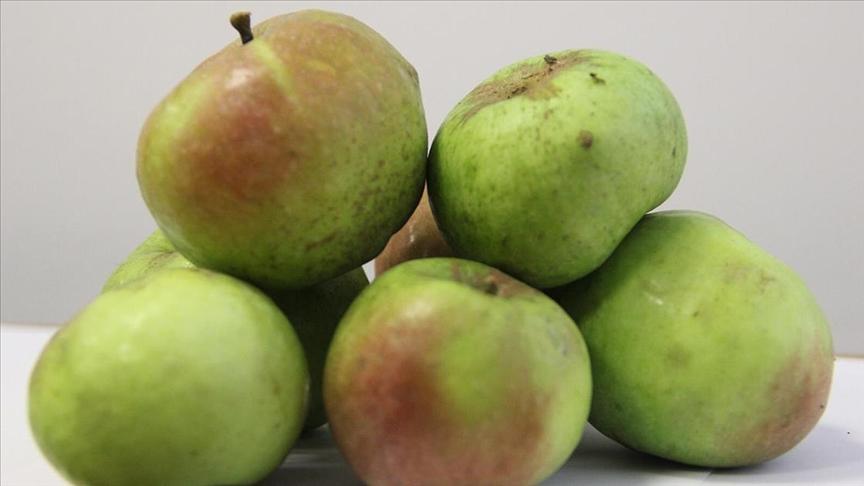
Trabzon Yomra Apple, (AA)
The Yomra Apple is also known locally as “yomur apple.” The fruit has a shape that is flattened at the stem end and slightly bulging in the middle. Its skin color varies depending on sun exposure, typically displaying a mix of red, burgundy, orange, and yellow tones over a green background with faint speckling. As it ripens, its tartness diminishes and the flesh softens.
The fruit’s stem cavity and blossom end are deep. The flower structure consists of five sepals, five petals, 15 to 20 stamens, and a five-chambered ovary.
Some Physical and Chemical Properties of the Yomra Apple:
The Yomra Apple is a parthenocarpic variety, meaning fruit development can occur without fertilization. As a result, the fruit typically contains no seeds or only a very small number.
Some key physical and chemical properties of the Yomra Apple have been identified as follows:
These parameters are fundamental indicators of the fruit’s quality and durability.
In Yomra Apple production, saplings are planted directly or propagated through bud or grafting methods. Trees are planted with a spacing of 7 meters by 6 meters. Due to the region’s climatic and soil conditions, irrigation and fertilization are generally unnecessary. Furthermore, the tree’s adaptation to local environmental conditions results in very low need for chemical pest control. However, in rare cases, limited spraying may be applied against aphids, which may appear particularly in April and May. Additionally, producers manually remove weeds and unwanted vegetation around the trees.
Harvesting typically takes place in September and November. Fruits are carefully picked from the branches to avoid bruising or damage; apples are detached with their stems intact, leaving approximately 2 cm of stem. Apples growing at the upper parts of trees are harvested without damage using a specialized fruit-picking device made of fabric material.
Environmental conditions play a critical role in storage. After harvest, apples must be stored under appropriate conditions. Cool, dark areas with approximately 70% humidity and no direct light are preferred. Apples are preserved in cool, dark, soft-floor environments with adequate air circulation. Soft-floor cellars suitable for air flow are commonly used for this purpose. In local practices, traditional structures known as “serandar” are also used for storage. If ambient humidity is insufficient, containers of water are placed inside the storage area to maintain moisture balance. The climate of Yomra district, particularly its high humidity and low temperature fluctuations after harvest, enables apples to be stored for extended periods without spoilage. Prior to storage, damaged or unhealthy fruits are sorted out to preserve product quality.
Ventilated cellars are suitable for this purpose. Traditionally, the region uses structures known as serandar. If humidity levels are inadequate, water containers are placed in the storage area to restore moisture balance. The average high humidity and low temperature variation in Yomra district allow the fruit to be stored for long periods without deterioration. Before storage, damaged or unhealthy fruits are separated and removed.
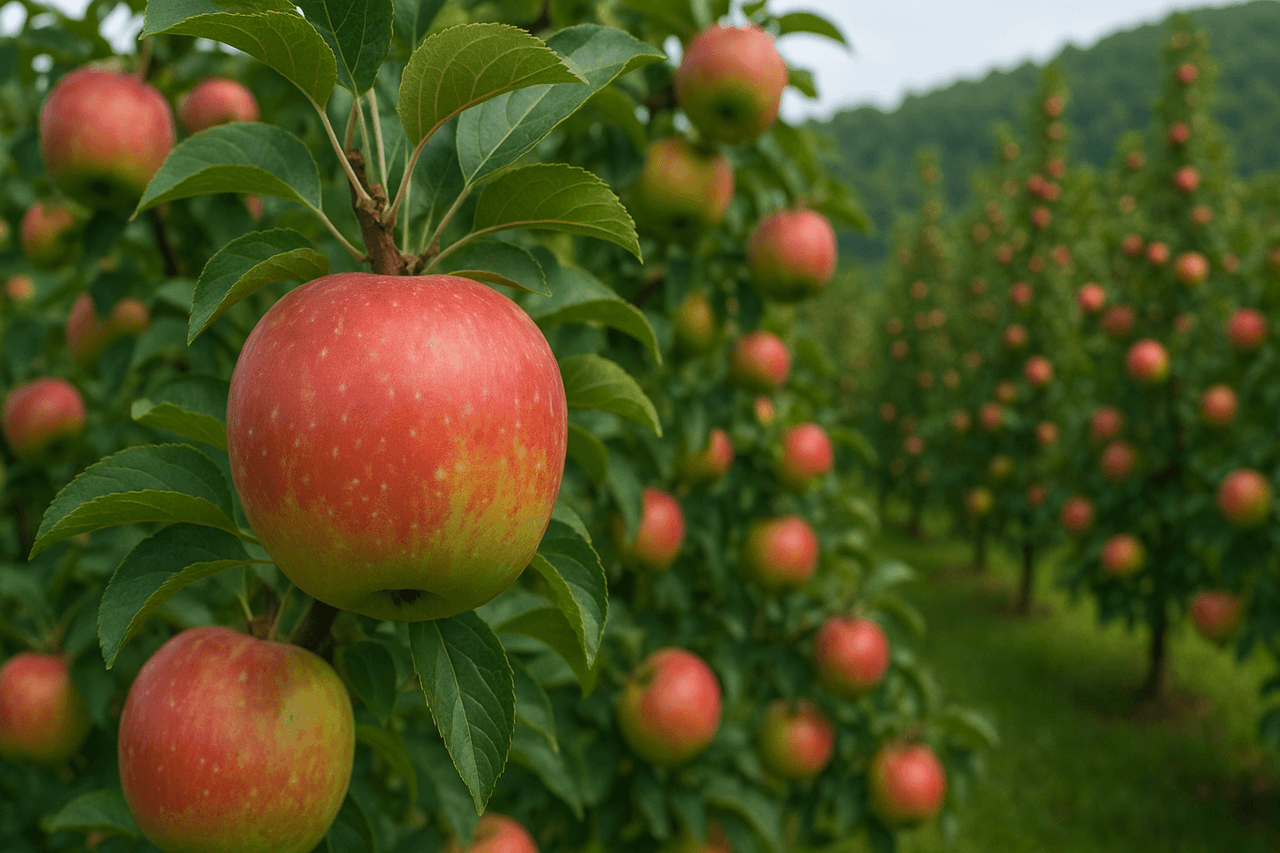
Trabzon Yomra Apple, (generated by artificial intelligence.)
The Yomra Apple can only be produced within the boundaries of Yomra district, Trabzon province. The product has a historical association with this region, and all production stages—including propagation, cultivation, harvesting, and storage—must occur within these geographical limits.
The production and use of the geographical indication are monitored by a control mechanism coordinated by the Yomra Municipality. This mechanism involves a three-member committee composed of representatives from the Yomra Municipality, the Yomra District Directorate of Agriculture and Forestry, and the Yomra Chamber of Agriculture, conducting inspections at least once annually, particularly during the harvest season. Additional inspections may be carried out as needed or upon complaint. During inspections, the physical and chemical properties of the product are verified for compliance with registered standards, and the correct use of the geographical indication label and emblem is checked. Chemical analyses are performed when necessary.
During the inspection process, support may be obtained from experts employed in the public or private sector, or services may be procured in this field. Legal procedures for protecting the rights arising from the geographical indication are managed by the registering authority.
When marketed or packaged for sale, the Yomra Apple must bear the label “Yomra Apple” together with the geographical indication emblem. If direct application on the product or packaging is not feasible, this label and emblem must be displayed in a clearly visible location at the point of sale.
The production process and compliance with geographical indication requirements for the Yomra Apple are monitored by a three-member inspection body coordinated by the Yomra Municipality. This body consists of representatives from the Yomra Municipality, the Yomra District Directorate of Agriculture and Forestry, and the Yomra Chamber of Agriculture. Inspections are conducted at least once annually, particularly during the harvest season. Physical and chemical analyses are included in the process as needed. The inspection body may procure services from experts in the public or private sector when necessary.
The Yomra Municipality is the authority responsible for executing legal procedures to protect rights derived from the geographical indication.
Anadolu Ajansı. "Yomra Elması Görseli." Accessed May 20, 2025. https://cdnuploads.aa.com.tr/uploads/Contents/2021/01/08/thumbs_b_c_9999bc582dcd47dd0b2b8d9d700f75da.jpg?v=154542.
Turk Patent and Trademark Office. "Yomra Elması - Coğrafi İşaret Detayı." Accessed May 20, 2025. https://ci.turkpatent.gov.tr/cografi-isaretler/detay/1703.
Turkish Patent and Trademark Office. "Yomra Elması Coğrafi İşaret Tescil Belgesi." Accessed May 20, 2025. https://ci.turkpatent.gov.tr/Files/GeographicalSigns/370c9925-9e5c-49b2-94ed-cc10e2490a14.pdf.

Botanical Characteristics and Morphology
Physical and Chemical Properties
Production Process and Growing Conditions
Storage Conditions
Geographical Production Boundaries and Monitoring Practices
Usage and Labeling
Inspection and Control Process