

This article was automatically translated from the original Turkish version.
+1 More
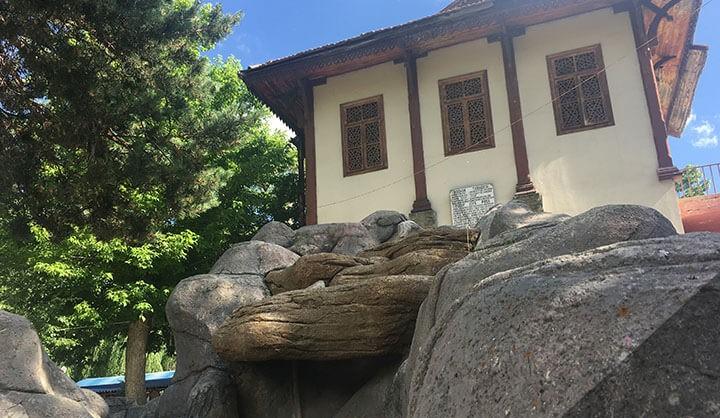
Yusuf Ziya Paşa Köşkü, Erzurum within the boundaries of which lies a historical civil architectural structure dating to the late period of the Ottoman State. The kiosk was constructed for residential purposes and is regarded as an example reflecting the architectural understanding, lifestyle, and spatial organization of its time. The structure is included among the civil buildings considered part of Erzurum’s historical and cultural heritage and provides important data regarding the city’s traditional residential fabric.【1】
Yusuf Ziya Paşa Köşkü derives its name from the Ottoman statesman Yusuf Ziya Paşa. It is noted that the structure was built during the late Ottoman period in accordance with the residential architectural norms prevalent in Erzurum at the time. The kiosk was used as a private residence upon its construction. Over time, the building underwent various interventions and repairs. Throughout its history, the kiosk has remained one of the structures integral to Erzurum’s social life.【2】
Yusuf Ziya Paşa Köşkü is located in the Köşk Mahallesi neighborhood of Erzurum, within a garden known as Ravzat-ül Hazra, and is one of the civil architectural examples from the Ottoman period. The structure was commissioned by Yusuf Ziya Paşa during his tenure as governor of Erzurum between 1795 and 1798. Historical sources refer to the kiosk and its surroundings as Nüzhet-ül Hazra, meaning a green place suitable for leisure and enjoyment, and describe it as designed with a spacious garden and a large pool that reflect the landscape sensibilities of the era.【3】
During its time of construction, the kiosk served as a private residence and gradually acquired an important place in Erzurum’s social life through both its architectural features and its environmental arrangement. It underwent restoration during the governorship of Mehmet Emin Rauf Paşa between 1821 and 1824, during the mayoral term of Edip Somunoğlu in 1921, and most recently in 1986 by the Erzurum Municipality. Despite these interventions, the structure has largely retained its original form and continued to preserve its authentic architectural character.
The building exhibits characteristic features of Ottoman civil architecture. Stone and wood materials were used together in its construction. The plan layout reflects the common interior-sofa typology found in residential architecture of the period. The architectural approach prioritizes functionality over decorative elements.【4】

Yusuf Ziya Paşa Köşkü Dış Görünümü (Erzurum Portalı)
Rooms are arranged around this central sofa. The spatial organization responds to the daily needs of domestic life. This plan configuration is regarded as a common arrangement in Ottoman residential architecture.
The facades exhibit a restrained architectural approach. Decorative elements on the exterior surfaces are limited. Window openings are arranged to ensure adequate natural light for interior spaces. Functional use is prioritized in structural elements, reflecting a minimalist architectural approach devoid of ostentation.
The interior spaces were designed to suit residential use. Rooms are arranged around the central sofa, facilitating circulation and spatial relationships. The placement and size of windows were planned to ensure natural lighting within the interior. The interior layout reflects the lifestyle and residential concepts of the period.
Yusuf Ziya Paşa Köşkü is considered not only as a building but also in relation to its surrounding garden. The garden retains traces of traditional Turkish garden design. A sense of unity has been achieved between the structure and the garden, with open areas regarded as integral components of residential life. The garden was clearly planned for both aesthetic and functional purposes.【5】
Today, the kiosk is recognized among Erzurum’s historical buildings and is evaluated as part of the city’s cultural heritage. The structure has been studied in research on civil architecture in Erzurum and is regarded as one of the elements reflecting the city’s historical fabric. Yusuf Ziya Paşa Köşkü is counted among the buildings documenting Erzurum’s historical and architectural legacy.【6】
[1]
Erzurum Portalı, ''Gezilip Sefa Bulunulacak Yeşil Yer' Erzurum Yusuf Ziya Paşa Köşkü,'' Erzurum Portalı, Erişim Tarihi: 24 aralık 2025, https://erzurumportali.com/shf/3270/Erzurum-Yusuf-Ziya-Pasa-Kosku
[2]
Erzurum Portalı, ''Gezilip Sefa Bulunulacak Yeşil Yer' Erzurum Yusuf Ziya Paşa Köşkü,'' Erzurum Portalı, Erişim Tarihi: 24 aralık 2025, https://erzurumportali.com/shf/3270/Erzurum-Yusuf-Ziya-Pasa-Kosku
[3]
Erzurum Portalı, ''Gezilip Sefa Bulunulacak Yeşil Yer' Erzurum Yusuf Ziya Paşa Köşkü,'' Erzurum Portalı, Erişim Tarihi: 24 aralık 2025, https://erzurumportali.com/shf/3270/Erzurum-Yusuf-Ziya-Pasa-Kosku
[4]
Elif Akpınar Külekçi, and Başak Aytatlu. "DETERMINATION OF THE CONTRIBUTION OF TRADITIONAL HOUSE AND GARDEN ARCHITECTURE TO URBAN LANDSCAPE: ERZURUM YUSUF ZİYA PAŞA KÖŞKÜ EXAMPLE," AL -FARABİ IV. ULUSLARARASI SOSYAL BİLİMLER KONGRESİ, syf 496-503, https://avesis.atauni.edu.tr/yayin/757fe6f7-65c2-4053-a1be-4fdab1cddc1b/determination-of-the-contribution-of-traditional-house-and-garden-architecture-to-urban-landscape-erzurum-yusuf-ziya-pasa-kosku-example
[5]
A.e., syf 501
[6]
Erzurum Büyükşehir Belediyesi, ''Tarihi Yerleri' Yusuf Ziya Köşkü,'' Erzurum Büyükşehir Belediyesi, Erişim Tarihi: 24 aralık 2025, https://www.erzurum.bel.tr/tarihi-yerleri

No Discussion Added Yet
Start discussion for "Yusuf Ziya Pasha Pavilion" article
Historical Background
Architectural Features
Facade Organization and Structural Elements
Interior Spatial Features
Garden and Environmental Arrangement
Current Status and Significance