


This article was automatically translated from the original Turkish version.
+2 More
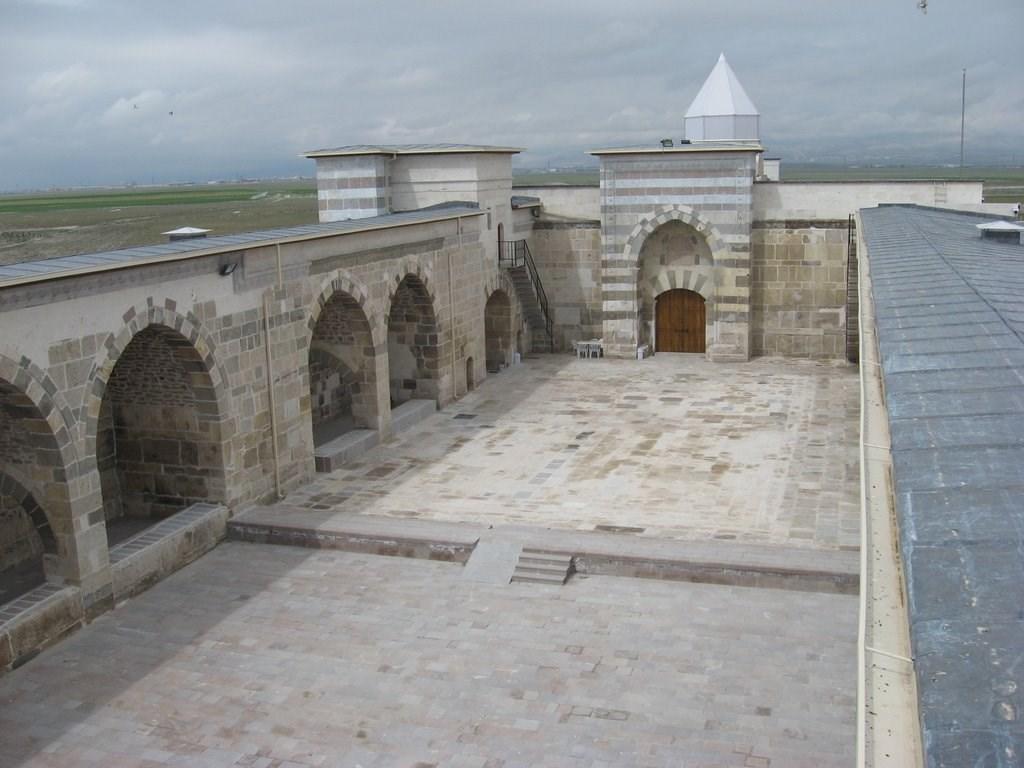
Zazadin Hanı is located approximately 22–25 kilometers from the center of Konya, near Tömek Village, about five kilometers inland from the Aksaray-Konya highway. The structure, regarded as the largest caravanserai of the Seljuk Sultanate of Anatolia in Konya, was built on a rectangular plan oriented east-west.
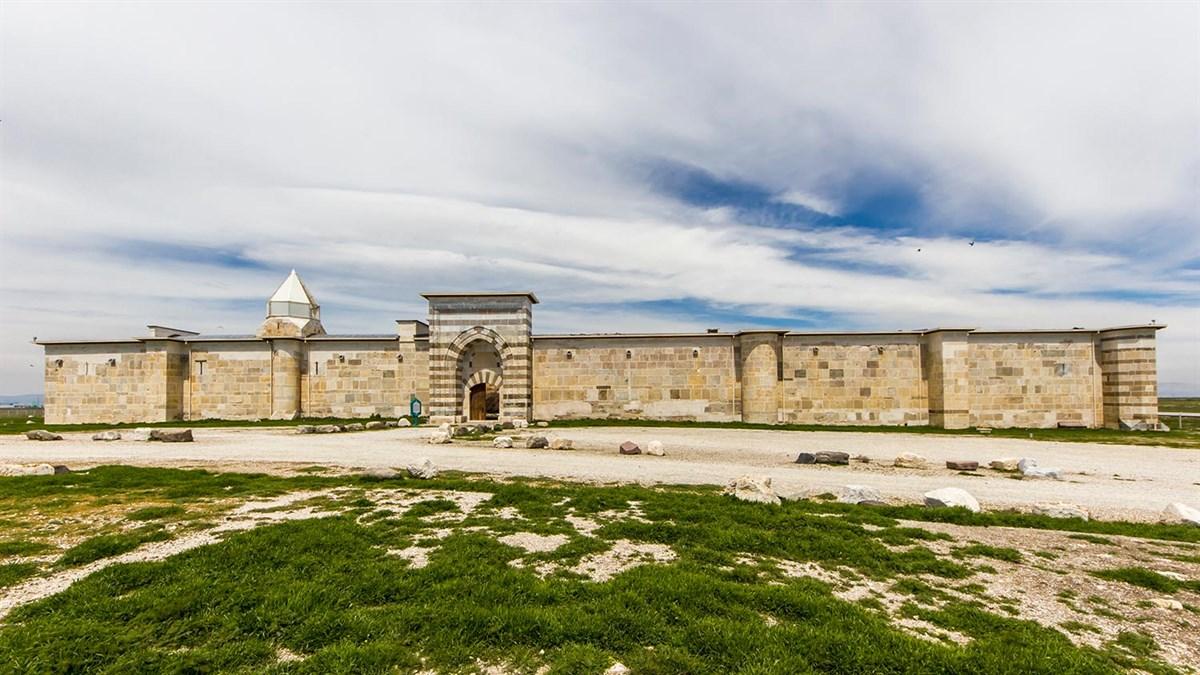
Zazadin Hanı (Subgovernorship of Selçuklu, Republic of Türkiye)
Construction of Zazadin Hanı began in 1235 during the reign of Seljuk Sultan I. Alaeddin Keykubat and was completed in 1237 under his son, II. Gıyaseddin Keyhüsrev. The structure was commissioned by the Seljuk vizier Sadettin Köpek. This individual, referred to in inscriptions as “Köpek bin Muhammed,” is also known as Emir-i Şikar, craftsman, and architect, and is believed to have been the builder of the caravanserai. The original name of the structure was “Sadeddin Hanı,” which over time evolved into “Zazadin Hanı” in popular usage.
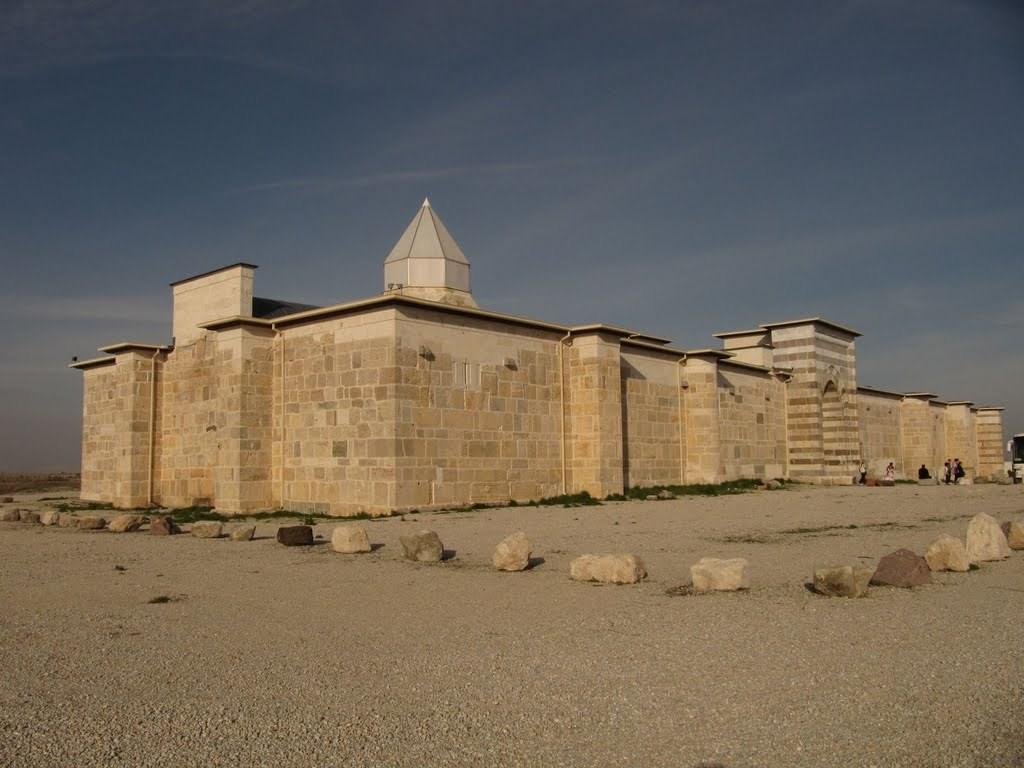
Zazadin Hanı (Subprefecture of Selçuklu, Republic of Türkiye)
Zazadin Hanı follows the classic Seljuk caravanserai type, consisting of two main sections: a summer courtyard and a covered winter section. The courtyard is an open area, while the enclosed section was used primarily during winter months. The total length of the structure is 104 meters and its width is 62 meters.
The outer walls of the building are supported by polygonal, square, and cylindrical buttresses and corner towers projecting outward in prismatic forms. The facade walls incorporate spolia stones from the Roman and Byzantine periods, adding a layer of historical stratification to the structure.
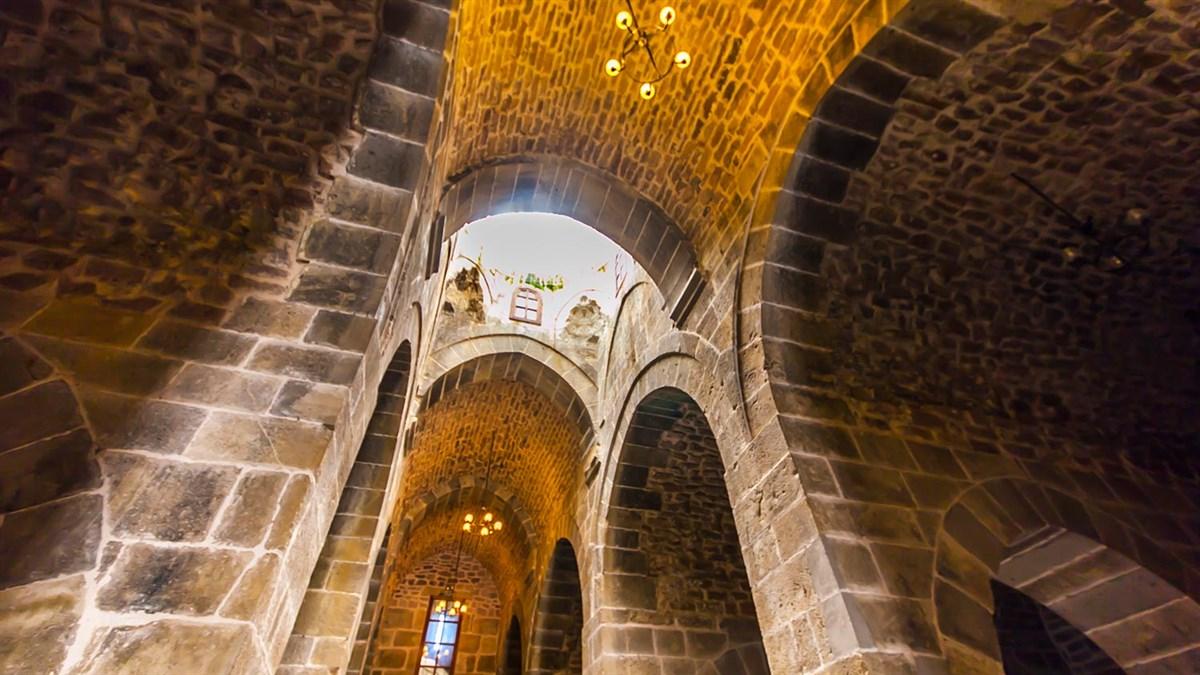
Zazadin Hanı (Subprefecture of Selçuklu, Republic of Türkiye)
The caravanserai features two separate portal entrances, one opening into the courtyard and the other into the enclosed section. The courtyard portal on the southern facade stands out as a rectangular prism constructed with alternating courses of two-colored stone, featuring limited geometric ornamentation. Above this portal is a mosque enclosed by rope-patterned pilasters and covered by a star-shaped vault. A staircase located in the northwestern part of the courtyard connects the mosque to the ground floor.
The portal of the enclosed section opens toward the courtyard and is notable for its depressed arch. The enclosed space consists of a wider and taller central area covered by a dome supported by pendentives, with the surrounding sections vaulted by pointed barrel vaults. During restoration, the dome was covered with a transparent polycarbonate material, forming an octagonal prismatic drum and an octagonal pyramidal cupola.
Zazadin Hanı has a total of 24 rooms in its courtyard, divided into open-front and enclosed types. In addition, the complex includes a mosque, a bathhouse, storage rooms, warehouses, and stables. The courtyard is surrounded on the south, east, and north sides by semi-open and enclosed spaces. On the eastern side, four rooms are arranged, while on the northern side, two rows of arcaded galleries and various rooms are located. In some parts of the structure, brickwork examples of cross vaults and barrel vaults are used together.
Akman, Muhammed Ali. “Zazadin Hanı İhtişamıyla Konuklarını Bekliyor.” Anadolu Ajansı. Accessed June 15, 2025. https://www.aa.com.tr/tr/kultur-sanat/zazadin-hani-ihtisamiyla-konuklarini-bekliyor/1333582.
T.C. Konya Valiliği. "Zazadin Hanı." Accessed June 15, 2025. http://www.konya.gov.tr/zazadin-hani.
T.C.Selçuklu Kaymakamlığı Governorship. "Zazadin Hanı." Accessed June 15, 2025. http://www.selcuklu.gov.tr/zazadin-hani.
Özekinci, Engin. “Selçuklu’nun Konya’daki En Büyük Kervansarayı: Zazadin Hanı.” Anadolu Ajansı. Accessed June 15, 2025. https://www.aa.com.tr/tr/turkiye/selcuklunun-konyadaki-en-buyuk-kervansarayi-zazadin-hani/1623609.

Historical Background
Architectural Features
Portal Entrances and Decorative Art
Interior Layout