


This article was automatically translated from the original Turkish version.
+2 More
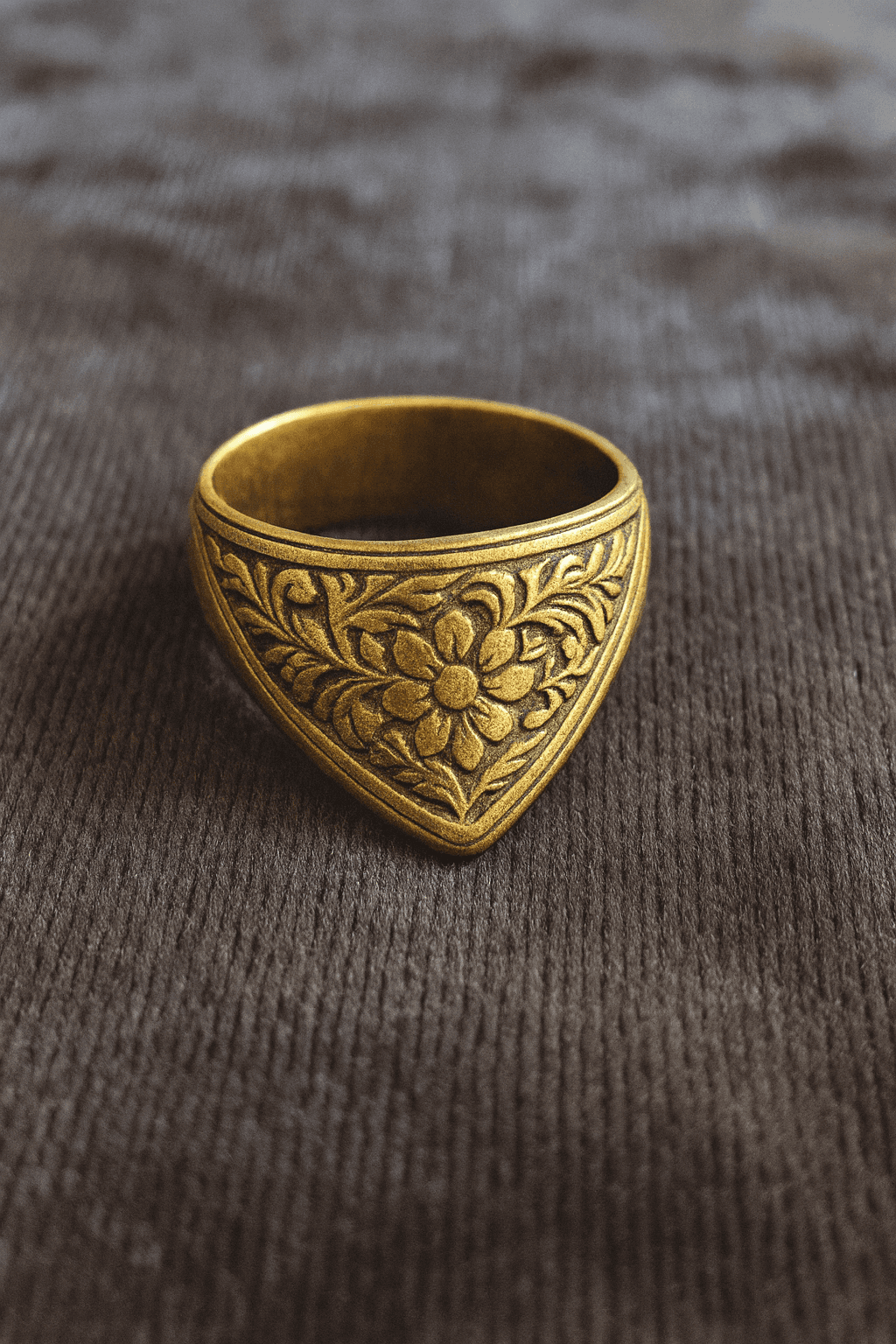
Zihgir (Generated with Artificial Intelligence.)
Definition(s) | Thumb ring that protects the thumb from bowstring pressure and facilitates drawing | ||||||||
|---|---|---|---|---|---|---|---|---|---|
Field of Use | Archery for war, hunting, sport and ceremonial purposes | ||||||||
Material(s) | Horn rarely mother-of-pearl metal bone | ||||||||
Historical Spread | From the Huns to the Ottomans, from Central Asia to Anatolia | ||||||||
Important Discoveries | Konya Gevale Castle mother-of-pearl inlay, Hasankeyf archer thumb rings, inlaid examples from the Topkapı Sarayı collection | ||||||||
Zihgir is a thumb ring that protects the thumb from the pressure of the bowstring during archery and ensures the continuity of the shot. In Ottoman sources, it is referred to as zingir, zehgir, or şast; in Arabic as küştibân; and in Persian as engüştvâne. Materials used include bone, horn, metal, and occasionally mother-of-pearl. Structurally, it consists of three parts: the palate (kaş), the ear, and the threshold. The zihgir is an essential auxiliary component of Turkish archery when used with the composite bow and the thumb draw technique.
In Turkish archery, the zihgir is as important as the bow, arrow, and quiver. The thumb draw technique, developed alongside the short composite bow among the steppe communities of Asia, made the zihgir indispensable. The high range and efficiency provided by composite bows elevated the zihgir from a mere accessory to an integral part of the shooting technique. During the Ottoman period, archery was regarded not only as a military practice but also as a sport and cultural heritage. During this time, zihgirs were produced not only for their functional purpose but also as ornate objects bearing artistic value and personal prestige.

Zihgir (Anadolu Agency)
The zihgir is defined as a specialized ring worn on the thumb and used to draw and release the bowstring. The Eastern thumb draw technique, distinct from the Western three-finger draw, became possible only with the use of the zihgir. Ottoman texts refer to it as zihgir, zehgir, or şast; Arabic sources use küştibân; and Persian sources use engüştvâne. This terminological diversity reflects its widespread use across different cultures.
The zihgir developed alongside the composite bow, a key element of Turkish military technology. The thumb draw technique, adopted by Turkic groups from the Huns to the Ottomans, rendered the zihgir essential. Direct archaeological evidence of zihgirs is limited; however, strong indications of their use are found in miniatures, written sources, and museum collections. A mother-of-pearl zihgir discovered at Konya’s Gevale Castle is one of the earliest examples from Anatolia. Finds in China dating to the 5th millennium BCE indicate some of the earliest known uses of the zihgir in Asia. During the Ottoman period, zihgirs were associated not only with warfare and hunting but also with sporting and ceremonial archery.
%252Felsanati2.jpg&w=1280&q=75)
Zihgir (Anadolu Agency)
The zihgir consists of three main parts: the palate (kaş), the ear, and the threshold. The palate is the part that bears the pressure of the bowstring and protects the thumb from injury. The ear is a leather piece fitted to the inner surface to ensure a secure fit on the finger. The threshold is the edge upon which the bowstring rests. Zihgirs were custom-made: the inner diameter was measured according to the archer’s finger, the leather lining was applied, and the surface was polished for use. During shooting, if the zihgir slipped off the finger, it was considered a sign of inexperience. Thanks to this design, the zihgir functioned both as a protective device and as a tool for controlling the shot.
The materials used in zihgir production vary. The most common are bone, horn, and metal, though examples made from fragile materials such as mother-of-pearl also exist. Horn stands out due to its durability and ease of shaping. In production, the material was cut, drilled to fit the finger’s dimensions, lined with leather on the inner surface, and polished. The mother-of-pearl zihgir found at Konya’s Gevale Castle is a rare example. With an internal diameter of 21 mm, this zihgir is also significant for its dimensional conformity with other Ottoman-era zihgirs. Such finds document the wide range of materials used in zihgir production.

Zihgir (Anadolu Agency)
After being placed on the thumb, the bowstring is positioned against the thumb joint. The index finger is then pressed over the string to form a secure grip. This technique allows the archer to execute a stronger and more controlled draw. Without a zihgir, thumb injuries, skin abrasions, and calluses commonly occur. Thus, the zihgir is an essential piece of equipment for the archer to shoot safely and effectively. In addition, during the Ottoman period, ornate zihgirs were also used as decorative items and symbols of prestige.
Archaeological excavations in Anatolia have yielded evidence of the historical presence of zihgirs. Two thumb rings discovered at Hasankeyf are among the most recent examples from this region. The mother-of-pearl zihgir unearthed at Konya’s Gevale Castle is a rare find in terms of manufacturing material. Art historical sources, particularly miniatures, clearly depict the use of zihgirs. Ottoman miniature scenes show zihgirs worn on the thumb, documenting the archery culture of the period. Kakmalı zihgirs in the Topkapı Palace collection attract attention for their intricate decorations and craftsmanship. These examples demonstrate that the zihgir served both as a functional weapon and as an artistic object.

Zihgir (Anadolu Agency)
Beyond its roles in warfare and hunting, the zihgir became a sportive and cultural heritage during the Ottoman period. Archery was institutionalized in archery grounds in Istanbul under the patronage of the sultans. During this process, the zihgir also gained importance as a symbol of prestige within Ottoman culture. Today, the tradition of the zihgir continues. At the Turkish Museum of War Weapons in Ankara, visitors are taught the craft of zihgir-making and archery through hands-on demonstrations. In Adana, artisans specializing in horn carving continue to pass on the art of zihgir production to future generations.
Anadolu Ajansı. "Hasankeyf’teki Kazılarda Şifa Tası ve İki Okçu Yüzüğü Bulundu." Accessed September 30, 2025. https://www.aa.com.tr/tr/pg/foto-galeri/hasankeyfteki-kazilarda-sifa-tasi-ve-iki-okcu-yuzugu-bulundu/0.
Anadolu Ajansı. “45 Yaşından Sonra Öğrendiği El Sanatını Gelecek Kuşaklara Aktarmak İstiyor.” Accessed September
Anadolu Ajansı. “Geleneksel Atlı Okçuluğa Gönül Veren Kaymakam.” Accessed September 30, 2025. https://www.aa.com.tr/tr/pg/foto-galeri/geleneksel-atli-okculuga-gonul-veren-kaymakam-/17.
Aygör, Erkan, and Şimşir, Zekeriya. “Konya Gevale Kalesinde Bulunan Bir Zihgir; Türk Sanatında ve Okçuluğunda Yeri”. *İSTEM* 42, (2023): 85–122. Accessed September 30, 2025. https://doi.org/10.31591/istem.1353205.
Çoban, Mehmet Salih. “Zihgir” KÜRE Ansiklopedi. Accessed September 30, 2025. https://kureansiklopedi.com/tr/detay/zihgir.
Ölmez, Filiz Nurhan, and Halit Özdamar. “Bir Yüzüğün Öyküsü: Zihgir.” *İdil Dergisi* 6, no. 33 (2017): 1555–1579. Accessed September 30, 2025. https://www.idildergisi.com/makale/pdf/1494333157.pdf.
İkibeş, Samet. “Savaş Tarihine Yön Veren Silah: Türk Kompozit Yayı ve Tamamlayıcı Unsurları.” *Journal of Universal History Studies* 5, no. 1 (2022): 32–50. Accessed September 30, 2025. https://doi.org/10.38000/juhis.1122432.

Zihgir (Generated with Artificial Intelligence.)
Definition(s) | Thumb ring that protects the thumb from bowstring pressure and facilitates drawing | ||||||||
|---|---|---|---|---|---|---|---|---|---|
Field of Use | Archery for war, hunting, sport and ceremonial purposes | ||||||||
Material(s) | Horn rarely mother-of-pearl metal bone | ||||||||
Historical Spread | From the Huns to the Ottomans, from Central Asia to Anatolia | ||||||||
Important Discoveries | Konya Gevale Castle mother-of-pearl inlay, Hasankeyf archer thumb rings, inlaid examples from the Topkapı Sarayı collection | ||||||||
Introduction
Terminology and Definition
Historical Context
Structural Features
Materials and Manufacture
Function and Use
Archaeological and Artistic Findings
Place in Turkish Culture