


This article was automatically translated from the original Turkish version.
+2 More
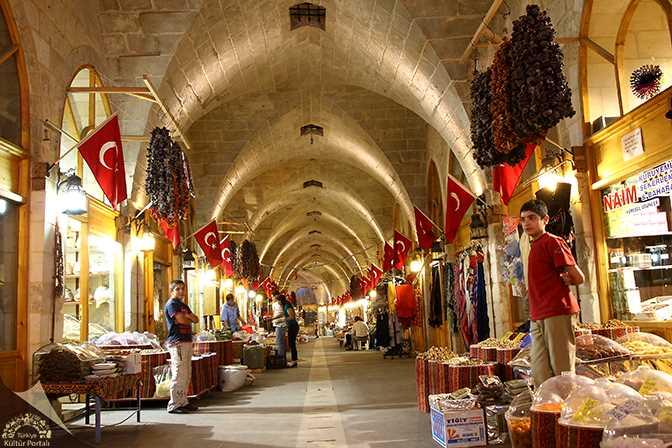
Zincirli Bedesten
Other Name(s) | Hüseyin Paşa Bedesteni Et Hali Kara Basamak Bedesteni | ||||||||
|---|---|---|---|---|---|---|---|---|---|
Location | Şahinbey Türkiye Gaziantep | ||||||||
Patron | Darendeli Hüseyin Paşa | ||||||||
Construction Year | 1718 | ||||||||
Inscription Author | Kusuri (Poet) | ||||||||
Architectural Plan | L-shaped; consists of two corridors intersecting along the north-south and east-west axes | ||||||||
Material(s) | Cut stone rubble stone | ||||||||
Number of Floors | Originally single-story; the second story, added later, was destroyed in the 1957 fire | ||||||||
Number of Shops | 73 | ||||||||
Zincirli Bedesten was constructed in 1718 during the Ottoman period by Darendeli Hüseyin Paşa. The building, originally named Hüseyin Paşa Bedesteni, is mentioned in its 1719 foundation deed as comprising 80 shops. A four-line inscription on the southern entrance of the bedesten was composed by the renowned poet of the era, Kusuri.
Constructed in the first quarter of the 18th century, the structure gradually became known among the public as "Zincirli Bedesten." This name is believed to derive from the practice of locking the gate with a large chain at night for security purposes. The building was also commonly referred to as "Kara Basamak Bedesteni" and, due to the long-standing presence of butchers operating within it, as "Et Hali."

Zincirli Bedesten (AA)
Zincirli Bedesten is an L-shaped structure composed of two intersecting main sections aligned along the north-south and east-west axes. Its architectural layout resembles that of the Egyptian Bazaar in Istanbul. Built as a single-story, covered structure using stone and rubble masonry, it lacks domes or vaulted ceilings. Instead, it features wide corridors and shop facades, making it a typical example of traditional Ottoman commercial architecture.
On the main entrance of the southern facade, there is a four-line inscription attributed to Kusuri. The building originally had five doors, of which only three remain in use today. An additional floor was later added to the roof of the bedesten, and it was subsequently used as a courthouse. However, this upper section was completely destroyed in a major fire in 1957.
Since its establishment, Zincirli Bedesten has held a central role in Gaziantep’s commercial life, serving for a long period as a marketplace primarily used by butchers and vegetable vendors. After the 1957 fire, the building was temporarily out of use but reopened in 1965 to resume operations in animal trade and butchery.
Between 2006 and 2008, Zincirli Bedesten underwent comprehensive restoration by the General Directorate of Foundations. During this process, the structure was renovated without compromising its original fabric and adapted for commercial use. Following restoration, 73 shops, ranging in size from 10 to 25 square meters, were allocated to artisans specializing in handicrafts, spices, dried fruits, jewelry, mother-of-pearl inlay, and local products.

One of the Shops (AA)
Located in the Şahinbey district of Gaziantep, near the city center, Zincirli Bedesten now functions as both a commercial and cultural hub. Among the products sold here, local handicrafts, natural stones, traditional智力 games, spices, and regional gastronomic items stand out. The building’s architectural character and atmosphere play a significant role in attracting tourists.
Despite the emergence of modern shopping centers, the historic bazaar continues to preserve traditional market culture, offering both local and international visitors a unique blend of shopping and cultural experience.
Zincirli Bedesten has become one of Gaziantep’s key cultural and tourist symbols. The restoration and continued use of the bazaar, which have preserved its historical identity, contribute to both the vitality of cultural heritage and the support of the local economy. Moreover, the bedesten’s cool and authentic ambiance today serves as a popular destination for shopping and visits by both tourists and locals during the summer months.
Anadolu Ajansı. “Gaziantep’in Tarihi AVM’si: Zincirli Bedesten.” Accessed May 24, 2025. https://www.aa.com.tr/tr/turkiye/gaziantepin-tarihi-avmsi-zincirli-bedesten/1927062.
Kültür Envanteri. "Zincirli Bedesten." KulturEnvanteri.com. Accessed May 24, 2025. https://kulturenvanteri.com/yer/zincirli-bedesten/#17.1/37.062981/37.385403.
Ministry of Culture and Tourism of the Republic of Türkiye. "Bedestenler." *Culture Portal*. Accessed May 24, 2025. https://www.kulturportali.gov.tr/turkiye/gaziantep/gezilecekyer/bedestenler.
T.C.Gaziantep İl Directorate of Culture and Tourism. "Bedestenler." T.C. Ministry of Culture and Tourism. Accessed May 24, 2025. https://gaziantep.ktb.gov.tr/TR-52356/bedestenler.html.
Türkiye Turizm Ansiklopedisi. "Zincirli Bedesten." TürkiyeTurizmAnsiklopedisi.com. Accessed May 24, 2025. https://turkiyeturizmansiklopedisi.com/zincirli-bedesten.

Zincirli Bedesten
Other Name(s) | Hüseyin Paşa Bedesteni Et Hali Kara Basamak Bedesteni | ||||||||
|---|---|---|---|---|---|---|---|---|---|
Location | Şahinbey Türkiye Gaziantep | ||||||||
Patron | Darendeli Hüseyin Paşa | ||||||||
Construction Year | 1718 | ||||||||
Inscription Author | Kusuri (Poet) | ||||||||
Architectural Plan | L-shaped; consists of two corridors intersecting along the north-south and east-west axes | ||||||||
Material(s) | Cut stone rubble stone | ||||||||
Number of Floors | Originally single-story; the second story, added later, was destroyed in the 1957 fire | ||||||||
Number of Shops | 73 | ||||||||
Architectural Features
Function and Use
Current Status
Conservation and Tourism