


This article was automatically translated from the original Turkish version.
+1 More
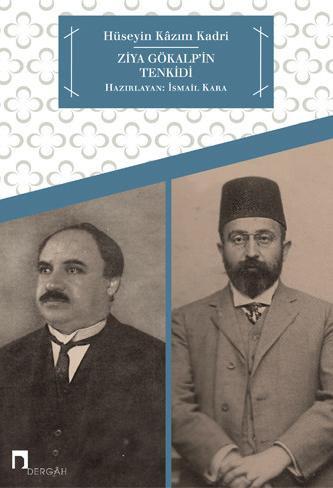
Ziya Gökalp's Critique (Book)
Author(s) | Hüseyin Kâzım Kadri | ||||||||
|---|---|---|---|---|---|---|---|---|---|
Prepared by | İsmail Kara | ||||||||
Publisher(s) | Dergâh Yayınları | ||||||||
Publication Year | July 2018 (2nd Edition) | ||||||||
Number of Pages | 160 | ||||||||
Type(s) | History of Thought / Criticism | ||||||||
Ziya Gökalp’s Critique is a critical examination of the ideas of Ziya Gökalp, written by Hüseyin Kâzım Kadri (1870–1934), one of the prominent figures in Turkish intellectual and political history, and published as part of Dergâh Yayınları’s series "Contemporary Turkish Thought". Prepared for publication by İsmail Kara, this work serves as a valuable primary source reflecting the intellectual climate of the Second Constitutional Era and the early Republic. First published in September 1989, the book consists of 160 pages and reached its second edition as of July 2018.
Ziya Gökalp’s Critique was written in response to the insufficient critical engagement with Ziya Gökalp’s ideas, despite their significant place and influence in modern Turkish thought. The book particularly questions why such a serious intellectual gap existed during the vibrant and dynamic political environment of the Second Constitutional Era. Gökalp’s direct associations with the Committee of Union and Progress and his passive, indirect stance toward his opponents are identified as factors contributing to this critical void.
Hüseyin Kâzım Kadri’s work fills an important critical gap regarding Gökalp’s ideas, especially as expressed in his book The Principles of Turkism. While writing his critiques, the author draws upon his own experiences as both witness and partial participant in the dynamics of the Second Constitutional Era and the early Republic, as well as his personal interactions and debates with Ziya Gökalp. This gives the work not only the character of an intellectual critique but also the status of a historical document offering an insider’s perspective on the intellectual relationships and ideological conflicts of the period. The book presents, through a critical lens, the various dimensions of Gökalp’s understanding of Turkism and modernization.
The language and style of the work reflect the serious, analytical, and argumentative tone characteristic of the intellectual writings of the era. İsmail Kara’s edition preserves the original language and style of the text, effectively conveying the intellectual atmosphere of the time to contemporary readers. The text contains no promotional or laudatory language; instead, it adopts a descriptive and objective academic tone. Kadri’s integration of his personal observations and experiences with scholarly arguments adds a unique dimension to the work.
Hüseyin Kâzım Kadri was one of the leading statesmen, linguists, and thinkers of the late Ottoman Empire and the early Republican period. He held various administrative posts and produced significant scholarly and intellectual works, particularly known for his contributions to the simplification of the Turkish language and his studies in Islamic sciences.
Ziya Gökalp, on the other hand, is recognized as one of the founders of Turkish sociology and a leading ideologue of Turkism and modernization. He is renowned for his extensive writings on Turkish society, culture, and politics.
Ziya Gökalp’s Critique serves as a key source for students and academics working in the fields of Turkish intellectual history, the history of sociology, political science, and Republican-era literature. The work offers a distinct perspective on Gökalp’s ideas while revealing the depth and diversity of the intellectual debates of the period. This book is a valuable primary source for understanding the intellectual exchanges and critical dialogues among the central figures of Turkish modernization.
Kadri, Hüseyin Kâzım. *Ziya Gökalp'in Tenkidi*. Edited by İsmail Kara. Istanbul: Dergah Yayınları, 1989. Accessed July 15, 2025. https://www.dergah.com.tr/kitaplar/ziya-gokalpin-tenkidi.

Ziya Gökalp's Critique (Book)
Author(s) | Hüseyin Kâzım Kadri | ||||||||
|---|---|---|---|---|---|---|---|---|---|
Prepared by | İsmail Kara | ||||||||
Publisher(s) | Dergâh Yayınları | ||||||||
Publication Year | July 2018 (2nd Edition) | ||||||||
Number of Pages | 160 | ||||||||
Type(s) | History of Thought / Criticism | ||||||||
No Discussion Added Yet
Start discussion for "Ziya Gökalp's Critique (Book)" article
Content and Thematic Structure
Language and Style
The Author’s Position and the Work’s Significance