


This article was automatically translated from the original Turkish version.
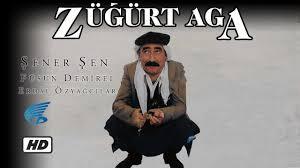
Züğürt Ağa (Film)
Director(s) | Nesli Çölgeçen | ||||||||
|---|---|---|---|---|---|---|---|---|---|
Screenwriter(s) | Yavuz Turgul | ||||||||
Lead Roles | Şener Şen (Ağa), Nilgün Nazlı (Kiraz), Erdal Özyağcılar (Kekeç Salman), Füsun Demirel (Ağanın Karısı) | ||||||||
Production Year | 1985 | ||||||||
Duration | 1 hour 41 minutes | ||||||||
IMDb Rating | 8.6/10 | ||||||||
Züğürt Ağa is one of the most significant dramatic-comedic films in Turkish cinema, shot in 1985 and released in 1986. Directed by Nesli Çölgeçen and based on a screenplay by Yavuz Turgul, the film was produced and distributed by Alfa Film. Starring Şener Şen in the lead role, it also features Erdal Özyağcılar, Nilgün Nazlı, Füsun Demirel and Can Kolukısa among its cast. The film explores the transition from feudalism to capitalism, focusing on the struggles of the lord of Haraptar village as he moves to the city. Released in Türkiye on 13 January 1986, Züğürt Ağa gained critical acclaim for its social message and is regarded as one of the most important works in Turkish cinematic history.
Züğürt Ağa tells the story of a village lord from Haraptar. While maintaining his dominance over the villagers, the lord faces constant pressure from his father Abdo (Bahri Selin), who insists on marrying new women. The situation changes when Abdo dies on the night he marries Kiraz (Nilgün Nazlı), the daughter of a poor laborer. The villagers begin stealing and selling the lord’s produce, drought destroys the harvests, and the lord is forced to sell his land to politicians for a dam project. After leaving his village and migrating to the big city, he is abandoned by everyone including his wife (Füsun Demirel). Only Kiraz, the loyal daughter of his worker, stands by him. Struggling to survive in the urban environment, the lord confronts the cruelty of capitalist society, while Kiraz’s long-hidden love and humane nature form the emotional climax of the film. The movie addresses themes of feudalism, capitalism and human relationships.
Züğürt Ağa Trailer (Stage)
Züğürt Ağa was filmed in 1985 in Istanbul and surrounding villages. The screenplay, written by Yavuz Turgul, offers a social critique of the decline of feudalism and the rise of capitalism. Directed by Nesli Çölgeçen and produced by Kadri Yurdatap, the film succeeded in delivering a powerful narrative and visual aesthetic despite the limited budget of the era. Shooting for village scenes took place in locations in Central Anatolia, while urban scenes were filmed in the outskirts of Istanbul. Cinematographer Orhan Oğuz’s use of natural light and somber framing reinforced the film’s emotional tone. The music was composed by Sarper Özsan.
The film critically portrays the collapse of the feudal order and the brutality of the capitalist system through a tragicomic lens. The lord’s loss of authority in the village and his inability to adapt in the city reflect the impact of societal transformation on the individual.
The lord’s fall from wealth to poverty reveals the fragility of class distinctions. Kiraz’s loyalty and love emphasize that human values surpass material power.
Kiraz’s platonic love for the lord and her unwavering devotion form the emotional backbone of the film. The lord’s gradual approach to Kiraz creates one of the most poignant scenes in the movie.
Züğürt Ağa was released in Türkiye on 13 January 1986 and quickly reached a large audience. With approximately 800,000 viewers, it became one of the most-watched films of 1986. Critics praised Şener Şen’s performance and Yavuz Turgul’s screenplay. The film shed light on the social issues of its time through its critique of feudalism and capitalism, while its emotional scenes resonated with a broad audience. Over time, Züğürt Ağa has secured an important place in Turkish cinema and continues to reach wide audiences through television broadcasts and digital platforms.
Beyazperde. “Züğürt Ağa,” Accessed May 2, 2025. https://www.beyazperde.com/filmler/film-14583/.
IMDb. "Züğürt Ağa." Accessed May 2, 2025. https://www.imdb.com/title/tt0201368/?ref_=ls_t_17.
Sinemalar.com. “Züğürt Ağa,” Accessed May 2, 2025. https://www.sinemalar.com/film/2364/zugurt-aga.
Züğürt Ağa. Dir. Nesli Çölgeçen. Fono Film, 1985. YouTube video, 2:45. Accessed May 2, 2025.

Züğürt Ağa (Film)
Director(s) | Nesli Çölgeçen | ||||||||
|---|---|---|---|---|---|---|---|---|---|
Screenwriter(s) | Yavuz Turgul | ||||||||
Lead Roles | Şener Şen (Ağa), Nilgün Nazlı (Kiraz), Erdal Özyağcılar (Kekeç Salman), Füsun Demirel (Ağanın Karısı) | ||||||||
Production Year | 1985 | ||||||||
Duration | 1 hour 41 minutes | ||||||||
IMDb Rating | 8.6/10 | ||||||||
Plot
Cast
Production
Thematic Structure
Transition from Feudalism to Capitalism
Class Differences and Humanity
Love and Loyalty
Release and Reception
Awards and Nominations