



Why Does Water Evaporate at Every Temperature?
Water can evaporate not only when it reaches its boiling point but also at lower temperatures. This means it is not necessary for water to reach 100 °C. When you leave a glass of water on a windowsill during summer you will notice its level decreases. This is evaporation! Water can evaporate at any temperature because not all water molecules have the same speed (kinetic energy).
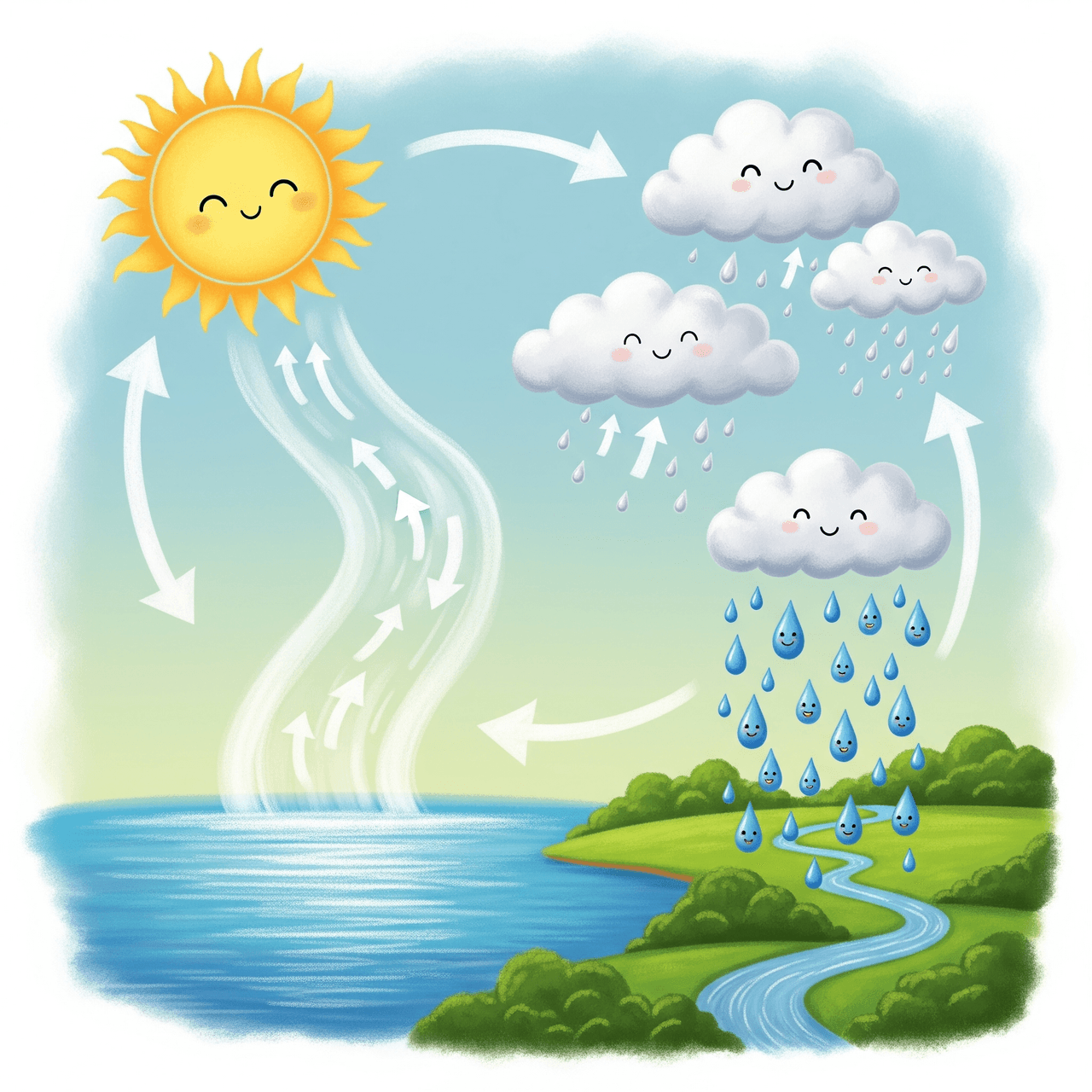
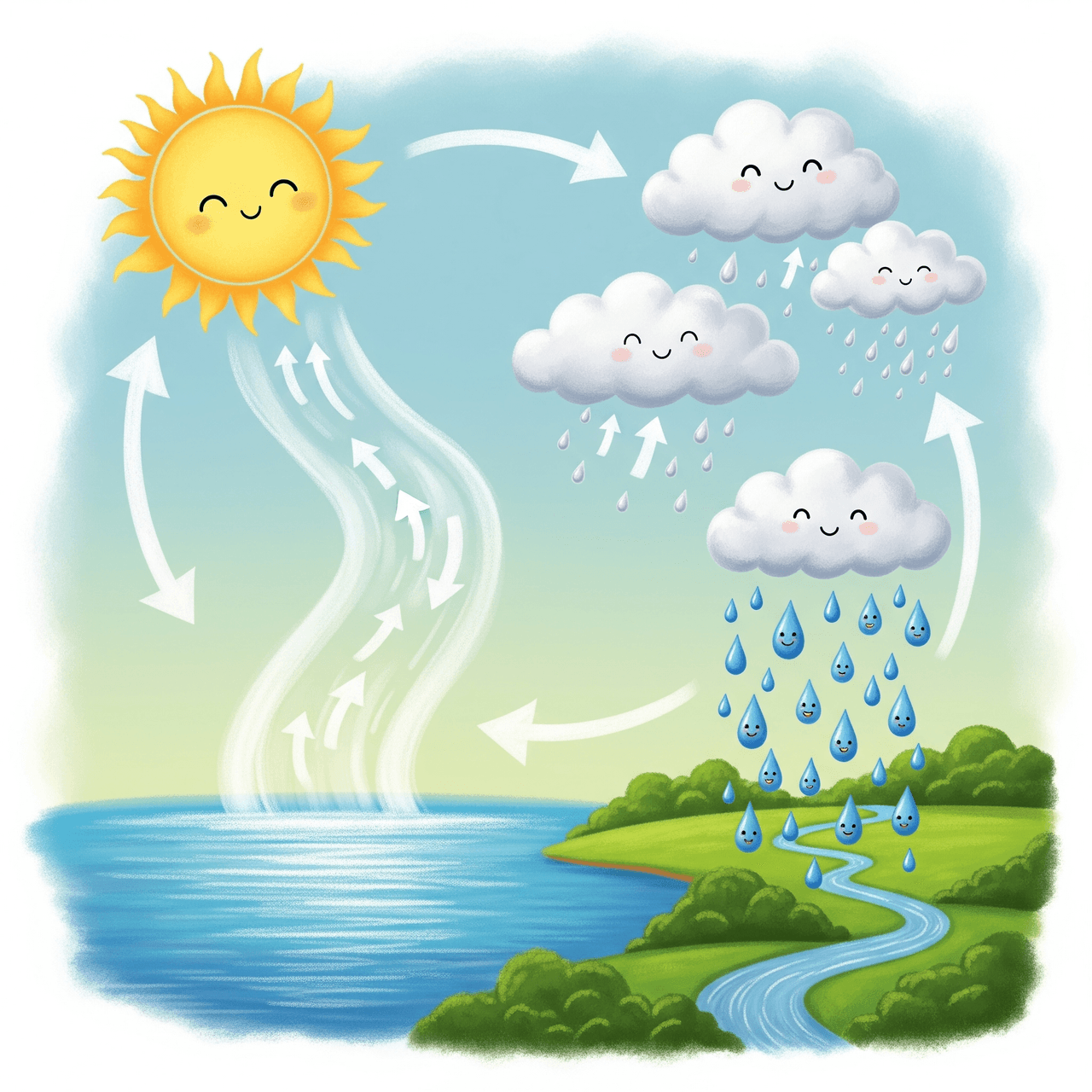
Water Cycle and Evaporation (Generated by Artificial Intelligence.)
What Is Evaporation?
Evaporation is the process by which a liquid turns into a gas. Clothes drying in the sun or puddles disappearing after rain demonstrate how water evaporates and mixes with the atmosphere. Water does not vanish; it transforms into a gas called water vapor.

Water Droplets Evaporating from the Ocean Surface Due to Solar Energy (Generated by Artificial Intelligence.)
Role in the Water Cycle
Evaporation is one of the three main steps in the Earth’s water cycle: evaporation condensation and precipitation. Approximately 90 percent of the moisture in the atmosphere originates from evaporation; the remaining 10 percent comes from plant transpiration.
Oceans are the largest source of evaporation. Covering more than 70 percent of the Earth’s surface oceans serve as the primary reservoir of atmospheric water. Interestingly during evaporation only water rises while salt remains behind. This is why rainwater returning to the Earth’s surface is fresh.
Transitions Between States of Matter
Evaporation is the transition from one of the three states of matter liquid to gas. Similarly:
When water cools sufficiently it freezes and becomes a solid (ice).
When ice warms it melts and returns to the liquid state.
When liquid water is heated its molecules move faster and eventually transform into a gas that is water vapor.
These changes occur due to variations in molecular motion as temperature increases or decreases.
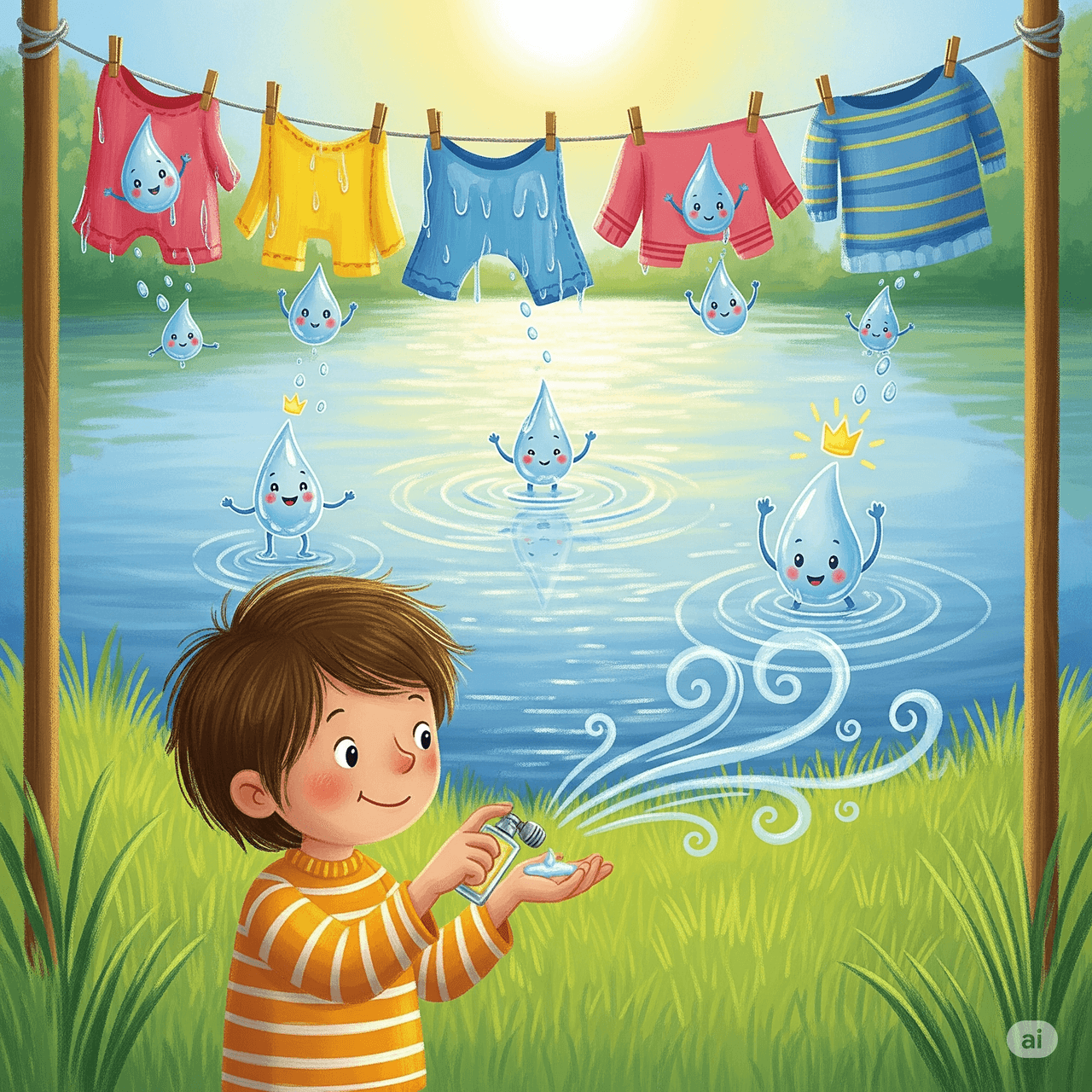
Drying Clothes and Evaporation of Cologne (Generated by Artificial Intelligence.)
Examples from Daily Life
Clothes drying in the sun during summer.
Vapor rising from lakes even in winter.
The cooling sensation felt when applying cologne.
Water vapor rising from oceans returning as rain.