

Bu içerik Türkçe olarak yazılmış olup yapay zeka ile otomatik olarak İngilizceye çevrilmiştir.
The Adélie penguin is a characteristic species of the Antarctic continent, belonging to the class of birds (Aves) and the family Spheniscidae (Spheniscidae).
It was first described in 1840 by French naval officer and polar explorer Jules Dumont d’Urville. The species name was given in honor of d’Urville’s wife, Adèle. The Adélie penguin is one of only two species that live and breed in the central regions of Antarctica; the other is the emperor penguin.
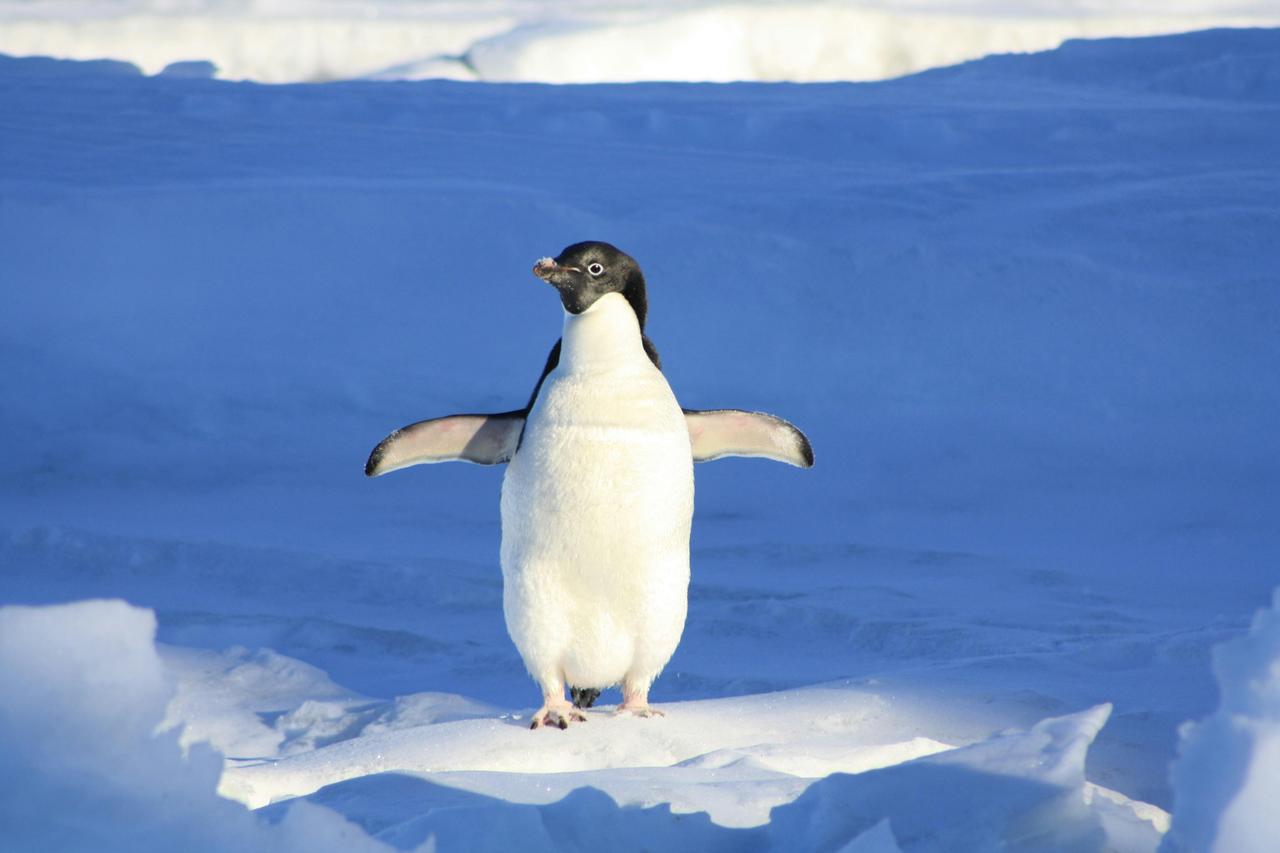
Adult individuals typically measure 70–73 cm in length and weigh between 4–6 kg. Their plumage is characterized by distinct color contrasts:
The structure of the feet and claws is adapted for walking on icy surfaces and climbing rocky terrain. When moving across snow, they conserve energy by sliding on their bellies, a behavior known as tobogganing.

Adélie penguin (Pexels)
Adélie penguins are excellent swimmers. Their average dive duration is approximately six minutes, and they can swim at speeds of up to 8 km per hour. While foraging, they typically remain in shallow waters; the maximum recorded diving depth is 180 meters.
During swimming, heat loss occurs through the feet to regulate body temperature. On land, they can move quickly over short distances. During colony life, they exhibit strong social behaviors.
The diet of Adélie penguins consists primarily of Antarctic krill (Euphausia superba), small fish (such as Antarctic silverfish), and various cephalopods (including small squid species).
This species plays an ecologically vital role in the Antarctic marine ecosystem as both a top predator and a food source for other predators such as seals and certain seabirds.
During winter months, they inhabit extensive ice sheets. In spring, they migrate to coastal areas to reach breeding grounds.
Adélie penguins have a wide distribution along the coasts of Antarctica. The largest colonies are found around the Ross Sea, the Antarctic Peninsula, and the South Orkney and South Sandwich Islands. The distribution of this species is directly linked to sea ice conditions and the availability of food resources.
Adélie penguins are regarded as indicators of environmental change in the Southern Ocean ecosystem. Three primary methods are used to monitor colony size and breeding success (Source: Springer, 2025):
Each of these methods has advantages and limitations in terms of cost, accessibility, and accuracy. Satellite imagery is particularly valuable as a data source in remote and hard-to-reach regions.
According to BirdLife Australia, the Adélie penguin is listed as Least Concern on the IUCN Red List. Nevertheless, melting sea ice, shifts in the food web, and climate change are recognized as potential long-term threats to population dynamics.

Henüz Tartışma Girilmemiştir
"Adélie Penguin (Pygoscelis adeliae)" maddesi için tartışma başlatın
Taxonomy and Discovery History
Physical Characteristics
Behavior, Swimming, and Diving Capacity
Feeding Ecology
Reproductive Cycle and Migration Behavior
Population and Distribution Areas
Population Monitoring Methods
Conservation Status