

Bu içerik Türkçe olarak yazılmış olup yapay zeka ile otomatik olarak İngilizceye çevrilmiştir.
Other Name(s) | Pink dolphin Bufeos Boto | ||||||||
|---|---|---|---|---|---|---|---|---|---|
Scientific Name(s) | Inia geoffrensis | ||||||||
Family | Iniidae | ||||||||
Order | Artiodactyla (suborder Cetacea) | ||||||||
Habitat | Freshwater rivers submerged forests lakes deltas | ||||||||
Length(s) | 2.7–2.8 m | ||||||||
Weight(s) | Up to 180 kg | ||||||||
Conservation Status | IUCN: Endangered | ||||||||
Amazon river dolphin, commonly known as the pink dolphin, is a species of dolphin that inhabits the major river systems of South America and is found exclusively in freshwater. Its scientific name is Inia geoffrensis, and it is the best-known member of the river dolphin family (Iniidae) and the largest among the six recognized river dolphin species. Two well-known subspecies exist: the Bolivian boto (I. g. boliviensis) and the common boto (I. g. geoffrensis).
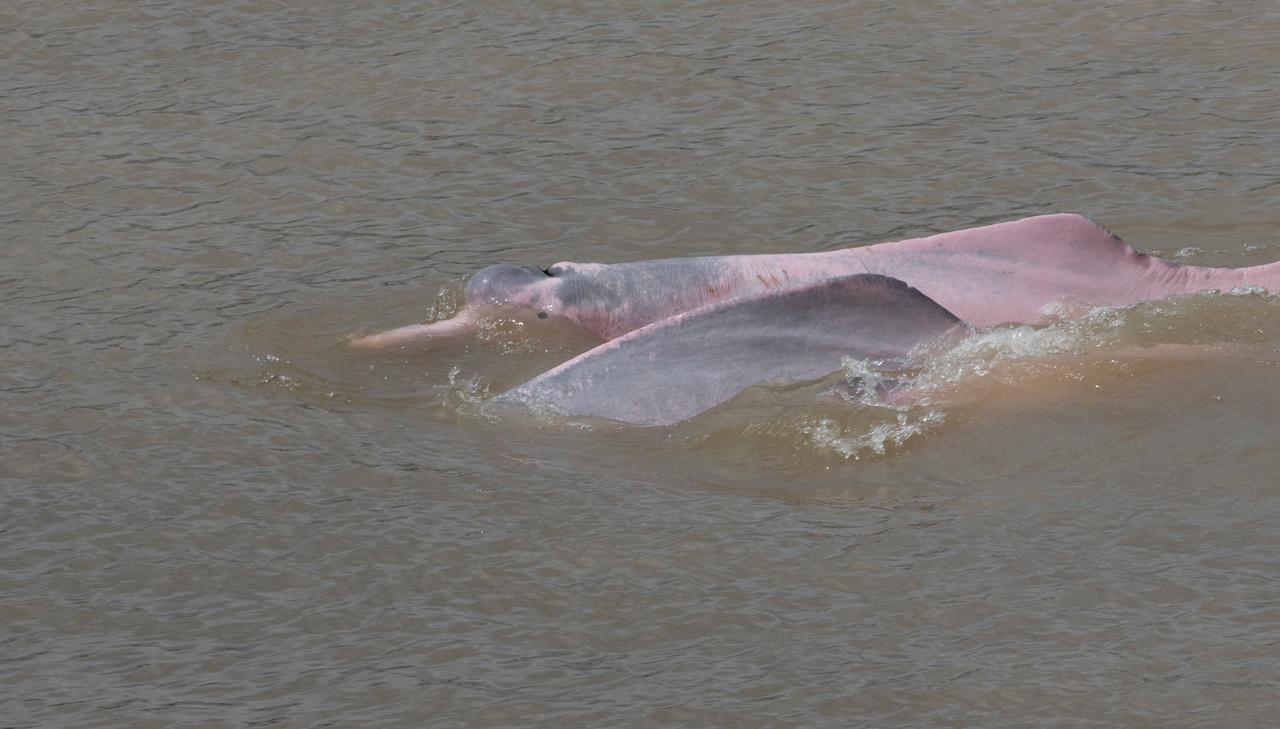
Amazon river dolphins are born gray but gradually develop a pinkish-gray or distinctly pink coloration as they age. Males are typically more pink than females, a trait linked to scar tissue that forms over time from aggressive interactions with other males. The development of this coloration is also influenced by the density of capillaries, feeding habits, and carotenoid pigments.
Their bodies are robust with long, slender snouts. Their eyes are small but functional, aiding navigation in murky waters. A prominent melon on the front of their head concentrates echolocation sounds. The dorsal fin is low and ridge-like. Adult individuals can reach lengths of 2.7–2.8 meters and weigh up to 180 kilograms. Their average lifespan ranges from 30 to 40 years.
One of the most distinctive features of Amazon river dolphins is that their neck vertebrae are not fused. This allows them to rotate their heads up to 90–180 degrees, enabling easy maneuvering among submerged branches and roots. Their pectoral flippers are broad and provide high agility.
The species is found in the Amazon, Orinoco, and Tocantins–Araguaia river basins. Its range encompasses Bolivia, Brazil, Colombia, Ecuador, Peru, and Venezuela. Photographic evidence of its presence has also been recorded in Guyana. Primary habitats include river tributaries, streams, deltas, and especially forests submerged during high-water seasons.
Unlike other dolphins, Amazon river dolphins possess both pointed teeth and molar-like teeth. This dental structure enables them to consume a variety of fish species, turtles, crustaceans, and hard-skinned prey. Their diet is highly diverse and includes more than 40 different species.
Their echolocation abilities are highly developed, allowing them to detect prey using sound waves in turbid waters. In addition, their vision is considered superior to that of other river dolphin species.
Females reach sexual maturity between 6 and 10 years of age. Gestation lasts approximately 11 months, and they typically give birth to a single calf. Newborns measure about 75 centimeters in length and weigh around 7 kilograms. Births can occur throughout the year but are more frequent during periods of high water levels. Birth intervals average 4–5 years.
The Amazon river dolphin holds an important place in the folklore of local communities. In regional legends, the dolphin is said to transform into a handsome man who seduces village women or lures solitary travelers to the enchanted underwater city of Encante. Today, the species is also one of the focal points of ecotourism activities.
The Amazon river dolphin is listed as Endangered on the IUCN Red List. The main threats to the species include:
In many countries, reserves, awareness programs, and ecotourism initiatives are being implemented to protect dolphin populations. Scientific studies, conducted in collaboration with WWF and local communities, aim to reduce the ecological impact of dam construction. Research has shown that some populations have declined by half over the past decade.
Flickr. “Amazon River Dolphin/Pink River Dolphin (Inia geoffrensis) JPG.” Accessed August 16, 2025.
Gözcelioğlu, Bülent. “Amazon Nehir Yunusu.” *Bilim ve Teknik*, (2024): 82-83. Accessed August 16, 2025. https://e-dergi.tubitak.gov.tr/edergi/yazi.pdf;jsessionid=zThJDCADwAzTI9MYIcDwI3EP?dergiKodu=4&cilt=57&sayi=1193&sayfa=82&yaziid=48787
River Dolphins. "Amazon River Dolphin." River Dolphins. Accessed August 16, 2025. https://www.riverdolphins.org/river-dolphins-worldwide/amazon-river-dolphin/
World Wildlife Fund. "Freshwater Dolphin Species and Facts." WWF Stories. Accessed August 16, 2025. https://www.worldwildlife.org/stories/freshwater-dolphin-species-and-facts

Other Name(s) | Pink dolphin Bufeos Boto | ||||||||
|---|---|---|---|---|---|---|---|---|---|
Scientific Name(s) | Inia geoffrensis | ||||||||
Family | Iniidae | ||||||||
Order | Artiodactyla (suborder Cetacea) | ||||||||
Habitat | Freshwater rivers submerged forests lakes deltas | ||||||||
Length(s) | 2.7–2.8 m | ||||||||
Weight(s) | Up to 180 kg | ||||||||
Conservation Status | IUCN: Endangered | ||||||||
Henüz Tartışma Girilmemiştir
"Amazon River Dolphin (Inia geoffrensis)" maddesi için tartışma başlatın
Physical Characteristics
Distribution and Habitat
Biology and Ecology
Cultural Significance
Threats
Conservation Efforts