

Bu içerik Türkçe olarak yazılmış olup yapay zeka ile otomatik olarak İngilizceye çevrilmiştir.
+1 Daha
Length(s) | 22.60 m | ||||||||
|---|---|---|---|---|---|---|---|---|---|
Height(s) | 8.23 m | ||||||||
Type(s) | Regional Passenger and Cargo Aircraft | ||||||||
Maximum Range | 3.680 km | ||||||||
Maximum Speed | 575 km/h | ||||||||
Propeller | 6-Bladed Aerosila SV-14 | ||||||||
Engine Type | 2 × Motor Sich AI-30 (AI-140) Turboprop | ||||||||
Maximum Takeoff Weight | 19.150 kg | ||||||||
Wingspan | 24.50 m | ||||||||
Passenger Capacity | 52 Persons (Standard Configuration) | ||||||||
Crew | 2 Pilots | ||||||||
First Flight Date | 17 September 1997 | ||||||||
Design Bureau | Antonov Design Bureau | ||||||||
Country of Origin | Ukraine (Licensed Production: Russia, Iran) | ||||||||
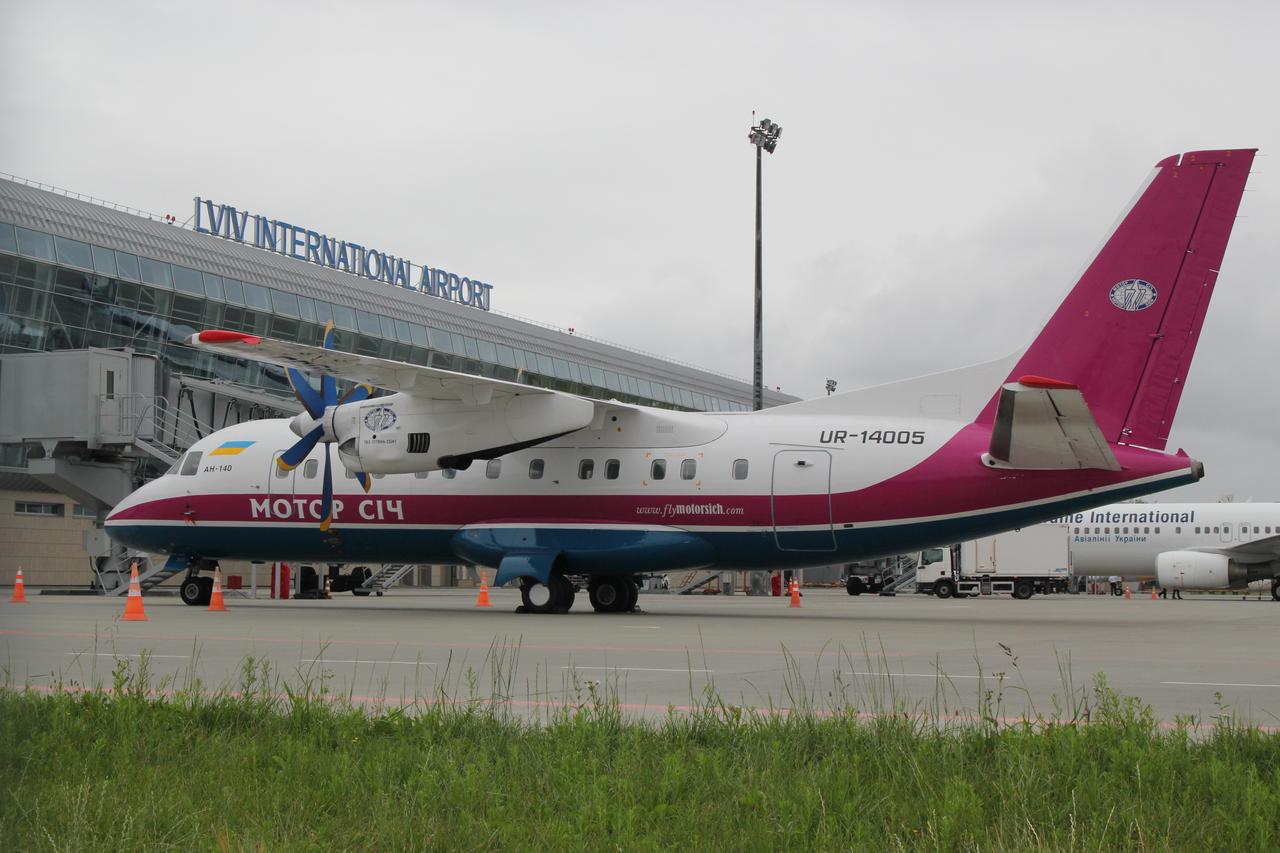
Antonov An-140, Ukraine-based Antonov Design Bureau-developed regional passenger aircraft featuring a twin-engine turboprop propulsion system. Designed as the successor to the Antonov An-24 series, which originated in the Soviet era and has reached the end of its operational life, the An-140 is optimized for short-haul passenger and cargo transport. First conceived in the early 1990s and making its maiden flight on 17 September 1997, the An-140 is notable for its high-wing configuration and ability to operate in challenging runway conditions. The aircraft has a standard passenger capacity of 52 and has been produced in various configurations for both civil aviation operations and military logistics services. 【1】
The Antonov An-140’s structural design is based on a high-wing (high-wing) conventional tail-unit monoplane configuration. The fuselage architecture is engineered as a semi-monocoque structure to optimize the aircraft’s center of gravity and facilitate loading and unloading operations. Primary materials used in the aircraft’s construction include high-strength aluminum alloys, corrosion-resistant steels, and advanced composite materials that reduce weight while enhancing structural rigidity. The wing structure features aerodynamic profiles that provide high lift and is equipped with control surfaces at the wingtips to improve stability. The landing gear bays located on the lower fuselage are integrated with streamlined cover systems designed to minimize aerodynamic drag.
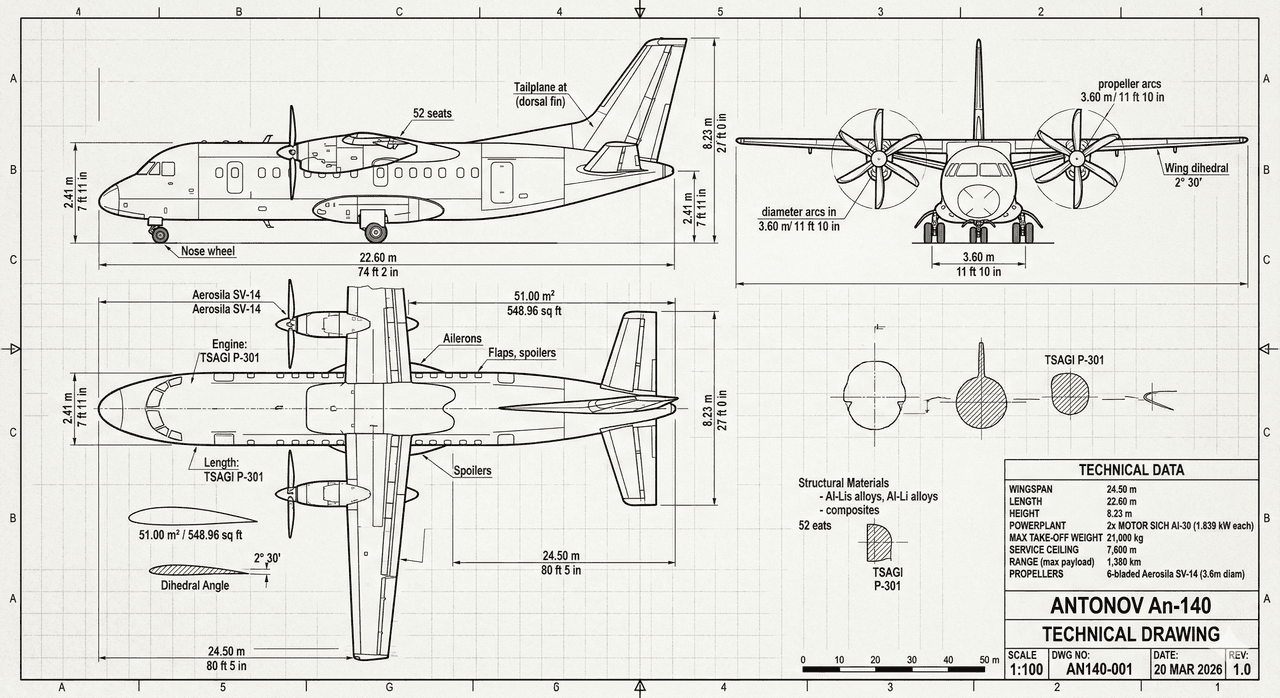
Antonov An-140 Technical Drawing (Generated by Artificial Intelligence)
The aircraft’s technical systems are designed to enable operations in harsh geographic conditions and at airfields with limited ground support infrastructure. To this end, the An-140 is equipped with a robust tricycle landing gear system featuring low-pressure pneumatic tires and high impact absorption capacity, allowing safe landings not only on concrete runways but also on compacted earth or gravel surfaces. The powerplant consists of two Motor Sich AI-30 (AI-140) series turboprop engines, each producing 2,466 horsepower (1,839 kW), coupled with six-bladed, variable-pitch Aerosila SV-14 propellers. These engines feature a thermodynamic design that prevents performance degradation under high-altitude and hot-and-high conditions. Additionally, the AI-9-3B auxiliary power unit (APU) on board the aircraft independently powers the electrical systems and initiates cabin climate control without requiring external ground support. 【2】
The avionics and cockpit systems are configured for a two-person crew and incorporate "glass cockpit" elements. The Flight Management System (FMS), multifunction displays (MFD), and digital navigation equipment reduce pilot workload while enhancing flight safety. The cabin interior design features a wide cross-section compatible with standard 52-passenger seating arrangements in either 1x2 or 2x2 seat configurations. A cargo door located in the rear section and a modular interior structure allow the passenger aircraft to be rapidly reconfigured for cargo or medical evacuation (MEDEVAC) missions. Electro-thermal de-icing systems installed on the wings and tail surfaces ensure the aircraft can operate across a wide climatic range from polar regions to tropical zones. 【3】
The production of the Antonov An-140 began as one of the most concrete examples of industrial cooperation among the newly independent states following the dissolution of the Soviet Union. The main production line was established at the Kharkiv State Aircraft Manufacturing Company (KSAMC) in Kharkiv Ukraine. However, to achieve broader commercial success, a strategic partnership was formed with the Russian Federation, designating the Aviakor Aviation Factory in Samara as the primary production center for the Russian domestic market. This partnership structure relies on an integrated supply chain model in which more than 50 percent of the aircraft’s components are manufactured in Ukraine, with the remainder supplied by Russian vendors. 【4】
Antonov An-140 Takeoff (PMO Aviation Channel)
The most comprehensive international expansion of the program occurred through a technology transfer agreement with the Islamic Republic of Iran. Under the protocol signed in the late 1990s, the Iranian Aircraft Manufacturing Industrial Company (HESA) obtained a license to produce the An-140 model under the name "IrAn-140." The assembly line established at the Shahinshahr facilities near Isfahan was designed to test the aircraft’s operational capabilities in the Middle Eastern and Asian markets. However, these production lines have periodically faced disruptions due to geopolitical constraints, supply chain issues, and economic disagreements between the parties. 【5】
Analysis of production volumes and delivery timelines reveals that the An-140 program has been conducted simultaneously across three main centers. The KSAMC line in Ukraine produces aircraft for the domestic market and select international customers, while the Aviakor line in Russia focuses specifically on the needs of the Russian Ministry of Defense and local airlines. The HESA line in Iran initially assembled aircraft from complete knock-down (CKD) kits to develop the local aviation industry and later transitioned toward local component manufacturing. By the mid-2010s, escalating political tensions between Ukraine and Russia led to a near-complete halt in the joint production ecosystem and spare parts supply chain.
The commercial introduction of the Antonov An-140 began in 1999 with regional flights operated by Ukrainian-based airlines. The aircraft’s primary role was configured as feeder routes connecting low-density short-haul routes to major jet hubs. Aircraft operated by Motor Sich Airlines and, for a time, Antonov Airlines were tested extensively under harsh climatic conditions across Eastern Europe and the Commonwealth of Independent States. In the Russian market, airlines such as Yakutia Airlines leveraged the aircraft’s capability to operate in extreme cold temperatures down to -50°C to conduct operations in Siberia and the Russian Far East.
Beyond civil aviation, the An-140 has also assumed operational roles within military and government institutions. The Russian Ministry of Defense placed several orders to evaluate the aircraft’s personnel transport and light cargo capacity and incorporated its military variants into its inventory. In Iran, HESA-produced IrAn-140 models have been operated by local airlines including Iran Air Tours and Sepahan Airlines, as well as serving as logistics support aircraft within the Islamic Republic of Iran Air Force. However, ongoing technical challenges related to spare parts supply have been a major factor negatively affecting fleet sustainability among users.
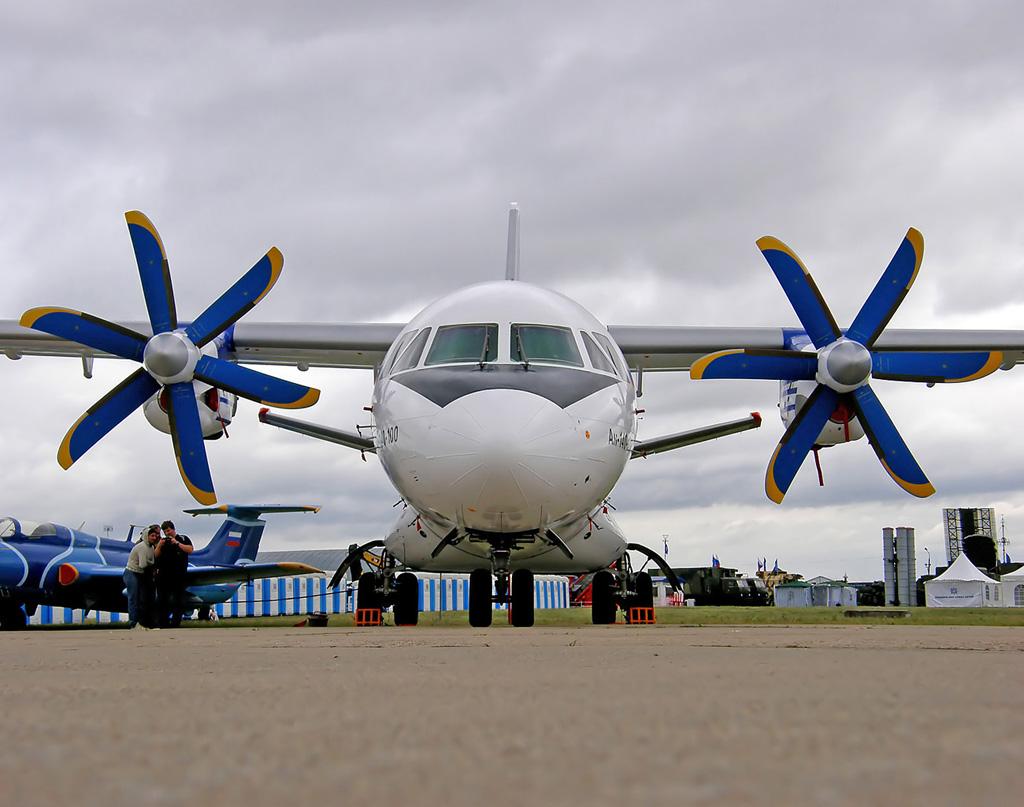
Antonov An-140 (Dmitry Terekhov)
The aircraft’s operational performance has been sustained even at underdeveloped airports with high foreign object damage (FOD) risk, thanks to the advantages provided by its high-wing design. The 52-seat passenger configuration has been optimized to maintain economic viability even at low load factors. Fleets actively flying until the mid-2010s began to shrink following the political and economic rupture between Ukraine and Russia, which led to the cutoff of spare parts and maintenance support. Today, the majority of An-140 fleets have been grounded or operate under restricted capacity due to certification restrictions and the need for modernization to maintain flight safety standards. 【6】
At the core of the Antonov An-140’s operational efficiency lies the AI-30 turboprop engine series developed by Ukraine-based Motor Sich. Two engines, each capable of producing 2,466 horsepower (1,839 kW) at takeoff, are integrated into nacelles mounted on the high-wing structure. The engine design features a modular architecture optimized for ease of component replacement and maintenance under field conditions. The most notable technical feature of the engine is its high-pressure compressor and turbine stages, which aim to maintain an optimal balance between low fuel consumption and high thrust output. This system provides a power-to-weight ratio that enables the aircraft to safely take off from short runways even at full payload. 【7】
As a complementary element of the propulsion system, six-bladed SV-14 propellers manufactured by Russia-based Aerosila are employed. These 3.6-meter-diameter propellers are constructed from composite materials and exhibit high resistance to corrosion and foreign object damage. The propellers are equipped with a regulator system that automatically adjusts the blade pitch angle independently of engine RPM, ensuring maximum aerodynamic efficiency during all flight phases (climb, cruise, and descent). Furthermore, the engine exhausts and propeller design are configured to meet regional passenger transport noise standards by minimizing noise emissions.
Antonov An-140 (Antonov Company)
Engine control is managed through a digital engine management system (similar to FADEC electronic control units), enabling pilots to precisely monitor engine parameters and optimize fuel flow. The aircraft also features an independent AI-9-3B auxiliary power unit (APU) that operates separately from the main engines. This unit supplies electrical power, provides hydraulic pressure, and initiates cabin climate control prior to engine start. The presence of the APU is critical to enabling the An-140 to operate autonomously at secondary and tertiary airfields lacking external ground power units (GPU). 【8】
The Antonov An-140’s cockpit architecture reflects the transition from analog to digital systems during its development era and is based on "glass cockpit" principles. The two-person crew cockpit is equipped with multifunction liquid crystal displays (LCDs) designed to enhance pilot situational awareness. These displays are managed through an Electronic Flight Instrument System (EFIS) that integrates flight data, engine parameters, navigation information, and system alerts. Key components of the aircraft’s avionics suite include VOR/ILS receivers enabling precision approach and landing operations, an automatic direction finder (ADF), and digital air data computers (ADC).
The aircraft’s navigation capability is supported by a Flight Management System (FMS) integrated with global positioning systems (GPS/GLONASS). This system automates a wide range of functions from flight planning to fuel optimization, significantly reducing crew workload. Safety-oriented technologies include a Ground Proximity Warning System (GPWS), Traffic Collision Avoidance System (TCAS-II), and airborne radar. The radar, housed in a radome at the aircraft’s nose, detects adverse weather phenomena and turbulence zones critical to regional operations, enabling dynamic route adjustments. 【9】
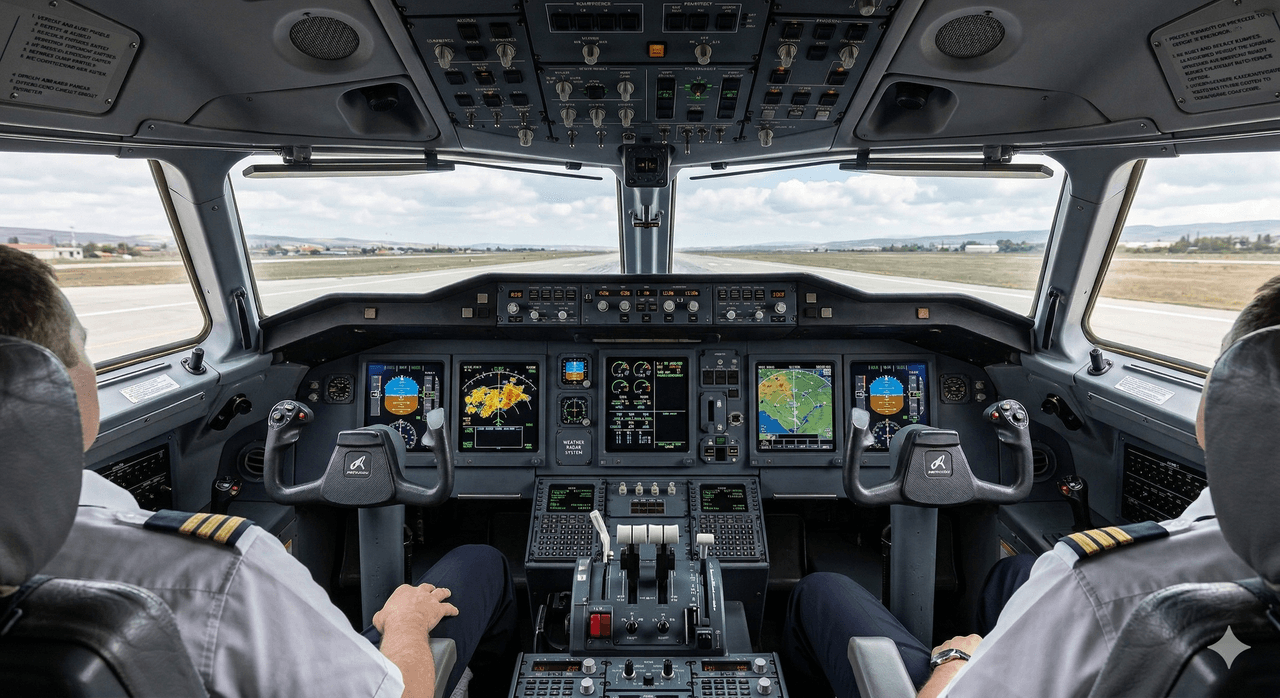
Antonov An-140 Cockpit Model (Generated by Artificial Intelligence)
Communication and data transfer systems include VHF/HF radio systems and emergency locator transmitters (ELT) compliant with civil aviation standards. The Flight Data Recorder (FDR) and Cockpit Voice Recorder (CVR) capture all operational parameters and crew communications to provide essential data for accident investigations and safety audits. Additionally, the aircraft’s autopilot system enhances stability during long-duration flights by maintaining pre-programmed altitude and speed values during climb, cruise, and descent phases. Although the modular design of the systems facilitates integration of next-generation avionics upgrades, economic constraints during production have limited the widespread implementation of such modernizations.
The design philosophy of the Antonov An-140 is based on a modular platform capable of adapting to diverse mission profiles. The base model, the An-140, is a standard regional passenger aircraft with a 52-seat capacity. Its enhanced variant, the An-140-100, extends the operational range by up to 300 kilometers through structural reinforcements and an increased maximum takeoff weight (MTOW). These revisions to wing span and fuel capacity have enabled the aircraft to operate more flexibly across broader geographic regions.
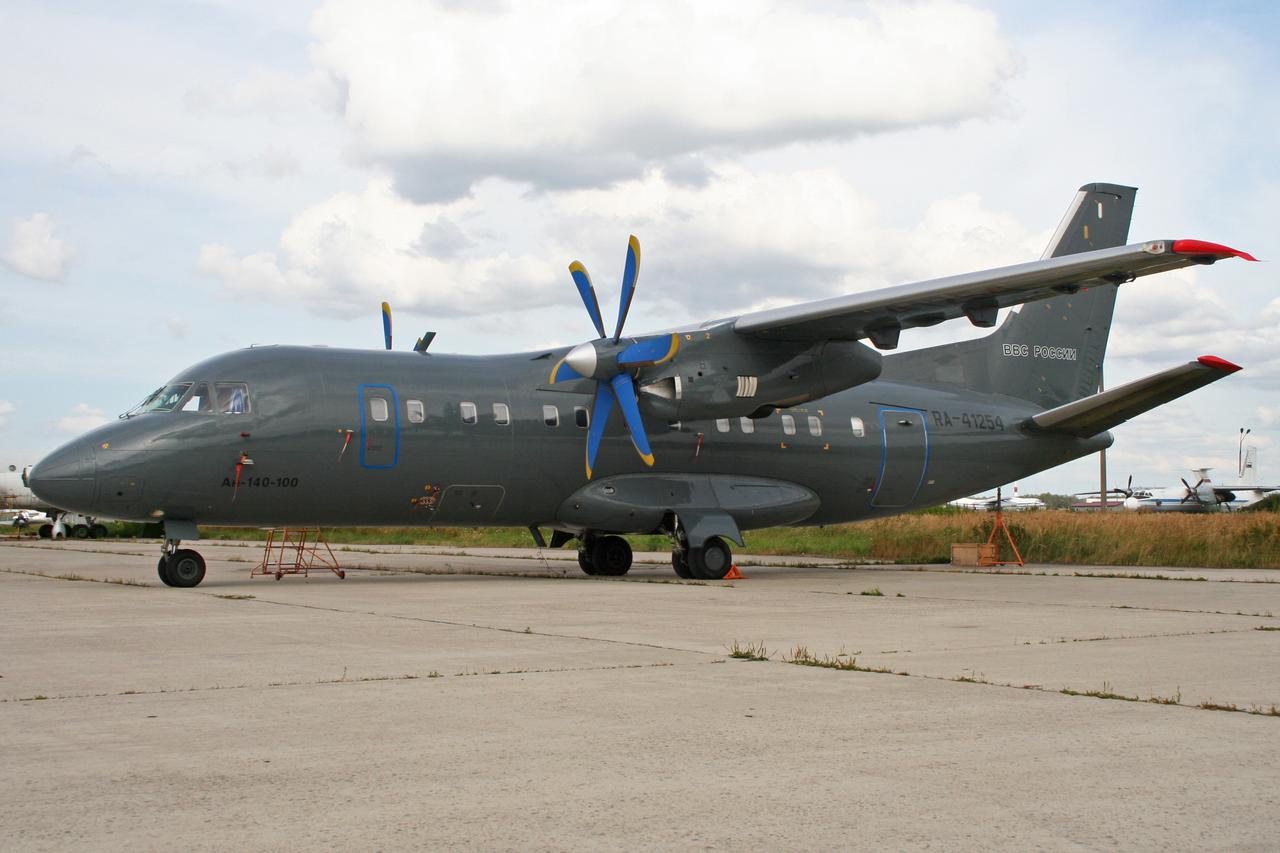
Antonov An-140-100 Variant (Alan Wilson)
Variants developed to meet military and cargo-specific needs have expanded the aircraft’s operational spectrum. The An-140T (Transport) model features a rear ramp cargo door that enables the transport of light vehicles and palletized cargo, functioning as a logistics support aircraft. Additionally, the An-140TK (Convertible) variant, designed for VIP transport, incorporates modular rail systems that allow rapid conversion of the interior from passenger seating to cargo space or a specialized luxury cabin.
The most significant modification arising from regional cooperation is the Iranian-produced HESA IrAn-140 variant. This model incorporates local modifications to the engine cooling systems and avionics cooling units to adapt to Iran’s high-temperature and high-altitude geographic conditions. Furthermore, the An-140MP variant, designed for maritime patrol missions, was equipped with radar systems and surveillance equipment mounted under the fuselage for coastal security operations, although serial production of this specific variant remained limited. 【10】
As of 2026, the Antonov An-140 program has entered a stagnant phase due to geopolitical constraints and industrial fragmentation. The escalation of political tensions between Ukraine and Russia since 2014 has completely severed the supply of components and technical cooperation between the two primary nations forming the aircraft’s production chain. The Aviakor facility in Russia was forced to suspend its serial production line due to the inability to source Ukrainian components—particularly Motor Sich engines and Antonov-designed parts. Similarly, the Kharkiv State Aircraft Manufacturing Company (KSAMC) in Ukraine has shifted focus from new aircraft production to modernization and maintenance of existing airframes, driven by domestic economic challenges and declining international orders. 【11】
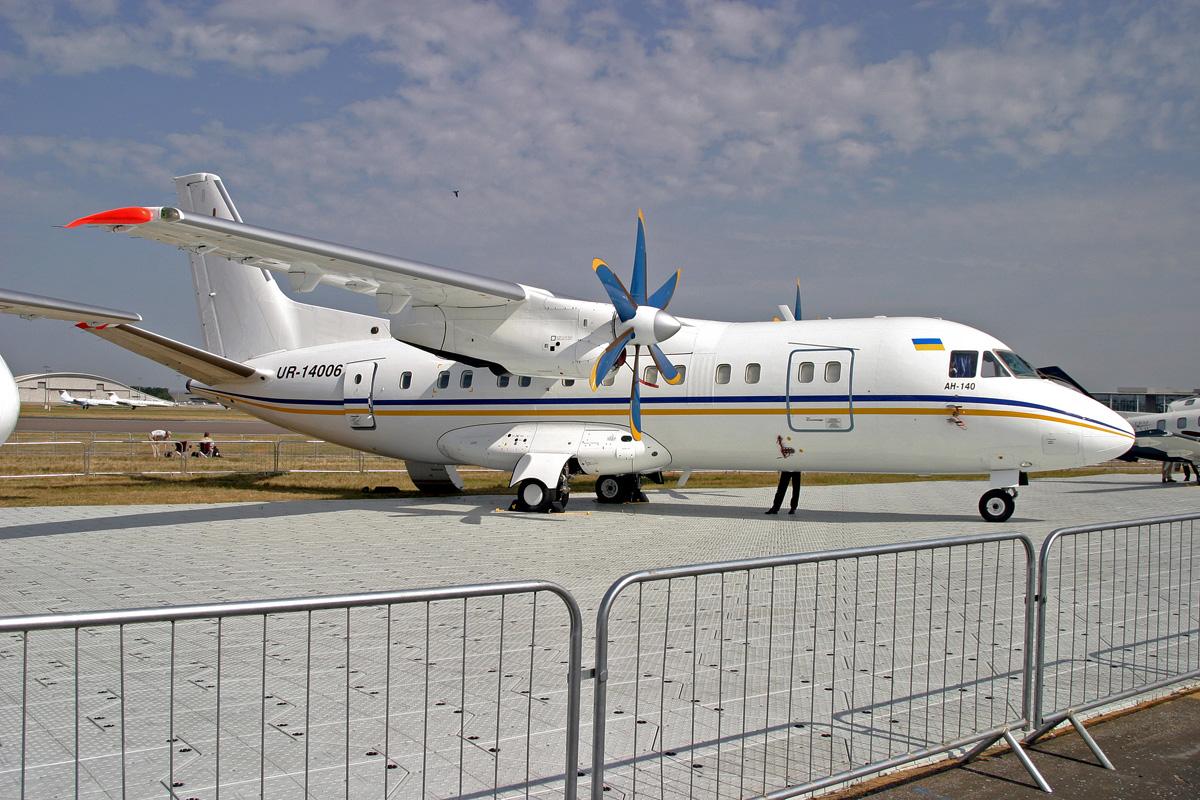
Antonov An-140 (Pete Webber)
Production activities in Iran have followed a similar trajectory, with civil aviation authorities imposing flight bans and technical embargoes following a fatal accident in 2014. Although some aircraft produced at HESA facilities have been modified locally for military transport and patrol duties, the aircraft’s competitive position in the global civil aviation market has weakened. Today, the majority of An-140 fleets are grounded, referred to as "hangar queens." Nevertheless, a limited number of aircraft maintaining operational capability continue to be used under restricted capacity by Russian and Ukrainian state institutions for strategic personnel transport. 【12】
The future of the An-140 program hinges on two potential paths: either reconfiguring the aircraft for full domestic production—particularly under Russia’s import substitution policies—or retiring the program entirely in favor of more modern turboprop designs such as the Il-114-300. While theoretical studies have been conducted at Antonov on a digitally upgraded version of the aircraft equipped with Western engines (such as Pratt & Whitney), the current financial and diplomatic climate makes the realization of such projects highly challenging.
Aero Corner. "Antonov An-140." Accessed March 20, 2026. https://aerocorner.com/aircraft/antonov-an-140/.
Airport Technology. "Antonov An-140 Regional Passenger Airliner." Accessed March 20, 2026. https://www.airport-technology.com/projects/antonov-an-140/.
Antonov Company. "An-140." Antonov Official Website. Accessed March 20, 2026. https://www.antonov.com/en/history/an-140.
Antonov Company. "Presentation of An-140." YouTube. Accessed March 20, 2026. https://youtu.be/udagKoaJmN8?si=d5f0PYPxAmx1SnMB.
Dmitry Terekhov. "Antonov An-140 ‘Yakutiya Airlines’" 21 August 2009. Flickr. Accessed March 20, 2026. https://www.flickr.com/photos/44400809@N07/4265762028/
Dmitry Terekhov. "Antonov An-140." Flickr, August 21, 2009. Accessed March 20, 2026. https://www.flickr.com/photos/44400809@N07/4322157730/
FlyHighAviation. "Antonov AN-140." Flickr, July 18, 2016. Accessed March 20, 2026. https://www.flickr.com/photos/144883149@N03/28684294975/
Jane's All the World's Aircraft. "Antonov An-140 Production and Cooperation Analysis." Accessed March 20, 2026. https://janes.migavia.com/ukr/antonov/an-140.html.
Jane's All the World's Aircraft. "IAMI (HESA) IrAn-140." Accessed March 20, 2026. https://janes.migavia.com/irn/iami/iran-an-140.html.
PMO Aviation Channel. "Antonov An-140." YouTube. Accessed March 20, 2026. https://youtu.be/-ZKsCKYbWK0?si=StrKwTOH-lX5jIU3.
Skybrary Aviation Safety. "Antonov An-140 (A140)." Accessed March 20, 2026. https://skybrary.aero/aircraft/a140.
The Virtual Diecast Museum. "Antonov An-140." Accessed March 20, 2026. https://tvd.im/aviation/143-antonov-an-140.html.
TopWar. "Samarskiy Aviakor Priostanavlivaet Proizvodstvo An-140 [Samara Aviakor, An-140 Üretimini Askıya Aldı]." Accessed March 20, 2026. https://tr.topwar.ru/amp/79997-samarskiy-aviakor-priostanavlivaet-proizvodstvo-an-140.html.
Webber, Pete. "UR-14006." July 20, 2006. Flickr. Accessed March 20, 2026. https://www.flickr.com/photos/wiltshirespotter/14171010153/
Wilson, Alan. "Antonov An-140-100 “RA-41254”." August 13, 2012. Flickr. Accessed March 20, 2026. https://www.flickr.com/photos/ajw1970/8554716107/
[1]
Antonov Company."An-140." Antonov Official Website. accessed 20 March 2026.https://www.antonov.com/en/history/an-140.
[2]
Skybrary Aviation Safety. "Antonov An-140 (A140)."Skybrary accessed 20 March 2026.https://skybrary.aero/aircraft/a140.
[3]
Aero Corner. "Antonov An-140." accessed 20 March 2026.https://aerocorner.com/aircraft/antonov-an-140/.
[4]
Skybrary Aviation Safety. "Antonov An-140 (A140)."Skybrary accessed 20 March 2026.https://skybrary.aero/aircraft/a140.
[5]
Antonov Company."An-140." Antonov Official Website. accessed 20 March 2026.https://www.antonov.com/en/history/an-140.
[6]
Aero Corner. "Antonov An-140." accessed 20 March 2026.https://aerocorner.com/aircraft/antonov-an-140/.
[7]
Airport Technology. "Antonov An-140 Regional Passenger Airliner." accessed 20 March 2026.https://www.airport-technology.com/projects/antonov-an-140/.
[8]
The Virtual Diecast Museum."Antonov An-140." accessed 20 March 2026.https://tvd.im/aviation/143-antonov-an-140.html.
[9]
Antonov Company."An-140." Antonov Official Website. accessed 20 March 2026.https://www.antonov.com/en/history/an-140.
[10]
Jane's All the World's Aircraft. "IAMI (HESA) IrAn-140." accessed 20 March 2026.https://janes.migavia.com/irn/iami/iran-an-140.html.
[11]
TopWar. "Samarskiy Aviakor Priostanavlivaet Proizvodstvo An-140 [Samara Aviakor, An-140 Production Suspended]." accessed 20 March 2026.https://tr.topwar.ru/amp/79997-samarskiy-aviakor-priostanavlivaet-proizvodstvo-an-140.html.
[12]
Jane’s All the World's Aircraft. "Antonov An-140 Production and Cooperation Analysis." Erişim 20 Mart 2026.https://janes.migavia.com/ukr/antonov/an-140.html

Length(s) | 22.60 m | ||||||||
|---|---|---|---|---|---|---|---|---|---|
Height(s) | 8.23 m | ||||||||
Type(s) | Regional Passenger and Cargo Aircraft | ||||||||
Maximum Range | 3.680 km | ||||||||
Maximum Speed | 575 km/h | ||||||||
Propeller | 6-Bladed Aerosila SV-14 | ||||||||
Engine Type | 2 × Motor Sich AI-30 (AI-140) Turboprop | ||||||||
Maximum Takeoff Weight | 19.150 kg | ||||||||
Wingspan | 24.50 m | ||||||||
Passenger Capacity | 52 Persons (Standard Configuration) | ||||||||
Crew | 2 Pilots | ||||||||
First Flight Date | 17 September 1997 | ||||||||
Design Bureau | Antonov Design Bureau | ||||||||
Country of Origin | Ukraine (Licensed Production: Russia, Iran) | ||||||||
Henüz Tartışma Girilmemiştir
"Antonov An-140" maddesi için tartışma başlatın
Design and Technical Structure
Production Program and International Partnerships
Operational History and User Profile
Engines and Propulsion Systems
Avionics and Cockpit Technologies
Variants and Modifications
Current Status and the Program’s Future