

Bu içerik Türkçe olarak yazılmış olup yapay zeka ile otomatik olarak İngilizceye çevrilmiştir.
+2 Daha
Arirang (original language: 아리랑) is a traditional folk song known for centuries across the Korean Peninsula and performed in various social contexts. With no single composer or specific historical origin attributed to it, the song has been shaped over generations through oral transmission and has become one of the most widespread elements of Korean cultural heritage. Today, Arirang is recognized as a shared cultural legacy both in the Republic of Korea and in Democratic People's Republic of Korea.
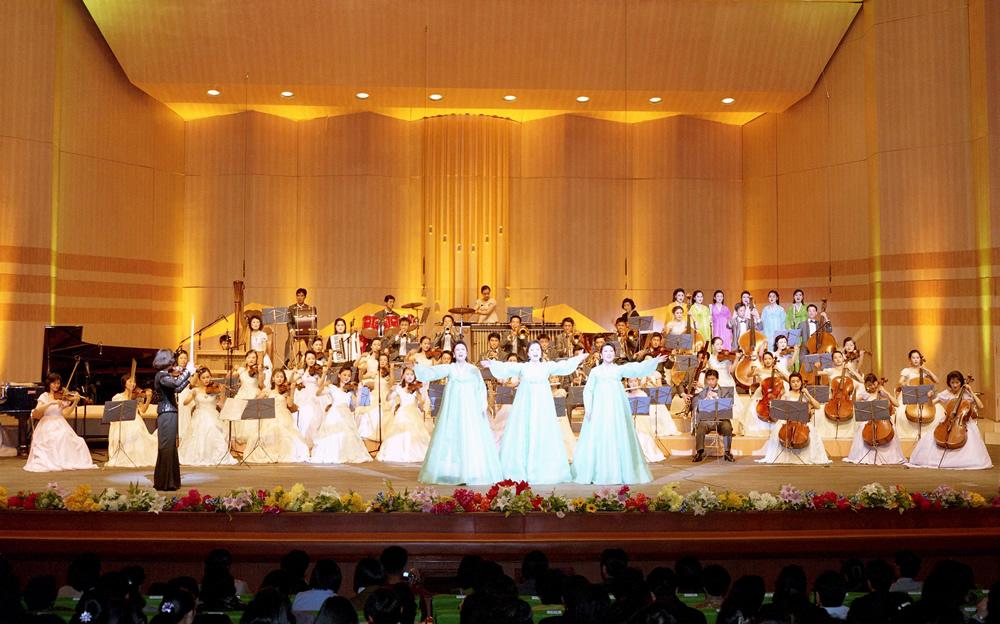
Arirang / Performed by So Hyang (KBS WORLD TV)
No definitive historical record exists regarding the origins of Arirang. Researchers suggest that its roots may extend to the Unified Silla Period (668–935) or the mid-to-late Joseon Dynasty (1392–1910)【1】. The song was transmitted through oral culture, acquiring new lyrics and melodic variations in each era according to the social conditions experienced by performers.
The widespread singing of Arirang during the reconstruction of Kyŏngbok Palace in Seoul in 1868 is considered a significant turning point in the song’s historical visibility【2】. Strong scholarly opinions hold that during this period, Arirang circulated among laborers conscripted from agricultural areas to work on construction projects, functioning as a work song. This process contributed to the transformation of Arirang from a local folk melody into a nationally recognized repertoire piece.
There is no universally agreed explanation in the literature regarding the origin of the word “Arirang.” However, the research of Professor Shin Yong-ha from Seoul National University provides a detailed analysis of its components. According to this approach, the term “Ari” was used in ancient Korean to mean “beautiful” or “pleasant,” a usage preserved in modern Korean words such as “aritda” and “arittaun.” It is also suggested that the same term is linked to the verb “ari-da,” meaning “the heart aches” or “intense longing.”
The element “Rang” is historically associated with a Chinese-derived form of address used to refer to young individuals, beloved persons, or as a respectful form of address. The combination of these two elements into the term “Arirang” is generally interpreted in the literature as “the much-longed-for beautiful beloved” or “the one whose absence causes heartache.” The word “Arari” appearing in the song’s lyrics is also believed to directly mean “pain of love” in ancient Korean【3】
Structurally, Arirang consists of a fixed refrain and variable short verses that differ from region to region. The most common refrain, “Arirang, arirang, arariyo,” is preserved as a structural skeleton upon which diverse lyrics are added. This feature has allowed the song to adopt an improvisational form and facilitated the easy incorporation of local narratives.
As a result of this structural flexibility, it is estimated that Arirang has approximately sixty main versions and over three thousand six hundred variations【4】. Among the best-known regional variants are Jeongseon Arirang, Jindo Arirang, and Miryang Arirang. These variants reflect the dialectal features, rhythmic interpretations, and local social experiences of their respective regions.
The Arirang Pass, frequently mentioned in the song’s lyrics, represents in Korean culture not only a geographical elevation but also a symbolic boundary. In traditional Korean society, mountain passes symbolized the separation between village and the outside world, and crossing such boundaries often implied an irreversible separation. Thus, the Arirang Pass appears in the lyrics as a symbol of parting from a loved one, distancing, and a rupture that is both physical and emotional.
Over time, this pass transcended the theme of individual separation and came to serve as a metaphor for historical hardships, forced migrations, and social trauma. Particularly during the Japanese colonial period, the Arirang Pass became a narrative element representing the oppression endured by the Korean people and the obstacles they had to overcome.
During the Japanese colonial administration, Arirang persisted not only as a traditional folk song but also as an expressive tool for preserving cultural identity. The singing of Arirang by protesters during the March 1 Movement of 1919 is regarded as evidence of the political and social significance the song acquired during this period【5】.
The 1926 silent film Arirang, directed by Na Un-gyu, became a landmark work that shaped the modern perception of the song. The use of Arirang in the film contributed to its transformation into a symbol evoking the traumas and spirit of resistance experienced by Korean society under Japanese rule. During this period, Japanese authorities censored or banned certain versions of Arirang.
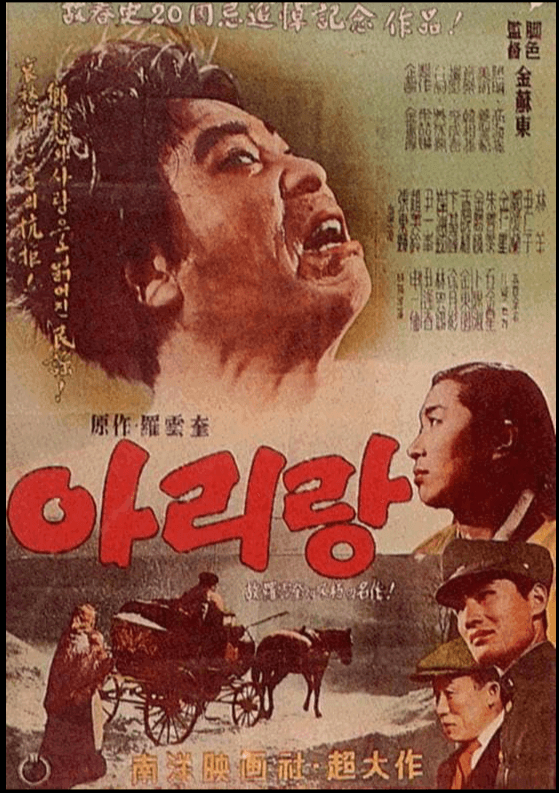
Poster of the 1926 Film “Arirang” (IMDb)
Due to its origins in oral tradition, the identity of its first performer cannot be determined. However, the earliest known written musical notation of Arirang was recorded in 1896 by Homer B. Hulbert. The 1907 recording by Kim Un-sŏn is regarded as one of the earliest surviving audio recordings of the song. Arrangements and recordings made in the 1920s and 1930s helped popularize Arirang among broad audiences both in Korea and Japan【6】.
Due to its cultural and historical significance, Arirang has been inscribed on UNESCO’s Representative List of the Intangible Cultural Heritage of Humanity through two separate nominations. The Republic of Korea registered Arirang in 2012 under the title “The Arirang Folk Song in the Republic of Korea.” The Democratic People’s Republic of Korea completed its own inscription in 2014 under the title “The Arirang Folk Song in the Democratic People’s Republic of Korea.” This dual recognition demonstrates that Arirang is a shared cultural element that transcends political boundaries.
Today, Arirang continues to be used in international sporting events, cultural festivals, and contemporary musical interpretations. It has also lent its name to Arirang TV and radio broadcasts aimed at promoting Korean culture globally. These uses illustrate that Arirang remains not only a historical folk song but also a living element within contemporary cultural circulation.
[1]
E. Taylor Atkins, "The Dual Career of 'Arirang': The Korean Resistance Anthem That Became a Japanese Pop Hit," The Journal of Asian Studies 66, no. 3 (Ağustos 2007): 645–687, Internet Archive, erişim tarihi: 1 Ocak 2026, https://web.archive.org/web/20220516051738/http://commons.lib.niu.edu/handle/10843/13185.
[2]
E. Taylor Atkins, "The Dual Career of 'Arirang': The Korean Resistance Anthem That Became a Japanese Pop Hit," The Journal of Asian Studies 66, no. 3 (Ağustos 2007): 645–687, Internet Archive, erişim tarihi: 1 Ocak 2026, https://web.archive.org/web/20220516051738/http://commons.lib.niu.edu/handle/10843/13185.
[3]
[4]
[5]
[6]
Henüz Tartışma Girilmemiştir
"Arirang (Song)" maddesi için tartışma başlatın
Historical Origins and Development
Etimology and Semantic Scope of the Term
Structure and Variants of Arirang
Arirang Pass (Arirang-gogae)
Japanese Colonial Period (1910–1945)
Recordings and Documentation Process
UNESCO Intangible Cultural Heritage Status
Contemporary Usage