

Bu içerik Türkçe olarak yazılmış olup yapay zeka ile otomatik olarak İngilizceye çevrilmiştir.
+2 Daha
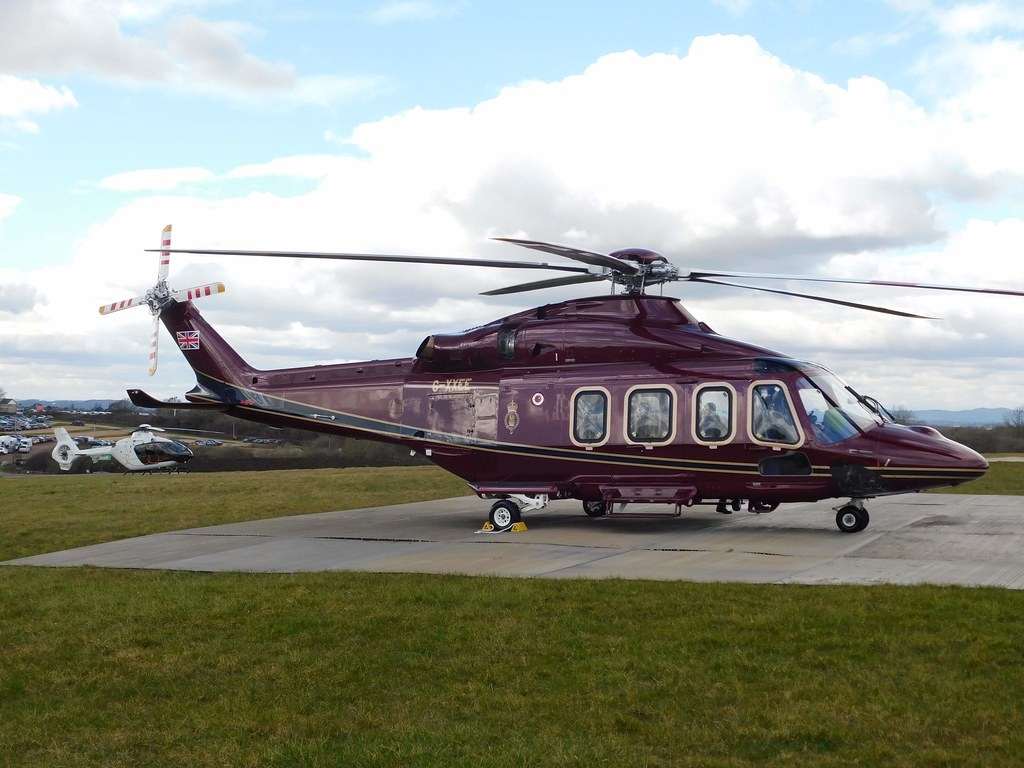
Leonardo AW139 (formerly known as AB139) is a medium-class, twin-engine, multirole helicopter manufactured by the European aerospace manufacturer Leonardo (formerly AgustaWestland). Recognized as one of the best-selling aircraft in its class, it enjoys global use across civil, commercial, military, and parapublic operations due to its high engine performance, modern safety standards, and versatile mission capabilities【1】.
The conceptual development of the AW139 helicopter began as a joint venture between the Italian manufacturer Agusta and the American Bell Helicopter company under the name AB139. The first test flight of the prototype was conducted in 2001 in the Cascina Costa region of Italy【2】. The aircraft was certified by the Joint Aviation Authorities (JAA) and the Italian Civil Aviation Authority (ENAC) on 18 June 2003, with its first commercial delivery made in early 2004 to the Italian emergency medical service and offshore operator Elilario. Following the acquisition of its type certification by the U.S. Federal Aviation Administration (FAA) in December 2004, the model’s name was officially changed to AW139 when AgustaWestland assumed full ownership and control of the program in 2005.
The European Aviation Safety Agency (EASA) type certificate data sheets define AB139 and AW139 not as two different variants of the same product, but as the current and previous names of the same aircraft. To meet growing global production demand, a second assembly line was activated in 2008 in Philadelphia, Pennsylvania, United States, in addition to the existing production line in Vergiate, Italy【3】. The program’s first major milestone in military applications occurred in 2005 when the Irish Air Corps ordered four helicopters. In 2018, the United States Air Force selected the AW139-based Boeing MH-139 model to replace its UH-1N fleet. The program’s 1,000th aircraft delivery was made in 2019 to the Guardia di Finanza, Italy’s financial crime and smuggling enforcement agency.

AW139(Flickr)
Aerodynamically and mechanically, the AW139 is equipped with a five-bladed main rotor featuring a fully articulated design and a four-bladed tail rotor system. The landing gear is configured as a retractable tricycle arrangement designed to absorb energy from vertical and horizontal impacts. The helicopter’s airframe and passenger seats are constructed to meet the stringent safety and crashworthiness requirements of international JAR/FAR 29 aviation standards. The powerplant consists of two Pratt & Whitney Canada PT6C-67C free-turbine turbo shaft engines, each equipped with a Full Authority Digital Engine Control (FADEC) system【4】. As an innovative safety feature, the helicopter’s main gearbox is designed to operate without oil leakage or loss for up to sixty minutes without damage.
The helicopter’s flight control architecture is based on a four-axis digital autopilot and Honeywell Primus Epic integrated avionics systems, designed to minimize pilot workload. The Phase 8 software update, integrated in 2020, added an AW139-specific synthetic vision system (SVS), enhanced two-dimensional maps, and an improved terrain awareness and warning system (EGPWS) with offshore mode capabilities to the avionics display. To ensure flight safety in all weather conditions, optional full (FIPS) or limited (LIPS) ice protection systems can be installed. Additionally, specialized equipment such as a Lidar-based obstacle proximity system (OPLS) has been integrated into the technological infrastructure to enhance environmental awareness.
Designed to meet Category A (Class 1) performance criteria, the AW139 is capable of safely maintaining its current flight altitude and operational capability even in the event of an engine failure.【5】 The aircraft’s standard empty weight is approximately 4,765 kilograms, with a maximum gross weight (MGW) of 6,400 kilograms. With the integration of additional performance kits, this maximum weight limit can be increased to between 6,800 and 7,000 kilograms【6】【7】. According to relevant regulations, the helicopter may be operated by a single pilot under visual flight rules (VFR) during daylight hours, but requires two pilots for night or instrument flight rules (IFR) operations, or in areas with potential icing conditions. Analysis of acceleration data shows that the never-exceed speed (V_NE) is set at 167 knots (KIAS). Under standard conditions (International Standard Atmosphere, 5,000 feet altitude, and maximum weight), the maximum cruise speed is measured at 165 knots (approximately 306 km/h). While standard twin-engine helicopters typically achieve climb rates of 1,000 to 1,200 feet per minute, the AW139 platform exceeds 2,000 feet per minute【8】. With the addition of auxiliary fuel tanks, the maximum operational radius reaches 641 nautical miles (1,187 kilometers), and endurance extends to approximately 5 hours and 38 minutes. The system demonstrates hover performance of up to 15,327 feet in ground effect (HIGE) and 8,123 feet out of ground effect (HOGE), with a maximum operational service ceiling of 20,000 feet【9】.

AW139 (Flickr)
With the largest internal cabin volume in its class, the AW139 features a modular interior design capable of rapid adaptation to diverse mission profiles. According to 2019 data, 33 percent of produced units were allocated to offshore sectors including oil, natural gas, and wind energy. Military aviation accounts for 21 percent, while search and rescue (SAR) and emergency medical services (EMS) operations constitute 17 percent of the fleet【10】. In medical evacuation configurations, the cabin provides space for four to five stretchers, allowing patients to be loaded either longitudinally or laterally, along with seating for up to two medical personnel. For security and law enforcement configurations (police and border patrol missions), integrated sensor and communication consoles enable the simultaneous deployment of up to ten fully equipped personnel. Beyond these, in specialized corporate VIP transport applications where noise and vibration isolation are maximized, the helicopter is modified with luxury fittings. These VIP configurations offer alternative seating arrangements including the “Corporate Interior” with a passenger capacity of ten, the “Deluxe” configuration for eight passengers, or the elite “Executive” layout with five seats. Wide sliding doors on both sides and optional baggage access panels optimize ground logistics and in-air crane operations safely【11】.
AW139 (DrBear Aviation)
[1]
Leonardo S.p.A. "AW139 - Commercial and Civil Helicopters." Leonardo, 2022. Access date: 20 February 2026
[2]
Sponsored Content. "Simply no rivals: Leonardo AW139." Vertical Mag, 22 July 2020. Access date: 20 February 2026
[3]
Sponsored Content. "Simply no rivals: Leonardo AW139." Vertical Mag, 22 July 2020. Access date: 20 February 2026
[4]
Leonardo S.p.A. "AW139 - Commercial and Civil Helicopters." Leonardo, 2022. Access date: 20 February 2026
[5]
Bristow Group Inc. "Medium Twins • Leonardo AW139." Bristow Group Inc. (VTOL), 2026. Access date: 20 February 2026
https://www.bristowgroup.com/fleet/medium-twins/leonardo-aw139
[6]
Leonardo S.p.A. "AW139 - Commercial and Civil Helicopters." Leonardo, 2022. Access date: 20 February 2026
[7]
Bristow Group Inc. "Medium Twins • Leonardo AW139." Bristow Group Inc. (VTOL), 2026. Access date: 20 February 2026
https://www.bristowgroup.com/fleet/medium-twins/leonardo-aw139
[8]
Sponsored Content. "Simply no rivals: Leonardo AW139." Vertical Mag, 22 July 2020. Access date: 20 February 2026
[9]
Leonardo S.p.A. "AW139 - Commercial and Civil Helicopters." Leonardo, 2022. Access date: 20 February 2026
[10]
Sponsored Content. "Simply no rivals: Leonardo AW139." Vertical Mag, 22 July 2020. Access date: 20 February 2026
[11]
Leonardo S.p.A. "AW139 - Commercial and Civil Helicopters." Leonardo, 2022. Access date: 20 February 2026

Development Process, Production History, and Certification Stages
Design Features, Technological Systems, and Safety Infrastructure
Performance Data and Technical Specifications
Applications and Configuration Flexibility