

Bu içerik Türkçe olarak yazılmış olup yapay zeka ile otomatik olarak İngilizceye çevrilmiştir.
+1 Daha
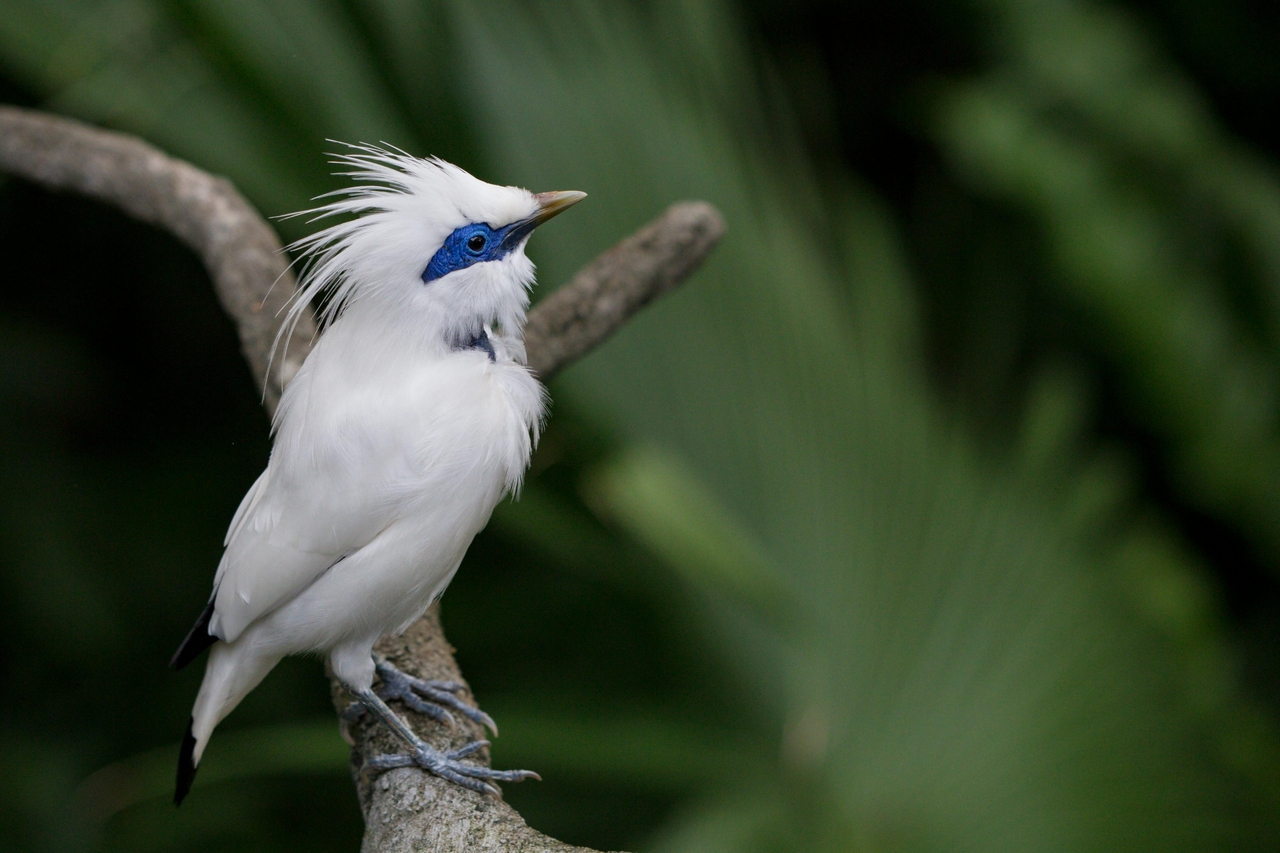
The Bali myna, or Bali starling (Leucopsar rothschildi), is a critically endangered bird species belonging to the family Sturnidae within the order Passeriformes. This species measures approximately 25 cm (10 inches) in length and weighs about 3 ounces (85 grams). It is distinguished by its pure white plumage, black wing and tail tips, and prominent blue skin patches around the eyes. The bill is bluish-gray with a dull yellowish tip. Males exhibit a delicate, lacy crest of feathers extending backward from the head.

Bali Starling (Pexels)
This species is endemic to the island of Bali in Indonesia and its natural habitat is restricted primarily to the Bali Barat National Park and surrounding areas in the northwestern part of the island. Historically distributed across one-third of the island’s northern region, the species now survives in a very limited area due to illegal poaching and habitat loss. During the breeding season, it is typically found in lowland monsoon forests and palm savannas below 175 meters in elevation; outside the breeding season, it disperses into more open areas and forest edges.
Bali mynas are social, monogamous birds that live in pairs. Both males and females jointly build nests, incubate eggs, and feed the young. Pairs construct nests in tree cavities using leaves, grass, and feathers, typically laying two to three eggs per season. The eggs are bluish-green in color, and chicks hatch after 12 to 28 days. After leaving the nest, the young are still fed by their parents for several weeks and attain adult plumage within a few months. The breeding season generally coincides with the rainy period from January to April, when insect populations are at their peak.
The omnivorous Bali myna feeds on insects such as ants, termites, beetles, grasshoppers, and caterpillars, as well as figs, papaya, nectar, and various fruits. It also consumes small reptiles and earthworms.
This species possesses a rich vocal repertoire consisting of various whistles, high-pitched calls, trills, and vibrational notes. During courtship or territorial defense, it displays behaviors such as raising its head feathers, puffing out its chest, spreading its tail in a fan shape, and rhythmically bobbing its body.
The Bali myna is classified as Critically Endangered (CR) by the International Union for Conservation of Nature (IUCN) and faces severe threats primarily due to high demand in the cage-bird trade. In the 1990s, the wild population declined to as few as 15 individuals. By 2001, this number had dropped to only six. High black-market prices—for example, $2,000 per bird in 1999—encouraged illegal poaching; in 1999, an armed gang stole 39 birds intended for release into the wild. Habitat loss, genetic erosion, predation, and disease are additional significant threats to the species.
The Bali myna has been protected under Indonesian law since 1970 and is listed on CITES Appendix I. Since 1983, the Bali Starling Project has implemented initiatives including the release of captive birds into the wild, public education, and community-based conservation programs. In 2006, a community agreement on Nusa Penida Island made the protection of these birds mandatory. By 2009, 65 individuals had been released onto the island, resulting in 62 chicks born in the wild. A 2019 survey in Bali Barat National Park recorded a total of 191 individuals, including those released. However, the IUCN emphasizes that reintroduced birds must successfully breed in the wild to be considered mature, self-sustaining individuals.
International collaborations, including institutions such as the San Diego Zoo, implement Species Survival Plans (SSPs) to monitor genetic diversity. Within this framework, breeding pairings are carefully planned to preserve genetic variation. Meanwhile, strict controls and educational campaigns are conducted to reduce illegal trade and curb the capture of birds from the wild.

Henüz Tartışma Girilmemiştir
"Bali myna (Leucopsar rothschildi)" maddesi için tartışma başlatın
Geographic Distribution and Habitat
Behavior and Reproduction
Diet
Vocalizations and Communication
Conservation Status and Threats
Conservation Efforts and Reintroduction