


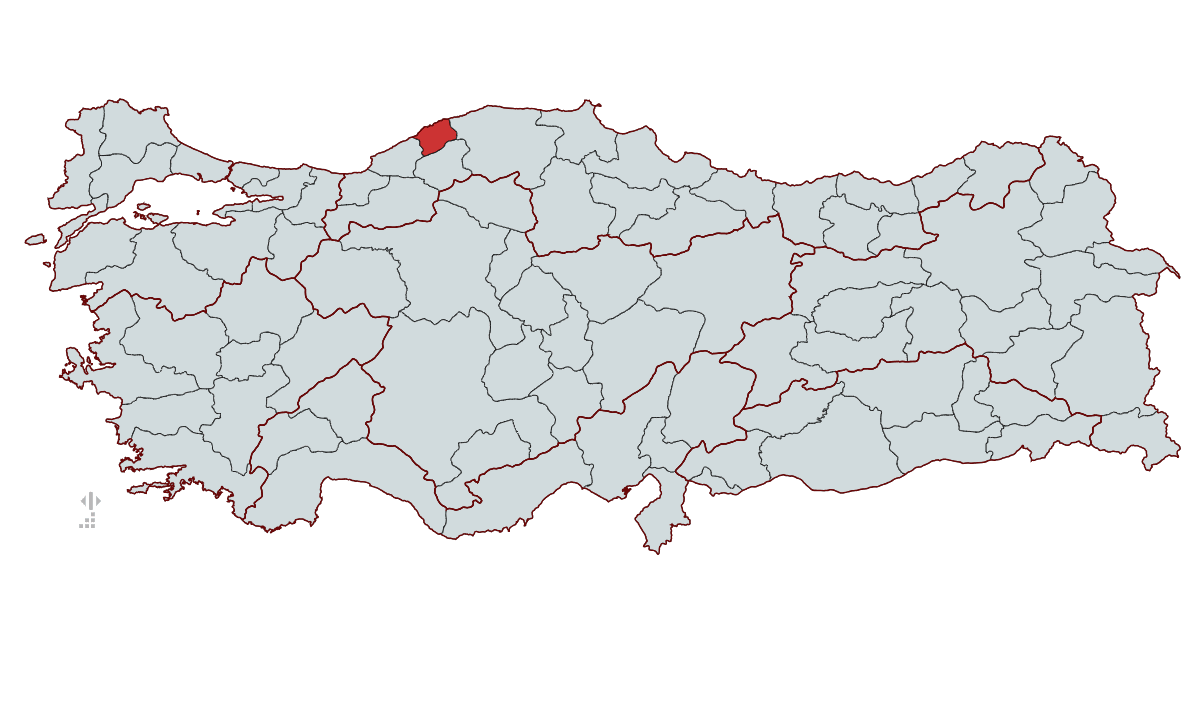
Bartın
Country | Türkiye | ||||||||
|---|---|---|---|---|---|---|---|---|---|
Region(s) | Black Sea | ||||||||
Area(s) | 2.120 Km² | ||||||||
Population | 207.634 | ||||||||
Climate(s) | Mild maritime climate (Black Sea climate) | ||||||||
License Plate | 74 | ||||||||
Area Code(s) | 378 | ||||||||
Mayor(s) | Muhammet Rıza Yalçınkaya | ||||||||
Governor(s) | Dr. Nurtaç ARSLAN | ||||||||
Districts | Kurucaşile Ulus Amasra Merkez | ||||||||
Important Structure(s) | Amasra Ancient Theater Kuşkayası Road Monument Amasra Museum Amasra Castle | ||||||||
Bartın is a province located in Türkiye’s Black Sea Region, specifically in the Western Black Sea subregion. In 1991, it separated from Zonguldak and gained the status of Türkiye’s 74th province. The province is bordered by Kastamonu in the east, Karabük in the south, Zonguldak in the west, and the Black Sea in the north. Rich in forest resources, a large part of Bartın lies within the boundaries of Küre Mountains National Park. Additionally, Bartın River, the only river in Türkiye used for transportation purposes, stands out among the province’s natural resources.
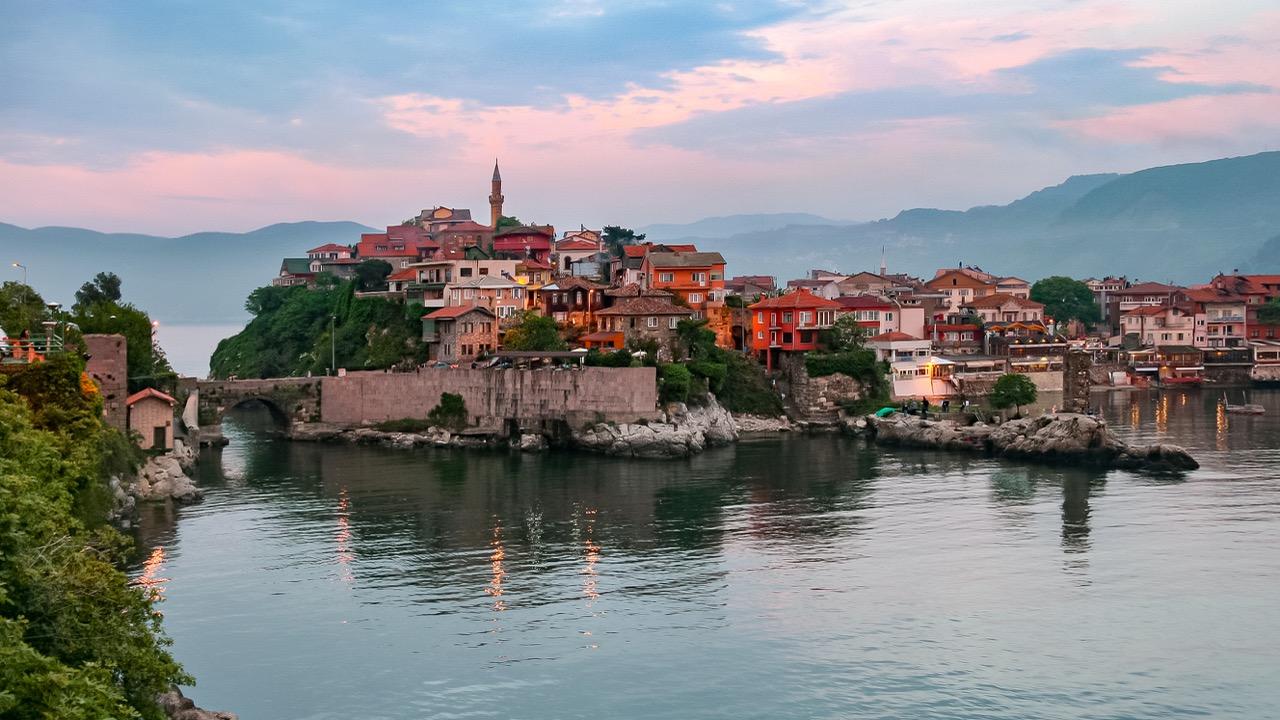
Amasra (Photo: Jorge Franganillo, flickr.com)
In ancient times, the name of the Bartın River was known as “Parthenios.” The settlement established based on this name was initially called “Parthenia,” which gradually evolved into the current name, Bartın. In Greek mythology, Parthenios is a figure described as the “God of Waters” and is among the children of Okeanos. This name is said to mean “god of waters” or “magnificent flowing water,” while some interpretations also suggest it refers to “choral songs for young girls.”
The famous bard Homer, in the Iliad, mentions that the heroes from Anatolia who came to defend Troy originated from the lands watered by the Parthenios River. The writer from Amasya, Strabo, also made similar references to this river in his work, emphasizing the importance of the ancient name of the region.
The initial acquisition of the city of Bartın is attributed to the Gaskas in the 14th century BC; subsequently, Hittites, Phrygians, Ionians, Cimmerians, Lydians, Persians, Greeks, Pontians, Romans, Byzantines, Seljuks, and Ottomans have all established their presence in this region.
It is suggested that between 3000–2400 BC, the Akas settled along the western Anatolian coasts (for example, in the regions of Samsun, Sinop, and Amasra) before establishing the Mycenaean Civilization in the Aegean, thereby introducing elements of the Copper Age Civilization to the local population. During this time, it is believed that the inland regions were under the influence of the Gaskas and Hittites.
One of the foremost ancient cities of Bartın and the Black Sea is Amasra, which in its 4000-year history experienced periods of independence as well as periods of shared fate. Among the earliest settlers of the region were the Gaskas in the 14th century BC and the Hittites in the 13th century BC.
At the beginning of the 12th century BC, the Bartın region was known as “Bithynia” while Amasra was within the borders of Paphlagonia; however, towards the end of the same century, Bartın came under the control of the Phrygians and Amasra under the control of the Phoenicians. Afterwards, the region came under the rule of the Cimmerians in the late 7th century, the Lydians in the 6th century, the Persians in 547 BC, the Macedonians in 334 BC, the Pontians in 279 BC, and the Romans in 64 BC.
Beginning with Amasra (Sesamos) and Kurucaşile (Kromna), which were among the first colonies established by the Phoenicians in the Black Sea in the 12th century BC, the process led to an approximately one-hundred-year dark period following the withdrawal of the Phoenicians and Carians in the 9th century. Subsequently, at the beginning of the 7th century, under the influence of the Ionian communities represented by the Megaral immigrants, the region joined the Ion (Milet) colony. The Persian rule that began in 547 BC and lasted for over two hundred years enabled the region to maintain its status; during the period 334–279 BC, Bartın and Ulus were first administered by Phrygia Satrap and Queen Amastris (302–286 BC) and later under the leadership of General Eumenes.
From the 12th century BC to the 3rd century BC, the city, known as “Sesamos,” transitioned during the Macedonian period into a city-state organized by Queen Amastris (302–286 BC), taking its name from the queen. In this short period, it became the center of the Symoikismos City Sites Union, which consisted of sites such as Kromna (present-day Kurucaşile–Tekkeönü), Tios (Filyos–Hisarönü), and Kyteros (Gideros).
After the split between Rome and Byzantium in AD 395, Bartın and its surroundings came under Byzantine rule. The region, influenced by the Turkish Emirate established by Kutalmış’s son Süleyman Bey between 1084 and 1096, was re-incorporated into the Byzantine borders following the Crusades. The control of the Anatolian Seljuks in the late 11th century, followed by the Candaroğulları Beyliği in 1326 and the Ottoman Empire from 1392 onward, brought about administrative changes. In this period, Bartın and Ulus came under Turkish rule in the late 11th century, while Amasra reached the status of the capital of the Pontus section of the Bitinya-Pontus Province, which was governed under the Satrapy system during the Roman period (64 BC–AD 395). During the Byzantine period (AD 395–1460), Amasra was managed as a Genoese colony between 1261 and 1460; in 1460, it was incorporated into Ottoman territories by Fatih Sultan Mehmet.
During the Ottoman Empire, Bartın was within the borders of Bolu Sancağı, which was connected to the Anatolian Beylerbeyliği between 1460 and 1692. After the abolition of Bolu Sancağı, the region was administered under the Voyvodalık system between 1692 and 1811, and in 1811 it was reattached to Bolu Sancağı under the Kastamonu Vilayeti, which had been reorganized. During this period, Bartın emerged as an important center in terms of commercial life, being recognized as the “On İki Divan” marketplace; it gained district status in 1867 and saw the establishment of its municipal organization in 1876.
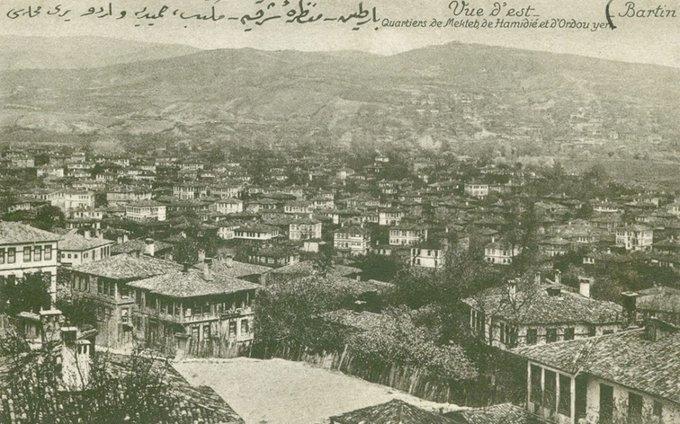
Bartın Hamidiye School and Barracks (Photo: Özhan Öztürk)
During the establishment of the Republic, Bartın was managed under the status of a mutasarrıflık in 1920 and then as part of Zonguldak in 1924. On 7 September 1991, with the law dated 28 August 1991 and numbered 3760, Bartın acquired its provincial status. In the Republican period, some settlements that had continued to exist as districts during the Ottoman period were reorganized. Amasra, which was once reduced to the status of a bucak, was reorganized as a district again in 1987. Similarly, Ulus became a district in 1944, and Kurucaşile in 1957. Today, Bartın consists of four districts – Merkez, Amasra, Ulus, and Kurucaşile; it also comprises a broad administrative structure with towns such as Arıt, Kozcağız, Kumluca, Abdipaşa, and Hasankadı, and a total of 268 villages.
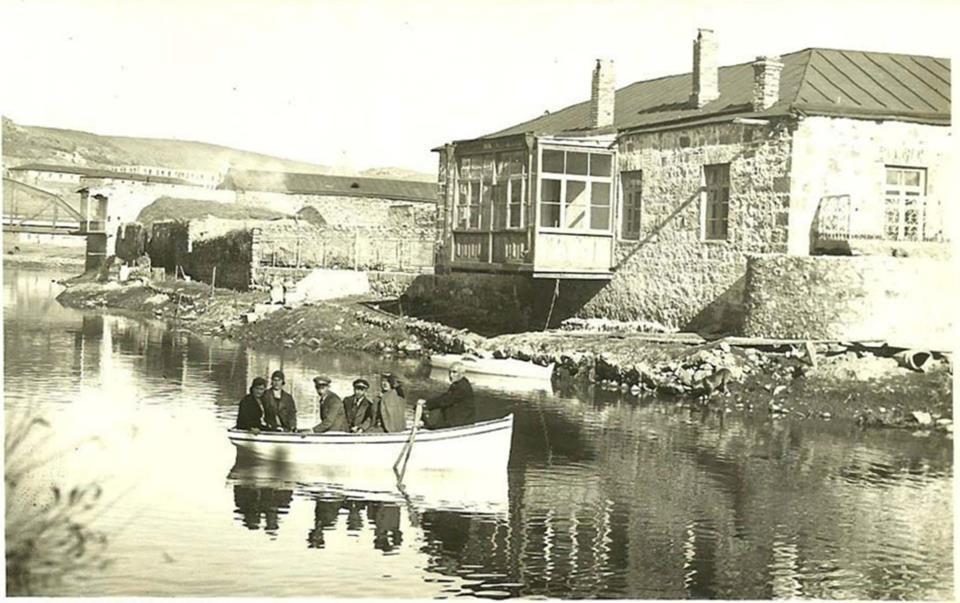
Bartın Filyos River (Photo: Özhan Öztürk)
Bartın is located in the western part of the Black Sea Region and has a direct coastline along the Black Sea to the north. In terms of geographical coordinates, the province is situated at approximately 41°38′ north latitude and 32°21′ east longitude. This feature plays an important role in determining Bartın’s climatic and geopolitical dynamics. The region, which borders provinces such as Kastamonu to the south, Çankırı and Karabük to the east, and Zonguldak to the west, holds a strategic position for both local and regional connections through its integrated land and sea transportation networks.
Bartın is a region that experiences warm summers and cool winters under the influence of the Black Sea climate. It exhibits a transitional climate that incorporates characteristics of both the Marmara and Black Sea climates. In the province overall, the Black Sea climate predominates in the basin area; however, in the Ulus district, which is located behind the Küre Mountains, continental climate characteristics are observed due to its insufficient exposure to the moist air currents coming from the Black Sea mountains.
The proximity to the sea and the presence of moderately high mountain ranges running parallel to the coast reduce temperature differences along the coastline and increase humidity, while also enhancing the influence of air masses coming from the Balkans. In line with these features, July stands out as the hottest period in Bartın with an average temperature of 23°C, while December represents the coldest month with an average of 4.2°C. The region experiences a total of 225 clear days, 125 rainy days, and 15 snowy days. These climatic conditions make June, July, and August the most favorable periods for tourism, while April, May, as well as September and October occasionally offer suitable weather conditions for visitors.
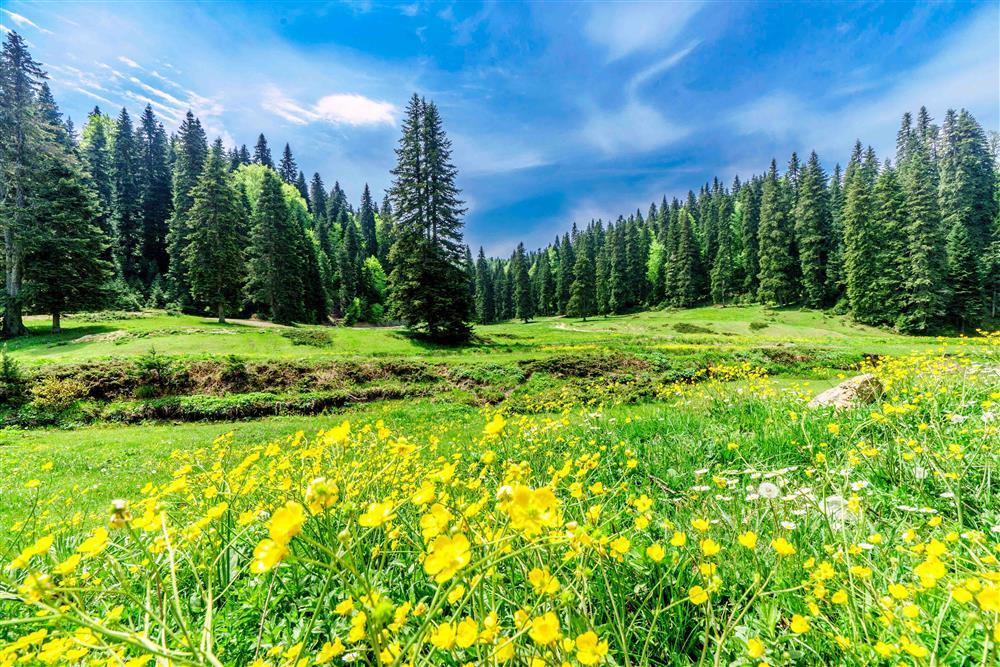
Bartın Katırovası Highland (Photo:Bartın Kültür ve Turizm Bakanlığı fotoğraf galerisi)
Approximately 46% of Bartın’s total area of 2143 km² is covered by forests, 35% consists of agricultural land, 7% is made up of meadows and pastures, and 12% comprises areas unsuitable for cultivation and settlements. Under the influence of the Black Sea climate, the region has a mixed flora that reflects both Black Sea and European-Siberian plant geographical characteristics. In this context, Bartın’s extensive forests are primarily composed of broadleaf and coniferous tree species. Along the coastal strip, in areas close to the sea and up to an altitude of 600 meters, oak, beech, and hornbeam trees are predominant; further inland and in regions above 1500 meters, species such as beech, chestnut, fir, and pine can be encountered. Additionally, walnut, chestnut, and hazelnut plantations are commonly observed in the coastal areas.
Furthermore, Bartın’s rich understory includes hundreds of species such as cornel, medlar, blackberry, linden, rosehip, fig, sage, asparagus, laurel, ivy, oleander, wild rose, guelder-rose, jasmine, dogwood, hawthorn, bellflower, daisy, chicory, clover, three-flowered, panic grass, foxglove, poplar, terebinth, sumac, mastic, sticky herb, yarrow, shepherd’s purse, laden, cypress, oak nut, whirly, and thyme. This diversity is supported by the soil characteristics and the climate conditions conducive to horticulture, allowing nearly all field crops, vegetables, and fruits to be produced. In recent years, the prominence of quality strawberry cultivation has been highlighted with festivals organized in its honor, emphasizing the modern aspect of local agriculture. On the other hand, no plant species protected under the Bern Convention have been encountered in Bartın.
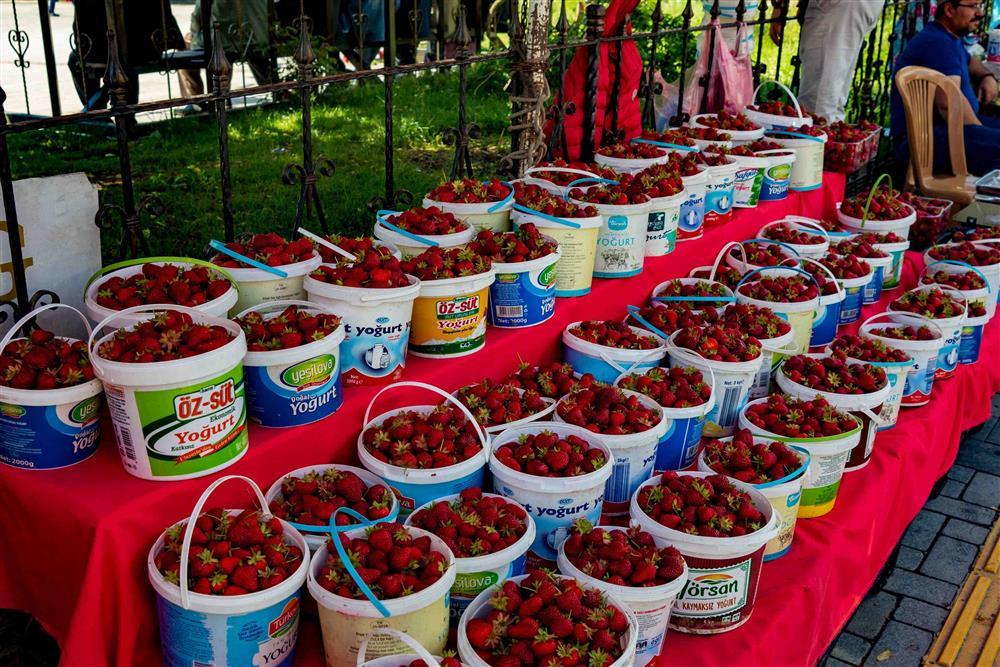
Bartın Strawberry (Photo: Bartın Kültür ve Turizm Bakanlığı fotoğraf galerisi)
Bartın is surrounded from the east, west, and north by mountains that do not reach an elevation of 2000 meters. Although these mountains are not very high, they stand out with their steep slopes and rugged, rocky formations running parallel to the coast. Among the most prominent mountains in the region are the Aladağ, Kocadağ, Karadağ, Kayaardı, Karasu, and Arıt Mountains. These mountains, which play an important role in the positioning of the city center, encircle the city with Aladağ to the west, Karasu to the north, and the Arıt Mountains to the east. Additionally, hill formations such as Halatçıyaması, Orduyeri, Kırtepe, and Ömertepe rise over the urban area, constituting characteristic elements of the region’s landforms and contributing to the aesthetic value of the natural landscape. This geomorphological structure not only affects the visual appearance of the city but also plays a decisive role in climate, vegetation, and agricultural productivity.
The most important watercourse in Bartın, Bartın River, was known in ancient times as “Parthenios” and has been a historic water source that gave the city its name. In the city center, in the Gazhane Burnu area, the confluence of Koca River and Kocanaz River forms this river, which flows for approximately 15 kilometers before reaching the Black Sea in the Boğaz area.
Bartın River is also of great importance for maritime transportation; it is regulated to allow the navigation of ships up to 500 tons, with a flow rate measured at approximately 720 meters per hour, and it transfers about 1 billion cubic meters of water to the sea annually.
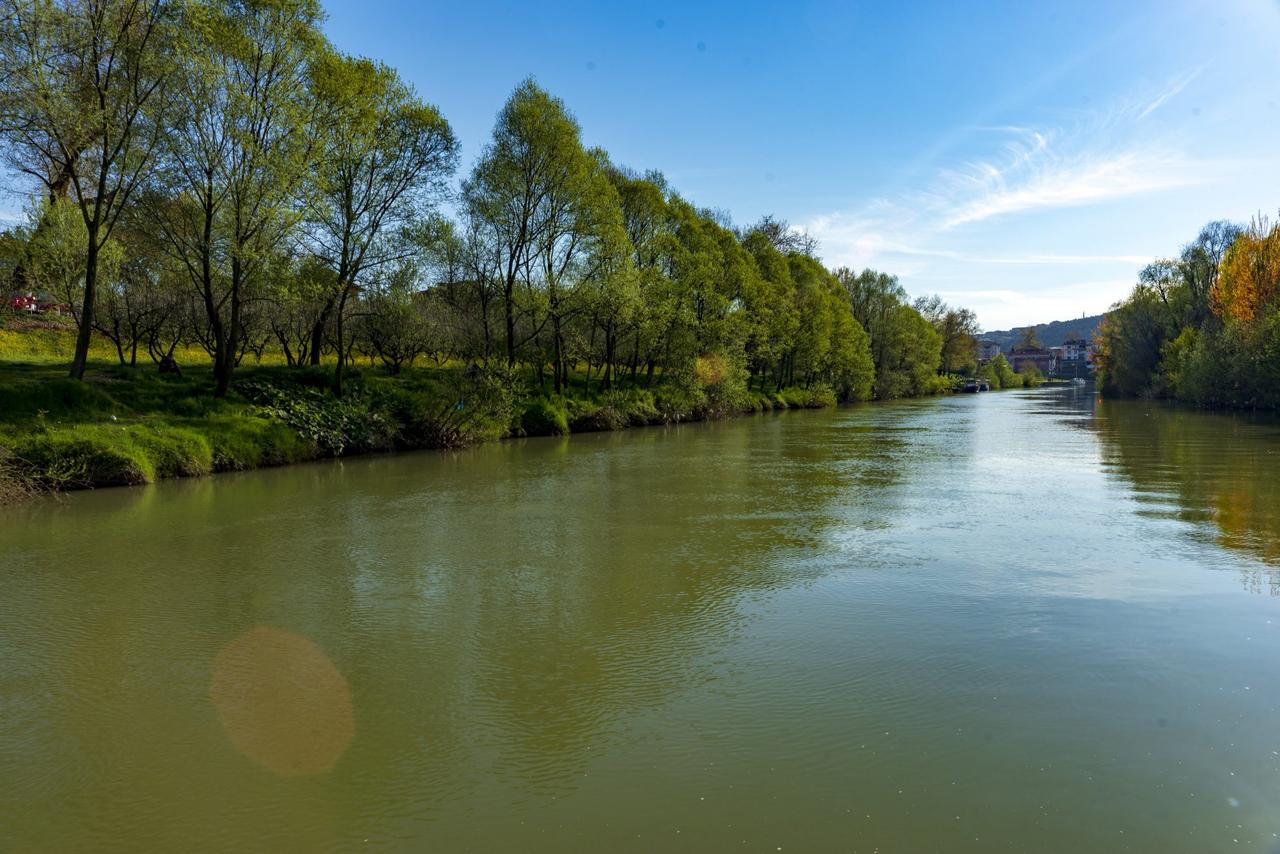
Bartın River (Photo: Batı Karadeniz)
Kocanaz River flows northward after originating from the south in the Kozcağız region; Koca River, which begins in the Kastamonu region, is fed by various tributaries including the Göksu and Eldeş Rivers (Ulus River) that pass through Ulus. In addition, significant watercourses that enhance the flow of the Koca River include the Akpınar and Karaçay Rivers, as well as the Kışla Stream, which joins with the Kozlu River formed by the Arıt and Mevren Streams.
Other important water resources in the region include the Kapısuyu and Tekkeönü Streams, which originate in the lands of Kurucaşile and reach the Black Sea, along with the Ova River and İnönü Streams that irrigate Ulus and Uluyayla.
Bartın, owing to the distinctive climate of the Black Sea Region and its rich forest cover, hosts a remarkably diverse wildlife. The region’s extensive forests, rivers, mountains, and coastline carry both Black Sea and European–Siberian biogeographic influences; this creates a foundation for a rich diversity of mammals, birds, reptiles, amphibians, fish, and invertebrates.
The forested areas in the region, primarily composed of broadleaf and coniferous trees, provide a favorable habitat for wildlife. In Bartın’s forests, wild boar (Sus scrofa), brown bear (Ursus arctos), red fox (Vulpes vulpes), Eurasian lynx (Lynx lynx), and various rodent species can be observed; on rare occasions, carnivorous mammals such as the wild cat may also be sighted. Additionally, squirrels, other small mammals, and bat species living in forest ecosystems contribute to the region’s rich faunal diversity.
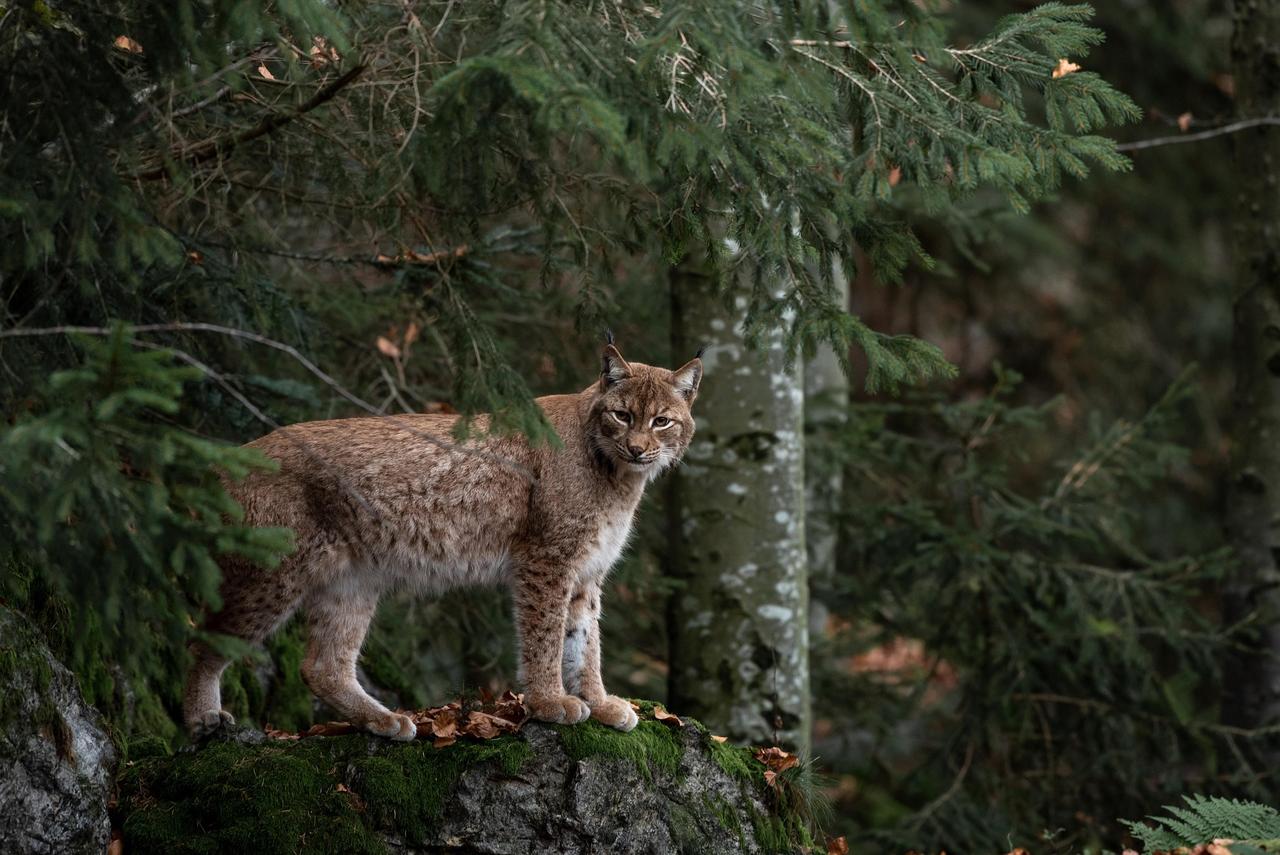
Common Lynx (Photo: Miller_Eszter, pixabay.com)
In terms of bird diversity, Bartın’s forests, riverbanks, and coastline are home to numerous species such as the black kite, tawny owl, swallow, sparrow, Anatolian tit, redstart, mountain fig bird, ababil, hoopoe, and various waterbirds. The region, especially during migration periods, hosts seasonal transient visitors due to its position at the intersection of bird migration routes between the East and West.
Bartın River and other rivers provide suitable habitats for the reproduction and survival of native fish species. In these waters, besides species such as trout, carp, and sturgeon, amphibians like frogs and salamanders inhabiting the riverbanks are also noteworthy. Reptile diversity is evident from the lizard and snake species found in the forested and rocky areas.
The region’s ecological diversity is further supported by protected areas such as Küre Mountains National Park. This national park, which aims to conserve the rich species diversity of both flora and fauna, contributes to the sustainability of the natural balance. However, factors such as deforestation, urban sprawl, and human interventions could adversely affect Bartın’s wildlife, making sustainable environmental policies essential for preserving the ecosystem.
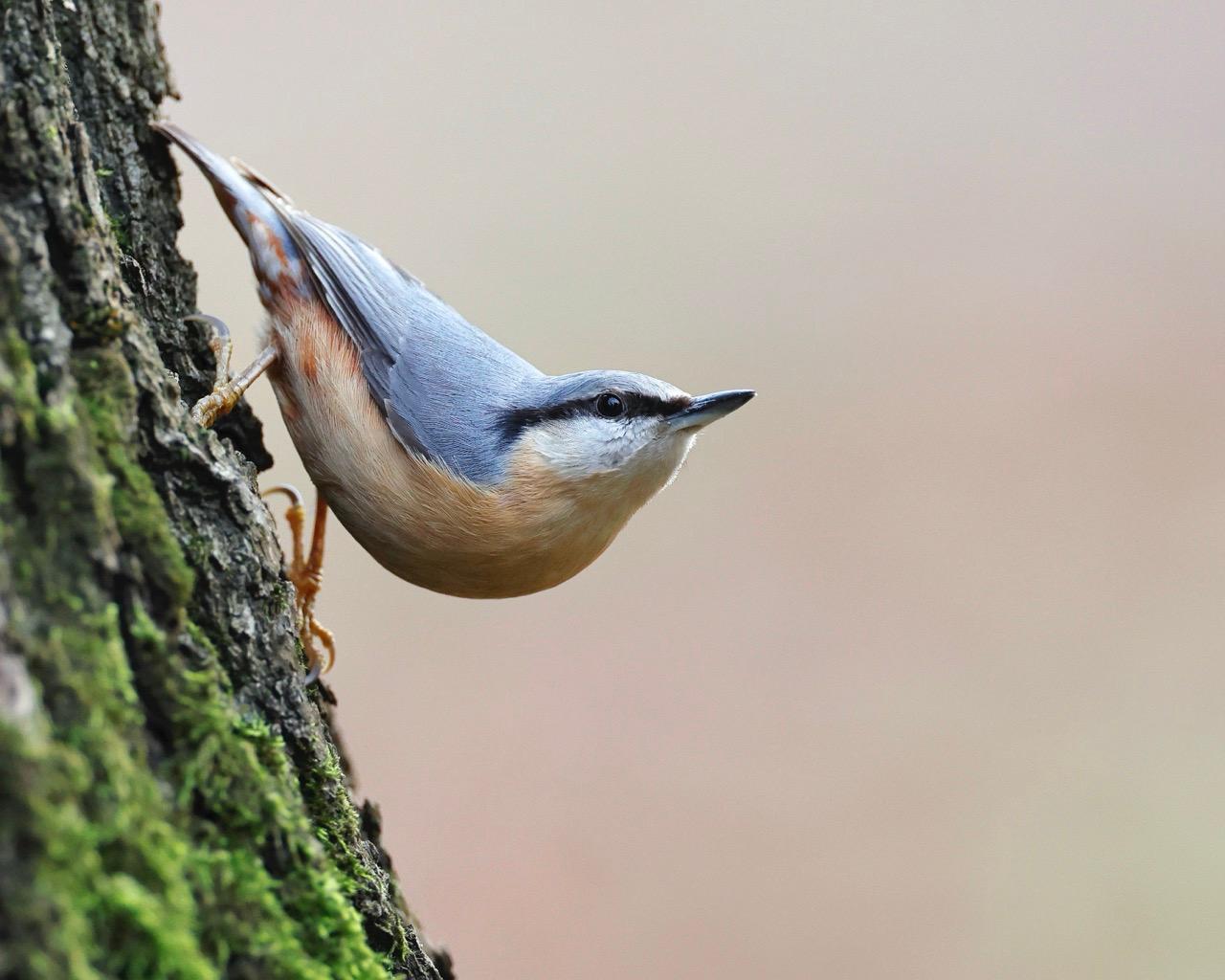
(Photo: Sharkolot, pixabay.com)
Bartın’s demographic structure shows a distinct distribution between urban centers and rural areas. According to estimated data, the population of Bartın is 207,634. While the provincial center and districts with high touristic value—such as Amasra—have higher population densities, settlements in rural areas are more sparsely distributed. The high proportion of young people reveals considerable potential in education and employment sectors, contributing to the strengthening of social and economic dynamism. This young and dynamic population structure supports the development of local services, infrastructure investments, and commercial activities, while also paving the way for agriculture, forestry, and small-scale enterprises in rural areas to make significant contributions to regional development. In general, Bartın’s population distribution indicates a demographic structure that integrates urban modernization with traditional rural life, conducive to socioeconomic growth and sustainable development.
Merkez: 162,793
Ulus: 23,256
Amasra: 14,107
Kurucaşile: 6,559
Amasra is a town named after Queen Amastris and boasts a rich historical background. Before being incorporated into the territories of the Ottoman Empire by Fatih Sultan Mehmet in 1460, the city was under Genoese administration and has hosted numerous works of art that bear traces of its vibrant commercial life up to the present day.
The Genoese described Amasra as the “Flowering Fortress”; Pliny referred to it as “Elegant and Beautiful,” while Niketas used the expression “Eye of the World.” Before the Ottomans, Fatih Sultan Mehmet, surveying the city, expressed his admiration by exclaiming, “Lala Lala acep Çeşm-i Cihan bu m’ola?” Following the conquest, two churches in Amasra were converted into mosques, a judge was appointed for the city, and, by Fatih’s order, the people of Eflani Castle were settled in the city. During the Ottoman period, when the city was administered as part of the Bolu Sancak Beyliği, it was recounted with great admiration by Western travelers.
Throughout history, Amasra has stood out not only as a strategically important military base but also as a commercial port city where captive trade was conducted and products such as timber, boxwood, tuna, and fur were exported. Since the 1940s, Amasra has been known as the pioneer town for home-stays and tent camping, earning the title “the place where tourism began in our country,” and today it continues its activities in culture and sea tourism.
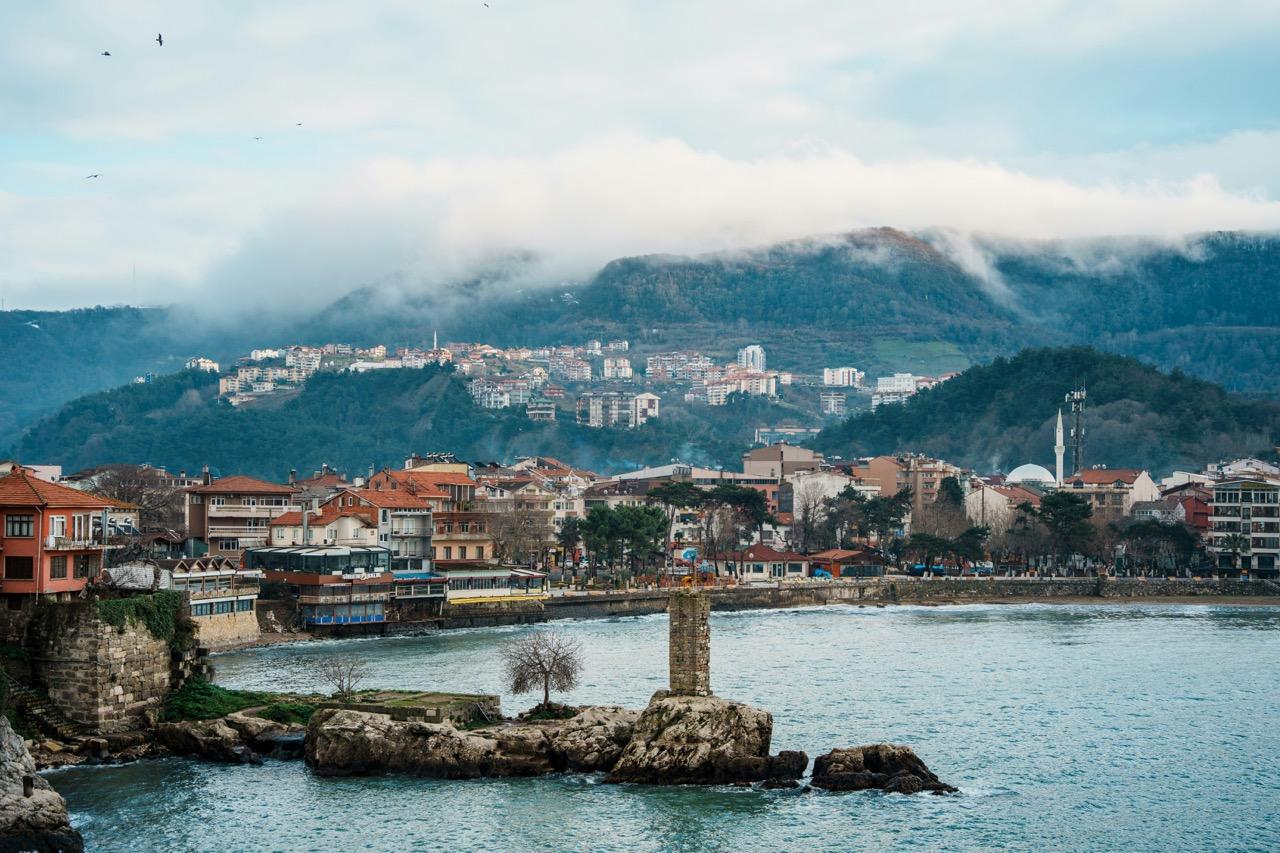
Amasra (Photo: Amo Fifty, unsplash.com)
Ulus is an important settlement located in the southeastern part of Bartın province, notable for its historical depth. According to tradition, its name is derived either from the Bozulus Turks who settled in the region in the 11th century or from the verb “üleşmek” (to share); in either case, the name reflects the cultural richness and historical continuity of the region. Ulus’s geographical setting, located in a wide valley where the Ulus and Eldeş rivers merge, is surrounded by natural beauty. The region offers various landscapes with its impressive plateaus (Uluyayla, Ardıç, and Gezen plateaus), as well as the Ulukaya Waterfall, and features numerous caves, waterfalls, and canyons.
In the early 18th century, the local scholar İbrahim Hamdi Efendi of Ulus, in his work titled "Atlas," praised the region’s rich vegetation and natural resources by saying, “The grand plateau and the Gökbeli forests are enough for the entire Ottoman world.”
Administratively, Ulus was initially a township belonging to Safranbolu, but on 8 August 1944, it was elevated to district status under Zonguldak province. Later, on 28 August 1991, within the framework of law number 3760, it was incorporated into Bartın province, acquiring its current administrative status.
Located in the northeastern part of Bartın, Kurucaşile is a historic settlement established on bays adjacent to olive groves and sandal capes. Covering an area of approximately 159 km², the ancient name of the region, “Kromna,” means “edge people.” It is one of the ancient cities mentioned in the Iliad in the region of Paphlagonia, sharing similar historical destinies with Amasra. The old settlement center of Kurucaşile is known as Tekkeönü village. Evidence of this ancient past has been revealed through structural remains such as the ruins of Tekkeönü Castle, cellars, galleries, and water cisterns within the castle, as well as coins bearing Amazon portraits, inscribed stones, and columns exhibited at the Amasra Museum.
During the Ottoman period, the region also gained prominence as the center of shipyards that met the need for galleons. Along with Kurucaşile, fishing villages such as Tekkeönü and Kapısuyu established this maritime tradition; to this day, the art of wooden yacht and boat building, passed down from father to son, remains an integral part of the region’s economic and cultural fabric. In addition to its historical and folkloric values, Kurucaşile offers visitors various tourism activities through its natural attractions, including the bays of Tekkeönü, Kapısuyu, Karaman, and Çambu, Göldere Waterfall, Kümes-Akkaya rock formations, canyons, and Düden Waterfall.
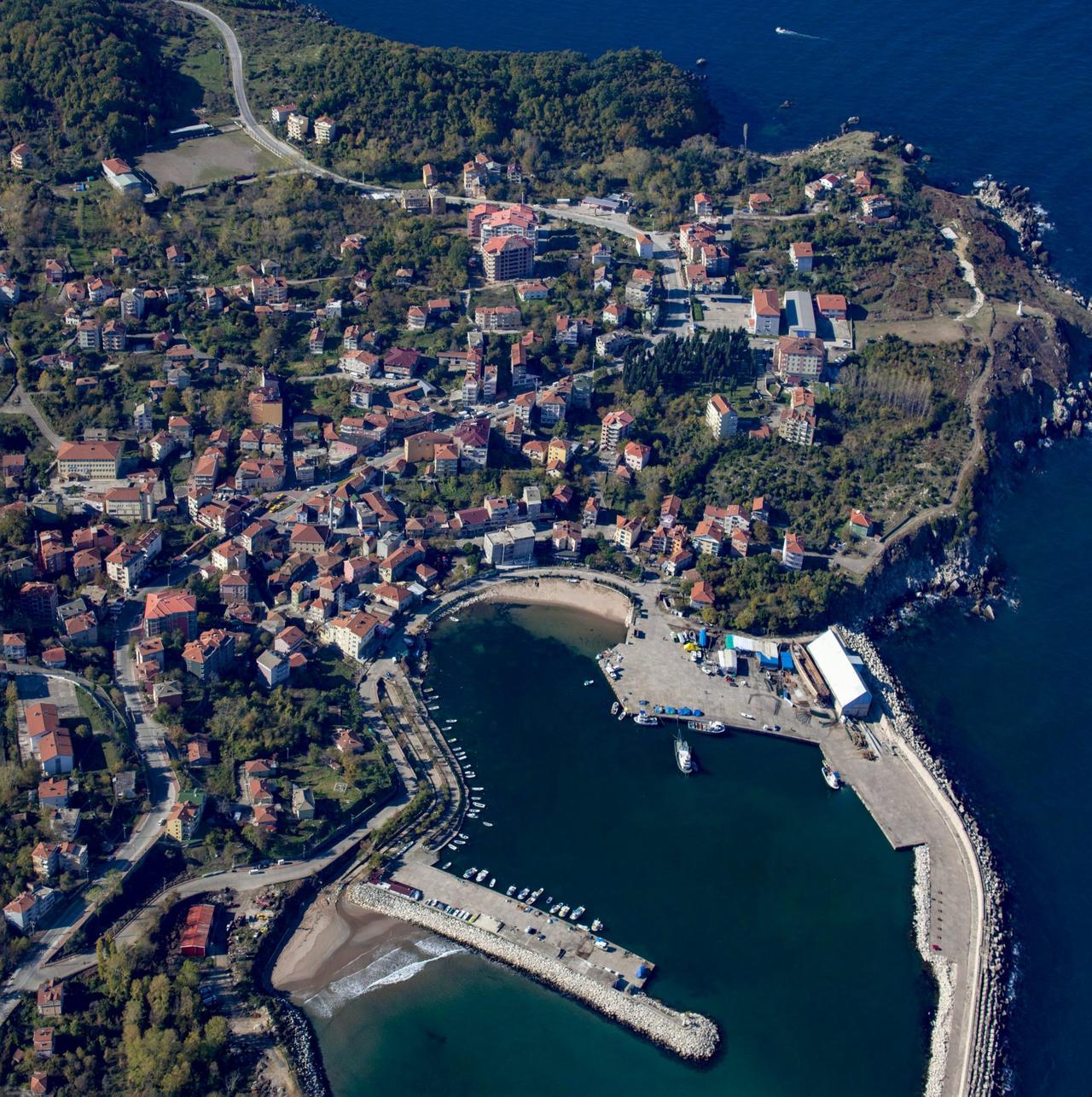
Kurucaşile (Photo: Batı Karadeniz)
Bartın has a multi-sectoral economic structure. When examining the distribution of land use in the province, it is seen that of the total area of 2,143 km², approximately 46% is covered by forests, 35% by agricultural land, 7% by meadows and pastures, and 12% by settlements and areas unsuitable for cultivation. This land distribution not only forms the basis of Bartın’s economy—built on agriculture, forestry, and local industry—but also allows for a diversification of commercial activities.
Bartın’s climate and soil composition provide a favorable environment for cultivating a variety of agricultural products. In the region, the production of cereals, vegetables, and fruits is widespread, while viticulture, olive cultivation, and the growing of other fruit varieties also play an important role. The 35% share of agricultural land forms the basis of rural production in the regional economy, and small ruminant and large ruminant farming are widely practiced among the local population. These sectors not only contribute to local food production but also provide a significant portion of employment in the area.
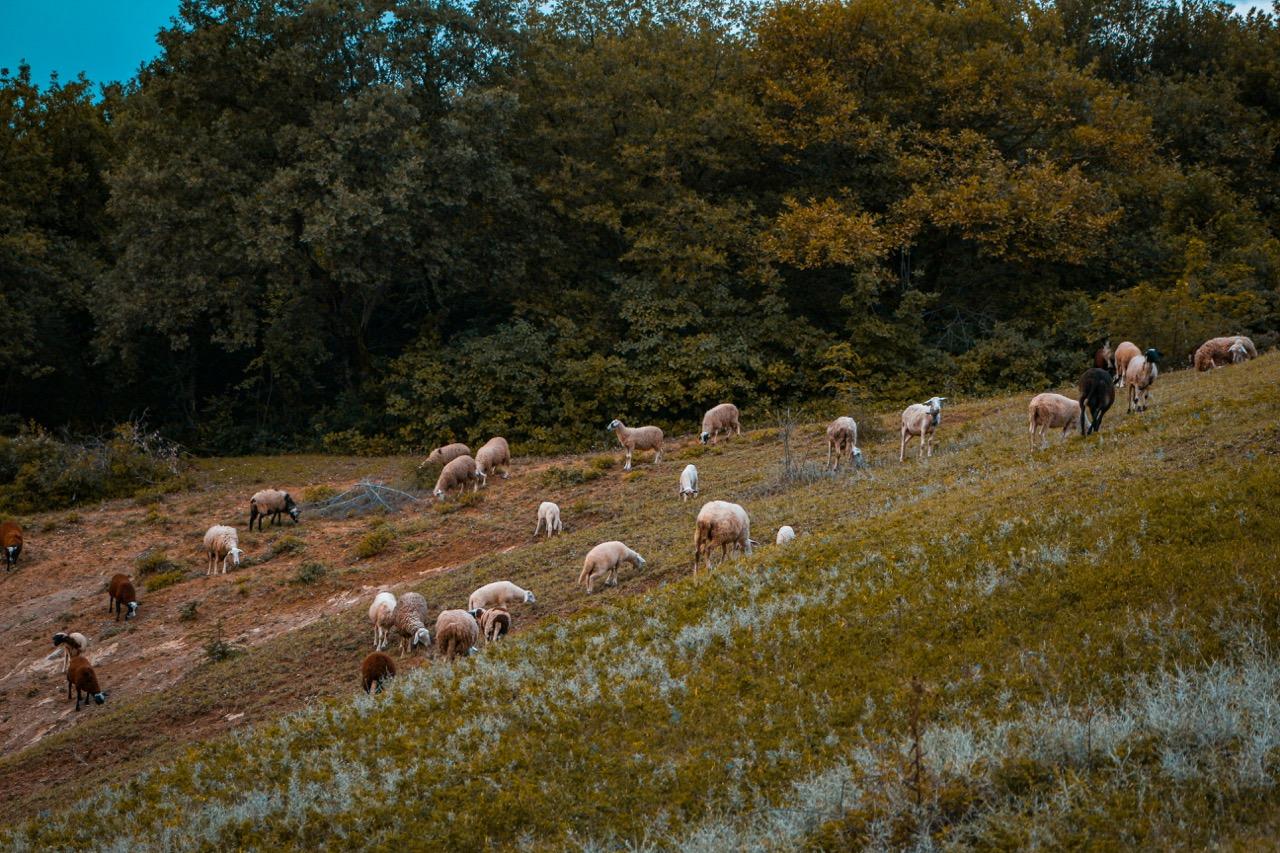
Small Ruminant Farming, Bartın (Photo: orijinal frame, pexels.com)
Thanks to its rich forest resources, Bartın stands out in the forestry sector. The forested areas, covering approximately 46% of the total area, contribute to the production of timber and wood products under sustainable forest management. In addition to forestry, the region’s geological structure provides favorable conditions for mining activities in some areas. Although the mining sector is not the main driving force of Bartın’s economy, mining and processing activities, integrated with regional industry, contribute to the local economic diversity.
Bartın’s land and sea transportation networks support its position as a strategic center for commerce. In particular, the Bartın River, with its steady flow and features conducive to sea navigation, plays an important role in commercial transportation and logistics activities. Small and medium-sized industrial enterprises in the region operate in sectors such as food processing, textiles, machinery manufacturing, wood products, and other local production fields, thereby increasing local employment and contributing to regional economic growth. These industrial and commercial activities are among the key dynamics that strengthen Bartın’s integration into national and international markets.
Within the scope of the ZBKP Project, Bartın’s importance stems from its strategic geographical location, tourism potential, cultural heritage, economic diversity, and developing transportation infrastructure. The project aims to maximize Bartın’s contribution to regional development by integrating and modernizing these elements. Thus, Bartın emerges as a critical center for sustainable development at both local and regional levels.
Bartın is one of the leading tourism destinations in the Black Sea Region, renowned for its natural beauty, historical heritage, and rich cultural fabric. One of the region’s most important tourist centers, Amasra, attracts both domestic and international visitors with its ancient ruins, historic port structures, and impressive sea views. Bartın’s tourism potential is further supported by local festivals, cultural events, and the exhibition of traditional handicrafts, which contribute significantly to the local economy.
One of the key components of Bartın’s cultural identity is the traditional handicrafts passed down from generation to generation. These crafts are produced using unique techniques that reflect the region’s historical past, geographical features, and local lifestyle. Local artisans create items for both functional and decorative purposes, and their works contribute to the preservation of Bartın’s cultural heritage while also diversifying tourism.
Metalworking in Bartın stands out with its “wire breaking” and “wire twisting” techniques. In these processes, thin metal wires are skillfully broken or twisted to create elegant and intricate decorative elements. The products range from everyday items to decorative objects, and the long-standing experience and craftsmanship behind these techniques hold an important place in Bartın’s tradition of handicrafts.
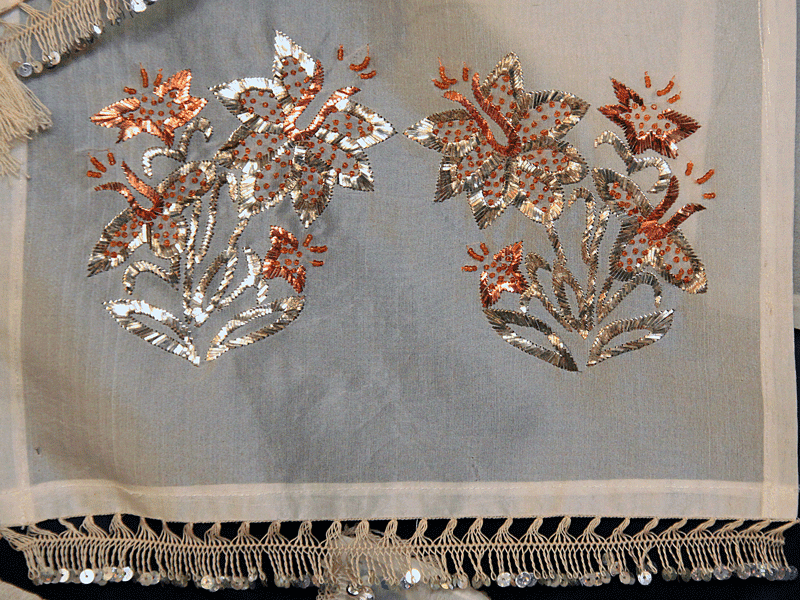
Bartın-style Wire Weaving (Photo: T.C. Bartın Governorship)
Kurucaşile Stone Sheet is a unique handicraft product with a history of approximately 150 years, produced from stone masses extracted using traditional methods. The local people use ancestral knowledge and traditional tools—such as picks, hammers, axes, compasses, sledgehammers, thick nails, and chisels—to separate natural rock masses. These stone masses are then planed, shaped, and smoothed, typically resulting in sheet products in the form of a round tray. One of the fundamental characteristics of this product is its fire resistance, which allows it to be used in the cooking of food items such as börek or gözleme. The natural color of the stone, which may exhibit smoky, dark bluish, or blackish tones, lightens slightly to yellow hues during the baking process; once baked and cooled, the final product appears in gray tones.
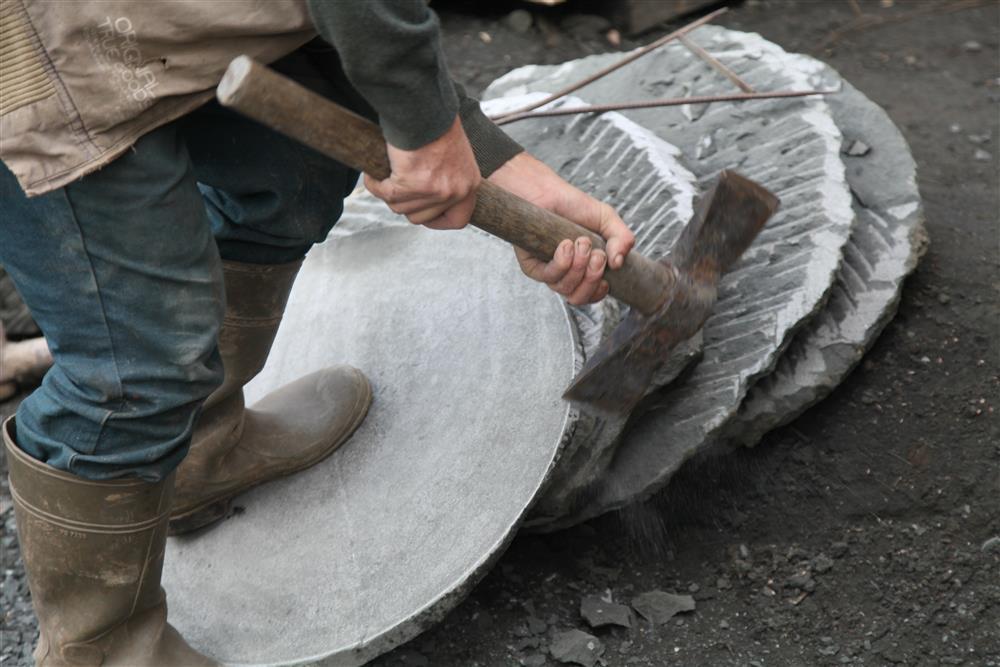
Kurucaşile Stone Sheet (Photo: Bartın Kültür ve Turizm Bakanlığı fotoğraf galerisi)
Bartın’s abundant forest resources have laid the groundwork for traditional handicrafts such as wood carving. Local craftsmen obtain wood from regional forests and carve it using traditional methods to produce furniture, decorative items, and practical objects. Wood carving reflects both its artistic value and the tradition of efficiently utilizing the region’s natural resources, thereby contributing significantly to Bartın’s cultural richness.
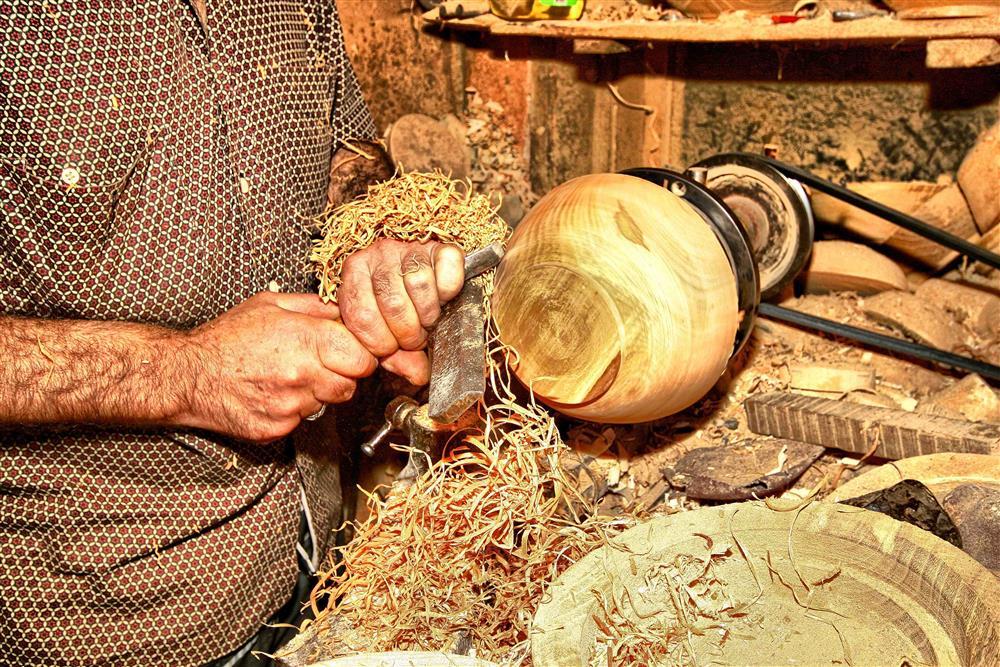
Wood Carving (Photo: Bartın Kültür ve Turizm Bakanlığı fotoğraf galerisi)
Located in the historic city center of Bartın, Çekiciler Bazaar carries traces of traditional commerce. This bazaar, where local products, handicrafts, and regional delicacies are exhibited, serves as a meeting point for both locals and tourists. Its historical texture and architecture are among the important elements that reflect Bartın’s cultural identity.
Situated in the city center, Gazhane Park regularly hosts cultural events alongside modern recreational areas. It offers visitors the opportunity to relax in its green spaces.
Bartın City Museum holds a rich collection related to the province’s historical and cultural evolution. Through archaeological findings, ethnographic artifacts, and old documents, the museum sheds light on Bartın’s past eras, providing visitors with a comprehensive historical experience.
Located in Amasra, Amasra Museum stands out with its collections filled with artifacts spanning from ancient times to the present day. The museum consists of four halls:
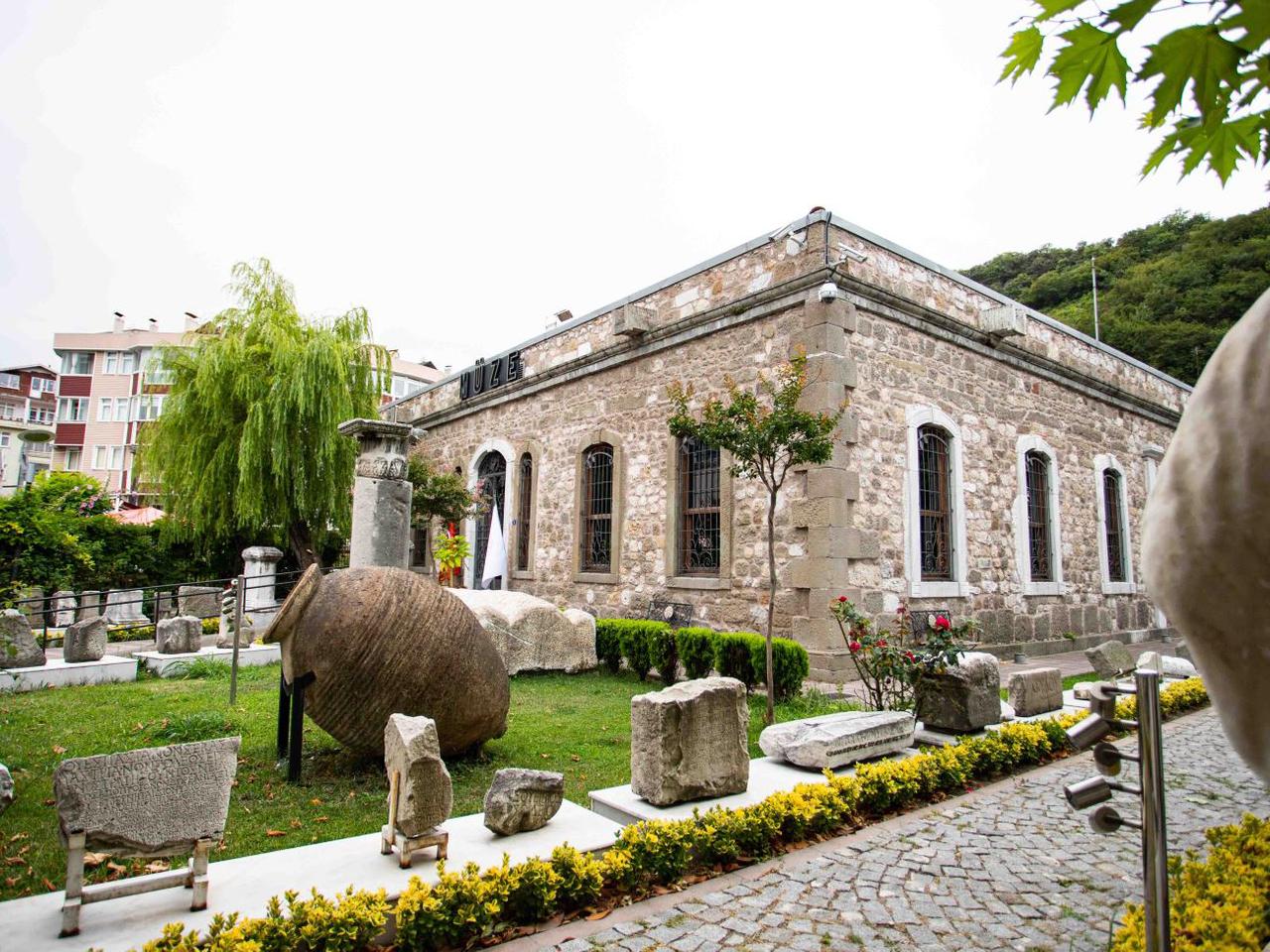
Amasra Museum (Photo Official Turkish Museums)
Reflecting the traditional life, folklore, and handicrafts of the region, the Kemal Samancıoğlu Ethnography Museum attracts visitors with its display of local costumes, tools, household items, and craft examples. The museum hosts important studies aimed at preserving and promoting Bartın’s local culture.
Among Bartın’s natural beauties, Uluyayla Cave, Kemerli Cave, and Gürcüoluk Cave are significant examples of the region’s geological structure.
Reflecting the volcanic past of the region, the Güzelcehisar Lava Columns are natural columns formed as lava cools and solidifies.
Amasra Castle is one of the most important historical structures in the region. With its strategic location, the castle bears traces of various civilizations; its remnants include structural features from both the Ottoman and Byzantine periods.
Kuşkayası Road Monument is a unique structure that sheds light on Bartın’s transportation and engineering history. Carved into the rock, this monument symbolizes the transportation challenges and engineering achievements experienced by the region throughout its history, serving as an important landmark that captures visitors’ attention along the road.
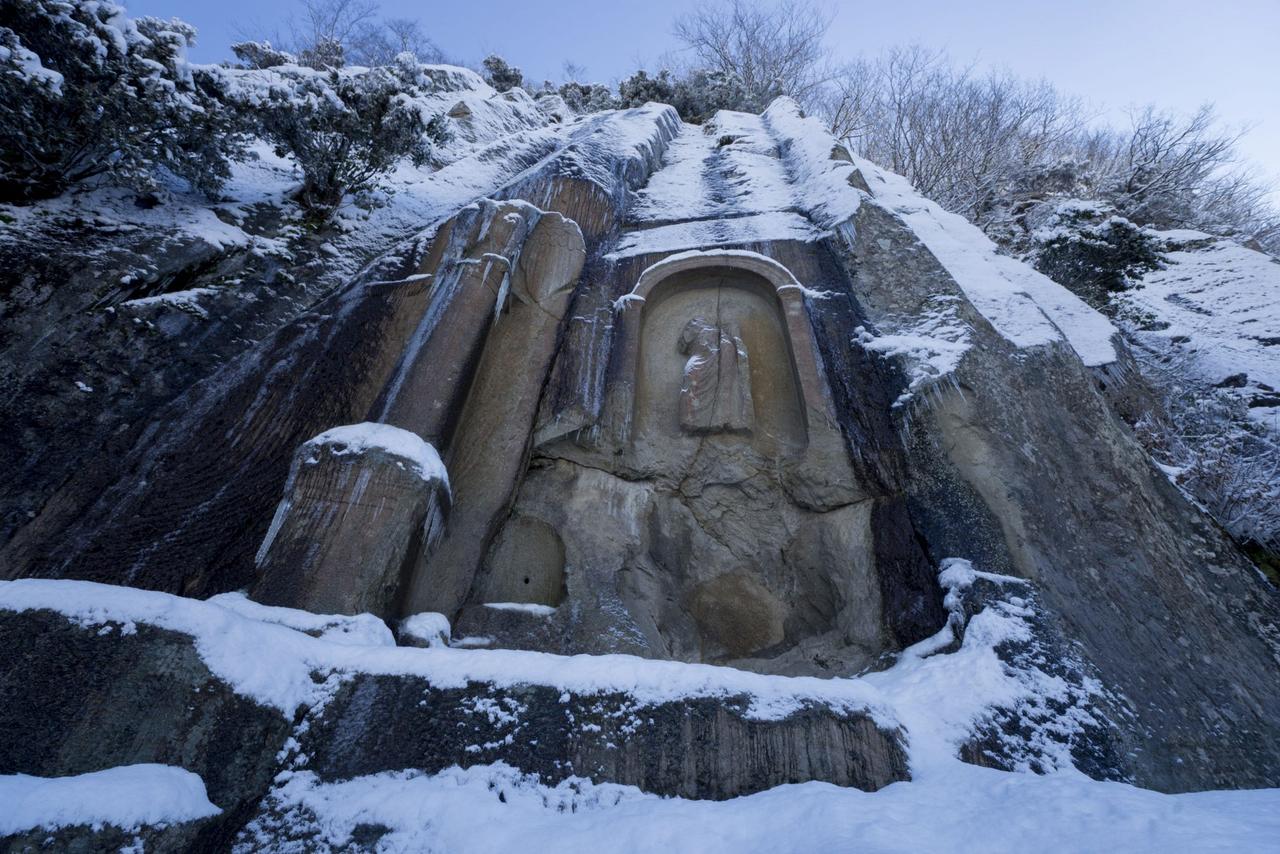
Kuşkayası Road Monument (Photo: Batı Karadeniz)
Amasra Ancient Theater, located in the Amasra district, is a historical structure dating back to the Roman period. The theater, positioned on the southern slope of Mount Aya Yorgi, once had an audience capacity of approximately 5,000 people. Unfortunately, over time the seating arrangement and stage area have fallen into ruin. Today, the area where the ancient theater once stood has been used as a cemetery since the 19th century, and the site is now primarily known by that function. The structure in Kum Mahallesi has survived only with remnants of its entrance gate. Throughout its history, it has hosted numerous artifacts from the Hellenistic, Archaic, Classical, Roman, Byzantine, Genoese, Seljuk, and Ottoman periods.
Imbued with the historical texture of Bartın, Halilbey Mosque is known locally as the “Upper Mosque.” This building, which bears traces of traditional Ottoman architecture, is situated in the higher part of the city.
Located in Bartın’s bazaar, İbrahimpaşa Mosque is also known as the “Middle Mosque.” With its architectural features and functional spaces, it plays an important role in Bartın’s social and cultural life. Through its historical background and regular restoration efforts, this mosque contributes to the preservation of local heritage.
Known locally as “Şadırvan Mosque” or “Lower Mosque,” this structure is notable for its preservation of şadırvan (fountain) architecture and the surrounding public spaces. It is said to have been built with funds collected from the people.
Built within the boundaries of Amasra Castle in the 9th century, this structure initially served as a Byzantine church. In 1460, during Fatih Sultan Mehmet’s conquest of Amasra, the building was converted into a mosque, marking the beginning of its new era. The building retains architectural characteristics of its period of construction and has reached the present day following a restoration in 1887. Today, at Fatih Mosque, as an unusual practice not seen in other mosques, the Friday sermon is delivered while drawing a sword.
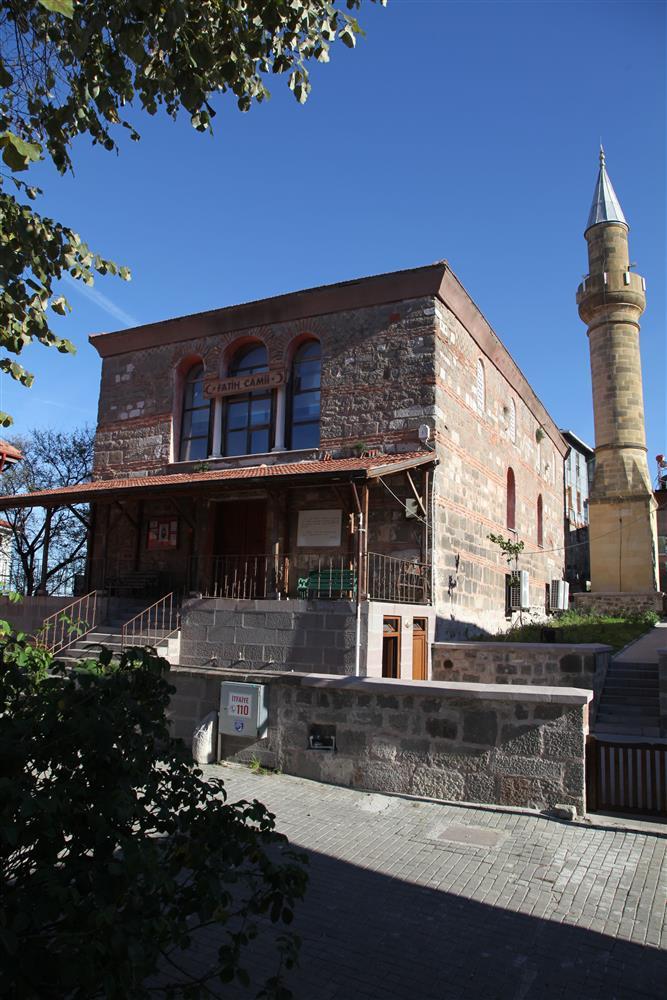
Fatih Mosque (Photo: Bartın Kültür ve Turizm Bakanlığı fotoğraf galerisi)
Aya Nikolas Church, dating from the Byzantine period, is a testament to the region’s multicultural heritage. During the conquest of Amasra in 1460, it was converted into a mosque by Fatih Sultan Mehmet.
Located in the ancient area of Amasra, the Küçüktepe Martyrdom commemorates historical events of the region and serves as a memorial.
Due to its location along the Black Sea coast, Bartın is home to various natural beaches. Particularly, the Amasra district stands out with its clean sea, natural beach areas, and unique scenery. The beaches in the region provide an ideal setting for swimming, water sports, and relaxation. These coastal zones, which hold strategic importance for tourism, not only invigorate the local economy but also offer a holiday experience immersed in nature.
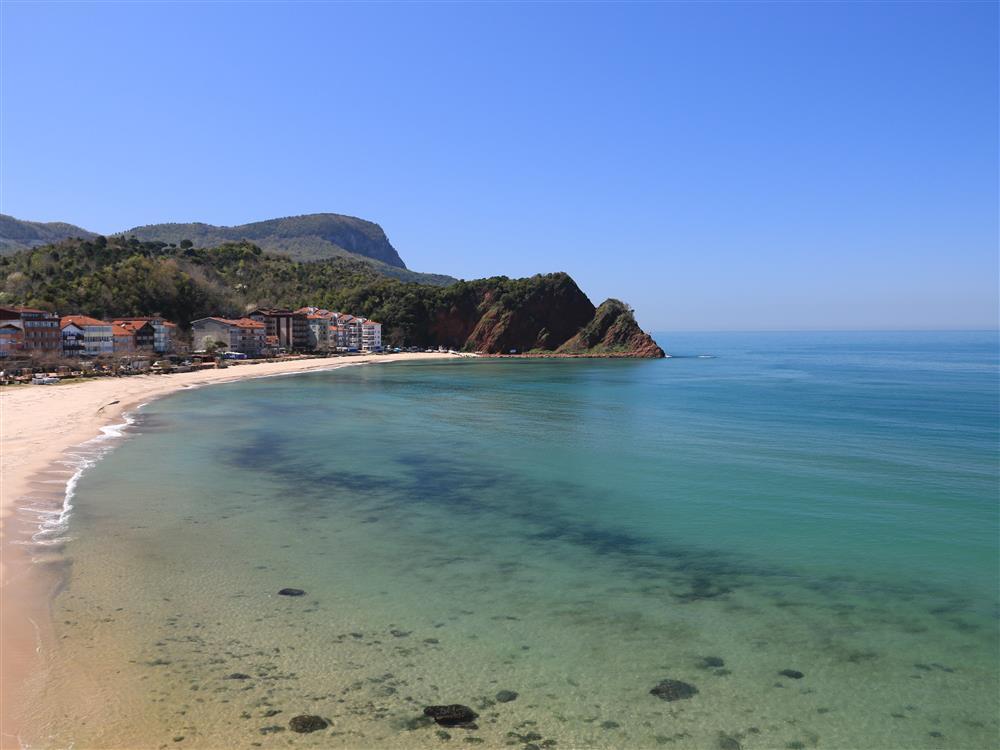
Çakrazşeyhler Beach (Photo: Bartın Kültür ve Turizm Bakanlığı fotoğraf galerisi)
Galla Market is a historic market that reflects Bartın’s traditional commercial life and signifies the region’s cultural heritage. For years, this market has been a center of economic activity and social interaction, where local women display their handmade products, regional foods, and craft items. Galla Market offers visitors the opportunity to experience Bartın’s local lifestyle and the continuity of traditional commerce up close.
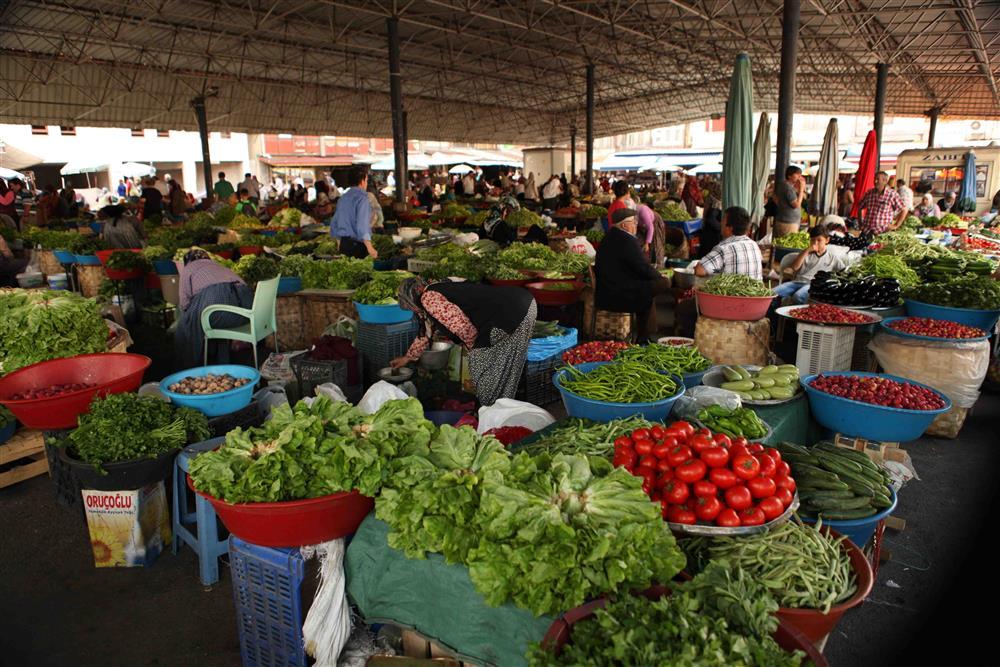
Galla Market (Photo: Bartın Kültür ve Turizm Bakanlığı fotoğraf galerisi)
Amasra Salad reflects the local cuisine of Amasra and is prepared using fresh seasonal vegetables. Common recipes feature chopped tomatoes, cucumbers, peppers, onions, and parsley. The salad’s flavor is enhanced with simple ingredients such as olive oil, lemon juice, and salt. On top, carefully shaped and decorative slices of carrots, radish, and cucumber are used, adding visual appeal to the dish.
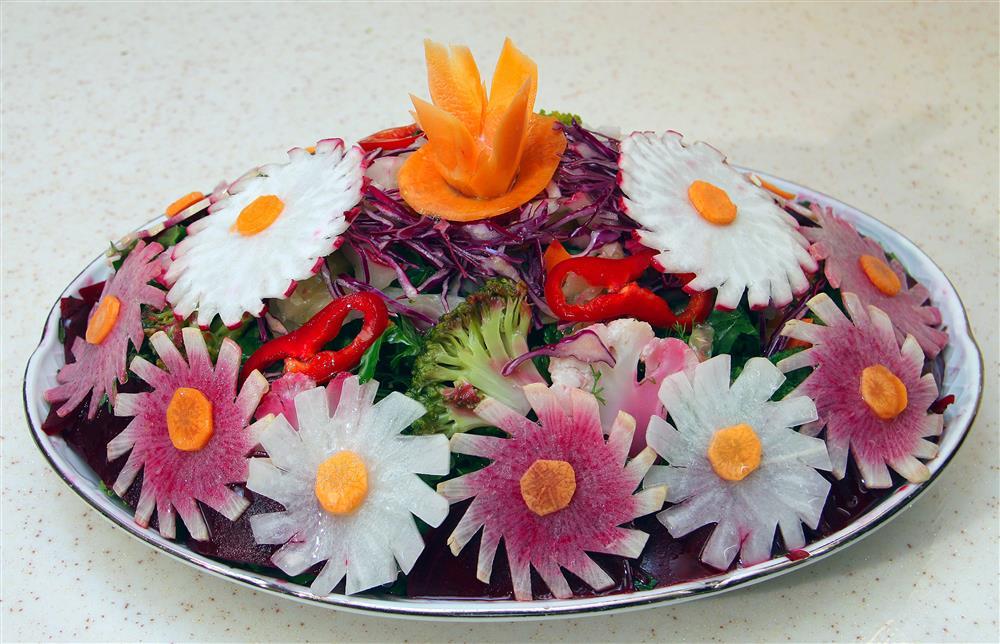
Amasra Salad (Photo: Bartın Kültür ve Turizm Bakanlığı fotoğraf galerisi)
Eggs with Isbut is one of the prominent local dishes of Bartın. Widely enjoyed by the locals, this dish is prepared using isbut herbs grown in Bartın. First, the isbut herbs are meticulously cleaned and boiled in a pot. Once boiled, fresh eggs, chopped tomatoes, and peppers are added to the drained herbs. The dish is served both as a main course and as an appetizer.
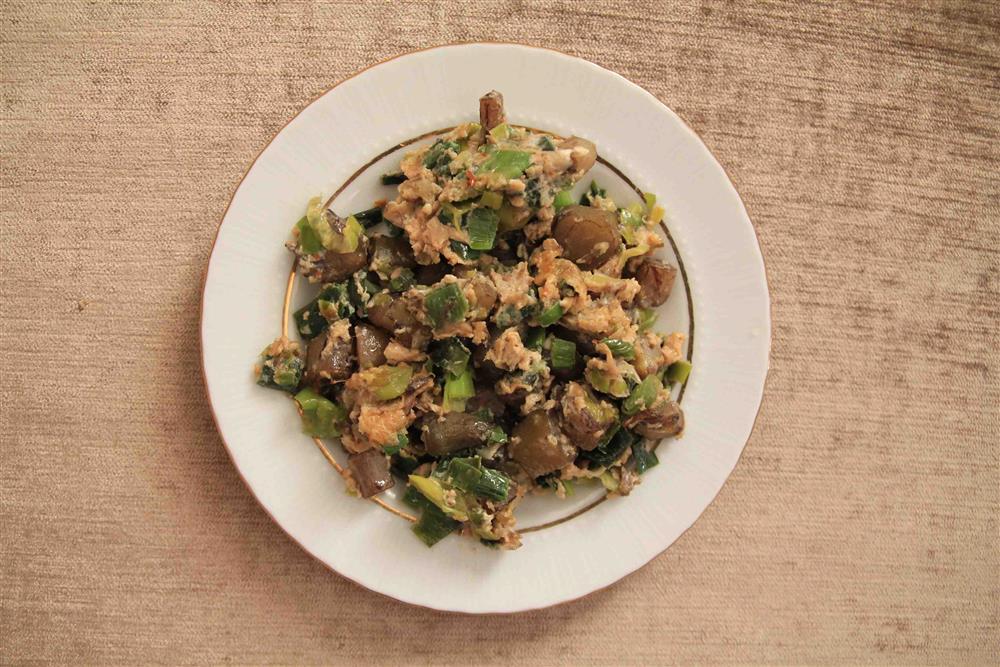
Eggs with Isbut (Photo: Bartın Kültür ve Turizm Bakanlığı fotoğraf galerisi)
Şap Köfte, one of the unique flavors of Bartın’s cuisine, is a type of meatball prepared with local ingredients and traditional techniques. Typically made with beef or a mixture of meats, the meatball dough is kneaded with finely chopped onions, garlic, and local spices.
Bartın Stuffed Pumpkin is a light and unique dessert made using pumpkin and walnuts. According to historical sources from the region, after the weekly bread was baked in the small ovens in every household’s garden, this dessert was also prepared in those same ovens. Bartın’s climatic conditions, which favor the production of pumpkin and walnuts, have enabled this dessert to be passed down from generation to generation and produced as an indispensable flavor of the local cuisine for many years.
Rice-Stuffed Manti is a variation of the classic meat-filled dumplings with the addition of rice. A filling made of pre-roasted rice, minced meat, onions, and spices is placed inside thinly rolled dough. The small pieces are then sealed and baked in the oven.
Amasra Pide derives its name from the famous Amasra district. This type of pide is prepared with fresh vegetables and cheese products available daily. The selection of organic and natural ingredients gives the pide its distinctive taste. As one of the most consumed flavors in the region, Amasra Pide is one of the most important representations of the local culinary culture.
Established in 2008, Bartın University is one of the most important higher education institutions in the region, offering academic education through various faculties, institutes, and research centers, and providing quality educational opportunities to the local young population. Across the province, public and private schools are supported by modern educational techniques and infrastructure investments, contributing to the improvement of education quality and the strengthening of employment in the region.
Thanks to its strategic location along the Black Sea coast, Bartın is an important transit point for land, sea, and waterway transportation.
Nurtaç ARSLAN is currently serving as the active Governor in Bartın. He was appointed as the Governor of Bartın by the Presidential Decree published in the Official Gazette on 12 May 2022, numbered 2022/209.
Bartın Kültür ve Turizm Bakanlığı. “Bartın Adının Kaynağı.” Son erişim: 10 Şubat 2025. https://bartin.ktb.gov.tr/TR-68970/bartin-adinin-kaynagi.html
Bartın Kültür ve Turizm Bakanlığı. “Tarihçe.” Son erişim: 11 Şubat 2025. https://bartin.ktb.gov.tr/TR-68969/tarihce.html
Bartın Kültür ve Turizm Bakanlığı. “İklim.” Son erişim: 11 Şubat 2025. https://bartin.ktb.gov.tr/TR-68966/iklim.html
Bartın Kültür ve Turizm Bakanlığı. “Bitki Örtüsü.” Son erişim: 11 Şubat 2025. https://bartin.ktb.gov.tr/TR-68967/bitki-ortusu.html
Bartın Kültür ve Turizm Bakanlığı. “Coğrafya.” Son erişim: 11 Şubat 2025. https://bartin.ktb.gov.tr/TR-68965/cografya.html
Bartın Kültür ve Turizm Bakanlığı. “Amasra.” Son erişim: 11 Şubat 2025. https://bartin.ktb.gov.tr/TR-68972/amasra.html
Karadeniz Doğa Gözlem Derneği. Bölgesel Fauna Araştırmaları. Trabzon: KDG Derneği Yayınları, 2021.
Özkazanç, N. K. (2016). Biyolojik Mücadelede Kuşların Önemi Ve Bartın İlinde Tespit Edilen Böcekçil Kuş Türleri. Bartın Orman Fakültesi Dergisi, 18(2), 55-64. https://doi.org/10.24011/barofd.238732
Nuri Kaan, Ozkazanc. “Biyolojik Mücadelede Kuşların Önemi Ve Bartın İlinde Tespit Edilen Böcekçil Kuş Türleri.” Son erişim: 11 Şubat 2025. https://www.researchgate.net/publication/313284716_Biyolojik_Mucadelede_Kuslarin_Onemi_Ve_Bartin_Ilinde_Tespit_Edilen_Bocekcil_Kus_Turleri
Nufusu. “Bartın İlçeleri Nüfusu.” Son erişim: 11 Şubat 2025. https://www.nufusu.com/ilceleri/bartin-ilceleri-nufusu
Metin, Tuncel. “Bartın.” İslam Ansiklopedisi. Son erişim: 11 Şubat 2025. https://islamansiklopedisi.org.tr/bartin
Bartın Kültür ve Turizm Bakanlığı. “Genel bilgiler.” Son erişim: 11 Şubat 2025. https://bartin.ktb.gov.tr/TR-68963/genel-bilgiler.html
TARIM ve KÖYİŞLERİ BAKANLIĞI, BARTIN TARIM İL MÜDÜRLÜĞÜ. İL TARIM ve KIRSAL KALKINMA MASTER PLANLARININ HAZIRLANMASINA DESTEK PROJESİ, BARTIN TARIM MASTER PLANI. 2005.
Çelikyay, S., Cengiz, S., & Görmüş, S. (2015). Coğrafi Bilgi Sistemleri ile Bartın İli’nin Arazi Kullanım Uygunluk Analizi. Bartın Orman Fakültesi Dergisi, 17(25), 73-81.
Bartın Kültür ve Turizm Bakanlığı. “Kurucaşile Taş Sacı.” Son erişim: 11 Şubat 2025. https://bartin.ktb.gov.tr/TR-340223/kurucasile-tas-saci.html
Bartın Kültür ve Turizm Bakanlığı. “Fotoğraf Galerisi.” Son erişim: 11 Şubat 2025. https://bartin.ktb.gov.tr/TR-69036/fotograf-galerisi.html
Bartın Kültür ve Turizm Bakanlığı. “Camiler ve Kiliseler.” Son erişim: 11 Şubat 2025. https://bartin.ktb.gov.tr/TR-69017/camiler-ve-kiliseler.html
T.C Bartın Valiliği. “Görev Yapmış Valililer.” Son erişim: 11 Şubat 2025. http://www.bartin.gov.tr/gorev-yapmis-valililer
Türkiye Kültür Portalı. Pirinçli Bartın Mantısı - Bartın. Son erişim: 11 Şubat 2025. https://www.kulturportali.gov.tr/turkiye/bartin/neyenir/prncl-bartin-mantisi
T.C. AMASRA KAYMAKAMLIĞI. “Amasra Salatası ve Balık.” Son erişim: 11 Şubat 2025. http://www.amasra.gov.tr/amasra-salatasi-ve-balik#:~:text=Genellikle%20en%20alta%20marul%2C%20so%C4%9Fan,s%C4%B1zma%20zeytinya%C4%9F%C4%B1%20ile%20salata%20tamamlan%C4%B1yor
Gezinomi. “Bartın’ın Meşhur Yemekleri ve Restoranları.” Son erişim: 11 Şubat 2025. https://www.gezinomi.com/gezi-rehberi/bartin-in-meshur-yemekleri-ve-restoranlari.html#:~:text=Amasra%20pidesi%2C%20ad%C4%B1n%C4%B1%20Amasra%20il,en%20%C3%A7ok%20t%C3%BCketilen%20lezzetler%20aras%C4%B1ndad%C4%B1r
Özhan, Öztürk. “Bartın Tarihi (Parthenius, Oniki Divan).” Son erişim: 12 Şubat 2025. https://ozhanozturk.com/2018/01/06/bartin-tarihi/#_ftn16
Fatma, Bağdatlı, Cam. “ANTİK DÖNEMDE BARTIN/PARTHENIA.” Son erişim: 12 Şubat 2025. https://www.researchgate.net/publication/323617415_ANTIK_DONEMDE_BARTINPARTHENIA
Amo, Fifty (6 Şubat 2023). a view of a city from across the water [JPG]. Unsplash. Erişim adresi: https://unsplash.com/photos/a-view-of-a-city-from-across-the-water-DrMD9CccJBk
Jorge Franganillo. Amasra (Bartın, Turkey) [JPG].Flickr. Erişim adresi: https://flic.kr/p/fbHfc1
Batı Karadeniz. Bartın Irmağı [JPG]. Erişim adresi: https://batikaradeniz.gov.tr/?p=3154
Miller_Eszter (28 Kasım 2019). Vaşak, Orman, Doğa görseli. [JPG]. Pixabay. Erişim adresi: https://pixabay.com/tr/photos/va%C5%9Fak-orman-do%C4%9Fa-y%C4%B1rt%C4%B1c%C4%B1-canavar-4656312/
Orijinal Frame. Bartın [JPG]. Pexels. Erişim adresi: https://www.pexels.com/tr-tr/fotograf/alan-tarla-saha-yemek-yiyor-13984843/
T.C. BARTIN VALİLİĞİ. Tel kırma [JPG]. Erişim adresi: http://www.bartin.gov.tr/tel-kirma
Turkish Museums. Bartın Amasra Müzesi [JPG]. Erişim adresi: https://turkishmuseums.com/museum/detail/1995-bartin-amasra-muzesi/1995/1
Amasra sofrası. Amasra pidesi [JPG]. Erişim adresi: https://amasrasofrasi.com.tr/menu/amasra-pide
Sharkolot (28 Kasım 2022). Avrasya sıvacı kuşu, Kuş, Hayvan görseli JPG]. Pixabay. Erişim adresi: https://pixabay.com/tr/photos/avrasya-s%C4%B1vac%C4%B1-ku%C5%9Fu-ku%C5%9F-hayvan-7618589/
Türkiye İstatistik Kurumu. https://cip.tuik.gov.tr/

Bartın
Country | Türkiye | ||||||||
|---|---|---|---|---|---|---|---|---|---|
Region(s) | Black Sea | ||||||||
Area(s) | 2.120 Km² | ||||||||
Population | 207.634 | ||||||||
Climate(s) | Mild maritime climate (Black Sea climate) | ||||||||
License Plate | 74 | ||||||||
Area Code(s) | 378 | ||||||||
Mayor(s) | Muhammet Rıza Yalçınkaya | ||||||||
Governor(s) | Dr. Nurtaç ARSLAN | ||||||||
Districts | Kurucaşile Ulus Amasra Merkez | ||||||||
Important Structure(s) | Amasra Ancient Theater Kuşkayası Road Monument Amasra Museum Amasra Castle | ||||||||
Henüz Tartışma Girilmemiştir
"Bartın (Province) " maddesi için tartışma başlatın
Etymology
History
Ancient Period and Early Settlements
Roman and Byzantine Periods
Bartın in the Ottoman Period
Bartın in the Republican Period
Geography
Location and Borders
Climate
Vegetation
Landforms
Water Resources
Wildlife
Demographic Structure
Population Count (2024)
Districts
Amasra
Ulus
Kurucaşile
Economy
Agriculture and Livestock
Mining and Forestry
Commerce and Industry
Bartın within the Zonguldak, Bartın, Karabük Regional Development Project (ZBKP)
Culture and Tourism
Traditional Handicrafts
Bartın-Style Wire Weaving and Wire Twisting
Kurucaşile Stone Sheet
Wood Carving
Touristic Attractions
Çekiciler Bazaar
Gazhane Park
Bartın City Museum
Amasra Museum
Kemal Samancıoğlu Ethnography Museum
Uluyayla Cave, Kemerli Cave, and Gürcüoluk Cave
Güzelcehisar Lava Columns
Amasra Castle
Kuşkayası Road Monument
Amasra Ancient Theater
Mosques and Churches
Halilbey Mosque (Upper Mosque)
İbrahimpaşa Mosque (Middle Mosque)
Şadırvan Mosque (Lower Mosque)
Fatih Mosque
Aya Nikolas Church
Amasra Küçüktepe Martyrdom
Beaches
Galla Market
Flavors
Amasra Salad
Eggs with Isbut
Şap Köfte
Stuffed Pumpkin
Rice-Stuffed Manti
Amasra Pide
Education
Transportation and Infrastructure
Local Administration
Governor
Former Governors