

Bu içerik Türkçe olarak yazılmış olup yapay zeka ile otomatik olarak İngilizceye çevrilmiştir.
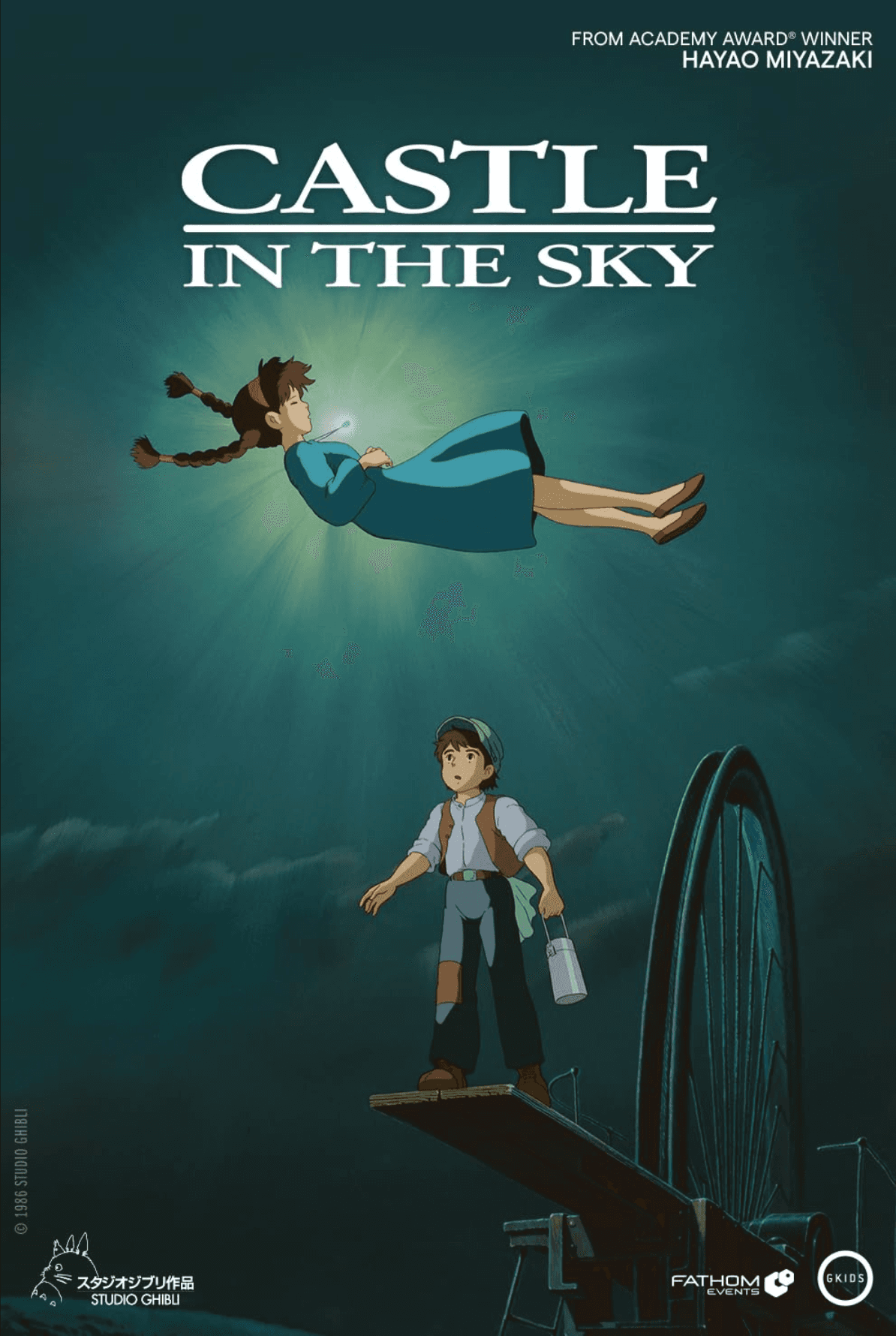
Castle in the Sky (Tenkū no Shiro Rapyuta) is a feature-length animated film produced by Studio Ghibli and released in Japan in 1986, with Hayao Miyazaki serving as both director and screenwriter. The film, originally in Japanese, is regarded as one of the classics of anime cinema for its blend of family, adventure, fantasy, and science fiction elements. It was released in Türkiye on 6 July 2007. The film has a runtime of 124 minutes and was produced by Tokuma Shoten and Studio Ghibli.
Castle in the Sky Trailer (NIHONOMARU)
The film is set in a distant future where humanity has built floating cities in the sky. After a great catastrophe, most of these cities are destroyed, forcing people to return to the earth. The last remaining city in the sky is Laputa. The story begins when Sheeta, a young girl, escapes an air pirate attack thanks to a magical stone she carries.
After falling from the sky and landing on earth, Sheeta meets Pazu, a brave boy who works in a mine. Together, they embark on an adventurous journey to find the legendary floating island of Laputa, linked to Sheeta’s stone. Throughout the film, Sheeta and Pazu confront treasure hunters, the military, and government agents, discovering themes of friendship, courage, and respect for nature.
The relationships among these characters form a dramatic structure that explores human emotions as well as themes of power and greed.
Castle in the Sky is the first official feature-length production by Studio Ghibli, established by Hayao Miyazaki after his film Nausicaä of the Valley of the Wind. The film was created using traditional hand-drawn techniques and is considered one of the earliest examples of steampunk aesthetics. Its visual world features colossal airships, intricate machines, floating islands, and imagery symbolizing the relationship between nature and humanity.
The film’s music was composed by Joe Hisaishi, Miyazaki’s long-time collaborator. Hisaishi’s piece “Kimi wo Nosete” (Carrying You) has become the film’s most iconic theme and has achieved classic status in the history of Japanese animation music. The film’s color palette, drawing style, detailed hand-painted backgrounds, and character animation are particularly notable.

Scene from the Film (IMDb)
The film is not merely an adventure story but also a philosophical narrative on humanity’s relationship with technology, environmental destruction, and the corrupting influence of power. Laputa is presented on one hand as a symbol of scientific progress, and on the other as a representation of the destructive potential of uncontrolled technology.
The friendship between Sheeta and Pazu symbolizes humanity’s desire to live in harmony with nature. While promoting themes of peaceful coexistence and respect for the environment, the film carries a dystopian critique of those who wield power destructively.
In the original Japanese version, the roles were voiced by Mayumi Tanaka (Pazu), Keiko Yokozawa (Sheeta), Kotoe Hatsui (Dola), and Minori Terada (Muska). In 1999, Walt Disney Company produced an English-language dub of the film, which was released on DVD in 2003. The English dub features voice actors such as James Van Der Beek, Anna Paquin, Mark Hamill, Cloris Leachman, and Mandy Patinkin.
Due to the Spanish meaning of “Laputa” as “prostitute,” the Disney version was released under the title Castle in the Sky alone.
The film premiered in Japan in 1986 and was subsequently shown in cinemas and on television in various countries at different times. Its release in Türkiye occurred on 6 July 2007. The film’s estimated budget was $3.3 million, and its worldwide box office revenue amounted to approximately $6.4 million.
Castle in the Sky is one of the foundational works that shaped Studio Ghibli’s identity. The film has inspired numerous subsequent anime and Western animated productions through its steampunk aesthetics, flying machines, and ecological sensitivity. Additionally, the concept of Laputa was inspired by the flying island in Jonathan Swift’s Gulliver’s Travels; however, Miyazaki has stated that he was unaware of the Spanish meaning of the name when he chose it.
The film’s final scene, in which Laputa remains in orbit after its destruction, has been interpreted as a visual metaphor for the transience of human civilization in the face of nature.
Beyazperde. "Laputa: Castle in the Sky." Beyazperde. Accessed October 11, 2025. https://www.beyazperde.com/filmler/film-40133/.
IMDb. “Laputa: Castle in the Sky (1986).” IMDb. Accessed October 11, 2025. https://www.imdb.com/title/tt0092067/?ref_=ttmi_ov_i.
Ministry of Culture and Tourism. "Laputa: Castle in the Sky." Film Classification. Accessed October 11, 2025. https://filmsiniflandirma.ktb.gov.tr/detail/laputa-castle-in-the-sky-.
NIHONOMARU. "Castle in the Sky: Trailer." YouTube. Accessed October 11, 2025. https://www.youtube.com/watch?v=FWjiXOqRKhk.

Henüz Tartışma Girilmemiştir
"Castle in the Sky (Film)" maddesi için tartışma başlatın
Plot and Story
Characters
Production and Technical Features
Themes and Layers of Meaning
Languages and Versions
Release and Achievements
Cultural and Artistic Legacy