


Bu içerik Türkçe olarak yazılmış olup yapay zeka ile otomatik olarak İngilizceye çevrilmiştir.
+2 Daha
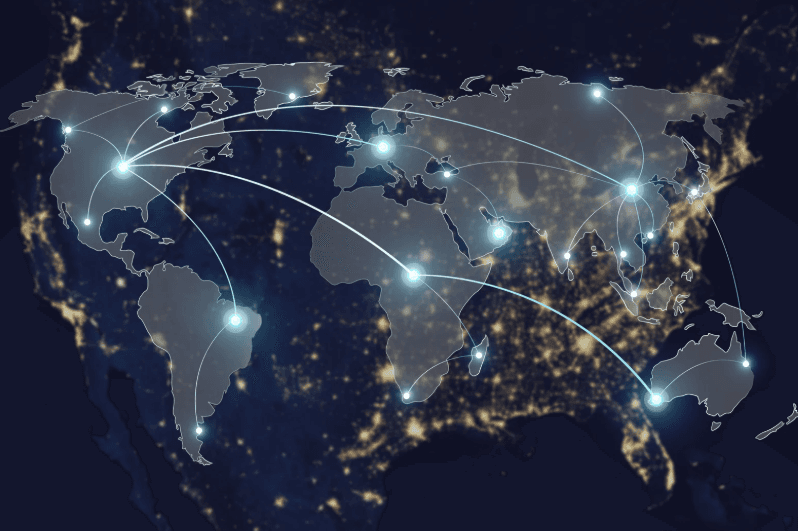
(Yapay Zeka ile Oluşturulmuştur)
Country Codes are sequences of letters or numbers used to identify, classify, and facilitate communication regarding countries and regions at international or national levels. These codes were developed to ensure standardization and comparability across various fields.
The emergence of country codes is directly linked to the development of international trade, diplomatic relations, and communication technologies. By the late 19th century, the widespread adoption of postal and telegraph networks created a need for rapid identification of countries and regions. Particularly in maritime and port operations, standard short codes began to be used for ship routing and loading-unloading procedures.
In 1947, the United Nations Statistical Commission launched the first initiatives aimed at standardizing numerical and alphanumeric identifiers for countries and regions. These systems were developed to enhance the international comparability of economic and demographic data. In the 1950s, the International Telecommunication Union (ITU) began implementing a country-based coding system in telephone numbering plans, enabling error-free routing of international calls.【1】

ISO Standards Infographic (Generated by Artificial Intelligence)
In the 1960s, the ISO (International Organization for Standardization) developed the ISO 3166 standard to align country codes with international standards. ISO 3166-1 codes include the widely used two-letter (Alpha-2), three-letter (Alpha-3), and numeric formats. The standard has established a universal reference framework for international trade, finance, data management, and internet applications.【2】
In the late 1990s and 2000s, the proliferation of the internet and rapid digitization necessitated the electronic use of country codes and their integration into domain name systems. As a result, ISO codes became more functional in areas such as ccTLD (country code Top-Level Domain) and currency codes.
The primary reason for developing country codes is to facilitate standardization and data management at international and national levels. These codes emerged to reduce information inconsistencies across fields and to enhance the security of global communication networks.
Country codes provide a unique identity for each nation, preventing confusion among international institutions, commercial enterprises, and governments. Organizations such as the United Nations and the World Bank rely on standardized coding systems to make economic and demographic data comparable.
Standards such as ISO 3166 enable the systematic collection and analysis of national and international statistics. For instance, data on financial markets, trade volumes, and population censuses are easily classified and compared using country codes.
ISO Standards (Szutest Türkiye)
Rapid and accurate identification is essential in fields such as telephony, postal services, the internet, and logistics. International telephone codes, email domain names, and port/cargo codes have been standardized to meet this need. In customs, diplomacy, and international agreements, countries must be officially recognized. Codes express national identity in a concise and standardized format in documents and procedures, enhancing legal compliance.
In international trade and finance, country codes play a critical role in payment systems, currency identification, and customs procedures. These codes ensure that transactions are correctly associated with the appropriate country, reducing economic risks.
In global health, disaster, and diplomatic coordination efforts, country codes enable rapid data sharing. For example, the World Health Organization (WHO) and the International Committee of the Red Cross use codes to facilitate aid coordination during crises.
Country codes are classified into various types and categories based on their applications and international standards. This classification ensures standardization across different disciplines and sectors.
The ISO 3166 standard, developed by the International Organization for Standardization (ISO), serves as the primary reference system for coding countries. ISO 3166 codes are presented in three main types:
ISO codes ensure data consistency in international comparisons of countries and regions and are critical for economic, demographic, and logistical analyses.
International telephone codes are numeric identifiers used to define countries’ telecommunication networks globally and to ensure correct routing of international calls. The E.164 numbering plan, established by the ITU, defines the global standard structure for telephone numbers and forms the basis for international country codes.
International telephone numbers generally follow this structure:
+ [Country Code] [Area Code] [Subscriber Number]
The “+” symbol represents the international dialing prefix. Different countries may have different prefixes. The country code determines the destination of the call.
The allocation of telephone codes is based on specific technical and historical criteria.
The coding system established by the ITU follows these principles:
Table: Regional Code Groups
Thanks to this system, international telecommunication networks can quickly and accurately determine the destination of a call. This ensures standardization within the global communication infrastructure and minimizes routing errors.
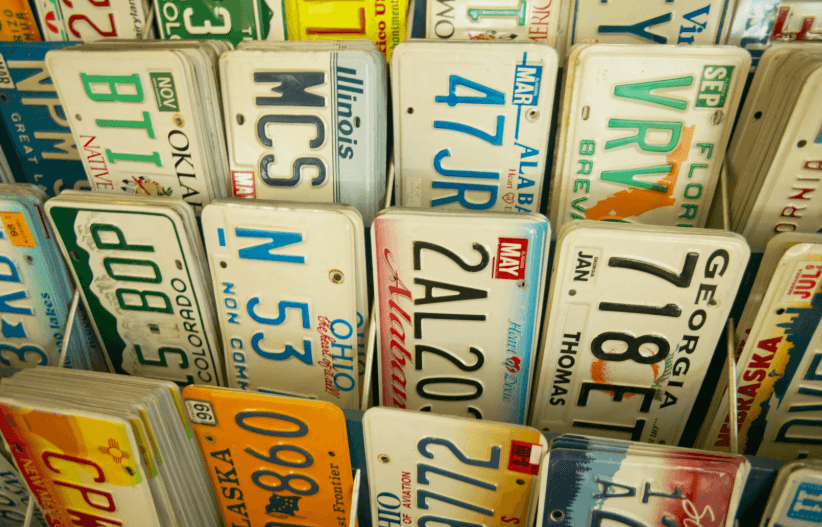
Vehicle Codes (Generated by Artificial Intelligence)
Vehicle codes used in international road traffic indicate the country of registration of a vehicle. These codes are particularly used in international transport and traffic enforcement.
Examples:
The ISO 4217 standard provides a three-letter code system for identifying national currencies. These codes ensure consistency in international financial transactions, banking systems, and e-commerce.
Examples:
Country Code Top-Level Domain (ccTLD) systems allow countries to define their own domain names on the internet. These codes identify national identity in the digital environment and provide a standardized reference for domain management.
Examples:
ICAO (International Civil Aviation Organization) and IATA (International Air Transport Association) codes are used by airlines and port authorities. These codes play a critical role in flight planning, air traffic control, and international maritime transport.
In Türkiye, country codes are used across a wide range of fields at both national and international levels. Their use has been widely adopted by both government institutions and the private sector for data standardization, communication, and international interaction.
According to ITU standards, Türkiye’s telephone code is +90. This code is used to ensure correct routing and error-free communication in international calls. Fixed and mobile lines in Türkiye connect internationally through this code, enabling management of international telephony traffic.
The ISO 3166-1 Alpha-2 code TR is used internationally as the identifier for Türkiye in postal and cargo operations. In international shipments, customs documentation, and logistics processes, the code clearly denotes national identity. Ports and airports also use the TR code to facilitate cargo and shipment tracking in international transport.
For the Turkish Lira, the ISO 4217 standard assigns the code TRY. This code plays a critical role in banking operations, foreign exchange markets, and international financial reporting. Electronic payments and international money transfers via the SWIFT system in Türkiye are standardized using this code.
Türkiye’s country code top-level domain (ccTLD) .tr represents the national digital identity and links websites to Türkiye. E-commerce platforms and government electronic services enhance user and data security by using Türkiye-specific domain codes.

Turkish Statistical Institute (TÜİK) - (Anadolu Ajansı)
In Türkiye, ISO codes are widely used in statistical and academic research. The TÜİK (Turkish Statistical Institute) uses ISO 3166-1 codes as a standard reference framework in its published reports on population, economy, and social indicators. This enables international comparison of data and integration of Türkiye into the global statistical system.【4】
Türkiye uses coding systems for international data exchange in health, education, and diplomacy. For example, in data exchanges with the World Health Organization (WHO) and United Nations programs, Türkiye uses the TR code, facilitating coordination in emergency management.
Country codes are among the fundamental tools that ensure information and communication are conducted in an orderly and secure manner in an increasingly globalized world. These codes create a universal language across sectors and disciplines and contribute to the effective functioning of international systems.
"ISO‑3166 and Other Country Codes." ResearchGate. Accessed March 16, 2026. https://www.researchgate.net/publication/301138320_ISO-3166_and_Other_Country_Codes.
Anadolu Ajansı. "TÜİK: Fiyat İstatistikleri Danışma Kurulu Oluşturuldu." February 2, 2021. Accessed March 16, 2026. https://www.aa.com.tr/tr/ekonomi/tuik-fiyat-istatistikleri-danisma-kurulu-olusturuldu/2131271
Holliday, Adrian, Martin Hyde, and John Kullman. *Intercultural Communication: An Advanced Resource Book*. London & New York: Routledge, 2021. Accessed March 16, 2026. https://turan-edu.uz/media/books/2024/05/27/1holliday_a_hyde_m_kullman_j_intercultural_communication_an_a.pdf
International Organization for Standardization. *ISO 1974:2012 — Paper — Determination of Tearing Resistance — Elmendorf Method*. 4th ed. Geneva: ISO, 2012. Accessed March 16, 2026. https://cdn.standards.iteh.ai/samples/52430/5de6029bfecb46218e32c76cef1e6875/ISO-1974-2012.pdf
International Organization for Standardization. *ISO 3166-1: Codes for the Representation of Names of Countries and Their Subdivisions—Part 1: Country Codes*. Geneva: International Organization for Standardization, 2020. Accessed March 16, 2026. https://www.iso.org/iso-3166-country-codes.html
International Telecommunication Union. "Digital Collections Records Listing." ITU Library & Archives Digital Collections. Accessed March 16, 2026. https://www.itu.int/library-archives/digitalcollections/records/listing?search=&sort=-Title,-Journal_Title,-Issue%20Number,_score&perpage=10&page=1&fulltext=1&&refine%5BYear%5D%5B%5D=1960&r&date_field=Date
Lendholt, Matthias. "Addressing Administrative Units in International Tsunami..." *International Journal on Disaster Resilience*, 2012. Accessed March 16, 2026. https://www.tandfonline.com/doi/full/10.1080/17538947.2011.584574
Szutest Türkiye. "ISO 9000 Standart Serisi ve ISO 9001 Nedir?" YouTube video. Accessed March 16, 2026. https://youtu.be/GQ1cgUP588k
Voss, Jakob. "Encoding Changing Country Codes for the Semantic Web with ISO 3166 and SKOS." arXiv, January 25, 2008. Accessed March 16, 2026. https://arxiv.org/abs/0801.3908
[1]
Adrian Holliday, Martin Hyde ve John Kullman, Intercultural Communication: An Advanced Resource Book (London & New York: Routledge, 2021), access date: 16 March 2026, https://turan-edu.uz/media/books/2024/05/27/1holliday_a_hyde_m_kullman_j_intercultural_communication_an_a.pdf
[2]
ISO, ISO 1974:2012 — Paper — Determination of Tearing Resistance — Elmendorf Method, 4th edition, 2012, access date: 16 March 2026, https://cdn.standards.iteh.ai/samples/52430/5de6029bfecb46218e32c76cef1e6875/ISO-1974-2012.pdf
[3]
International Telecommunication Union, “Digital Collections Records Listing,” ITU Library & Archives Digital Collections, access date 16 March 2026, https://www.itu.int/library-archives/digitalcollections/records/listing?search=&sort=-Title,-Journal_Title,-Issue%20Number,_score&perpage=10&page=1&fulltext=1&&refine%5BYear%5D%5B%5D=1960&r&date_field=Date
[4]
Turkish Statistical Institute, “Home Page,” access date 16 March 2026, https://www.tuik.gov.tr/

(Yapay Zeka ile Oluşturulmuştur)
Henüz Tartışma Girilmemiştir
"Country Codes" maddesi için tartışma başlatın
History
Reasons for Development
International Identification and Standardization
Data Management and Statistical Analysis
Communication Convenience and Technological Compatibility
Trade and Financial Functionality
International Cooperation and Disaster Management
Types and Categories
ISO Codes
Telephone Codes
Principles of Telephone Code Assignment
Vehicle Codes
Currency Codes (ISO 4217)
Internet Domain Name Codes (ccTLD)
Aviation and Maritime Codes
Use of Codes in Türkiye
Use in Telephony and Telecommunications
Use in Postal and Logistics Services
Use in Finance and Currency
Use in Internet and Digital Fields
Official and Academic Data Management
International Cooperation and Diplomatic Use