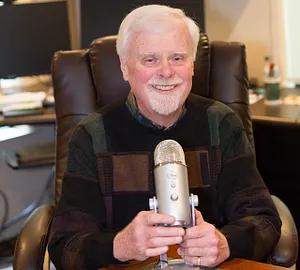



Birth | 19 September 1942 | ||||||||
|---|---|---|---|---|---|---|---|---|---|
Profession(s) | Psychiatrist Author Psychotherapy Trainer | ||||||||
Specialization Area | Cognitive Behavioral Therapy, T.E.A.M. Therapy, Treatment of Depression and Anxiety | ||||||||
Affiliated Institutions | Stanford University School of Medicine University of Pennsylvania School of Medicine | ||||||||
Notable Works | Development of the T.E.A.M. Therapy Model Burns Depression Scale Clinical Research on Depression and Anxiety | ||||||||
David D. Burns is a psychiatrist working in the field of cognitive behavioral therapy. He served as Assistant Clinical Professor in the Department of Psychiatry and Behavioral Sciences at the Stanford University School of Medicine. He is known for his publications clinical research and psychotherapy models.
Burns completed his undergraduate education at Amherst College with honors. He received his medical education at the Stanford University School of Medicine and continued his psychiatric residency at the University of Pennsylvania School of Medicine. He worked as Chief of Psychiatry at Penn Presbyterian Medical Center and served as a Visiting Scholar at Harvard Medical School.
Burns’s work has focused on improving assessment processes in the treatment of depression and anxiety. He developed methods to enable more accurate and rapid evaluation of patient feedback in clinical practice. The T.E.A.M. therapy model he developed consists of four components—Testing Empathy Agenda Setting and Methods—and provides a framework for structuring the therapeutic process.
Burns developed a measurement tool called the Burns Depression Checklist for assessing depression. This scale is used to monitor the severity of depression and evaluate therapeutic progress.
In the early stages of his career Burns focused on the chemical imbalance theory of depression but later questioned the scientific basis of this approach. He contributed to studies challenging the direct link between serotonin levels and depression. In evaluating the effects of antidepressants he emphasized the importance of the placebo effect.
Within the framework of his T.E.A.M. cognitive behavioral therapy approach he examined change processes using data-driven analyses. For many years he conducted online psychotherapy classes and made significant contributions to the training of numerous mental health professionals.
Burns has produced works aimed at both professional and general audiences in the field of mental health. His major books include:
"About." *Feelinggood.Com*. Accessed December 11, 2025. Https://Feelinggood.Com/About/
Anderson, Emily R., and Debra A. Hope. “A Review Of The Tripartite Model For Understanding The Link Between Anxiety AndDepression İn Youth.” *Clinical Psychology Review* 28 (2008): 275–287. Accessed December 13, 2025. Https://Doi.Org/10.1016/J.Cpr.2007.05.004
Buckby, Joe A., Sue M. Cotton, Elizabeth M. Cosgrave, and Others. “A Factor Analytic Investigation Of The Tripartite Model Of Affect İn A Clinical Sample Of Young Australians.” *BMC Psychiatry* 8 (2008): 1-12. Accessed December 11, 2025. Https://Doi.Org/10.1186/1471-244X-8-79
Feeling Good. "Mini Description Of Davids Books As Well As A Comparision Table Below." Feelinggood.Com. Accessed December 11, 2025. Https://Feelinggood.Com/Books/
Penguin Random House. "David D. Burns". Accessed December 11, 2025. Https://Www.Penguinrandomhouse.Com/Authors/70084/David-D-Burns/
Psychwire. "David Burns." Accessed December 11, 2025. Https://Psychwire.Com/Profiles/19405bq/David-Burns

Birth | 19 September 1942 | ||||||||
|---|---|---|---|---|---|---|---|---|---|
Profession(s) | Psychiatrist Author Psychotherapy Trainer | ||||||||
Specialization Area | Cognitive Behavioral Therapy, T.E.A.M. Therapy, Treatment of Depression and Anxiety | ||||||||
Affiliated Institutions | Stanford University School of Medicine University of Pennsylvania School of Medicine | ||||||||
Notable Works | Development of the T.E.A.M. Therapy Model Burns Depression Scale Clinical Research on Depression and Anxiety | ||||||||
Henüz Tartışma Girilmemiştir
"David D. Burns" maddesi için tartışma başlatın
Life and Education
Academic and Clinical Work
Research Areas
Publications
Awards