


Doğum tarihi | 1889-11-20 | ||||||||
|---|---|---|---|---|---|---|---|---|---|
Eş | Grace Burke (b. 1924–1953) | ||||||||
Ölüm tarihi | 1953-09-28 | ||||||||
Discoveries | 1373 Cincinnati, C/1937 P1 | ||||||||
Awards Received | Order of Merit of the United States, Gold Medal of the Royal Astronomical Society, Benjamin Franklin Medal, Bruce Medal | ||||||||
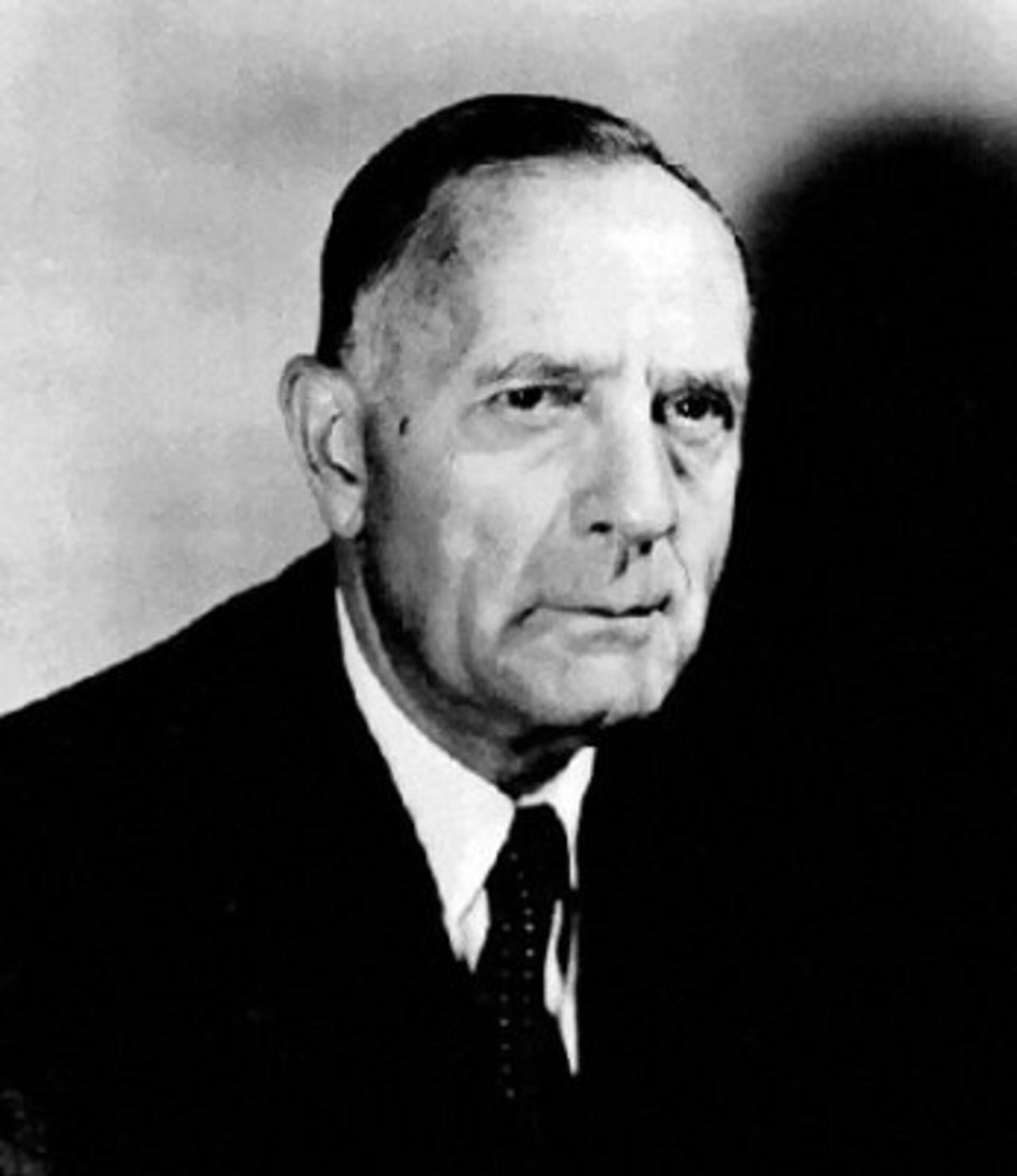
Edwin Powell Hubble was an American astronomer and mathematician regarded as one of the foundational figures of modern astronomy. His observational studies on the structure and expansion of the universe played a critical role in shaping 20th century cosmology.

Edwin Hubble. (ESA)
Edwin Hubble was born on 20 November 1889 in Marshfield, Missouri. His family belonged to the middle class and placed great importance on education and academic achievement. Hubble’s childhood unfolded in an environment intertwined with science and sports; he demonstrated success in both athletic and academic domains from an early age.
Hubble completed his undergraduate studies in philosophy at the University of Chicago, after which he traveled to the University of Oxford on a Rhodes Scholarship.
At Oxford, he studied law and English literature. During this period, Hubble developed his interdisciplinary thinking and applied his analytical approach to his scientific career. He returned to the United States in 1913 to receive his bachelor’s degree from the University of Chicago and began graduate studies in astronomy in 1914.
Hubble’s astronomical career was shaped by his work at the Yerkes Observatory. During this time, he gained experience in telescope use and observational techniques. In 1917, he joined the First World War and returned to academic research after a brief period of military service. In the early 1920s, he began working at the Mount Wilson Observatory, where he conducted observational research using the Hooker telescope.
During this period, Hubble focused on studying distant galaxies and identified the spiral structure of galaxies such as Andromeda and Triangulum. These observations confirmed that the Milky Way was not the only galaxy in the universe and that the universe possessed a much larger structure.
Hubble conducted extensive work on the morphological classification of galaxies. His classification system, published in 1926 and known as the Hubble Tuning Fork, categorized galaxies into elliptical, spiral, and irregular types. This classification remains a fundamental reference in galaxy research to this day.
Hubble’s observational work did not merely describe galaxy structures; it also enabled the development of new methods for measuring galactic distances. His research on variable stars, particularly Cepheid variables, made it possible to determine the positions and distances of distant galaxies.
Hubble’s most significant scientific contribution was demonstrating that the universe is expanding. In a 1929 paper, he revealed a linear relationship between the redshifts of distant galaxies and their distances. This relationship became known as Hubble’s Law and showed that galaxies are moving away from each other due to the expansion of the universe.
Hubble’s Law is regarded as one of the foundational pillars of modern cosmology. It directly contributed to the development of the Big Bang theory and the understanding of the dynamic nature of the universe. Hubble’s observations objectively demonstrated that the universe is not static but expanding over time.
Hubble maintained close ties with academic institutions and engaged with the scientific community through memberships in the American Astronomical Society and the Royal Astronomical Society. Awards and academic recognition serve as testament to his scientific contributions. Hubble was known for his objective, data-driven approach and adopted a scientific method free from rhetorical embellishment.
Throughout his academic and research career, Hubble focused intensely on scientific production and kept his personal life relatively private. He died on 28 September 1953 in San Marino, California, from heart failure.
Hubble’s name continues to be honored in the scientific world for his contributions to observational astronomy and cosmology. The Hubble Space Telescope was named in his honor to commemorate his contributions to understanding the structure of the universe and remains in active use in modern astronomical research.
Edwin Hubble’s work established foundational reference points in galaxy classification, the expansion of the universe, and cosmological modeling. His contributions to observational astronomy methods and telescope technology enabled subsequent generations of astronomers to investigate the structure of the universe in greater depth. Hubble’s research played a decisive role in shaping modern cosmology.
ESA. "Edwin Hubble: The man who discovered the Cosmos." European Space Agency. Accessed August 16, 2025. https://www.esa.int/About_Us/50_years_of_ESA/Edwin_Hubble_The_man_who_discovered_the_Cosmos.
ESA/Hubble. "Edwin Powell Hubble - The scientist behind the name." ESA/Hubble. Accessed August 16, 2025. https://esahubble.org/about/history/the_scientist_behind_the_name/.
ESA/Hubble. "Still from Hubblecast episode 89: Edwin Hubble." ESA/Hubble. Accessed August 16, 2025. https://esahubble.org/images/ann1527a/.
NASA. "Edwin Hubble." *NASA Science*. Accessed August 16, 2025. https://science.nasa.gov/people/edwin-hubble/.

Doğum tarihi | 1889-11-20 | ||||||||
|---|---|---|---|---|---|---|---|---|---|
Eş | Grace Burke (b. 1924–1953) | ||||||||
Ölüm tarihi | 1953-09-28 | ||||||||
Discoveries | 1373 Cincinnati, C/1937 P1 | ||||||||
Awards Received | Order of Merit of the United States, Gold Medal of the Royal Astronomical Society, Benjamin Franklin Medal, Bruce Medal | ||||||||
Henüz Tartışma Girilmemiştir
"Edwin Hubble" maddesi için tartışma başlatın
Early Life and Education
Beginning of Academic and Professional Career
Galaxy Classification and Observational Contributions
Expansion of the Universe and Hubble’s Law
Academic Recognition and Awards
Personal Life and Death
Scientific Legacy