


Bu içerik Türkçe olarak yazılmış olup yapay zeka ile otomatik olarak İngilizceye çevrilmiştir.
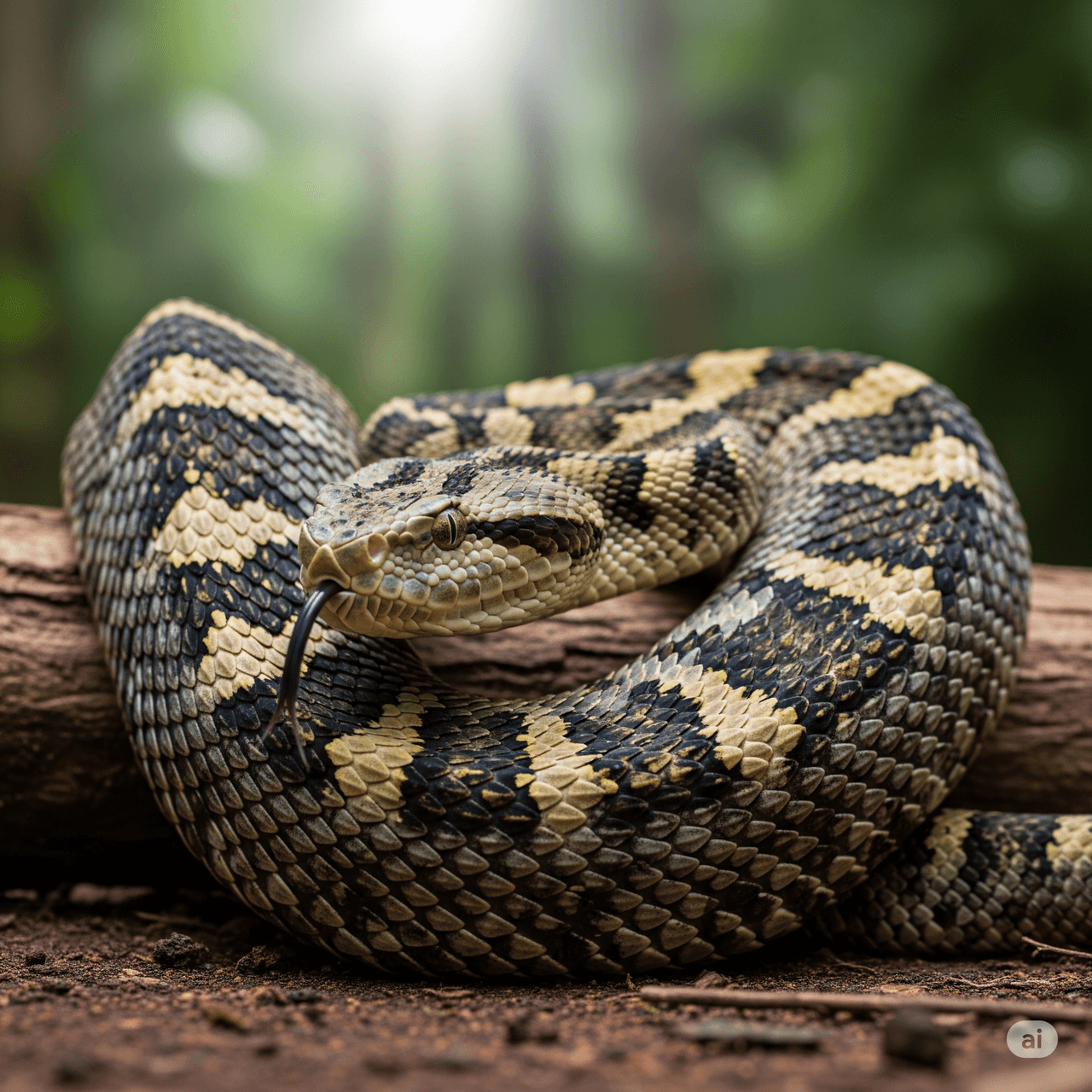
Gaboon Viper (Bitis gabonica) is a large, venomous snake of the Viperidae family, commonly found in the rainforests of West and Central Africa. This species is recognized as one of the longest and heaviest vipers in the world. Bitis gabonica is a remarkable species both in terms of its morphological characteristics and its chemical composition. Its venom has been extensively studied from a medical perspective due to its structure and toxicological effects.
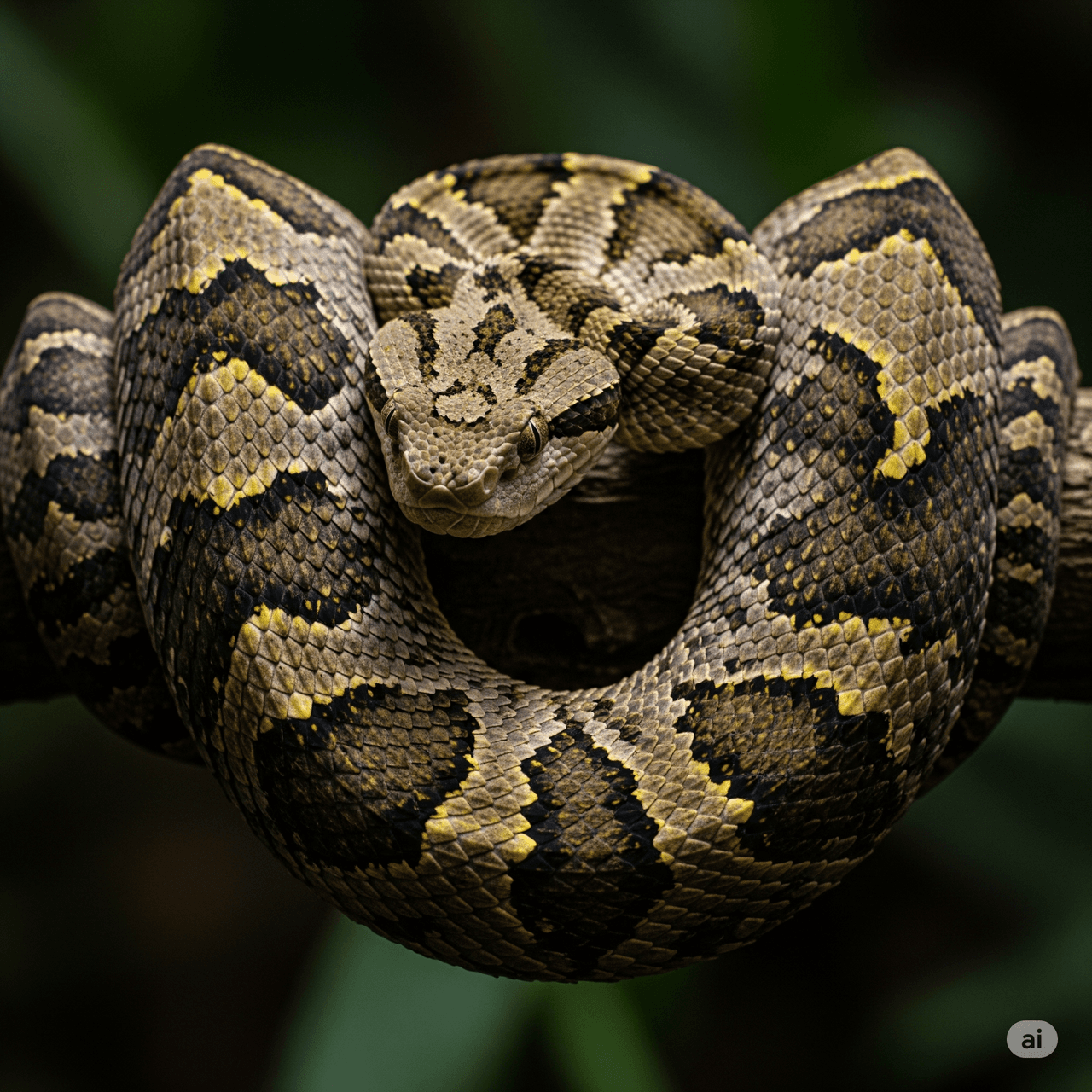
Gaboon Viper (Generated by Artificial Intelligence)
The Gaboon viper typically ranges in body length from 120 to 180 centimeters, with some individuals exceeding 200 centimeters. Its body is robust and muscular, distinguished by a short, broad head. The top of the head is wide and triangular, covered with large plates. The most distinctive feature of this species is the wide, colorful, diamond-shaped patterns along its body, which provide effective camouflage in its natural habitat.
The flexibility and shape of the Gaboon viper’s skin can vary depending on its feeding state. Particularly after feeding, a visible increase in body volume occurs. This phenomenon has been shown to be closely related to the mechanical structure of the snake’s skin.
This species is widespread in the western and central regions of Africa, particularly in moist tropical rainforests. Bitis gabonica is an important component of local ecosystems and typically remains concealed on the forest floor. Humid and shaded environments provide suitable conditions for its life cycle and hunting strategies.
The Gaboon viper primarily feeds on small mammals, birds, and amphibians. Its predatory traits and hunting techniques are fundamental to its successful ecological role. This snake immobilizes its prey with sudden strikes. After feeding, visible changes in body size and shape occur. This adaptation stems from the flexibility of its skin and parallels increased metabolic activity following feeding.
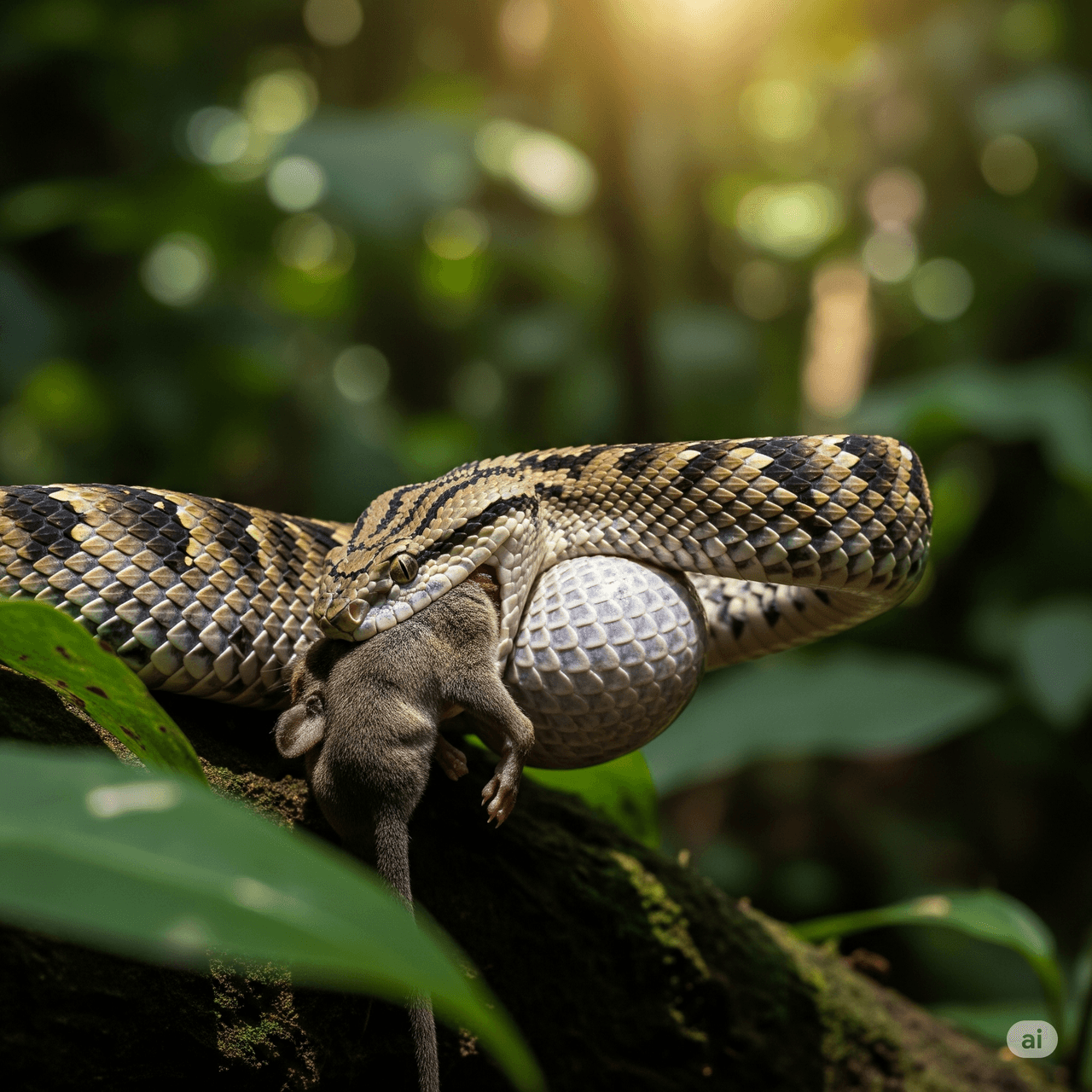
Gaboon Viper and Prey (Generated by Artificial Intelligence)
The venom of Bitis gabonica is a complex mixture composed of numerous proteins and enzymes. Important protein families in the venom include enzymes that affect coagulation factors and dimeric disintegrins. These components effectively paralyze prey and induce physiological effects such as blood clotting or hemorrhage in the prey’s tissues.
The venom contains thrombin-like enzymes that play a key role in the blood clotting mechanism. This property enables the snake to rapidly immobilize its prey. Additionally, two distinct dimeric disintegrin proteins, named bitisgabonin-1 and bitisgabonin-2, are present in the venom. These disintegrins disrupt cell-cell interactions and the integrity of connective tissue, rapidly inducing paralysis in the prey.
The Gaboon viper plays a vital predatory role in its natural habitats and contributes to maintaining ecosystem balance. However, population declines have been observed in certain regions due to deforestation and habitat destruction. Understanding the biological and ecological characteristics of this species is critical for developing effective conservation strategies.
This species generally exhibits a nocturnal lifestyle. During the day, the snake remains hidden and becomes active at night for hunting. It employs an ambush strategy, remaining motionless to lure prey. Its movements are slow and deliberate; however, when threatened, it can display aggressive defensive behaviors.
The Gaboon viper is ovoviviparous, giving birth to live young that hatch from eggs retained within the mother’s body. The female carries the eggs internally until the offspring are fully developed. This reproductive strategy enhances offspring survival rates and strengthens the species’ ecological adaptation.
Bonnet, X., Shine, R., Naulleau, G., & Thiburce, C. (2001). Plastic vipers: influence of food intake on the size and shape of Gaboon vipers (Bitis gabonica). *Journal of Zoology*, *255*(3), 341–351. https://doi.org/10.1017/s0952836901001443
Botes, D. P., & Viljoen, C. C. (1974). Bitis gabonica Venom. *Journal of Biological Chemistry*, *249*(12), 3827–3835. https://doi.org/10.1016/s0021-9258(19)42549-0
Calvete, J. J., Marcinkiewicz, C., & Sanz, L. (2006). Snake Venomics of Bitis gabonica gabonica. Protein Family Composition, Subunit Organization of Venom Toxins, and Characterization of Dimeric Disintegrins Bitisgabonin-1 and Bitisgabonin-2. *Journal of Proteome Research*, *6*(1), 326–336. https://doi.org/10.1021/pr060494k
Francischetti, I. M., My-Pham, V., Harrison, J., Garfield, M. K., and Ribeiro, J. M. (2004). Bitis gabonica (Gaboon viper) snake venom gland: toward a catalog for the full-length transcripts (cDNA) and proteins. *Gene*, *337*, 55–69. https://doi.org/10.1016/j.gene.2004.03.024
Pirkle, H., Theodor, I., Miyada, D., & Simmons, G. (1986). Thrombin-like enzyme from the venom of Bitis gabonica. Purification, properties, and coagulant actions. *Journal of Biological Chemistry*, *261*(19), 8830–8835. https://doi.org/10.1016/s0021-9258(19)84456-3

Henüz Tartışma Girilmemiştir
"Gabonese Viper (Bitis gabonica)" maddesi için tartışma başlatın
Morphology and Anatomical Features
Habitat and Distribution
Diet and Hunting Strategies
Biochemical Composition of the Venom
Ecology and Conservation Status
Behavioral Characteristics
Reproduction and Life Cycle