

Bu içerik Türkçe olarak yazılmış olup yapay zeka ile otomatik olarak İngilizceye çevrilmiştir.
Scientific Name(s) | Phalacrocorax carbo | ||||||||
|---|---|---|---|---|---|---|---|---|---|
Family | Phalacrocoracidae | ||||||||
Size(s) | 80–100 cm | ||||||||
Weight(s) | 2–3.5 kg | ||||||||
Habitat | Coastlines Reservoir lakes Lagoons Rivers Lakes | ||||||||
Diet(s) | Fish species | ||||||||
Türkiye Conservation Status | Protected (hunting is prohibited) | ||||||||
Conservation Status (IUCN) | LC – Least Concern (Low Concern) | ||||||||
Karabatak (Phalacrocorax carbo) is a marine bird from the family Phalacrocoracidae, characterized by its long, pointed beak, black plumage, and fish-based diet【1】. Adapted to aquatic environments, it is notable for its diving ability. The fish-eating karabatak is commonly observed along the coasts and inland waters of Türkiye. It supports significant populations in wetland areas such as İzmir Bird Paradise.
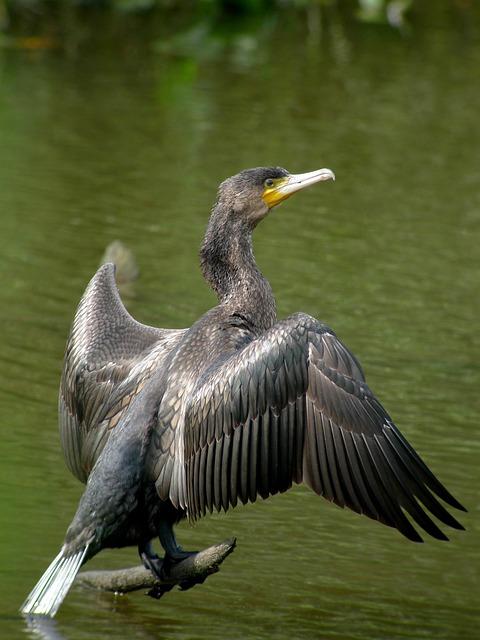
The karabatak is a large bird with black plumage. In adults, metallic greenish or bluish iridescence may be visible. Its beak is long, strong, and hooked at the tip. The eyes are green, the feet are webbed and black. Especially during the breeding season, white feathers become prominent around the head and neck. Because its feathers are water-permeable, it frequently spreads its wings in the sun after diving to dry them.
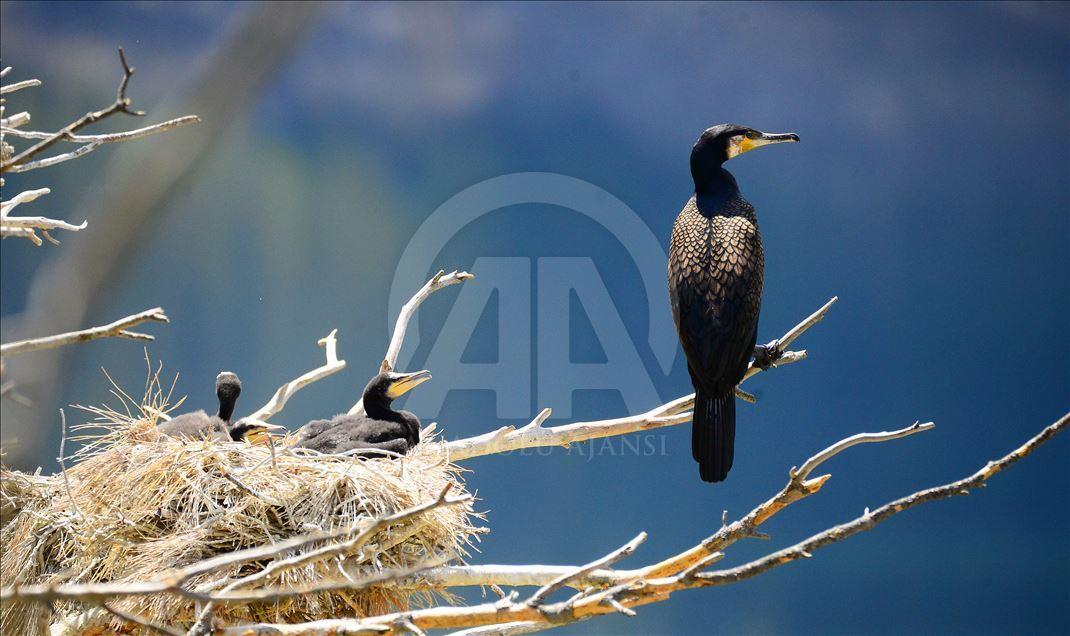
Karabatak (AA)
Karabataks inhabit coastal areas, lakes, rivers, dams, and lagoons. They can adapt to both freshwater and saltwater habitats. In Türkiye, they are observed not only along the Marmara, Aegean, Mediterranean and Black Sea coasts but also in inland regions. İzmir Bird Paradise is an important center for wintering populations of large karabataks. This species is distributed across Europe, Asia and Africa.
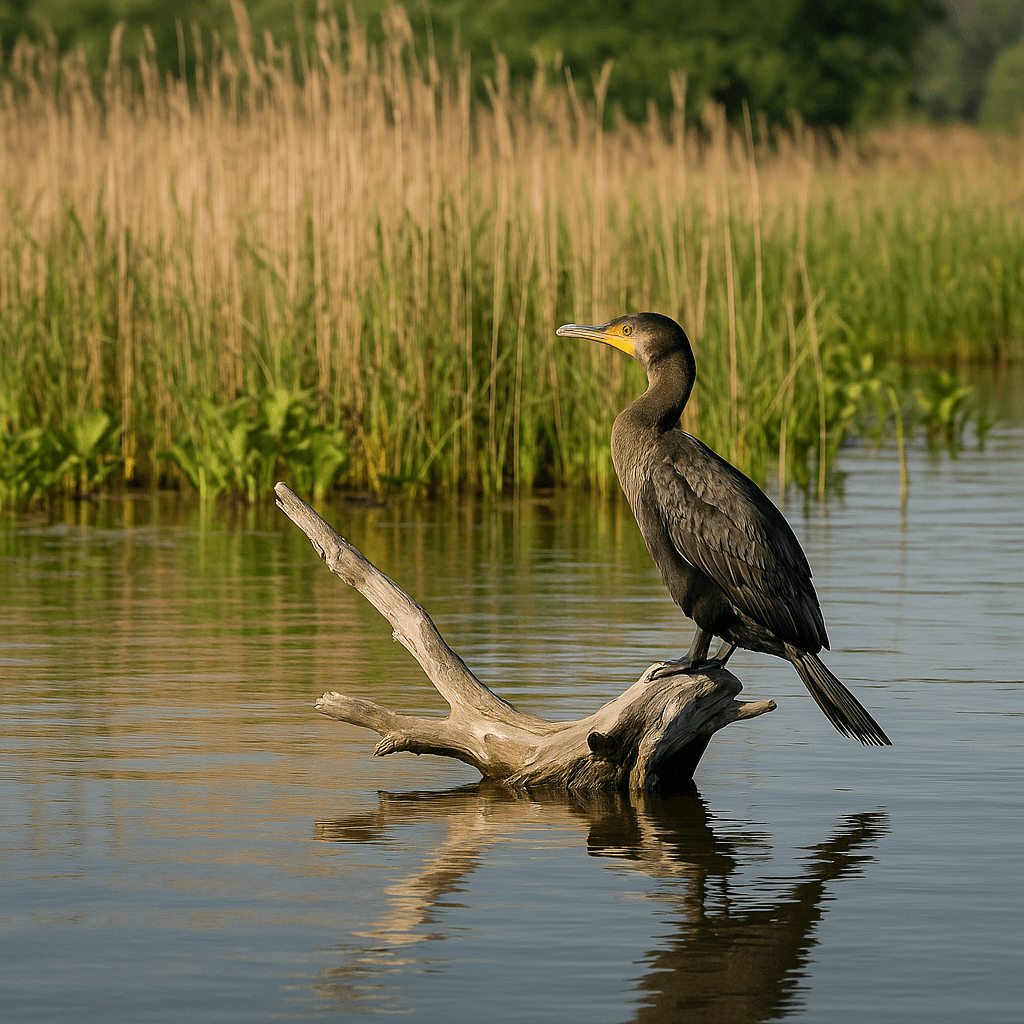
The karabatak (Phalacrocorax carbo) is primarily a fish-eating bird. Its feeding strategy relies on diving underwater to capture prey. Thanks to its diving capability, it can remain submerged for up to one minute and reach depths of up to 35 meters when necessary. It typically locates prey visually; therefore, water clarity and light conditions can influence feeding success. Its main food sources are small to medium-sized fish. In some regions, it has also been observed feeding on crustaceans and invertebrates.
Unlike other water birds, its plumage is water-permeable. This enhances its mobility underwater but results in frequent resting and drying behaviors on land. Consequently, after feeding, karabataks are often seen perched on rocks, piers or tree branches with their wings spread wide to dry in the sun.
Its social structure is also notable. Karabataks typically live in colonies and gather in large flocks, especially at night or for resting. During the day, they disperse to feeding areas and return to sheltered zones in the evening. Their advanced diving skills, navigational abilities, and collective lifestyle make them successful predators within aquatic ecosystems.
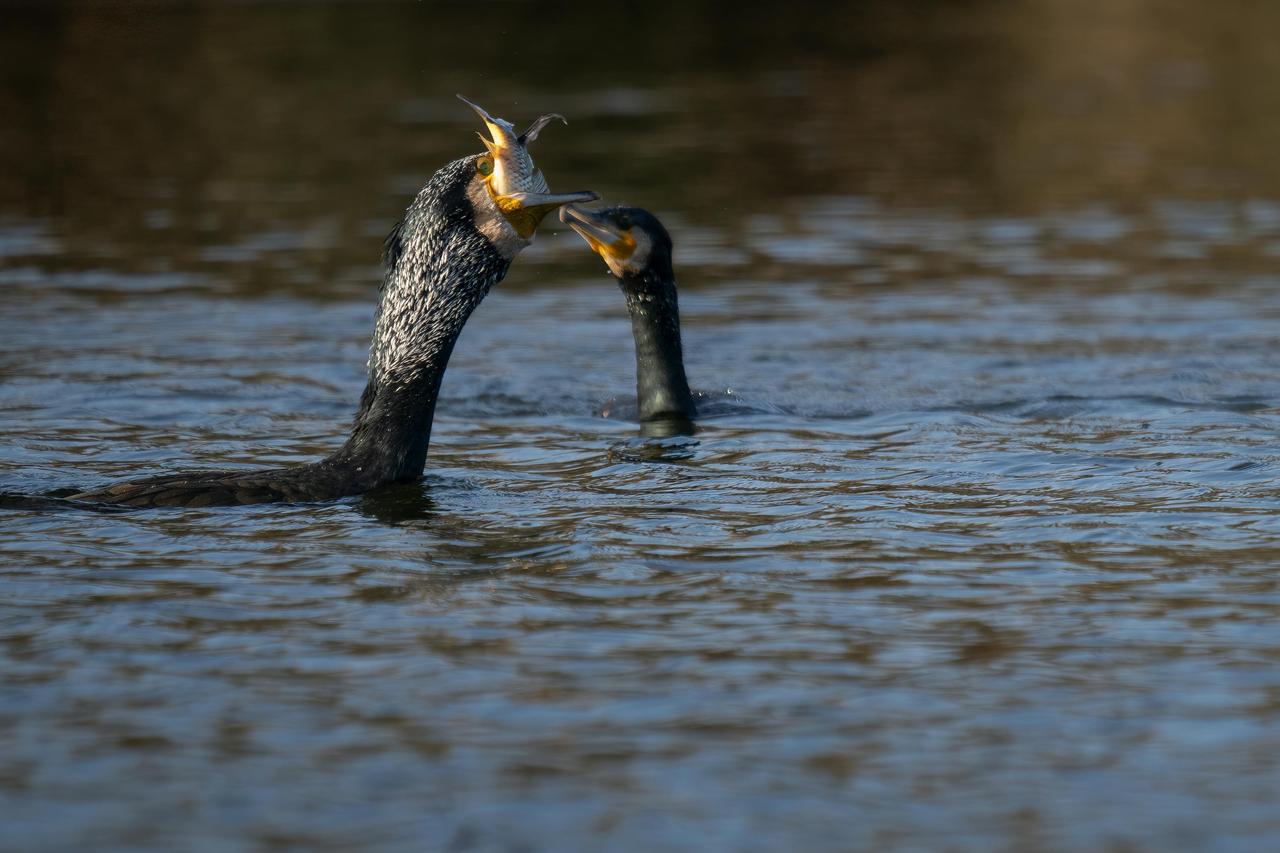
Large Karabatak with Large Fish (pexels)
The karabatak is a social breeder that nests in colonies. The breeding season varies according to regional climatic conditions but generally begins in spring in Türkiye. Preferred nesting sites include wooded wetlands, reedbeds, rocky coastlines and isolated islands away from human disturbance. Colonies can consist of hundreds of nests, offering advantages for collective defense and communication.
Both partners build the nest together using materials such as twigs, grass and moss. Sometimes human-made waste materials like fishing nets are incorporated into the structure. The female typically lays three to five eggs. Incubation lasts approximately 23 to 31 days, with both parents taking turns. Chicks hatch featherless and require extensive care; parents feed them regurgitated fish.
Karabatak chicks acquire flight capability after about six to seven weeks. However, parental care continues for some time after this stage.
Karabataks exhibit a mixed migratory structure, including both resident and migratory individuals. While some populations in Türkiye remain in the same areas year-round, individuals from northern and eastern Europe migrate to Türkiye for wintering. This reflects the species’ wide distribution and flexible ecological adaptability.
Migratory movements typically begin in autumn and continue until spring. Birds from colder northern regions spend the winter in Türkiye’s coastal and inland wetlands, especially in the Aegean, Mediterranean and Marmara regions. Important wintering sites include İzmir Bird Paradise, Gediz Delta, Göksu Delta and Manyas Lake, where large numbers of karabataks are frequently observed during this period.
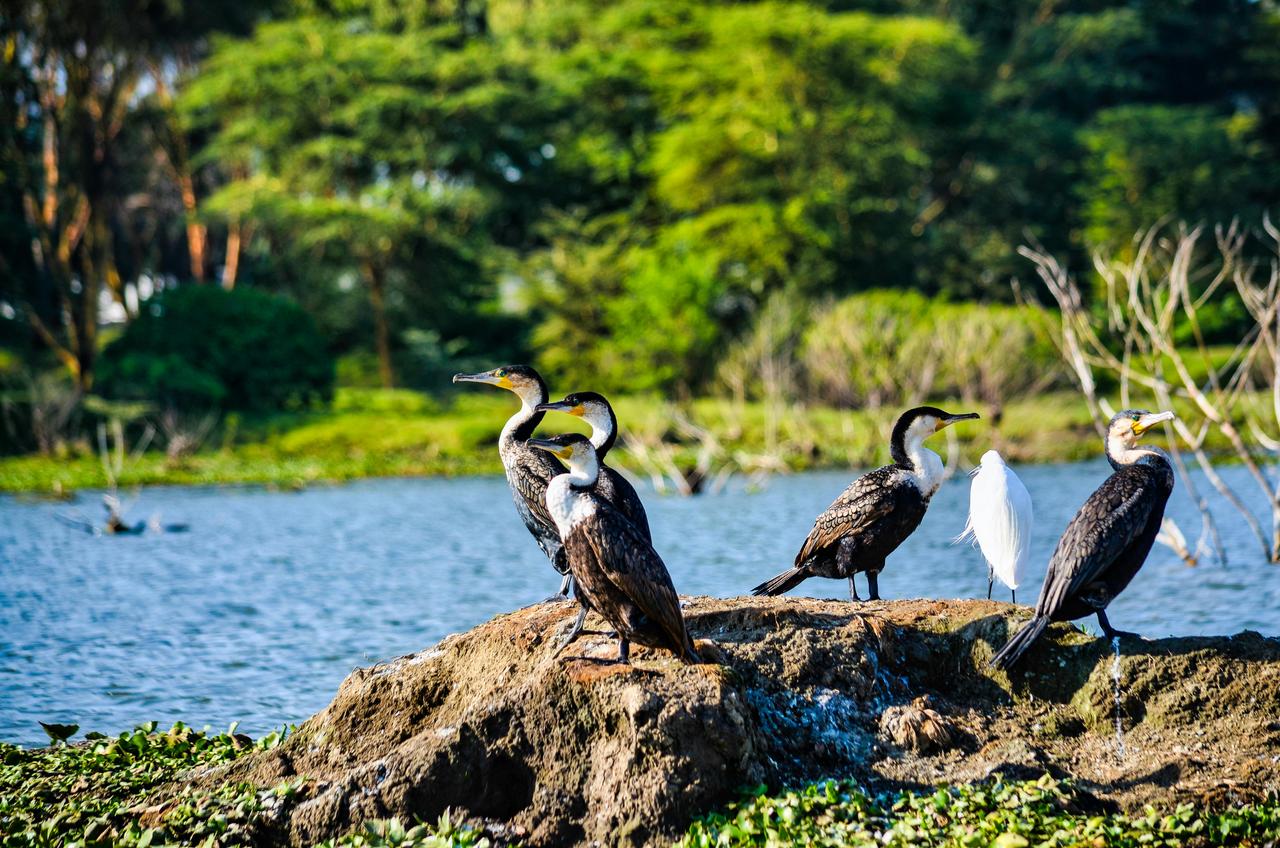
Karabataks (pexels)
Although some fishermen view karabataks negatively due to their consumption of fish stocks, their role within ecosystems is significant. As a natural component of the aquatic food chain, they contribute to the sustainability of healthy fish populations. They also support ecotourism in wetland areas such as İzmir Bird Paradise.
The karabatak is a protected bird species at both international and national levels. The International Union for Conservation of Nature (IUCN) classifies it as “Least Concern.” This status reflects the species’ extensive global distribution and stable or increasing population trends. Its widespread presence across Europe, Asia and Africa indicates that, at present, large karabataks face no significant threat of extinction on a global scale.
This species, which also has a wide distribution in Türkiye, is protected under the Wild Game Hunting Law No. 4915. Its hunting is prohibited in accordance with decisions of the European Commission. Large bustards, which are observed in significant numbers during breeding and wintering periods in wetland areas such as İzmir Bird Paradise, hold an important place in terms of the biological diversity of these protected areas.
"Karabatak." *Türk Dil Kurumu Güncel Türkçe Sözlük*. Accessed July 14, 2025. https://sozluk.gov.tr/?ara=karabatak
Anadolu Ajansı. "Saklı Cennet"te kuş sayısında rekor artış.'' Accessed July 10, 2025. https://www.aa.com.tr/tr/pg/foto-galeri/-sakli-cennette-kus-sayisinda-rekor-artis/0
Cornell Lab. "Great Cormorant (Phalacrocorax carbo)." *Birds of the World*. Accessed July 2, 2025. https://birdsoftheworld.org/bow/species/grecor/cur/introduction
Pexels. "Büyük Balıklarla Büyük Karabatak JPG." Pexels. Accessed July 10, 2025. https://www.pexels.com/tr-tr/fotograf/buyuk-baliklarla-buyuk-karabatak-28277414/
Pexels. "Karabataklar JPG." Pexels. Accessed July 10, 2025. https://www.pexels.com/tr-tr/fotograf/balik-tutmak-balikcilik-peyzaj-manzara-8341096/
Pixabay. "Karabataklar JPG." Accessed July 10, 2025. https://pixabay.com/photos/great-cormorant-birds-nature-1174083/
eBird. "Karabatak (Phalacrocorax carbo)." Cornell Lab of Ornithology. Accessed July 10, 2025. https://ebird.org/species/grecor?siteLanguage=tr
İzkuş. "Karabatak." İzmir Kuş Cenneti. Accessed July 10, 2025. https://izmirkuscenneti.gov.tr/2022/08/08/karabatak/
[1]
“Karabatak", Türk Dil Kurumu Güncel Türkçe Sözlük, Son Erişim: 14 Temmuz 2025, https://sozluk.gov.tr/?ara=karabatak.

Scientific Name(s) | Phalacrocorax carbo | ||||||||
|---|---|---|---|---|---|---|---|---|---|
Family | Phalacrocoracidae | ||||||||
Size(s) | 80–100 cm | ||||||||
Weight(s) | 2–3.5 kg | ||||||||
Habitat | Coastlines Reservoir lakes Lagoons Rivers Lakes | ||||||||
Diet(s) | Fish species | ||||||||
Türkiye Conservation Status | Protected (hunting is prohibited) | ||||||||
Conservation Status (IUCN) | LC – Least Concern (Low Concern) | ||||||||
Henüz Tartışma Girilmemiştir
"Great Cormorant (Phalacrocorax carbo)" maddesi için tartışma başlatın
Morphological Characteristics
Distribution and Habitat
Diet and Behavior
Breeding
Migratory Patterns
Human Interaction and Ecological Role
Conservation Status