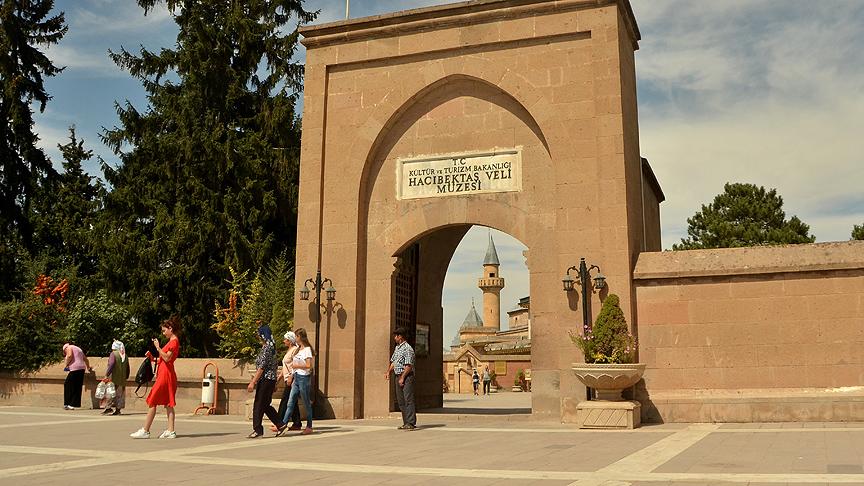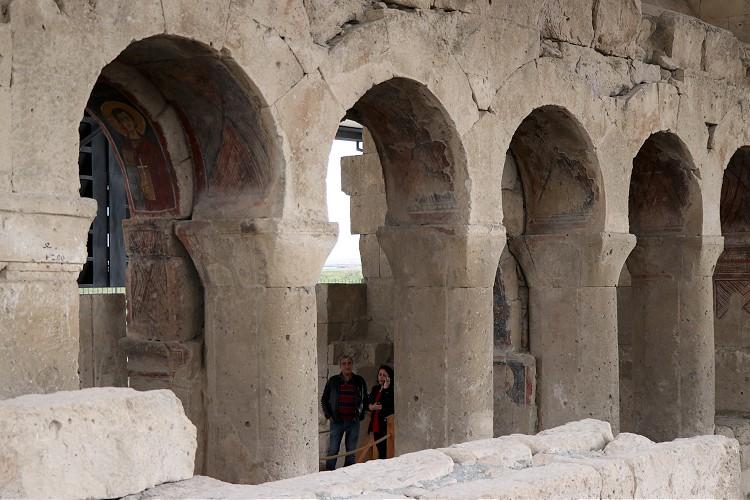



The Hacı Bektaş Veli Complex is a historical and cultural structure founded in the 13th century by Hacı Bektaş Veli, who played a significant role in the Islamization process of Anatolia and served as the center of the Bektashi order. Located in the Hacıbektaş district of Nevşehir province, this structure is not only a center of faith but also one of the fundamental institutions for the intellectual and social structuring of Anatolian Alevism. The Complex expanded its political and social influence, especially during the Ottoman period, due to its connection with the Janissary Corps.

Hacı Bektaş Veli Complex (Republic of Türkiye Ministry of Culture and Tourism)
Hacı Bektaş Veli's arrival in Anatolia, which coincided with the post-Mongol invasion period, contributed to his rapid acceptance among the Turkmen people in the region. Nourished by the tradition of Ahmet Yesevi and considered among the Erens of Khorasan, Hacı Bektaş Veli disseminated an understanding of Islam centered on tolerance, equality, and the people. After his passing, the dergah was built to institutionalize his teachings, and it gradually became the center of Bektashism.
The Hacı Bektaş Veli Complex is organized around three courtyards. The first courtyard includes the entrance and Aslanlı Çeşme, which welcomes visitors. The second courtyard houses the Mihmanhane, Aşevi, and various service rooms. The third courtyard, considered the most sacred, contains Hacı Bektaş Veli’s Türbe, the Halvet Odası, Çilehane, and Balım Sultan Türbesi. The Complex was constructed with a modest interpretation of classical Ottoman architecture and was transformed into a mystical and educational space through a functional design approach.

Hacı Bektaş Veli Complex II. Courtyard (Republic of Türkiye Ministry of Culture and Tourism)
The institutional identity of the Complex was particularly shaped through the efforts of Balım Sultan in the 16th century. He systematized the teachings of Bektashism, codified its rules (erkan) and rituals, and formalized the order. During this period, the Complex became one of the most influential Alevi-Bektashi centers across the Ottoman geography, with affiliated tekkes established both in Anatolia and the Balkans.
Following the proclamation of the Republic of Türkiye and the enactment of the Law on the Closure of Tekke, Zaviye, and Türbe in 1925, the activities of the Complex ceased. In 1964, the structures were transferred to T.C. Kültür ve Turizm Bakanlığı and opened to visitors under the name Hacı Bektaş Veli Müzesi. Today, it attracts both adherents of the Alevi-Bektashi faith and local and international tourists interested in cultural heritage.
The Hacı Bektaş Veli Complex was added to the UNESCO World Heritage Tentative List on April 13, 2012, under the name “Hacı Bektaş Veli Complex.” This inclusion recognizes its universal value, historical importance, and its representation of intangible cultural heritage.
Furthermore, the ritual of Semah, associated with Hacı Bektaş Veli’s teachings, was inscribed on the UNESCO Representative List of the Intangible Cultural Heritage of Humanity in 2010.
Today, the dergah continues to function as a symbolic structure for cultural identity and social memory. Held every August, the Hacı Bektaş Veli Commemoration Ceremonies and Cultural Events serve both as spiritual pilgrimages and platforms for intercultural dialogue. The Complex remains one of the most significant representative structures of the Alevi-Bektashi belief system in contemporary Türkiye.

Henüz Tartışma Girilmemiştir
"Haji Bektash Veli Complex " maddesi için tartışma başlatın
Historical Background
Architectural Structure and Sections
Institutionalization of the Complex and Bektashism
Closure and Museum Transformation Process in the 20th Century
International Recognition and Cultural Heritage Status
Contemporary Meaning and Use
Bu madde yapay zeka desteği ile üretilmiştir.