


Bu içerik Türkçe olarak yazılmış olup yapay zeka ile otomatik olarak İngilizceye çevrilmiştir.
+2 Daha
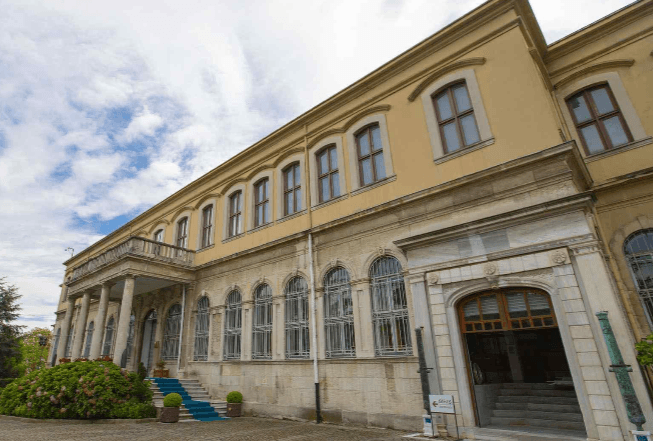
Military Museum and Culture Site is a museum located in the Harbiye district of Istanbul, operating under the Directorate of Culture and Arts, which is part of the General Directorate of Management Services of the Ministry of National Defence. The Harbiye district derives its name from the building that once housed the Ottoman Empire’s War School, where Mustafa Kemal Atatürk graduated.
The museum operates to collect, classify, maintain and restore military cultural artifacts, exhibit them using modern methods, and transmit them to future generations. The museum’s collection comprises approximately 55,000 objects, of which 5,000 are displayed in its exhibition halls for visitors.

Military Museum and Culture Site (Harbiye Military Museum and Cultural Site Command)
The museum employs technological systems that enable the modern presentation of historical artifacts:
Mehter Multivision (Introduction to the Mehter ensemble)
Çanakkale Diorama (Panoramic depiction of the Çanakkale Battles)
Touchscreen Computer Systems (Interactive information display)
The Military Museum presents historical artifacts to domestic and international researchers using contemporary museological techniques.
The Mehteran Band Command, recognized as the world’s oldest military band, contributes to the promotion of Türkiye through concerts held both domestically and abroad. The museum hosts a Mehter concert daily between 15:00 and 16:00.

Military Museum and Culture Site (Harbiye Military Museum and Cultural Site Command)
The Military Museum is regarded as one of Türkiye’s oldest museum buildings, with a history extending back to the 15th century. After the conquest of Istanbul in 1453, the Church of Hagia Irene was converted by the Ottoman State into a Cebehane, a storage facility for valuable weapons and military equipment.
In 1726, this collection was organized more systematically, leading to the establishment of a new institution named Dar-ül Esliha. This reorganization, aimed at preserving Ottoman military artifacts, represents the earliest phase of modern Turkish museology.
The true foundation of Turkish museology occurred in 1846 through the initiatives of Tophane Müşiri Ahmet Fethi Paşa. During this period, exhibition spaces were created within Hagia Irene by enclosing areas with galleries, and a formal museum organization was established. This structure, named Müze-i Hümayun, functioned as the official museum institution of the Ottoman State.
As the number of archaeological artifacts increased, a portion of Müze-i Hümayun was relocated to the Çinili Köşk, laying the foundation for today’s Istanbul Archaeology Museums. Ahmet Muhtar Paşa expanded the military museum, adding new functions such as a library, cinema, shooting range, and Mehter section, transforming it into an institution aligned with modern museological principles.
The Military Museum, which had operated in Hagia Irene until 1940, was temporarily closed due to the possibility of World War II spilling over into Türkiye. In 1949, the artifacts were moved to the Maçka Armory for storage. Starting in 1959, the collection was again exhibited in the gymnasium building of the Harbiye School.

Military Museum and Culture Site (Harbiye Military Museum and Cultural Site Command)
Due to the increasing inadequacy of the Harbiye School building and the necessity of adopting contemporary museological practices, restoration work began in 1966. It was decided to repurpose the old Harbiye building as the Military Museum, leading to its comprehensive renovation. The museum reopened in its new format on 10 February 1993.
The museum was established with weapons inherited from the Ottoman Cebehane and has since expanded its collection through acquisition, purchase, and donations. With artifacts spanning from the 13th century to the present, the museum has become a comprehensive institution reflecting Türkiye’s military history and cultural heritage.
Through the integration of modern museological practices, thematic exhibition halls have been created on topics such as the Foundation of the Turkish Armed Forces, the Seljuk Period, the Establishment and Rise of the Ottoman State, the Conquest of Istanbul, and the Çanakkale Battles. Large-scale dioramas, illuminated panels, and historical figures have strengthened the museum’s narrative techniques.
The Harbiyeli Atatürk Classroom, located within the museum, is a dedicated space focusing on the educational journey of Mustafa Kemal Atatürk. The museum also includes areas that facilitate local and international cultural events such as Mehter performances and other cultural activities.

Harbiyeli Atatürk Classroom (Turkish Museums)
The lower floor halls are equipped with collections offering a broad perspective on Ottoman and Turkish military history. Exhibits include weapons technology, military uniforms, battle scenes, and artifacts related to cultural heritage.
This hall at the museum entrance provides visitors with general information about the museum’s history and collections. Photographs and artifacts belonging to Ahmet Muhtar Paşa, a museum model, informational panels, and illuminated display systems are featured here. A display case includes historical weapons and uniforms such as rifles, swords, shields, and horse armor, alongside two mannequins dressed in historical Janissary uniforms.
This hall focuses on Central Asian Turkish culture and history. Exhibits include the Turkish genealogical tree, maps of Turkish migration routes, Metehan’s ten-unit army system, Göktürk and Uyghur alphabets, and sketches illustrating Turkish military tactics. A diorama depicting the Turkish crossing of the Great Wall of China and paintings narrating Turkish legends and heroes are displayed here. Ancient Turkish war equipment and daily life objects complete this section.
Artifacts related to Seljuk history are supported by a panoramic model of the Battle of Manzikert, visual representations of the Dandanakan and Myriokephalon battles, and paintings depicting Turkish pioneers of the history of science and important Seljuk rulers. The statue of Karamanoğlu Mehmet Bey, decrees related to the Turkish language, and a large-scale map showing the borders of the Seljuk Empire are among the key collection pieces.
The Establishment Period Hall contains historical scenes depicting the expansion of the Ottoman State. Panels narrating the advice of Ertuğrul Gazi and Osman Bey, an oil painting illustrating Osman Bey’s declaration of his beylik, portraits of Ottoman sultans, and paintings depicting victories of the era are exhibited here. Among the museum’s collection are the helmet of Orhan Gazi, the standard used by the Ottoman army during the 1389 Battle of Kosovo, and the armor shirt of Gazi Evrenos Bey.
The Rise Period Hall displays a diorama of the Battle of Mohács, battle scenes, and detailed depictions of Ottoman victories. Swords with gold-inlaid inscriptions commissioned in the names of Kanuni Sultan Süleyman and Yavuz Sultan Selim, horse armor, 16th-century helmets used by Hungarian soldiers, and swords from Islamic and European countries are among the collection’s significant pieces.

Establishment and Rise of the Ottoman State Halls (Harbiye Military Museum and Cultural Site Command)
This area provides information on the history of the Great Turkish States. Exhibits include busts of founders, flags of the states, maps, a list of other Turkish states established throughout history, names and emblems of the Oghuz tribes, and a copy of the Orkhon Inscriptions, which contain the earliest known use of the term “Turk.”
This section presents scenes from the reigns of Fatih Sultan Mehmet and Yavuz Sultan Selim. A panoramic model depicts the Ottoman fleet being lowered into the Golden Horn during the Conquest of Istanbul. Yavuz Sultan Selim’s iron horse armor is one of the collection’s most notable pieces.
This hall, a significant part of the collection of bladed weapons, features Ottoman, Mamluk, Iranian, and European swords and blades. Special exhibits include the Zulfikar Sword, the Çift El Epesi (14th and 16th-century German swords), a sword presented by the Shah of Iran to a Russian general, and Mamluk swords brought by Yavuz Sultan Selim from Alexandria.

Bladed Weapons Hall (Turkish Museums)
This hall contains military equipment from the Ottoman, Mamluk, Iranian, Akkoyunlu, Shirvanshah, and Timurid periods. Helmets, armor shirts, ceremonial helmets, and knee guards are part of the collection, including ornate Ottoman helmets used in ceremonies, crocodile-skin shields, and cavalry armor.
Firearms produced from the 16th to the 20th century are displayed here, including matchlock, flintlock, caplock, and needle-fire rifles and pistols.

Firearms Hall (Turkish Museums)
Historical instruments belonging to the Mehter unit are exhibited here. Musical instruments such as the boru, nakkare, and ney, as well as the kös used during the Battle of Mohács under Kanuni Sultan Süleyman, are displayed in this section.
The Martyrs Gallery is dedicated to the memory of soldiers who lost their lives for independence. Personal belongings of the Çanakkale martyrs, inscriptions of battle names on stones, and an area displaying the phrase “Peace at home, peace in the world” by Mustafa Kemal Atatürk in multiple world languages are among its significant sections.
The maritime history collection includes naval flags, submarine buoys, ship lanterns, compasses, submarine mine models, and the first Turkish submarine model.
The upper floor halls of the Military Museum cover military history from the Ottoman period to the Republic, highlighting key figures and conflicts. The objects and documents exhibited here present pivotal moments in Turkish military history, from Ottoman reform processes through the War of Independence to the Korean and Cyprus operations.
This hall examines key military and political figures of the Second Constitutional Era. The carriage in which Harbiye Minister and Grand Vizier Mahmud Şevket Paşa was assassinated is exhibited here. Additionally, weapons and personal items presented to Sultan II. Abdülhamit, along with uniforms, weapons, and equipment belonging to Serasker Hüseyin Avni Paşa, Gazi Ahmet Muhtar Paşa, and Tevfik Sağlam, are among the museum’s important collection pieces.

Carriage in Which Mahmud Şevket Paşa Was Assassinated (Turkish Museums)
This hall presents the role of the Ottoman army during the war, displaying period military equipment, standards, medals, decorations, and victory ribbons. Personal clothing, uniforms, and weapons belonging to Enver Paşa are included in the collection.
This section features various objects and materials collected from the battlefields of the Çanakkale Campaign. Headgear, clothing accessories, flags, and standards belonging to Turkish, British, and ANZAC forces are displayed here. The Çanakkale Battles Diorama includes a panoramic model and projection display providing a visual narrative of the conflict.

Çanakkale Battles Hall (Turkish Museums)
This hall contains special collections related to key commanders of the Turkish War of Independence, including Kazım Karabekir, Ali Fuat Cebesoy, Refet Bele, Asım Gündüz, Şükrü Naili Gökberk, and Ömer Halis Bıyıktay. The captured belongings of the defeated Greek Army Commander Trikopis and a model composition depicting Mustafa Kemal Atatürk’s order “Armies, your first objective is the Mediterranean… Forward!” are among the museum’s most compelling exhibits.

War of Independence Hall (Turkish Museums)
This hall contains military artifacts used during the Korean War (1950–1953) and the Cyprus Peace Operation (1974). Uniforms, standards, medals, and decorations belonging to Korea Division Commander Major General Tahsin Yazıcı, Regiment Commander Martyr Colonel Nuri Pamir, and Celal Dora are displayed in the Korea section. Objects belonging to commanders who participated in the Cyprus Peace Operation, along with captured weapons and uniforms from the operation, are exhibited here.
This hall features artifacts reflecting daily life in Ottoman culture, beyond military equipment and personal collections. Objects made of silver, glass, copper, and porcelain, decorative items, and religious artifacts are displayed here. Additionally, Ottoman-language manuscripts, decrees, and patents form the museum’s academic archive.

Ethnographic and Manuscript Works Hall (Harbiye Military Museum and Cultural Site Command)
Personal belongings, uniforms, and military artifacts belonging to the Chiefs of General Staff of the Republic of Türkiye since its foundation are exhibited here.
The Harbiye building was constructed during the Ottoman period to train officers and is one of the institutions where Mustafa Kemal Atatürk, the founder of the Republic of Türkiye, received his education. This hall displays Atatürk’s personal belongings, medals, decorations, and gifts presented to him. Models of Anıtkabir, the Erzurum Congress Building, the Sivas Congress Building, the First TBMM Building, the Şişli Atatürk House, and his birthplace in Thessaloniki are also exhibited here.
The Hasan Rıza Exhibition Hall, located beside the Museum Introduction Hall, is named after the painter Hasan Rıza (1860–1912), who graduated from a military school and became known for his battle paintings. This hall, opened in memory of Hasan Rıza, whose works are well represented in the Military Museum collection, hosts various exhibitions organized annually by the Command of the Military Museum and Culture Site.
This section displays artifacts reflecting Ottoman tent culture. Tents used in warfare and state ceremonies are presented to visitors. Detailed exhibits include sayebans, single-pole tents, double-pole tents, and Ottoman tent decorations.
This section displays documents related to the 1915 Tehcir (Forced Migration) Law and wartime conditions during the Ottoman period. Records of Armenian soldiers serving in the Ottoman army during the war, official documents concerning the Tehcir Law, and Ottoman-language documents are included here.
The Culture Site and Ahmet Fethi Paşa Halls within the Military Museum host all types of cultural, scientific, artistic, fair, and festival events, both domestic and international, civil and military. In addition to conference, seminar, symposium, colloquium, congress, and panel rooms for academic events, temporary exhibition spaces are available for artistic activities.
The Culture Site features halls with different functions for hosting events:
The Culture Site provides technical support services to facilitate meetings and events:
Communication Infrastructure: Connection to Türk Telekom for telephone and fax systems.
Presentation Equipment: Overhead projectors, slide projectors, LCD projectors, and computer-assisted audio systems.
Security Services: Door detectors, cloakrooms, and a paid parking area for 130 vehicles for guests.
Accessibility for People with Disabilities: Elevators, ramps, telephones, and restrooms designed to international accessibility standards.
Lower Floor Foyer: Can be used for consultation and registration desks during congresses. Opening cocktails for art exhibitions, fairs, and similar events can be held here.
Large Foyer: A spacious foyer with 11 seating groups that can be converted into booth and exhibition areas when needed.
Square Foyer: A space suitable for small tabletop exhibitions and coffee breaks.
Large Inner Garden: Can accommodate 1,000 guests for cocktail events and 400 for seated meals. Can also be used as an open-air fair area.
Small Inner Garden: Has a cocktail capacity of 150 and can accommodate a limited number of booths.
The Culture Site offers comprehensive facilities for event organization, enabling the execution of both academic and artistic activities.

Military Museum and Culture Site Garden (Turkish Museums)
The library and uniform collection within the Command of the Military Museum and Culture Site provide a comprehensive archive on Ottoman and Turkish military culture. These collections, which include historical books, documents, manuscripts, and Ottoman-era uniforms, serve as vital resources for academic research and cultural activities.
The library, whose foundations were laid during Ahmet Muhtar Paşa’s directorship of the museum between 1908 and 1926, holds an extensive collection focused on Ottoman and Turkish military history. The collection includes materials on history, military sciences, art, and documentary archives. The library is maintained under constant control of light, temperature, and humidity levels.
The library’s foundation was established when Ahmet Muhtar Paşa donated his personal bookshelf and books to the museum. The collection has been expanded through donations and purchases. In 1959, it was relocated to the Harbiye School cafeteria, and in 1987, it was moved to its current location and began operating in a modern environment. It is situated on the second floor of the Command Headquarters of the Military Museum and Culture Site. The collection areas within the three-story building are as follows:
First Floor: Reading room, reference materials, consultation and lending desks, book storage, painting and artwork storage, photograph archive, microfilm machines, internet-connected computers.
Second Floor: Manuscript Collection, Albums and Periodicals.
Third Floor: Official military publications.
The library holds a total of 24,785 items. The main collection categories are as follows:
Books: 17,394 items
Photographs: 3,782 items
Magazines: 225 items
Albums and paintings: 381 items
Decrees and plaques: 148 items
Maps and atlases: 53 items
The Manuscript Collection, developed under the extensive efforts of Ahmet Muhtar Paşa at Hagia Irene, contains rare Ottoman-era handwritten works. Today, the Military Museum Library holds 105 volumes of manuscripts.
These works were produced between the 10th and early 20th centuries and include seals of Fatih Sultan Mehmed, Sultan II. Bayezid, Sultan III. Selim, and Sultan I. Abdülhamid. The library also holds documents from Ottoman military academies and engineering schools, providing significant insights into Ottoman and Turkish military culture.
Ottoman uniforms represent a rich cultural heritage encompassing the attire of palace personnel, Janissaries, and state officials. This collection constitutes an important research area for academic studies and cultural events.
The most significant studies on Ottoman uniforms are the 1863 Mecmua-i Tesavir-i Osmaniye album and Jean Brindesi Giovanni’s 1856 publication Elbicei Atika Musee des Anciens Costumes Turcs De Constantinople. These works provide visual and academic analyses of Ottoman clothing.
The Kıyafet-i Milliye-i Osmaniye Album, prepared during the reign of Sultan II. Abdülhamid, provides a detailed examination of traditional Ottoman attire. The collection includes uniforms of Ottoman pashas, Janissaries, and the upper administrative class.
The Military Museum Library and uniform collection are preserved and made accessible to researchers through various services:
Consultation Services: Museum staff provide guidance to researchers on the use of the collection.
Lending Service: Books not classified as historical artifacts may be lent to museum staff for a period of 15 days.
Microfilm and CD Services: Manuscripts can be examined in microfilm and digital formats.
Digital Archives: Ottoman uniforms and manuscripts are cataloged digitally and made accessible to researchers.
The Military Museum Library serves authorized researchers and museum staff from 08:30 to 12:00 and 13:00 to 17:00 on weekdays. Researchers wishing to use the library must obtain permission from the Directorate of Culture and Arts of the Ministry of National Defence.
These collections provide a comprehensive academic resource and cultural heritage on Ottoman and Turkish military history, available to researchers.
Mehter originally began as a tradition using the tuğ and davul, evolving over time into tabılhanes during the Seljuk period and mehterhanes during the Ottoman period. Mehter musicians became a vital element in meeting the musical needs of the army and society. During the Ottoman expansion period, Mehter bands not only served as military units but also regularly performed in castles and cities, acting as musical ensembles representing public sentiment. From the early 19th century, countries such as Prussia, Russia, Poland, and Germany were influenced by the Ottoman Mehter tradition and established their own military bands, integrating Mehter music into their military formations.
Following the abolition of the Janissary corps, Mehter was temporarily disbanded but reemerged on the historical stage with the Second Constitutional Era in 1911, playing an active role during the First World War and the War of Independence. In 1952, Mehter was reestablished and reorganized based on historical documents to restore its original form. Today, the Mehteran Unit under the Command of the Military Museum and Culture Site performs guard duty five days a week.

Mehter Ensemble (Harbiye Military Museum and Cultural Site Command)
The traditional musical instruments used in the Mehter ensemble are as follows:
The Command of the Military Museum and Culture Site produces various publications to promote its collections and support historical research. The museum publishes brochures, catalogs, and promotional materials for exhibitions, aiming to inform academic researchers and visitors.
These publications systematically document the museum’s rich collections, contributing to both academic research and cultural activities. Catalogs prepared for exhibitions, in particular, offer detailed insights into the military heritage of their respective periods.
The publishing activities of the Military Museum aim to serve as a vital information source for historians, academics, and museum visitors interested in the subject.
The Military Museum has implemented architectural adaptations to ensure that visitors with physical disabilities can access the museum in accordance with international standards. Work initiated in 1997 completed the installation of directional signage with wheelchair symbols, elevators, ramps, telephones, and restrooms. Staff are always available to assist visitors using wheelchairs.
Established in 1983 as the “Maintenance and Repair Section,” and renamed the “Restoration and Conservation Section” in 1993, this unit has led efforts to bring the museum’s exhibition spaces into compliance with contemporary museological standards.
Weapons Workshop: Mechanical and chemical cleaning methods are applied to restore firearms, bladed weapons, and defensive weapons in the museum’s collection.
Chemical Treatment Workshop: Cleaning and preservation of objects adorned with gold, silver, leather, and precious stones are carried out. Coordination is maintained with the textile workshop for fabric dyeing procedures related to weapons restoration.
Textile Workshop: Restoration and conservation of uniforms, standards, flags, pennants, tents, sayebans, and textile-based paintings in the museum’s collection are performed.
Henüz Tartışma Girilmemiştir
"Harbiye Military Museum and Cultural Site" maddesi için tartışma başlatın
Modern Exhibition Techniques
Cultural and Academic Significance
History
Founding and Early Periods
1846: The Era of Ahmet Fethi Paşa and Müze-i Hümayun
Post-World War II Period
Modernization Process After 1966
Current Exhibition Structure and Cultural Function
Lower Floor Halls
Introduction Hall
Foundation of the Turkish Armed Forces Hall
Seljuk Hall
Establishment and Rise of the Ottoman State Halls
Great Turkish States Introduction Area
Fatih and Yavuz Corner
Bladed Weapons Hall
Defensive Weapons Hall
Firearms Hall
Mehter Instruments Hall
Martyrs Gallery
Maritime Corner
Upper Floor Halls
Constitutional Monarchy Period Hall
First World War Hall
Çanakkale Battles Hall
War of Independence Hall
Korea-Cyprus Hall
Ethnographic and Manuscript Works Hall
Chief of General Staff Hall
Atatürk Hall
Hasan Rıza Exhibition Hall
Tents Gallery
Documents on the Armenian Question Hall
Culture Site
Halls and Facilities
Services and Equipment
Foyers and Gardens
Military Museum Library and Ottoman National Uniforms Collection
Military Museum Library
Collection
Manuscript Collection
Ottoman National Uniforms Collection
History and Sources
Services and Access Principles
Mehter
Mehter Instruments and Performance
Publishing Activities
Architectural Adaptations
Restoration and Conservation
Restoration and Conservation Workshops