

Bu içerik Türkçe olarak yazılmış olup yapay zeka ile otomatik olarak İngilizceye çevrilmiştir.
+2 Daha
International Day for Monuments and Sites (IDMS) is an international observance held annually on 18 April to promote the protection of cultural heritage and raise awareness about it. First proposed in 1982 by the International Council on Monuments and Sites (ICOMOS), this special day was officially adopted in 1983 by the UNESCO General Conference. The selection of this date was significantly influenced by the emphasis on historical structures and sites not merely as physical entities but as embodiments of humanity’s common memory values.
Today, the International Day for Monuments and Sites is celebrated through numerous activities organized by ICOMOS national committees UNESCO local authorities academic institutions and civil society organizations like across stakeholder the globe. These activities include exhibitions seminars guided tours of monuments and sites and educational programs focused on conservation place. Each year’s celebration centers on a different theme designed to draw attention to the most pressing heritage issues of that year.
In the 2025 theme “Heritage Under Threat from Disasters and Conflict: Lessons from ICOMOS’s 60 Years of Action” the focus has been on the resilience of cultural heritage and preparedness during crises. Activities under this theme encompass multifaceted practices such as inventorying heritage sites against hazards harm identifying risks documenting traditional information practices and techniques. In the face of increasingly complex threats IDMS continues to serve as a vital international important platform for sustaining awareness of cultural heritage vehicle.
Source: Youtube-Turkish Museums
The International Day for Monuments and Sites was first proposed on 18 April 1982 by the International Council on Monuments and Sites ICOMOS. This proposal emerged during a symposium held that same year Tunisia and was endorsed by ICOMOS’s Execution Executive Committee. Subsequently in 1983 at the 22nd session of the UNESCO General Conference it was recommended that member states observe 18 April each year as this special day.
The date of 18 April was chosen to coincide with the anniversary of the Second International Congress of Architects and Technicians of Historic Monuments held in Venice in 1964. The Venice Charter (International Charter for the Conservation and Restoration of Monuments and Sites) adopted at this congress which laid the foundational principles of heritage conservation remains a globally recognized document in the field of cultural heritage today. This congress and its charter also directly paved the way for the establishment of ICOMOS.
Initial commemorations began with limited events organized by ICOMOS national committees but over the years they have evolved into a global phenomenon through the participation of ICOMOS scientific committees UNESCO local authorities academic institutions and civil society organizations. Activities have diversified to include seminars open forums site visits exhibitions documentary demonstrations and social media campaigns. Each year a different theme is selected to highlight various issues related to cultural heritage. For instance in 2024 the theme “Cultural Heritage Through the Lens of Disasters and Conflicts” was observed in commemoration of the 60th anniversary of the Venice Charter.
The international framework underpinning this day includes foremost the Venice Charter (1964). Subsequent documents that have strengthened its institutional and intellectual foundation include ICOMOS’s own statutes (1978) the World Heritage Convention (UNESCO 1972) the Nara Document on Authenticity (1994) and recent thematic reports on IDMS. Within this context IDMS is not merely a commemorative occasion but also an important instrument for scientific production research and advocacy.
The primary purpose of the International Day for Monuments and Sites is to highlight the necessity of preserving cultural assets that belong to humanity’s shared heritage and to foster a global awareness of awareness. In this context “cultural heritage” extends beyond monuments buildings and archaeological sites to encompass cultural landscapes traditional ways of life crafts and oral traditions as well as other concrete and intangible values. Cultural heritage constitutes the totality of knowledge experience and aesthetic understanding that shapes community identity establishes meaningful connections with the past and is transmitted across generations.
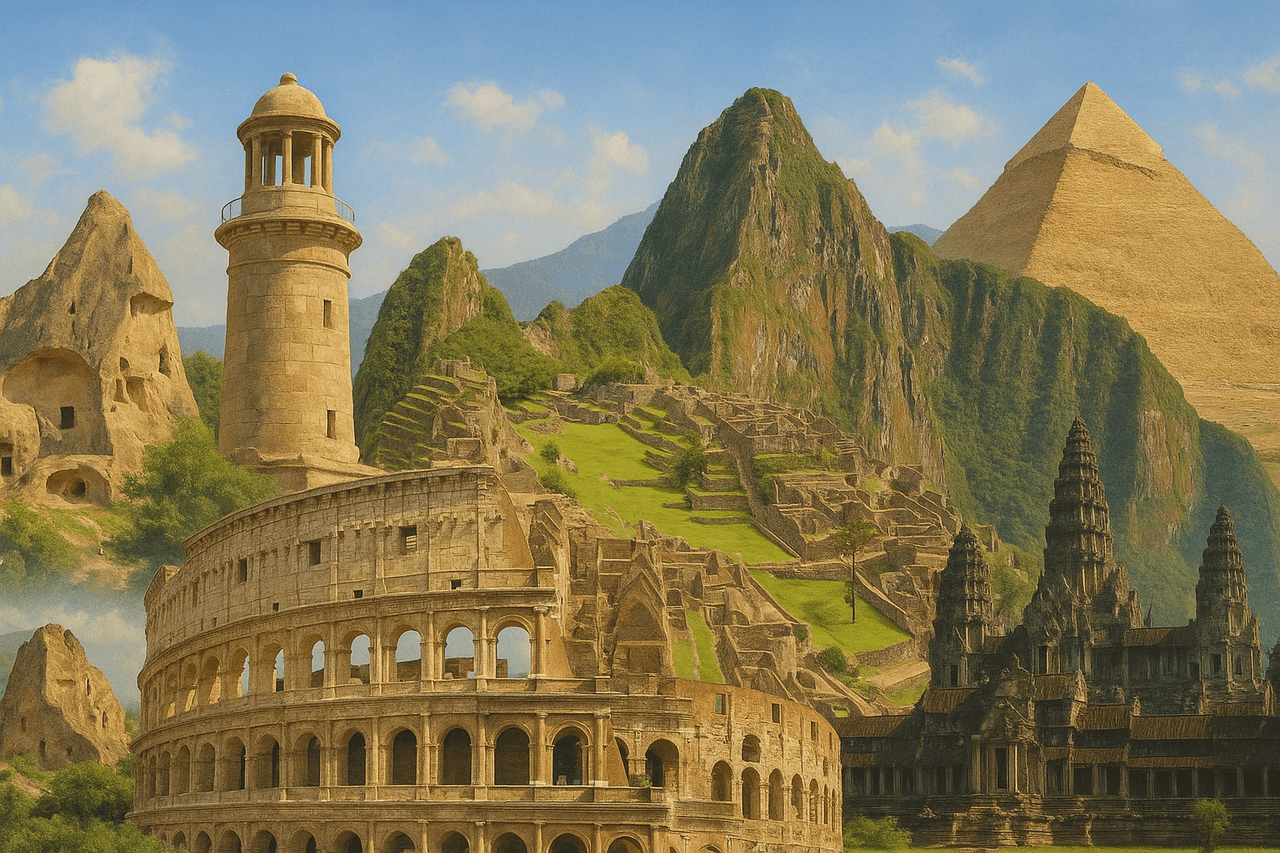
Representative image of monumental structures (Generated by Artificial Intelligence.)
Through these activities diverse segments of society particularly students academics professionals and local communities are given the opportunity to form educational and experiential connections with heritage sites. Seminars guided tours and workshop workshops held in educational institutions have become effective tools for transmitting cultural heritage to younger generations. At the academic level this day encourages interdisciplinary interaction among fields such as architecture urban planning archaeology art history and cultural studies. Thus heritage work is enriched not only by conservation techniques but also by ethical sustainability and social participation dimensions.
Worldwide activities supported by ICOMOS are shaped according to the annual theme. For example under the 2025 theme “Heritage Under Threat from Disasters and Conflict” field presentations documentation workshops and risk management seminars are being organized in various countries. ICOMOS supports these activities through social media campaigns video presentations and trilingual communication kits aiming to build a global interaction network.
In Türkiye activities are coordinated by the ICOMOS Türkiye National Committee and take place in numerous cities. In recent Past years programs in Mersin Antakya Diyarbakır Istanbul and Bursa have prominently featured academic presentations archaeological site visits (e.g. Misis Ancient City Zerzevan Castle) thematic exhibitions and cultural heritage workshops. The 2017 celebrations in Adana were organized around the theme “Cultural Heritage and Sustainable Tourism” and involved active participation from city administrators academics and the local community.
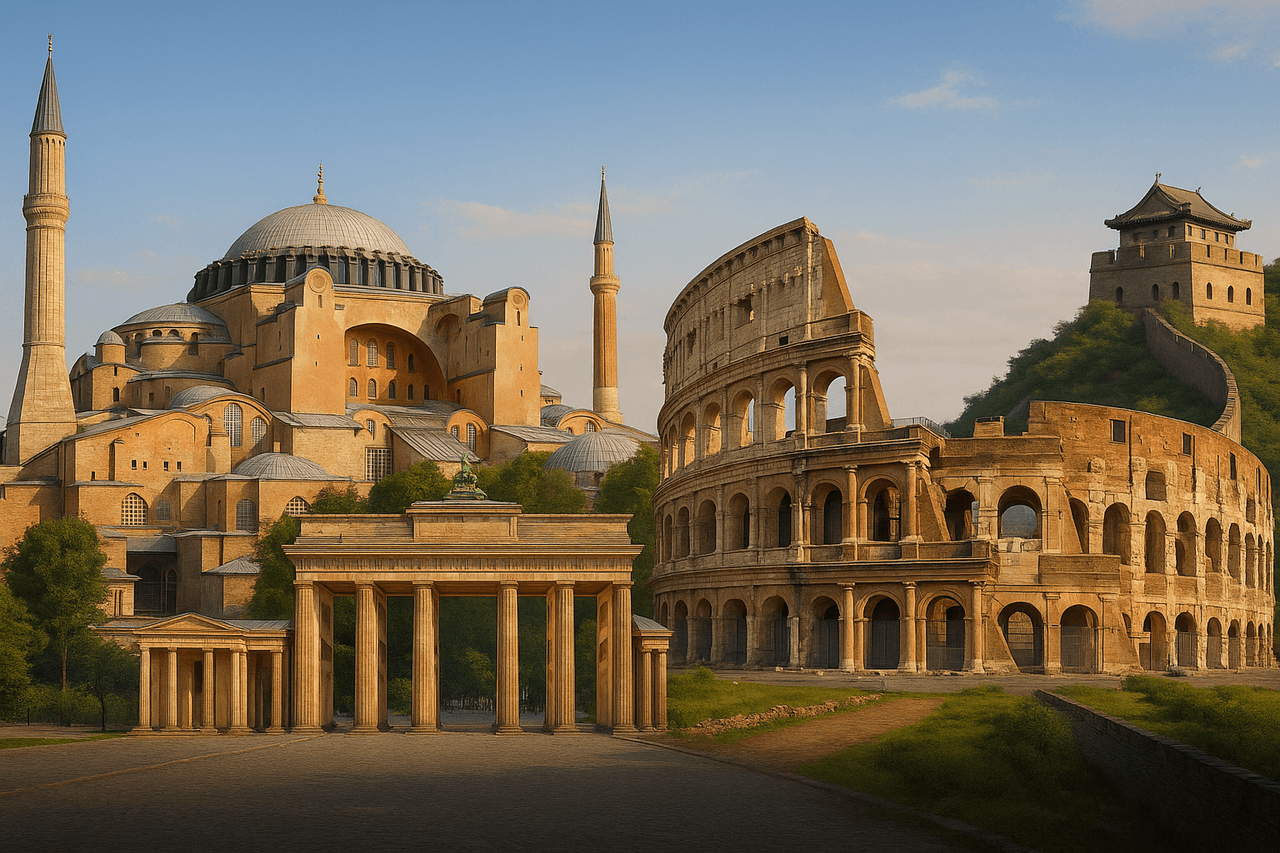
Representative image of some important global structures (Generated by Artificial Intelligence.)
More than 167 country worldwide participate in IDMS activities through ICOMOS national committees. Countries with rich cultural heritage such as Italy France China India Türkiye Germany Spain and Mexico are strongly represented. These countries stand out due to their large number of sites on the UNESCO World Heritage List and their robust conservation infrastructures.
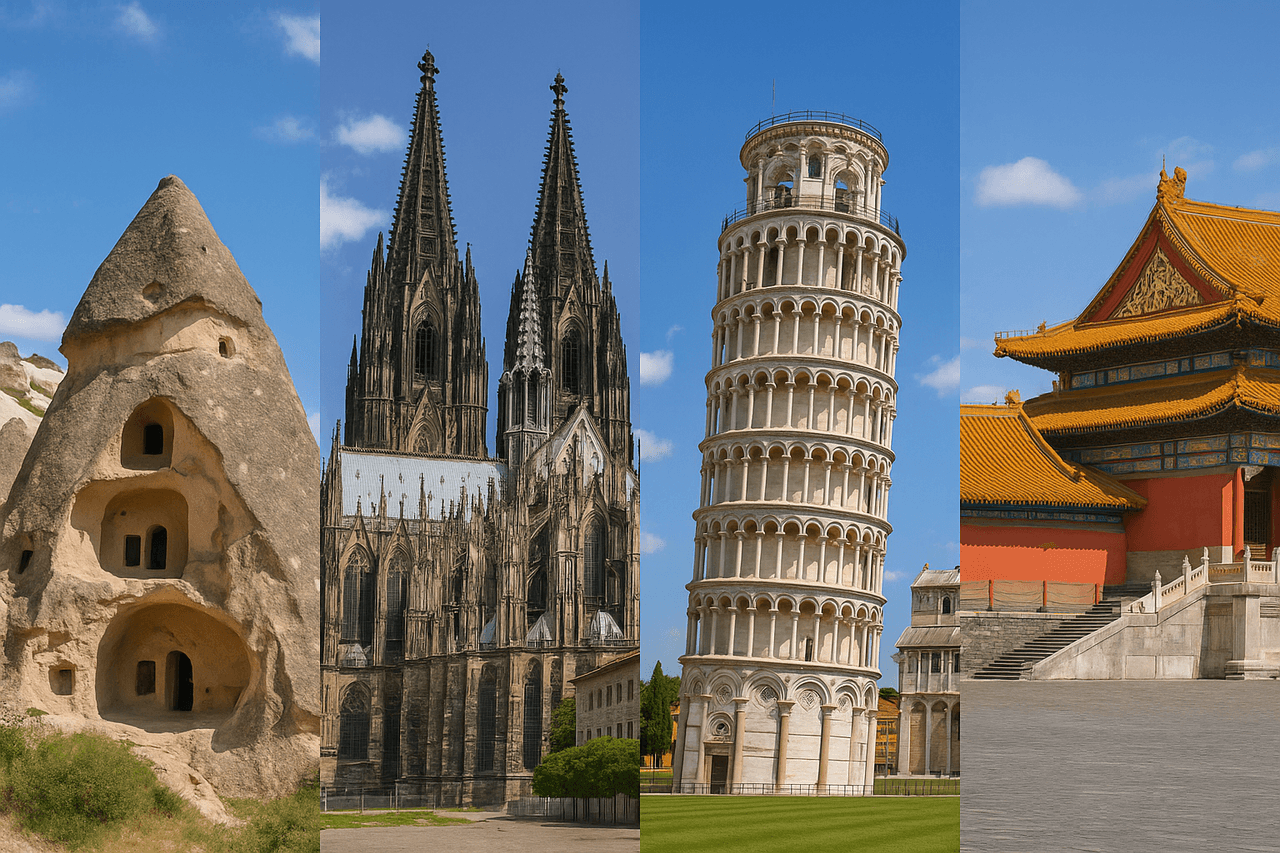
Representative image of works from Türkiye Germany Italy and China (Generated by Artificial Intelligence.)
A wide range of civil actors participate in these activities including ICOMOS national and scientific committees UNESCO advisory bodies heritage associations cultural heritage foundations and expert groups working in restoration and conservation. In Türkiye organizations such as TMMOB Chamber of Architects Tarih Vakfı and Sulukule Platform provide support to these events. Additionally various museum associations and local culture platforms make significant contributions on the ground.
In Türkiye numerous major cities and districts including Istanbul Adana Mersin Bursa Diyarbakır and Eskişehir organize seminars exhibitions and site visits under IDMS. Municipalities fulfill roles such as providing venues for activities promoting local heritage restoration and enhancing public participation through outreach and logistics support.
Universities research centers and conservation programs play a vital role in these activities. In Türkiye institutions such as Mimar Sinan Beautiful Fine Arts University Istanbul Technical University Çukurova University METU and Hacettepe University contribute through academic presentations student-led workshops and scholarly discussions. Furthermore departments in conservation archaeology city planning and art history provide a scientific foundation for evaluating heritage.

Henüz Tartışma Girilmemiştir
"International Monuments and Sites Day" maddesi için tartışma başlatın
History
Purpose and Significance
Activities
Themes by Year (Selected Years)
Institutional Structure and Participants